Shape Recognition Normal Community Worksheets for Ages 5-8
4 filtered results
-
From - To
Introduce your child to the basics of geometry and community awareness with our "Shape Recognition Normal Community Worksheets" for ages 5-8. These engaging worksheets from Kids Academy help children identify shapes like circles, squares, and triangles, while connecting them to everyday objects found in their community. Perfect for early learners, these activities enhance spatial reasoning and visual recognition through fun, hands-on exercises. Ideal for home or classroom settings, our worksheets offer a blend of education and creativity, paving the way for a solid foundation in both math and social studies. Download now to elevate your child’s learning experience!
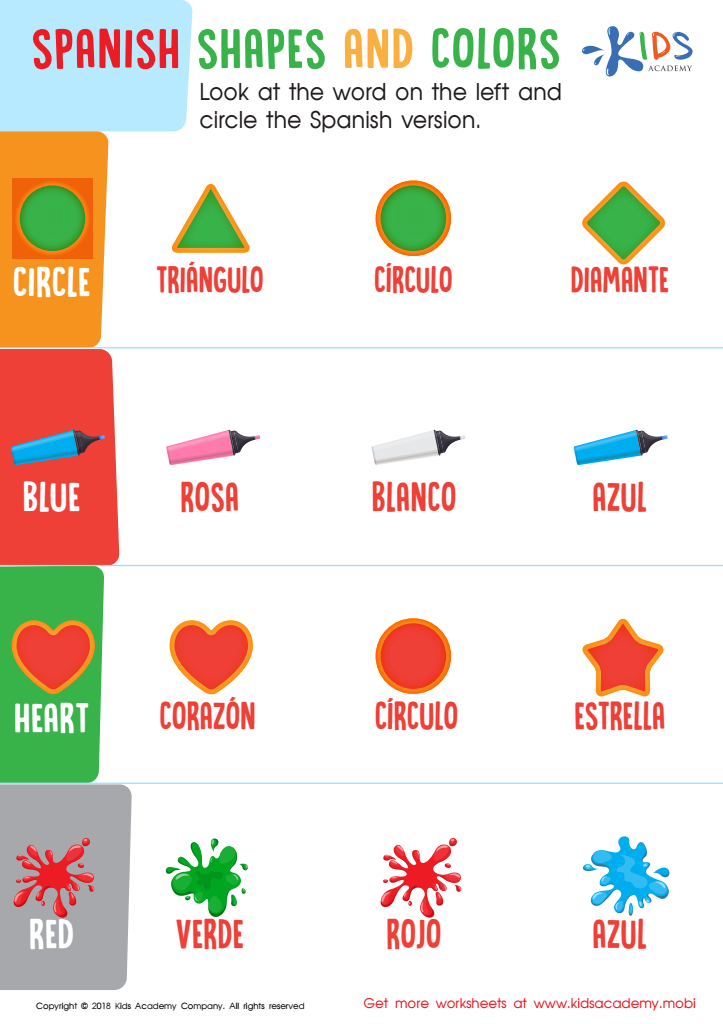
Spanish Shapes and Colors Worksheet
 Assign to My Students
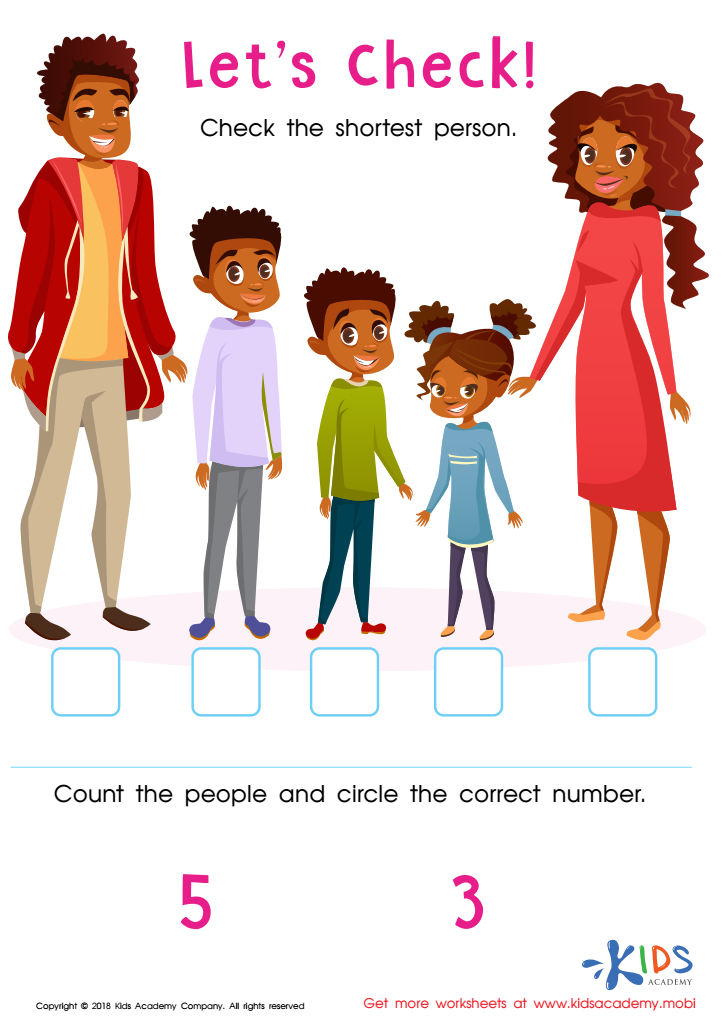
Let's Check! Assessment Worksheet
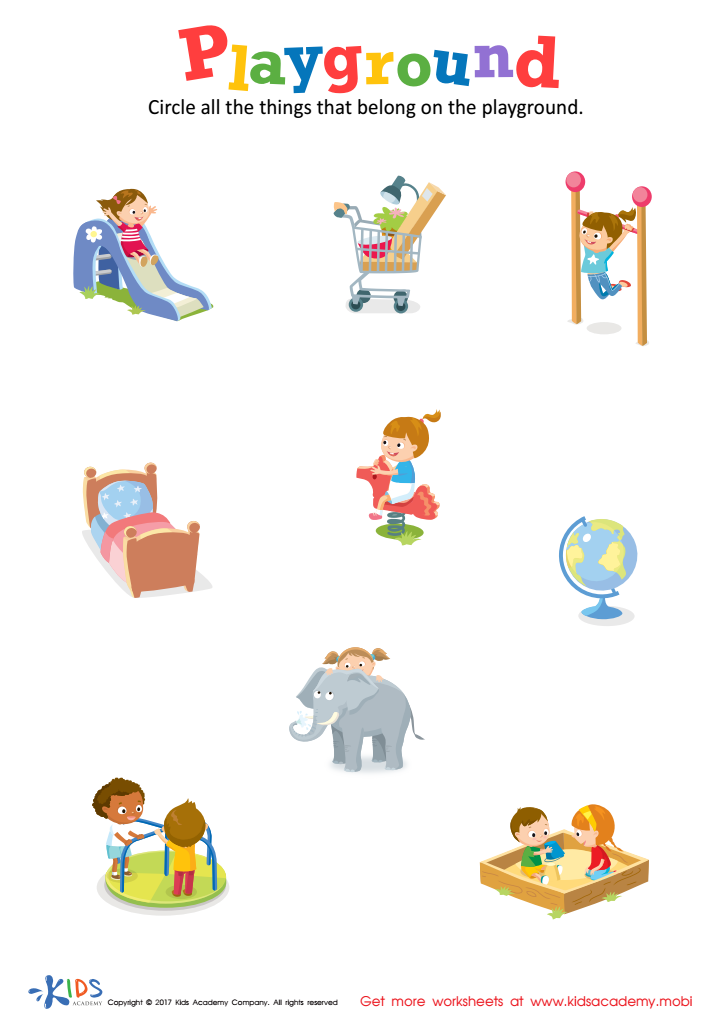
Playground Worksheet
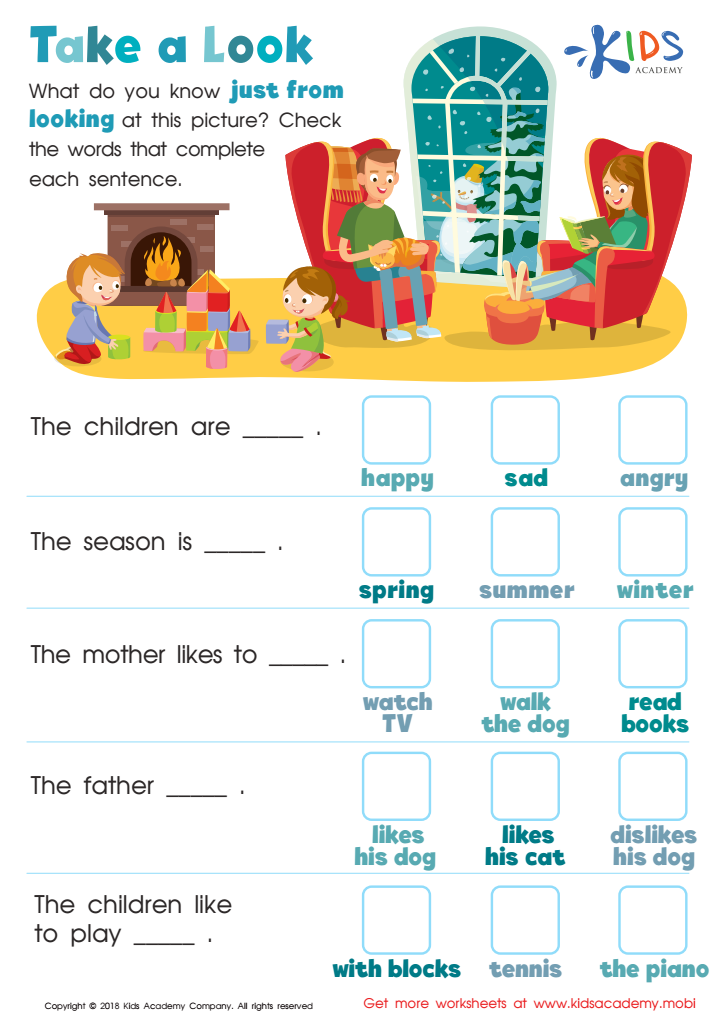
Take a Look - Part 1 Worksheet







Shape recognition is a foundational skill critical to the cognitive development of children ages 5-8, making it essential for both parents and teachers to nurture this skill. At this age, children are developing basic mathematical concepts, and recognizing shapes is a stepping stone to understanding geometry, spatial awareness, and higher-level math skills.
By recognizing shapes, children learn to categorize and analyze their environment, improving their problem-solving capabilities. For instance, distinguishing between squares, triangles, circles, and rectangles helps children understand the properties of these shapes, which is a visual-spatial skill that translates into everyday tasks and advanced academic subjects.
Moreover, recognizing shapes enhances fine motor skills as children learn to draw, trace, and manipulate objects. This progression supports writing development and eye-hand coordination, which are vital for academic success. Shape recognition also integrates with literacy, as recognizing the shapes of letters paves the way for reading proficiency.
Socially, classroom activities involving shape recognition can foster collaboration and communication skills among peers. Encouraging a normal community activity surrounding shape recognition means providing a structured yet interactive learning environment where sharing knowledge and excitement about shapes binds the classroom community.
Thus, focusing on shape recognition prepares children not only for future academic challenges but also helps in their overall developmental trajectory by laying a strong cognitive and social foundation.








