Multiplication practice Normal History Worksheets for Ages 5-8
3 filtered results
-
From - To
Explore our engaging Multiplication Practice Normal History Worksheets, specially designed for children ages 5-8! These worksheets seamlessly integrate multiplication skills with fascinating historical themes, making learning both fun and educational. Ideal for young learners, our resources provide a unique way to strengthen math abilities while sparking interest in history. Each worksheet features age-appropriate problems that encourage critical thinking and problem-solving skills. Perfect for classroom settings or at-home practice, these worksheets are sure to make learning multiplication an enjoyable adventure. Dive into history and mathematics today with our thoughtfully crafted resources and watch your child's confidence in both subjects soar!
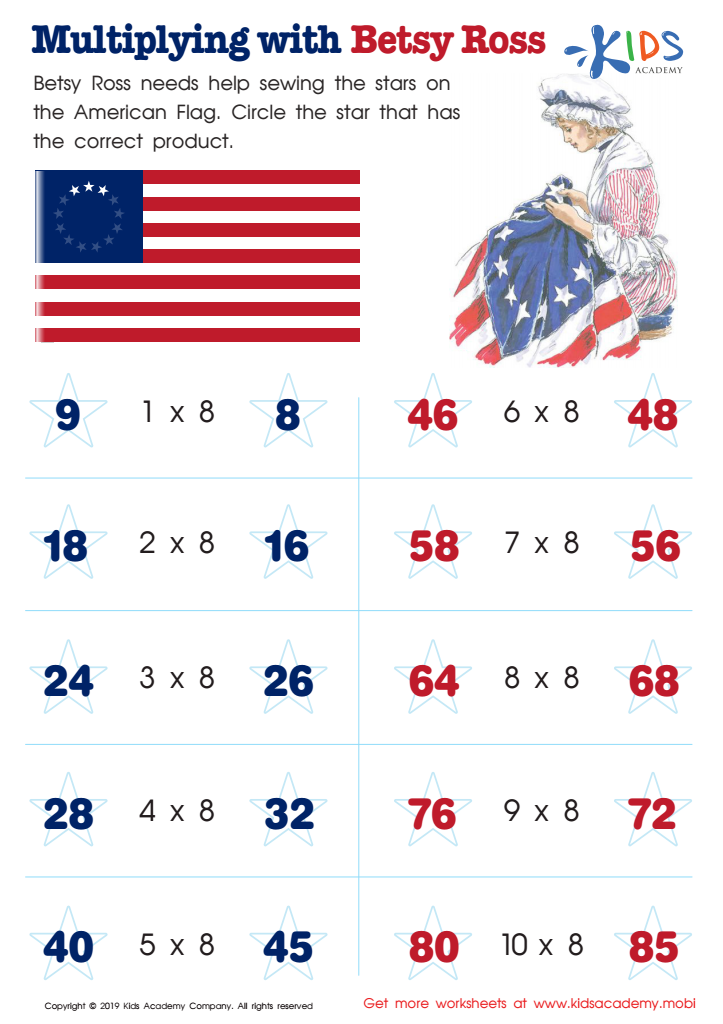
Multiplying with Betsy Ross Worksheet
 Assign to My Students
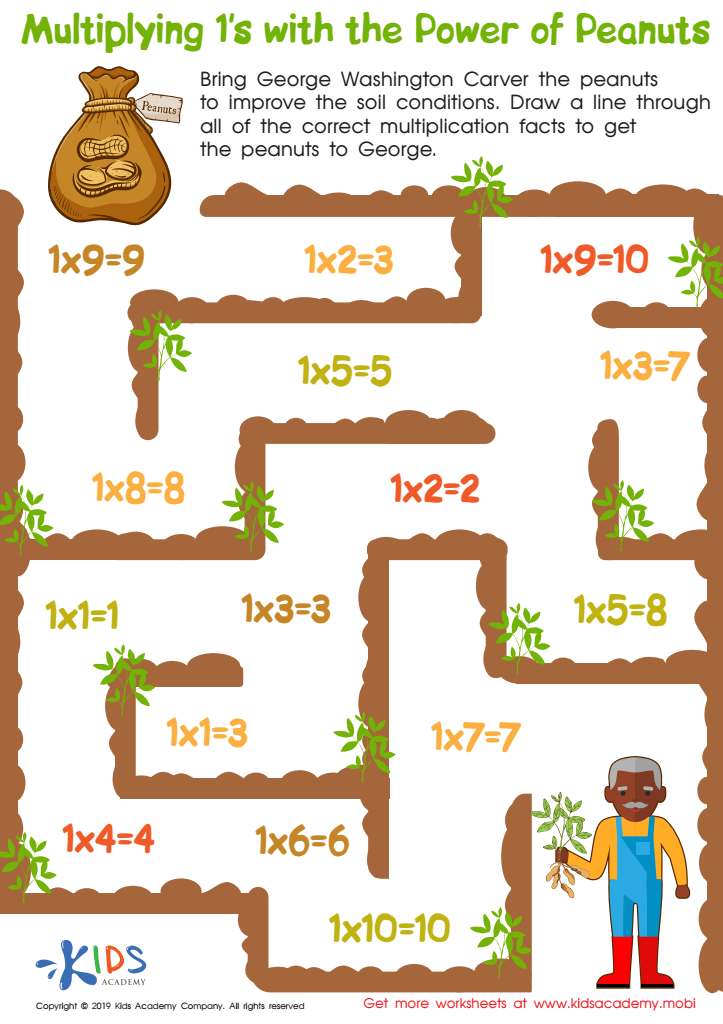
Multiplying 1’s With the Power of Peanuts Worksheet
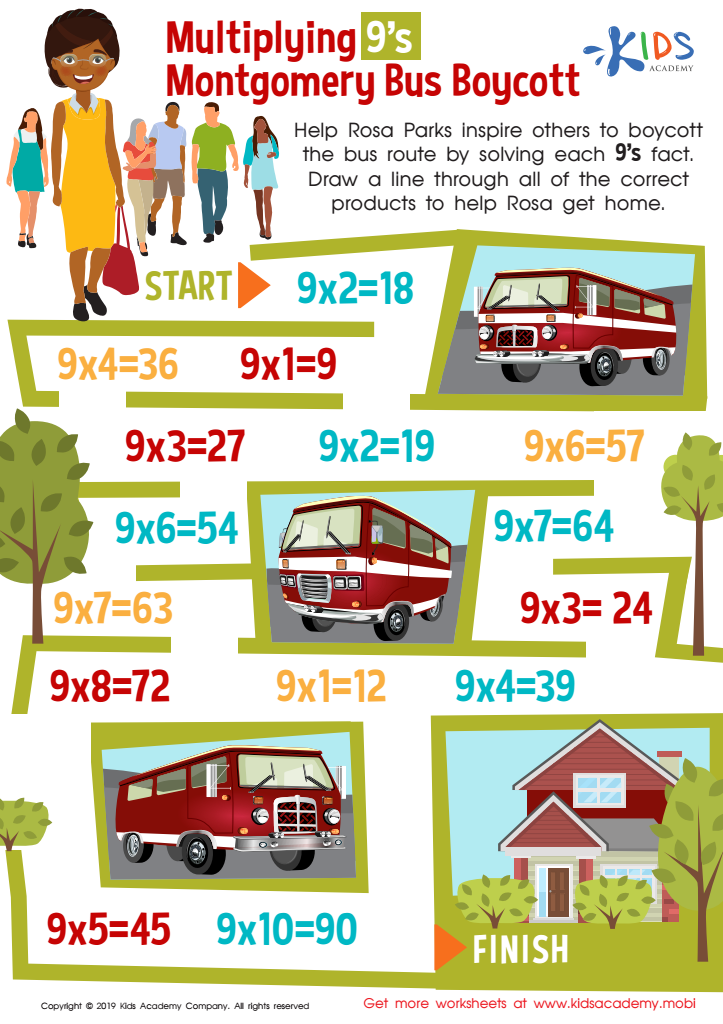
Multiplying 9’s Montgomery Bus Boycott Worksheet








Parents and teachers should care about multiplication practice for children ages 5-8 because early mastery of foundational math concepts significantly impacts future academic success. Introducing multiplication at a young age helps to develop critical thinking skills, encourages problem-solving abilities, and builds confidence in mathematical capabilities.
At this age, children are naturally curious and adept at learning through play and engagement. By integrating multiplication practice into daily activities—through games, songs, and interactive lessons—children can grasp this essential concept more readily. Physical and visual aids, such as counting blocks or multiplication charts, make learning fun and accessible, creating positive associations with math.
Additionally, early multiplication skills set the stage for more complex math concepts encountered in later grades, such as division, fractions, and algebra. Building a strong math foundation fosters a lifelong love of learning and paves the way for ongoing engagement in STEM-related fields.
Moreover, kids who struggle with multiplication may feel frustration and anxiety, making it essential for teachers and parents to implement effective learning strategies. By focusing on multiplication practice now, parents and teachers can cultivate competency, ensure academic equity, and promote emotional well-being, ultimately giving children the tools they need to succeed in their educational journeys.