Understanding timelines Normal History Worksheets for Ages 5-8
3 filtered results
-
From - To
Explore our engaging "Understanding Timelines" history worksheets tailored for children aged 5-8. At Kids Academy, we help young learners develop essential skills by making the concept of timelines fun and accessible. Our printable worksheets introduce kids to the sequential order of events, fostering a strong foundation in historical understanding. Through hands-on activities and colorful visuals, children learn to identify and arrange significant events, enhancing their comprehension of time and chronology. Perfect for early grade social studies classes or home learning, our worksheets simplify complex ideas, making history enjoyable and educational for young minds. Start exploring today!
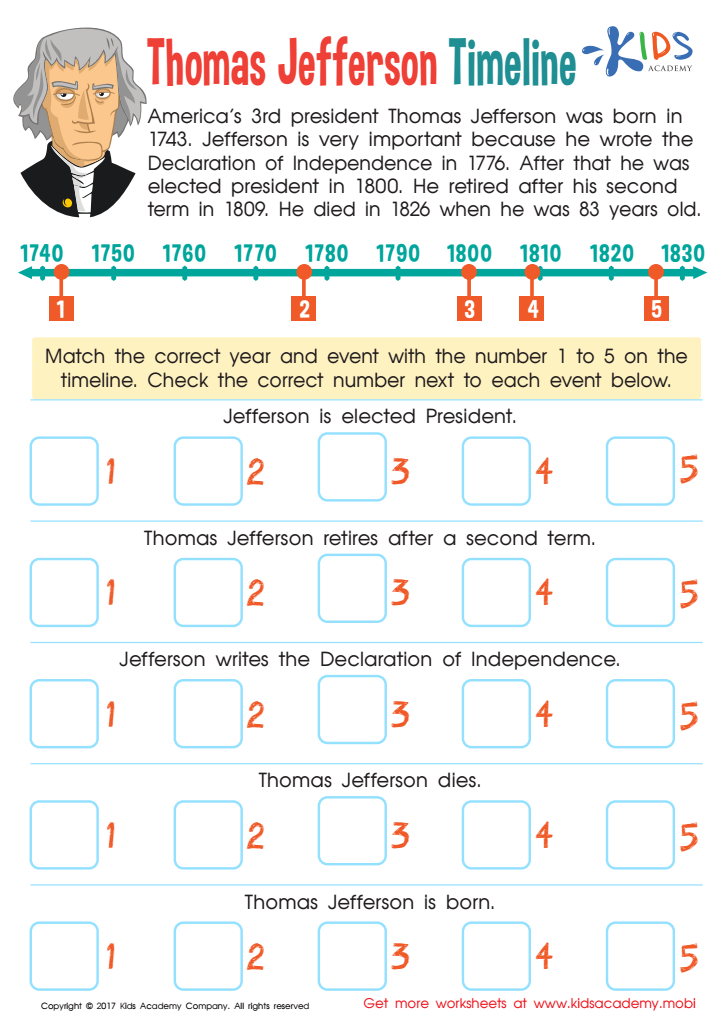
Thomas Jefferson Timeline Worksheet
 Assign to My Students
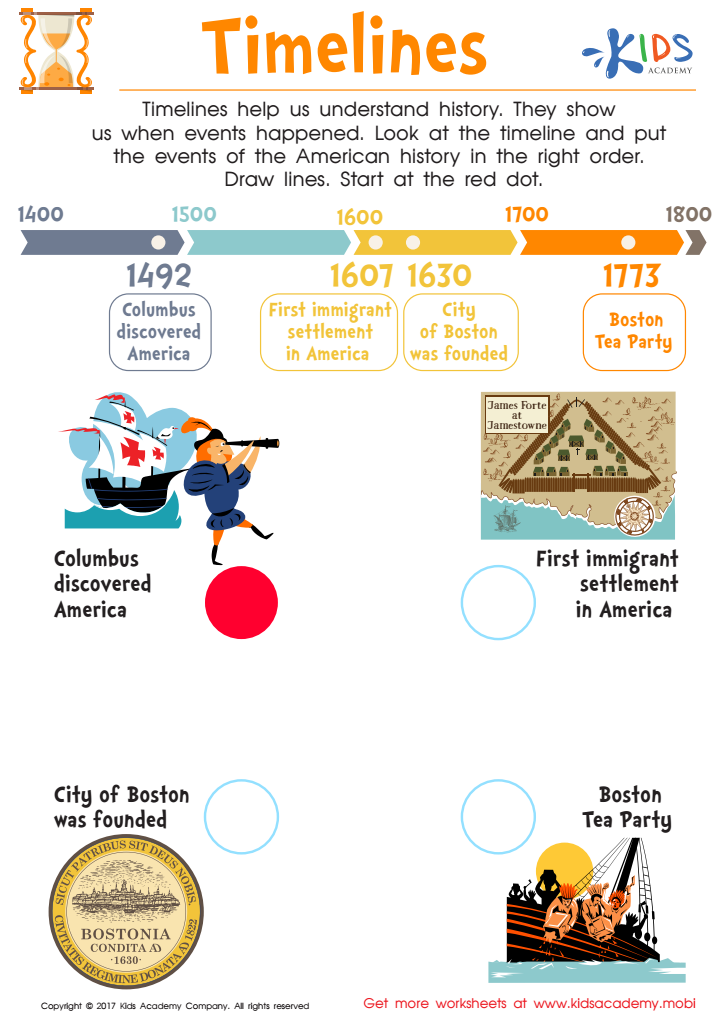
American History Timeline Worksheet
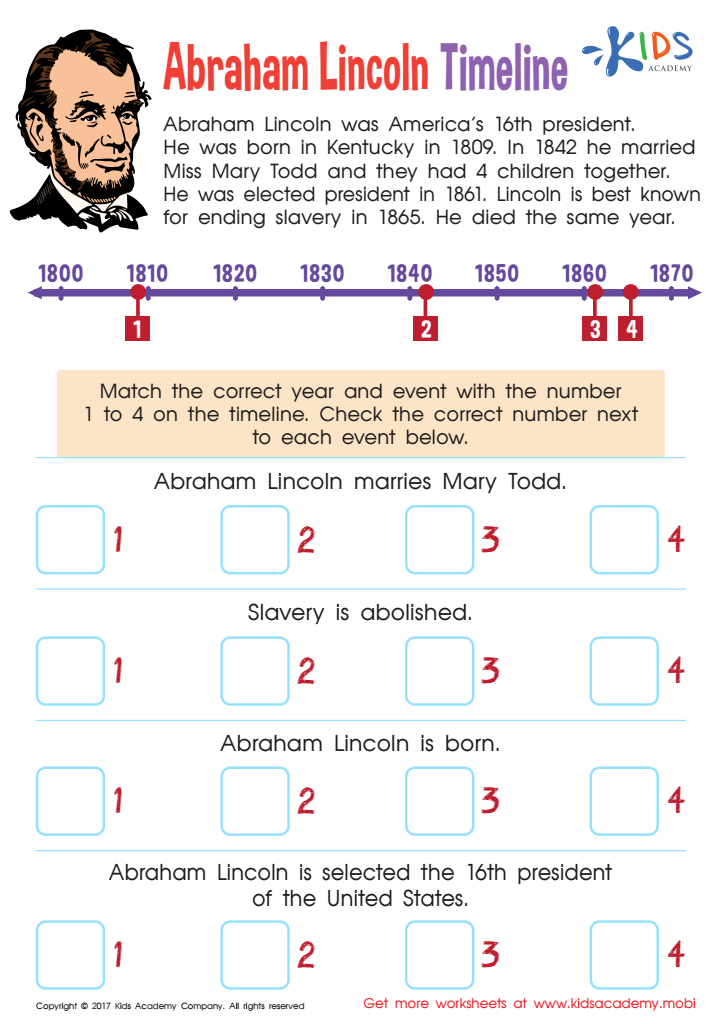
Abraham Lincoln Timeline Worksheet




.jpg)


Understanding timelines and normal history for children ages 5-8 is important for several reasons. First, it helps young children grasp the concept of time, which is pivotal for their cognitive development. By learning about sequences of events, such as what happened in the past, what happens now, and what might happen in the future, children can develop a better sense of the world around them and how they fit into it.
Timelines also provide a way to introduce cause and effect, enhancing critical thinking skills at an early age. For example, discussing why certain historical events happened and their impact allows children to make connections between different pieces of information. This aids in building logical reasoning skills, which are crucial for all areas of learning.
Furthermore, understanding normal history fosters a sense of identity and cultural belonging. Learning about significant events, people, and traditions helps children understand their heritage, community, and the broader world. It also promotes empathy and respect for different cultures and histories, contributing to their social and emotional development.
Lastly, these history lessons can spark curiosity and a lifelong interest in learning. Exciting stories of the past can ignite children's imaginations and inspire them to ask questions and seek knowledge. Therefore, teachers and parents should prioritize integrating timelines and normal history into early education for a well-rounded developmental foundation.