Shape Recognition Normal Social Studies Worksheets for Ages 5-8
4 filtered results
-
From - To
Explore our engaging Shape Recognition Normal Social Studies Worksheets designed specifically for children aged 5 to 8! These worksheets foster essential skills in recognizing and identifying shapes while integrating fundamental social studies concepts. Perfect for young learners, these activities encourage critical thinking and observational skills in a fun and interactive way. Each worksheet offers vibrant illustrations and simple instructions to captivate children's attention and make learning enjoyable. Get ready to enhance your classroom experience with our carefully crafted resources that support shape recognition and early social studies education. Download now and help your students build a strong foundation in shape recognition!
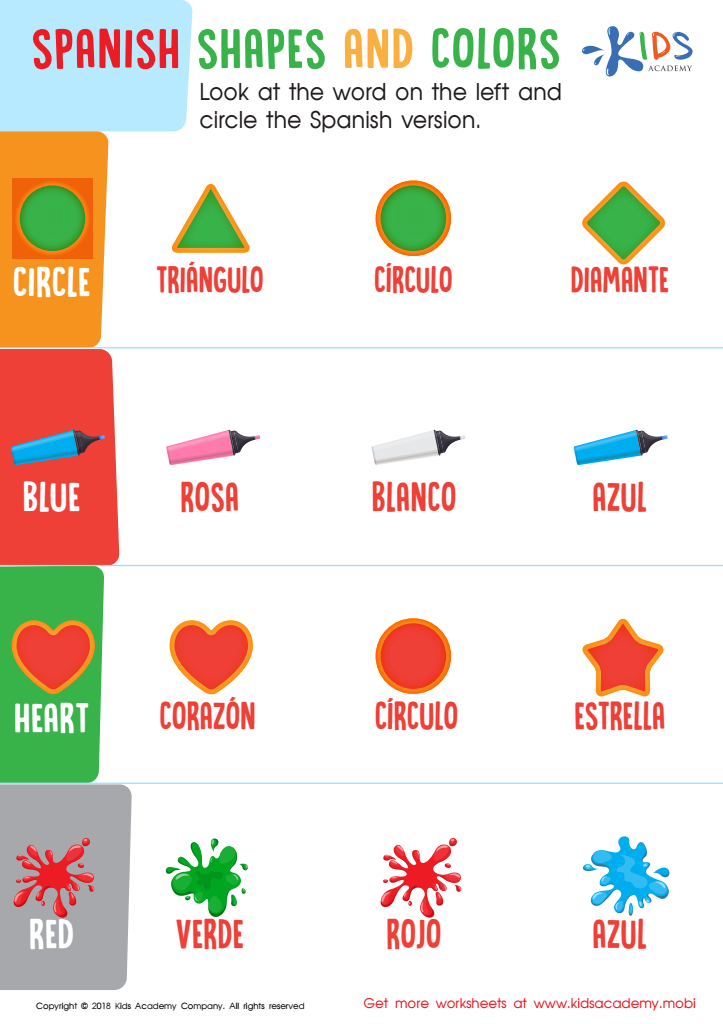
Spanish Shapes and Colors Worksheet
 Assign to My Students
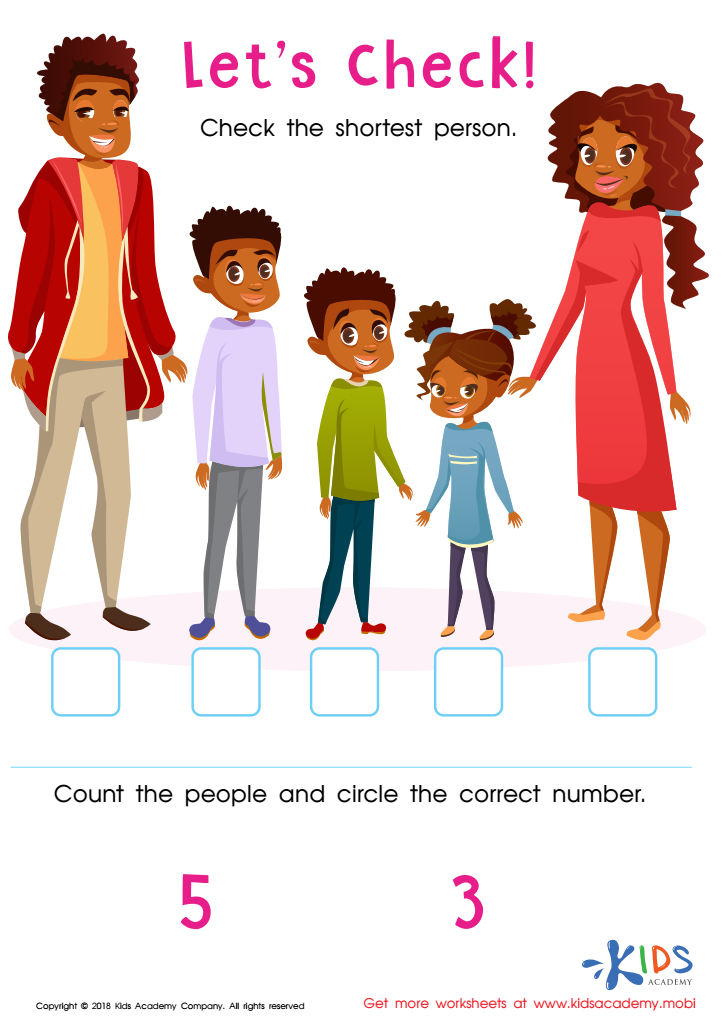
Let's Check! Assessment Worksheet

Playground Worksheet
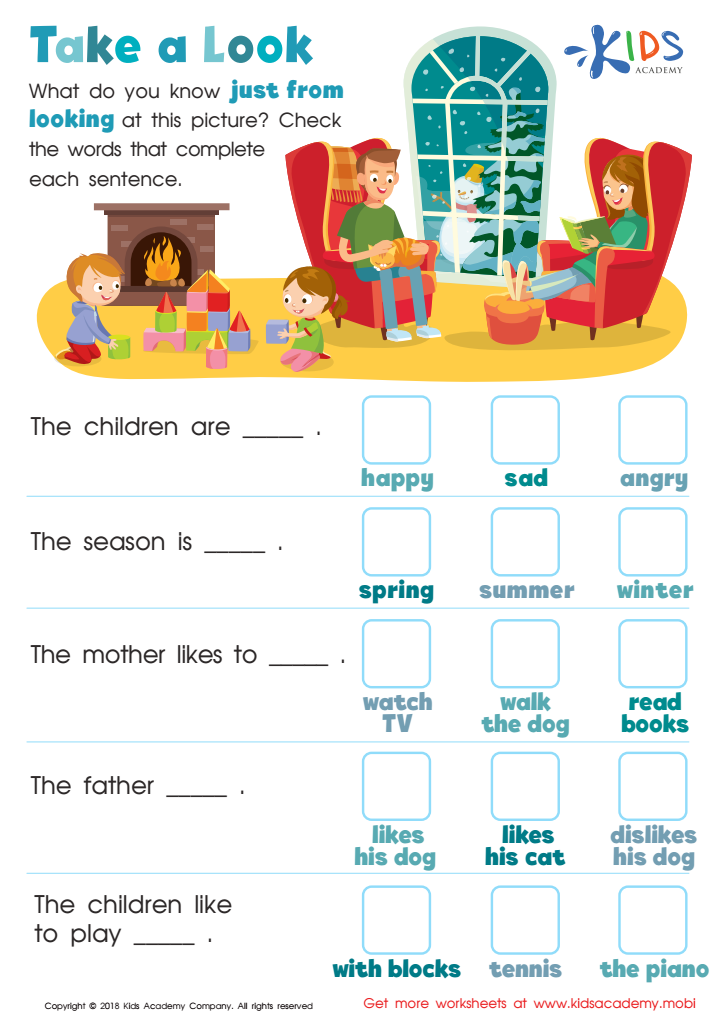
Take a Look - Part 1 Worksheet








Shape recognition is a fundamental aspect of early childhood education, particularly in social studies for children aged 5-8. Understanding shapes goes beyond simply identifying geometric forms; it serves as an essential building block for social interaction, cognitive development, and visual-spatial skills.
Firstly, recognizing shapes aids children in their understanding of the world around them, as they begin to categorize and differentiate various objects. This skill is crucial not only for math but also for language development, as children learn to describe and communicate about the shapes they see. Moreover, engaging with shapes can enhance critical thinking and problem-solving skills, as children learn to arrange, compare, and manipulate them.
In social studies, shape recognition often comes into play when discussing maps, cultural symbols, and community structures. Children learn to form connections between different shapes and their meanings in society, fostering their ability to navigate and interact in their environment.
By prioritizing shape recognition, parents and teachers equip children with essential skills that promote visual literacy, logical thinking, and a deeper appreciation for the complexities of social structures, thus laying a foundation for future learning and interpersonal relationships. This engagement not only makes learning enjoyable but also relevant, paving the way for well-rounded development.