Noun identification Normal Grammar Worksheets for Ages 5-8
3 filtered results
-
From - To
Discover our engaging Noun Identification Normal Grammar Worksheets, designed specifically for children ages 5-8. These resources enhance early literacy skills while making learning fun! Our carefully crafted worksheets facilitate the understanding of nouns in a variety of forms, including common and proper nouns. With a mix of interactive activities, colorful illustrations, and easy-to-follow instructions, kids will build confidence in their grammar skills. Perfect for classroom use or at-home learning, these worksheets promote essential educational growth while keeping children excited about learning. Explore our collection today and provide your child with the tools needed for successful language development!
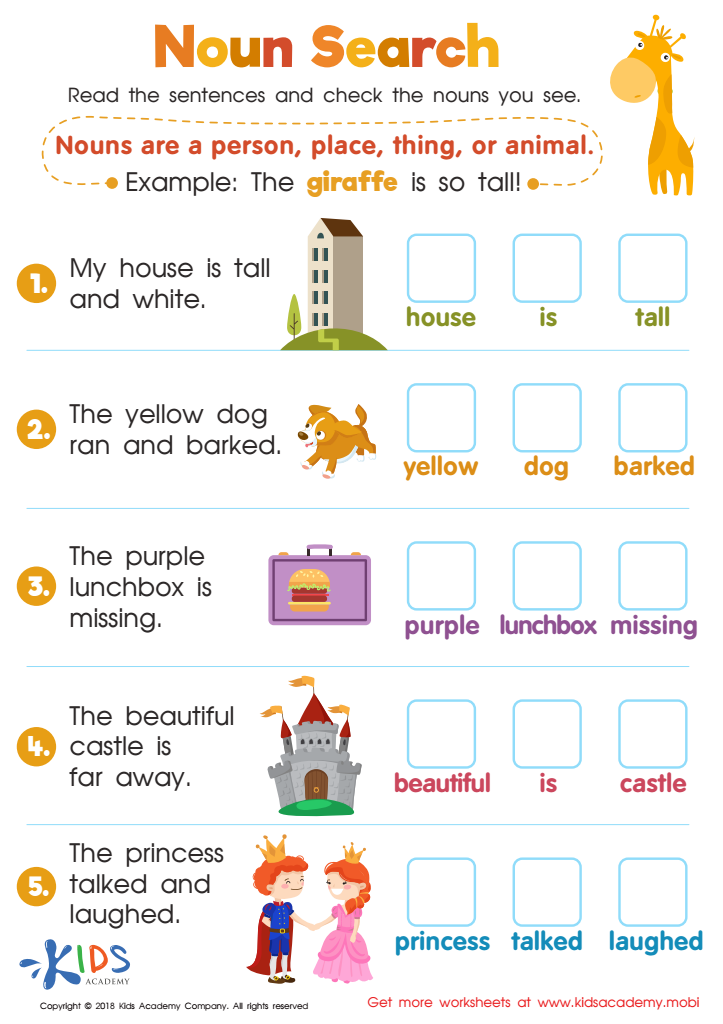
Noun Search Worksheet
 Assign to My Students
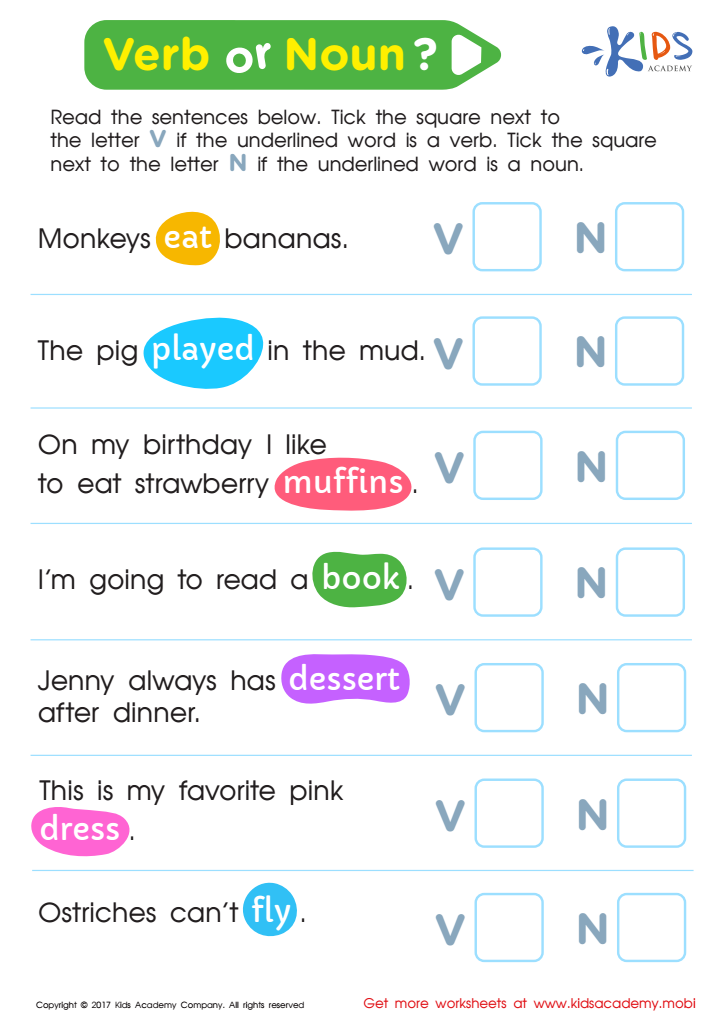
Verb or Noun Worksheet
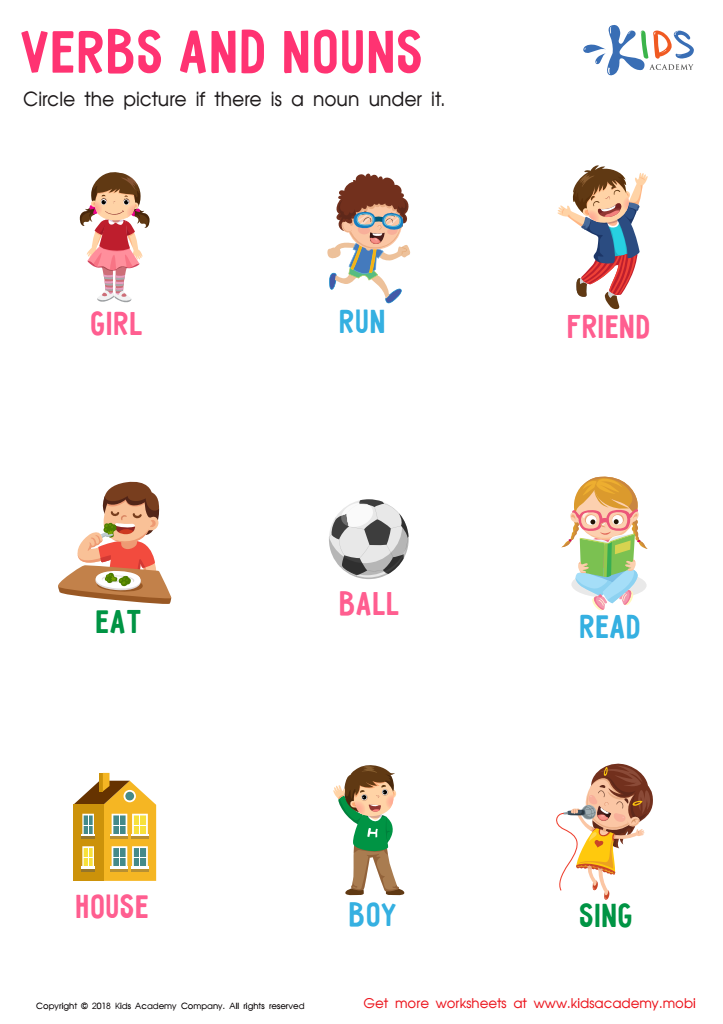
Verbs and Nouns Worksheet







Noun identification is a crucial aspect of language development for children aged 5-8, and parents and teachers should prioritize it for several reasons. First, nouns are foundational building blocks of language, helping children label people, places, and things they encounter daily. By mastering noun identification, young learners expand their vocabulary, gaining the words they need to articulate their thoughts and feelings effectively.
Additionally, understanding nouns enhances reading and writing skills. When children can identify nouns in sentences, they improve their comprehension and begin to grasp more complex grammar structures. This foundational knowledge supports their ability to read for understanding and write creatively, preparing them for higher academic challenges.
Moreover, noun identification fosters essential cognitive skills such as categorization and critical thinking. As children differentiate between proper and common nouns, they engage in analytical thinking that benefits other areas of learning.
Finally, promoting noun recognition in everyday conversations encourages parents and teachers to create a rich language environment, cultivating a love for language and storytelling. By focusing on noun identification, we empower children to communicate confidently, paving the way for lifelong literacy skills and effective communication.