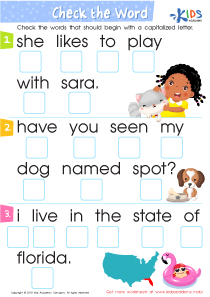
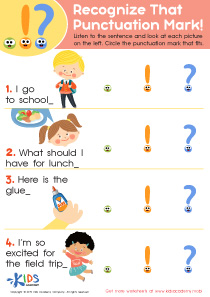
Sight word recognition Normal Writing Worksheets for Ages 5-8
5 filtered results
Difficulty Level
Grade
Age
-
From - To
Subject
Activity
Standards
Boost your child’s reading confidence with our Sight Word Recognition Writing Worksheets for ages 5-8! Perfect for early learners, these engaging worksheets help identify and write common sight words, promoting fluency and comprehension. Each activity blends fun with learning, encouraging children to recognize, trace, and write essential sight words effortlessly. With colorful designs and easy-to-follow instructions, our worksheets make practice enjoyable and effective. By mastering these foundational skills, your child will build a strong reading foundation, ready for more advanced literacy adventures. Enhance your kid’s learning journey with our expertly designed worksheets today!
Favorites
With answer key
Interactive
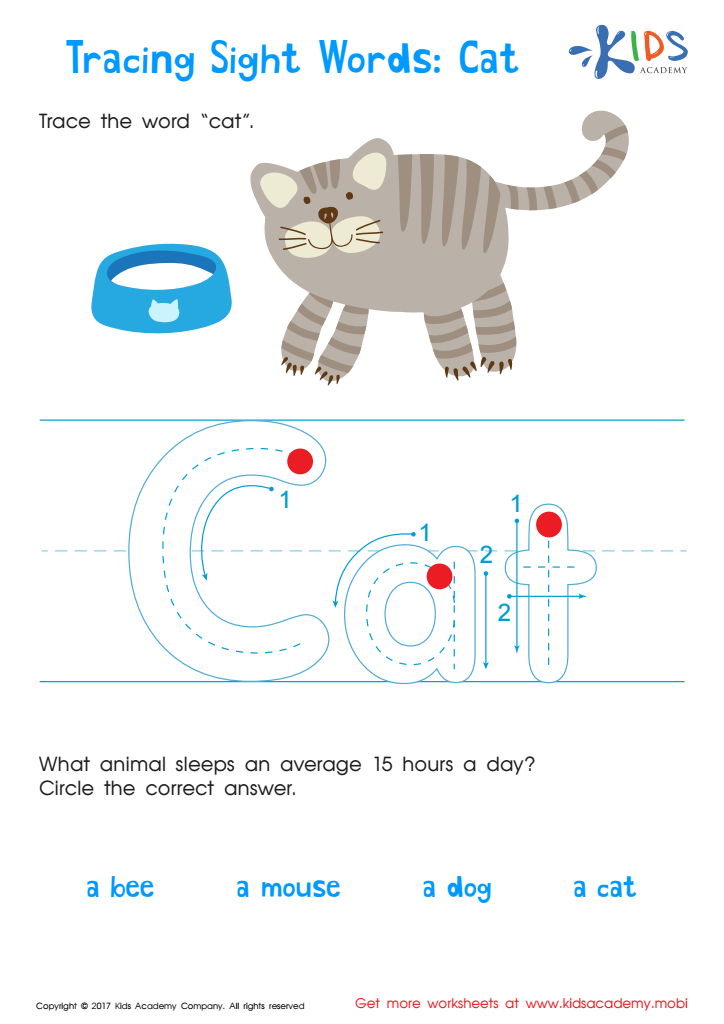
Cat Printable Sight Words Worksheet
Encourage your child's literacy with this fun sight words worksheet: cat PDF! It helps build a solid foundation for reading, featuring activities such as reading and tracing the word cat, and finding it amongst other sight words. With its cute cat, Kids Academy makes learning to read a delight!
 Assign to My Students
Cat Printable Sight Words Worksheet
Worksheet
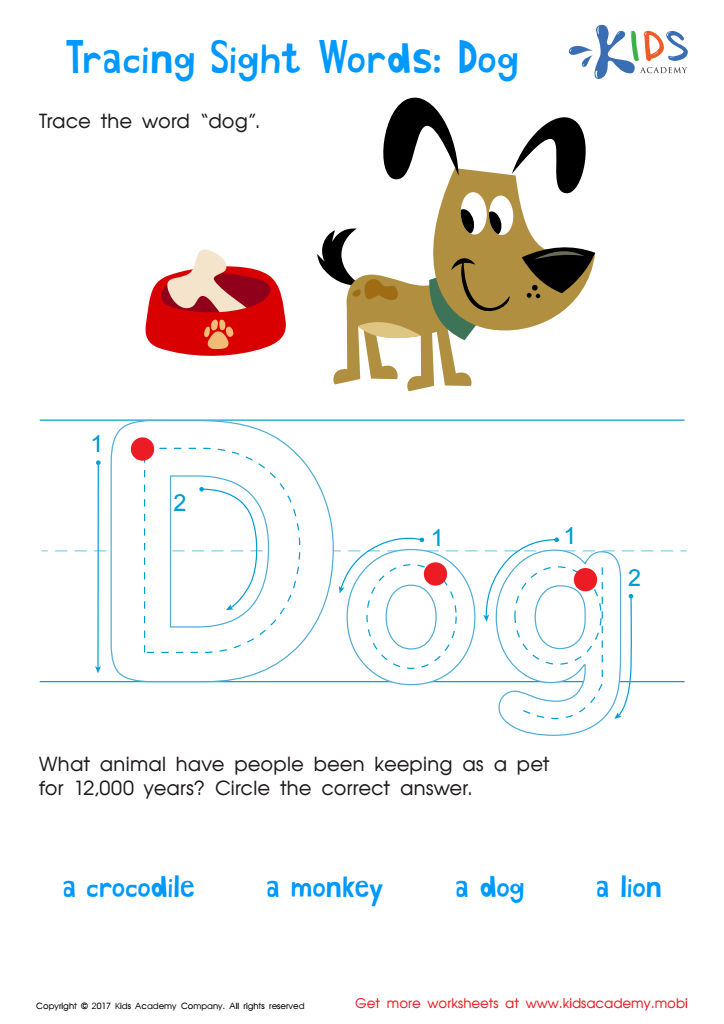
Dog Worksheet Sight Words Worksheet
Get your kids excited to read with our dog-themed sight words worksheet!
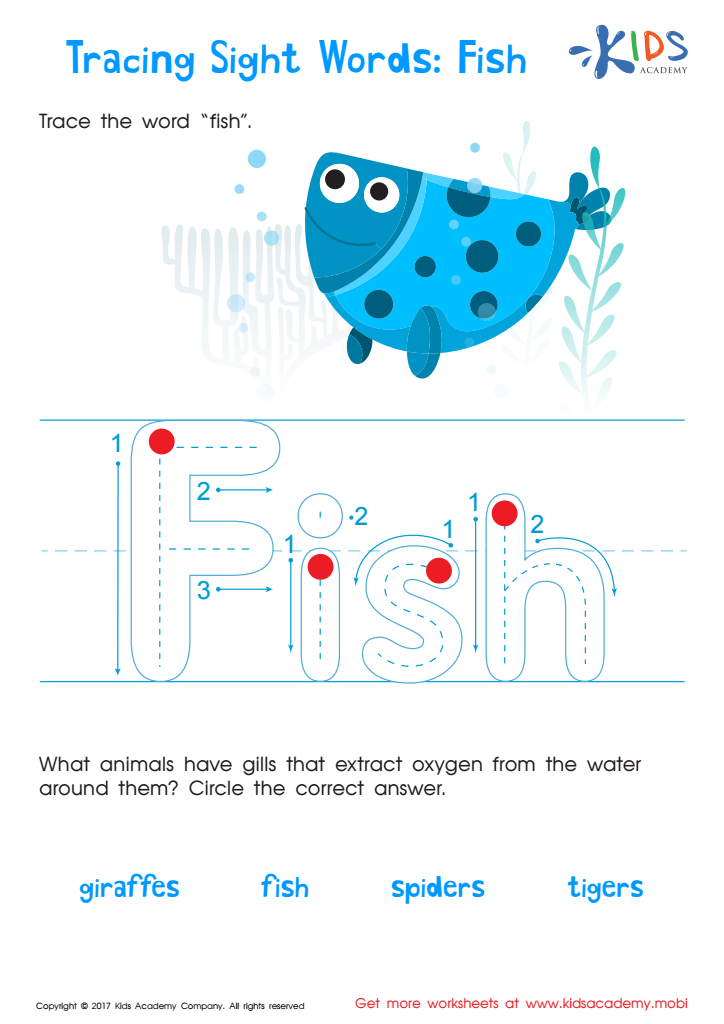
Excite your child to read with our sight words worksheet: dog edition! Featuring a lovable dog character to put a smile on any kid's face, this worksheet helps kids practice reading and writing the word "dog". Build a library of words they can read quickly and promote increasing literacy skills with early fluency! Get them ready for reading with our dog-themed sight words worksheet!
Dog Worksheet Sight Words Worksheet
Worksheet
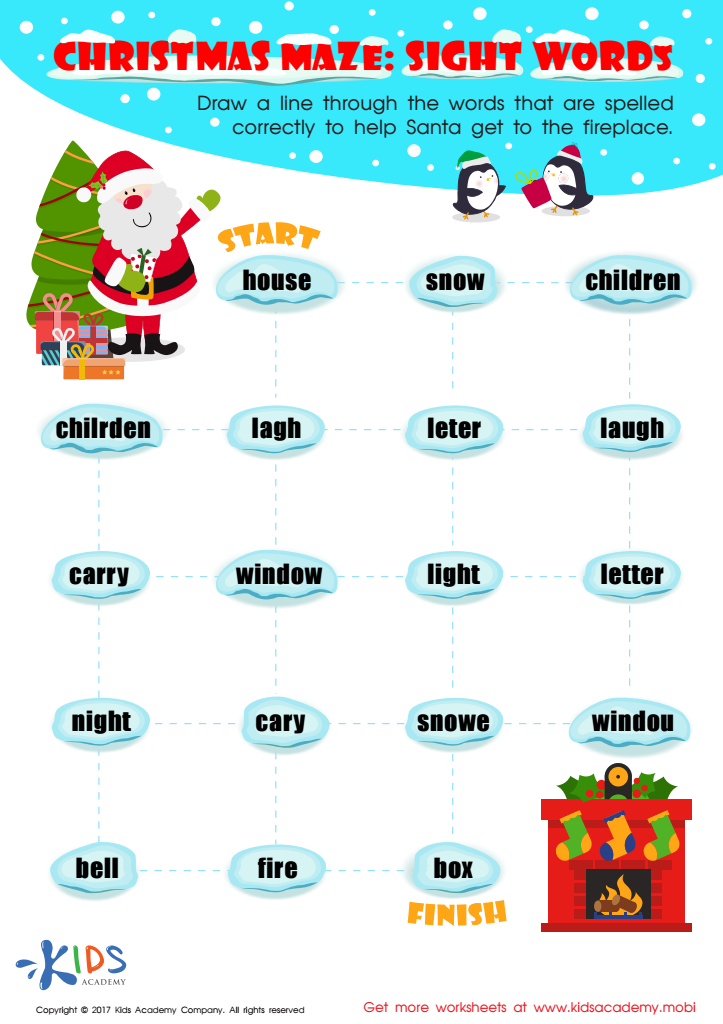
Sight Words Christmas Maze Printable
Let your 3rd grader practice early reading and spelling with this festive Christmas maze! Have fun helping Santa find the fireplace and build fluency skills at the same time. This free worksheet is sure to be a hit and get your child excited for the holidays!
Sight Words Christmas Maze Printable
Worksheet
Sight Word Sentences Worksheet
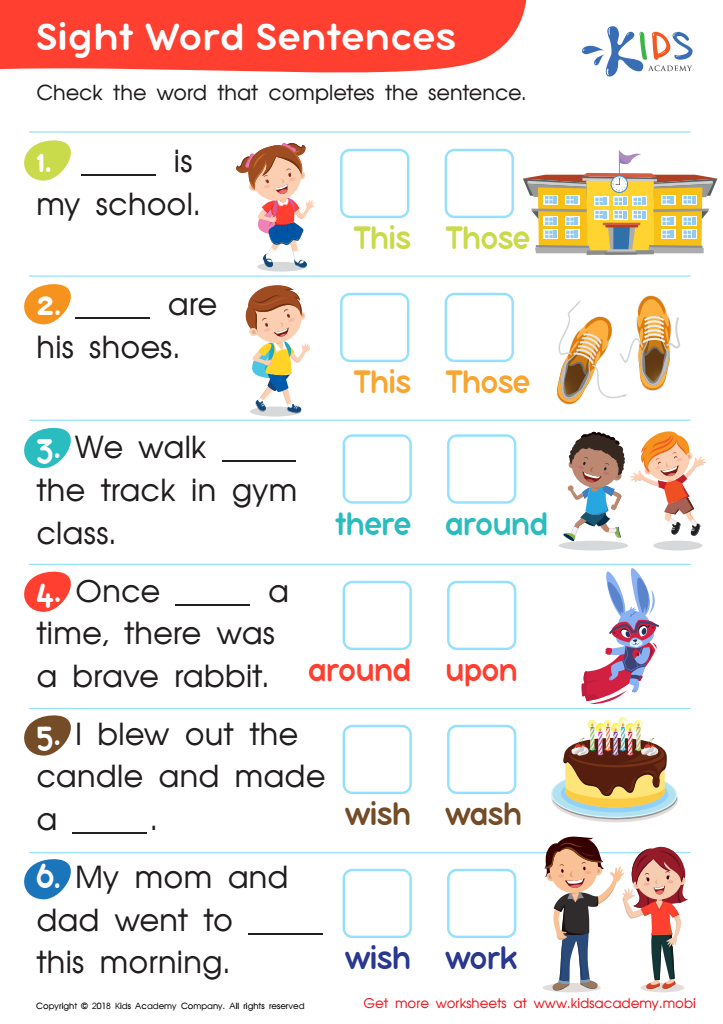
Improve reading fluency! Have students fill in the blank with the correct sight word to complete sentences. Sight words are often tricky to decode - they don't follow phonics or spelling rules. To read smoothly, young learners must know them by memory. Use this printable and help kids master their sight words!
Sight Word Sentences Worksheet
Worksheet
Join Kids Academy for Free
Who is primarily going to use this learning content?








Sight word recognition plays a crucial role in the literacy development of children aged 5-8. Parents and teachers should prioritize it because these words are frequently encountered in texts and often cannot be easily sounded out phonetically. Mastering sight words helps children read more fluently and with greater comprehension, making reading a more enjoyable and less frustrating activity.
First, sight word recognition aids in the development of reading fluency. When children can quickly recognize common words, they can read more smoothly and focus on understanding the story or information, rather than getting bogged down by individual words. This fluency is essential for the transition from learning to read to reading to learn.
Second, familiarity with sight words builds confidence. As children recognize more words, they become more enthusiastic about reading, leading to more practice. This positive reinforcement loop is vital for continuous improvement in reading skills.
Lastly, sight word recognition complements other reading skills, such as phonics and context clues, by providing a foundation of commonly used words that can serve as anchors in sentences, facilitating overall reading and comprehension.
Given these benefits, both parents and teachers should emphasize sight word learning through engaging activities, such as flashcards, reading games, and repetitive practice. Ensuring children acquire a solid grasp of sight words sets them on a path to successful reading and academic achievement.