Phonics Skills Normal Tracing Words Worksheets for Ages 5-8
3 filtered results
-
From - To
Boost your child's phonics skills with our Normal Tracing Words Worksheets, specially designed for ages 5-8! These engaging worksheets help kids practice letter recognition and sound-letter correspondence through tracing exercises. As children trace various high-frequency words, they improve their writing and spelling abilities while reinforcing essential phonics concepts. Each worksheet offers colorful illustrations and fun activities that make learning enjoyable. Perfect for home or classroom use, these resources support early literacy development and help young learners gain confidence in their reading and writing skills. Explore our range of phonics tracing worksheets and watch your child's abilities soar!
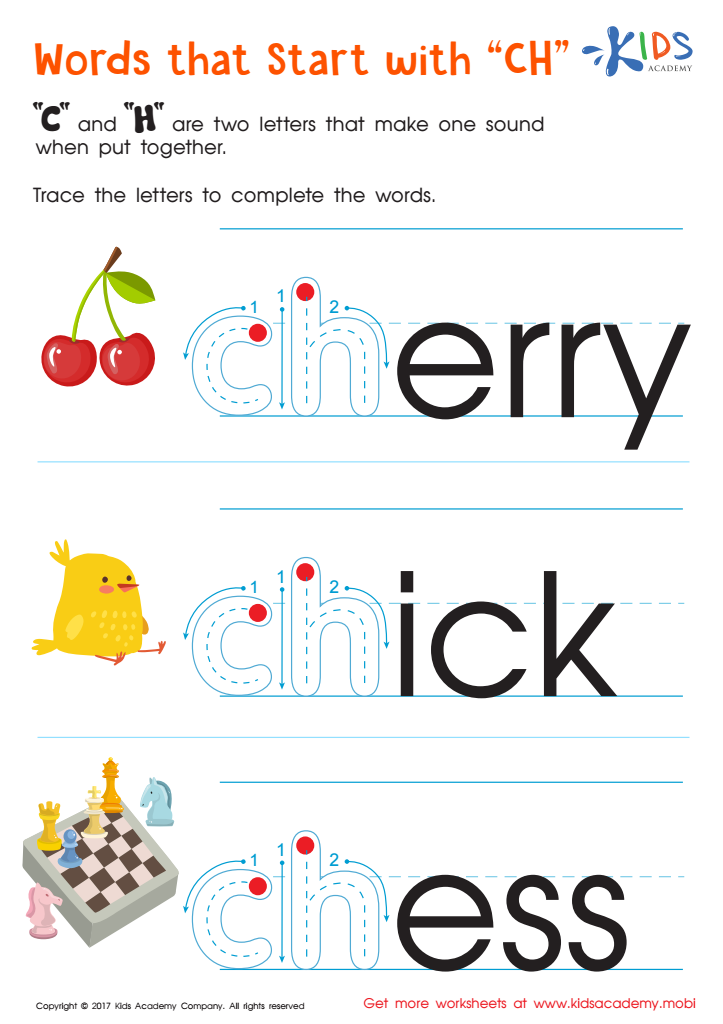
Words That Start with "ch" Spelling Worksheet
 Assign to My Students
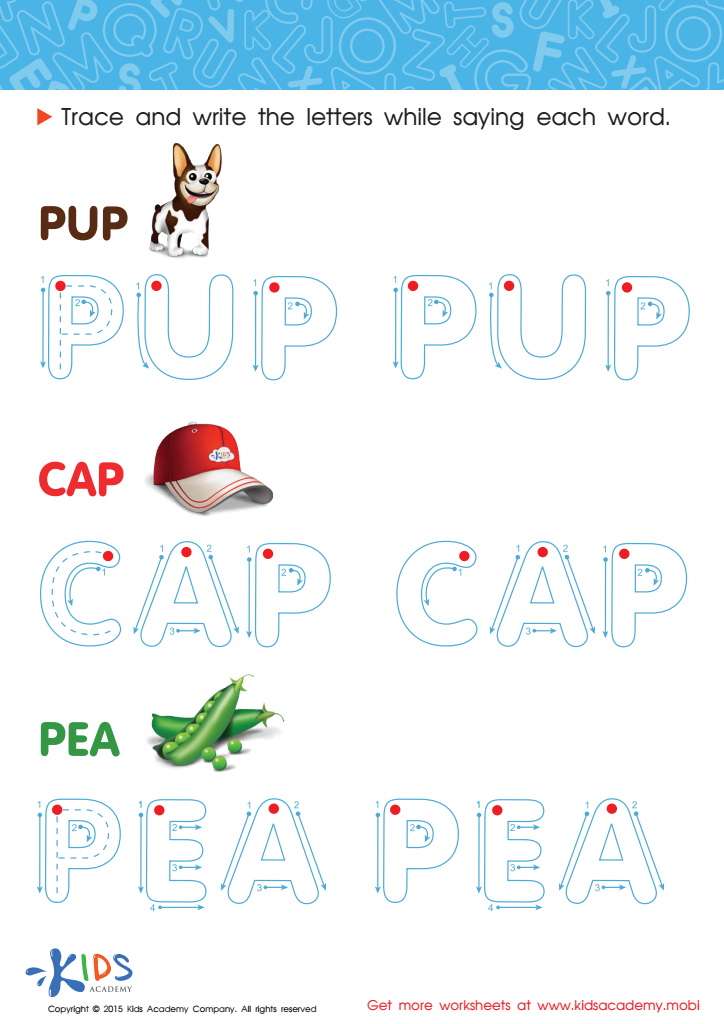
A Pup, a Cap and a Pea Spelling Worksheet
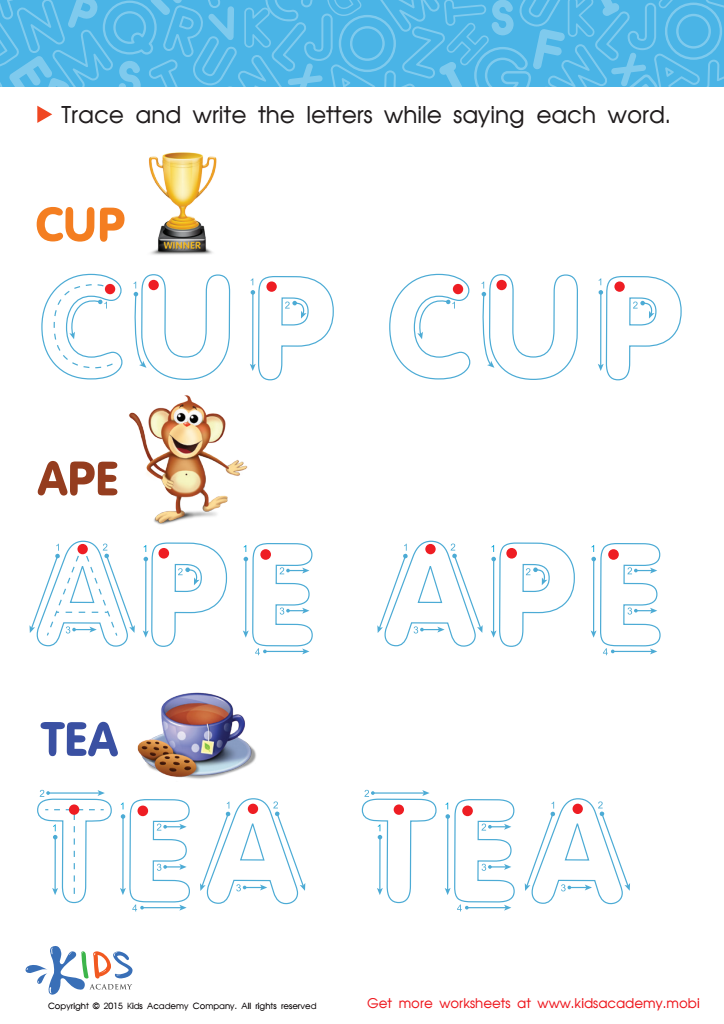
A Cup, an Ape and Tea Spelling Worksheet








Parents and teachers should prioritize phonics skills and normal tracing words for children aged 5-8 because these foundational skills significantly impact reading and writing development. Phonics entails understanding the relationship between sounds and letters, which enables children to decode words. By mastering phonics, children gain the ability to read independently, fostering a love for literature and learning.
Tracing words strengthens hand-eye coordination and fine motor skills, essential for writing. As children trace letters and words, they reinforce their understanding of letter formation, which aids in developing neat and legible handwriting. This practice complements phonics instruction, as they engage both auditory and visual learning styles.
Moreover, proficiency in phonics enhances vocabulary acquisition and comprehension skills. As children read phonetic words successfully, they become more confident and motivated to tackle more complex texts. Early mastery of these skills can reduce future learning difficulties and instill a positive attitude toward literacy.
By emphasizing phonics and tracing words, parents and teachers can create a strong literacy foundation that benefits children's overall academic success and communication abilities in the long term. Ultimately, fostering these skills sets children on a path to lifelong learning and achievement.