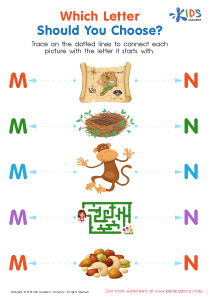
Letter recognition Normal Lowercase/Small Letters Worksheets for Ages 5-9
10 filtered results
-
From - To
Discover engaging "Letter Recognition Normal Lowercase/Small Letters Worksheets for Ages 5-9" at Kids Academy. These expertly designed printables help young learners master the alphabet by recognizing and writing lowercase letters. Perfect for both classroom and home use, our worksheets offer a variety of activities, from tracing letters to matching them with images. Tailored to enhance fine motor skills, phonics, and early reading proficiency, these resources provide a fun, educational experience. Ideal for ages 5-9, they ensure kids build a strong foundation in literacy while enjoying the process. Visit the link to explore and download these valuable learning tools today!
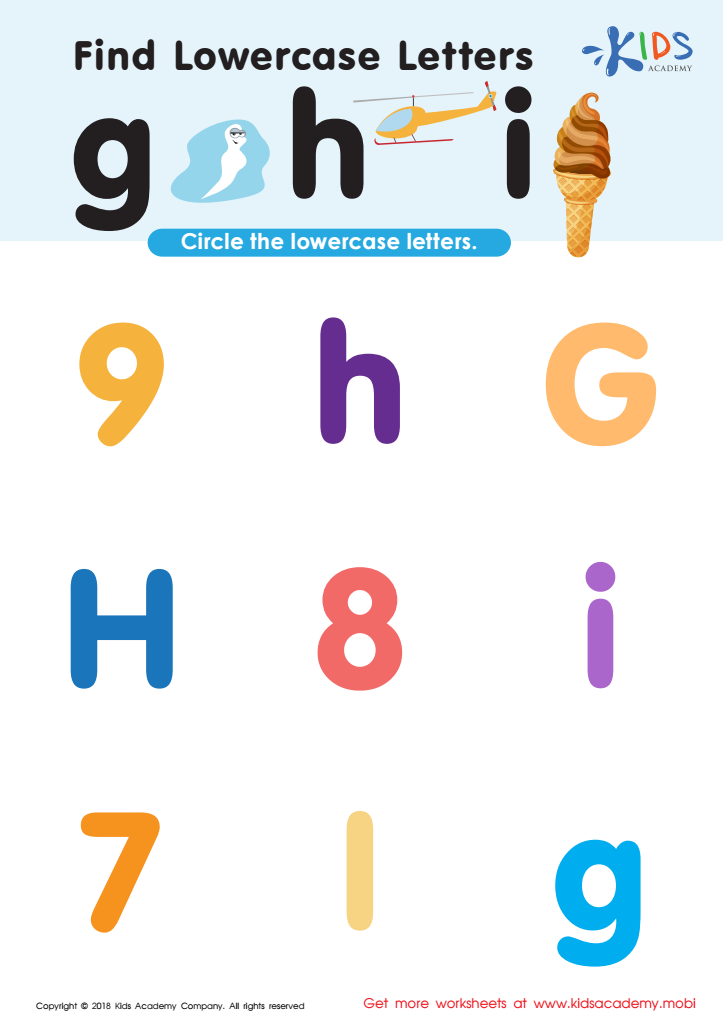
Find Lowercase Letters g h i Worksheet
 Assign to My Students
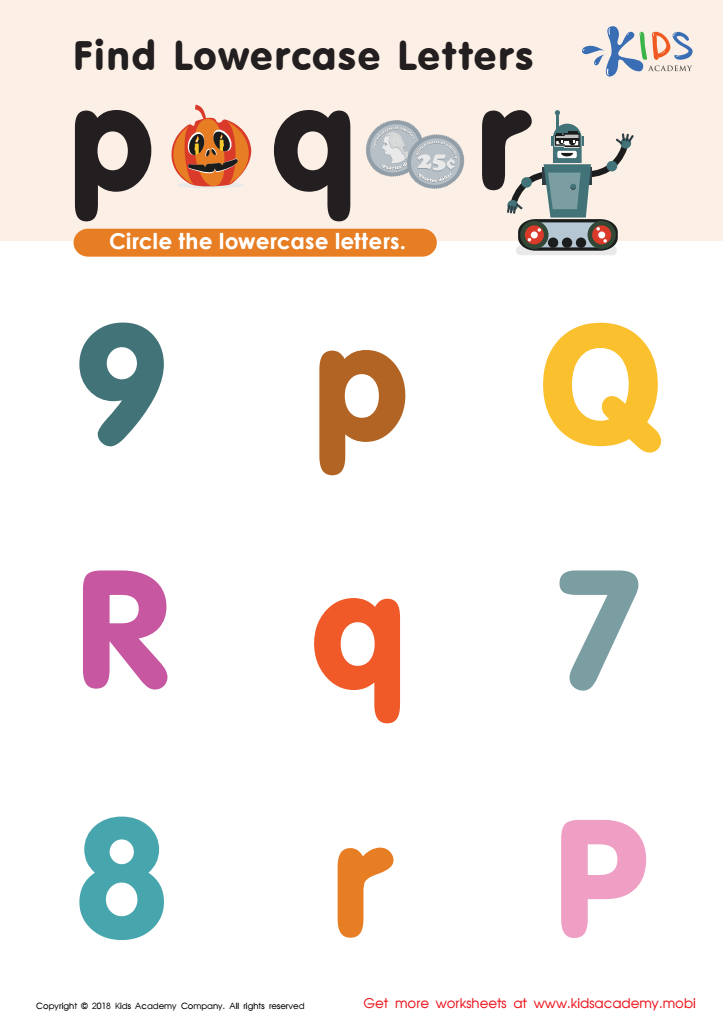
Find lowercase Letters p q r Worksheet
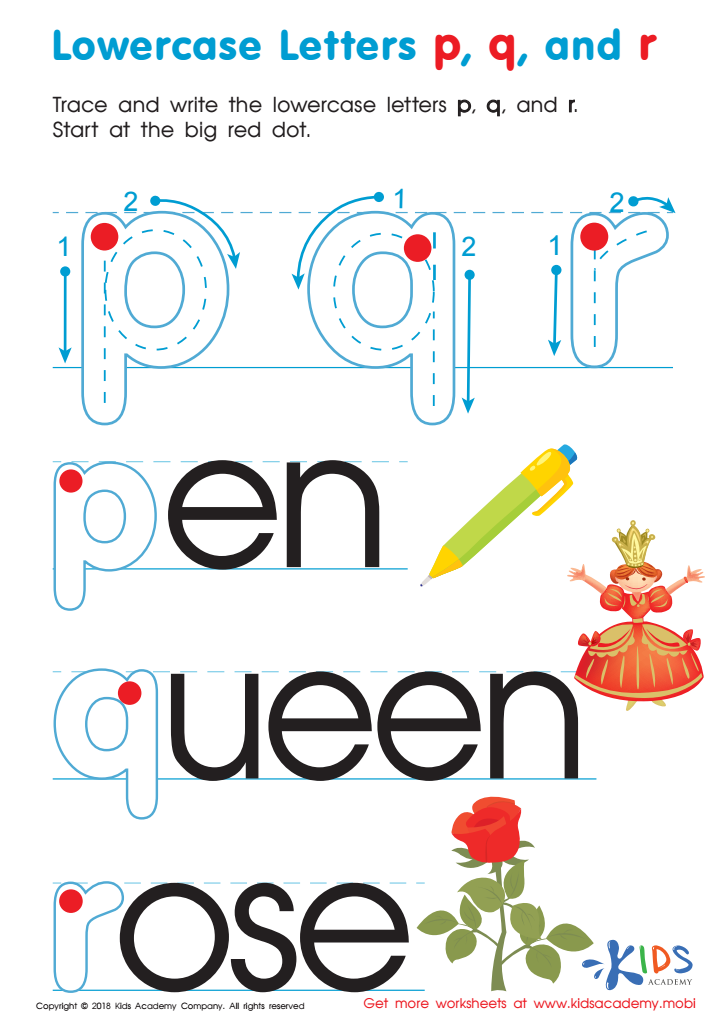
Lowercase Letters p q r Worksheet
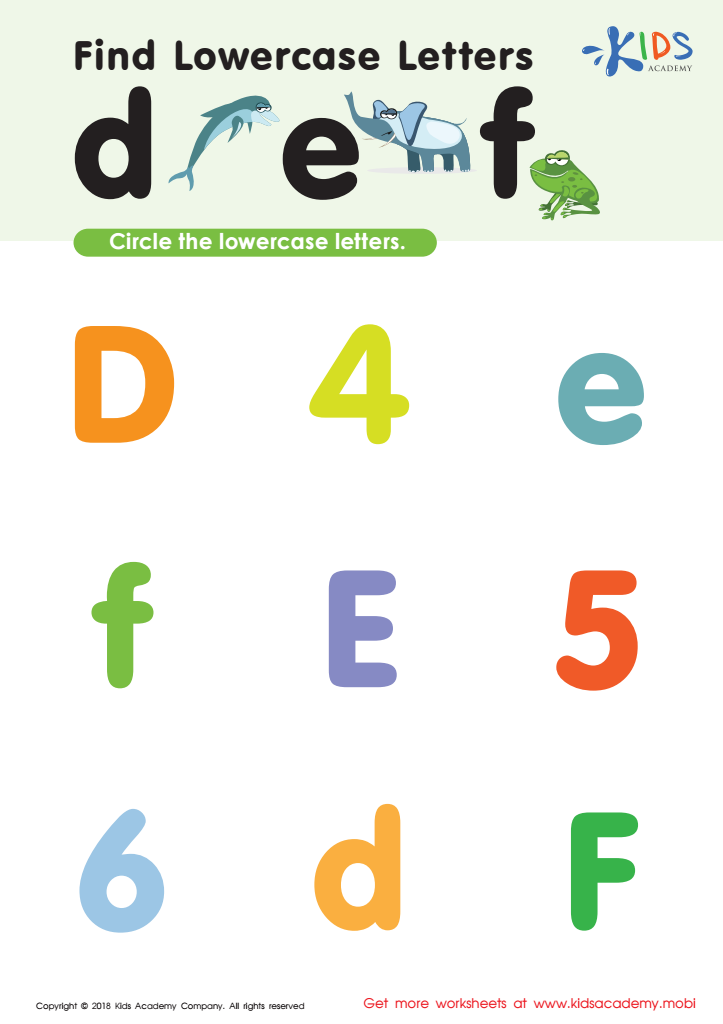
Find Lowercase Letters d e f Worksheet
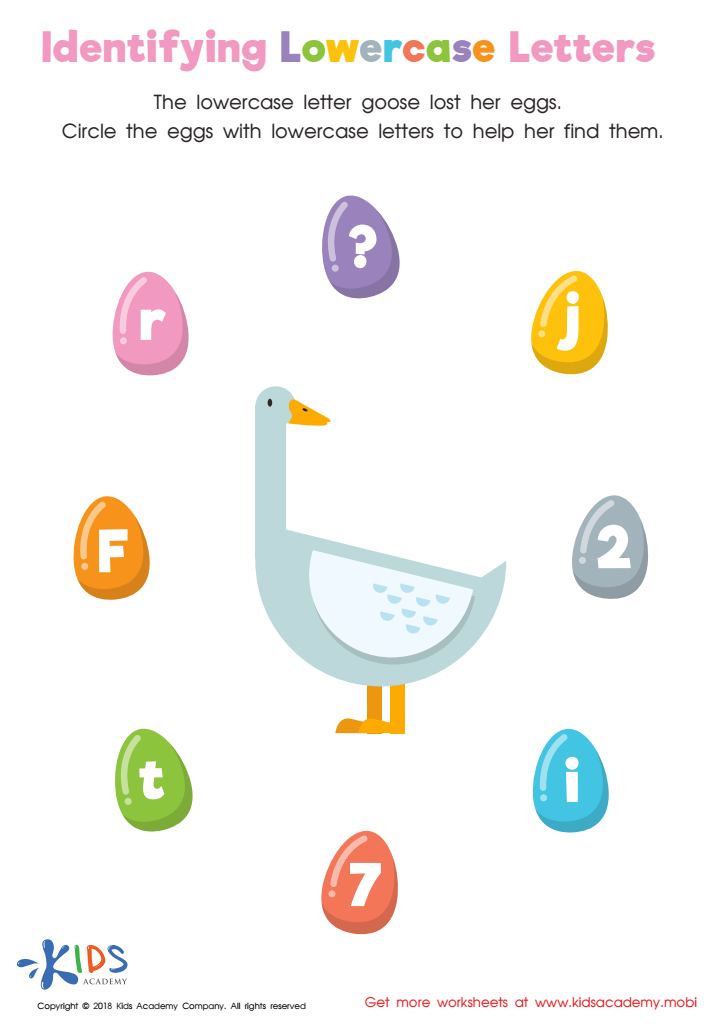
Identifying Lowercase Letters Worksheet
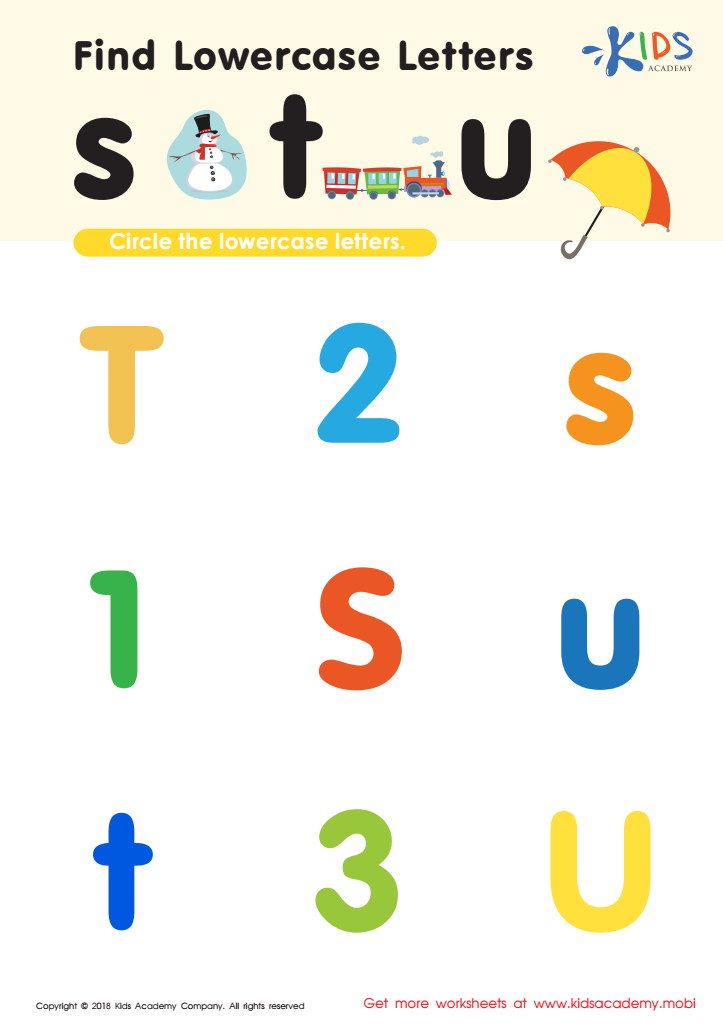
Find lowercase Letters s t u Worksheet
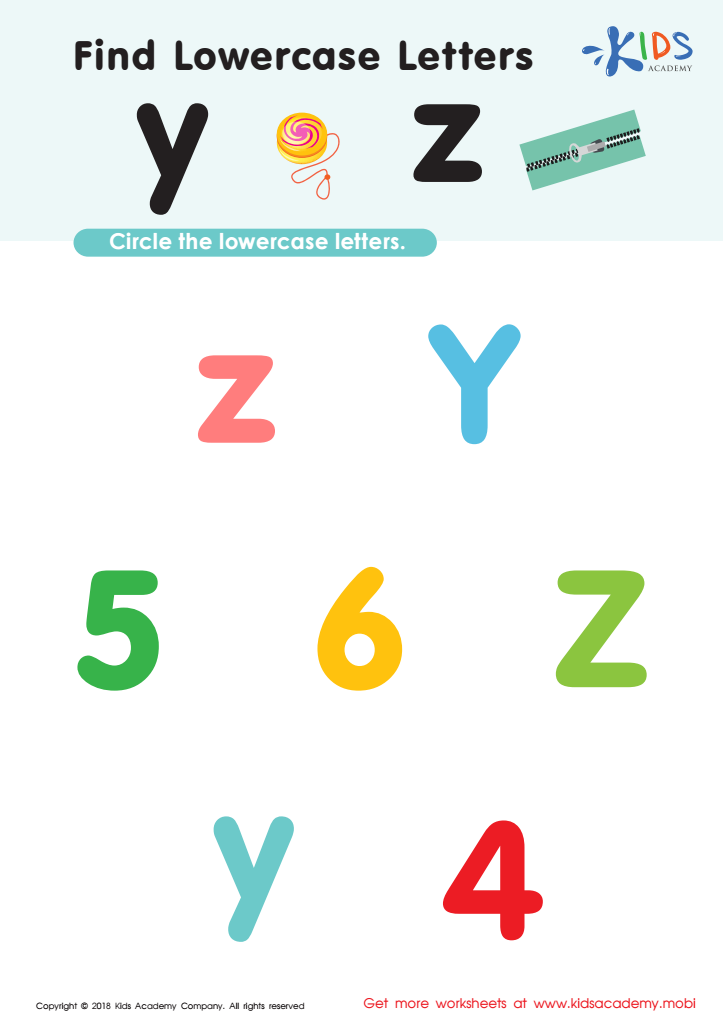
Find Lowercase Letters y z Worksheet
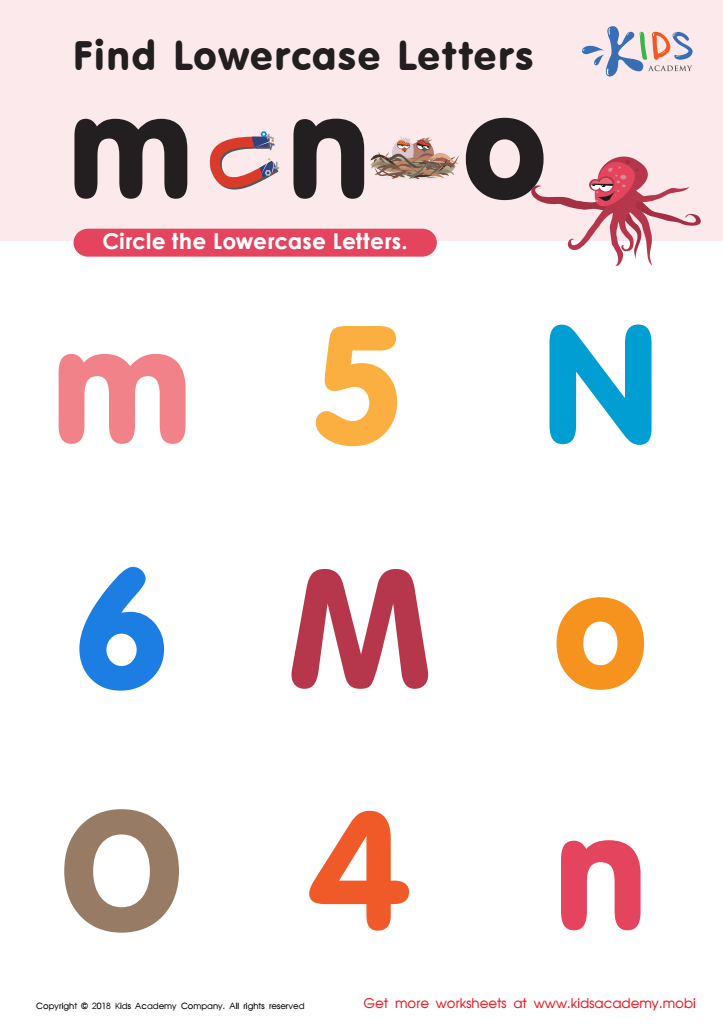
Find Lowercase Letters m n o Worksheet
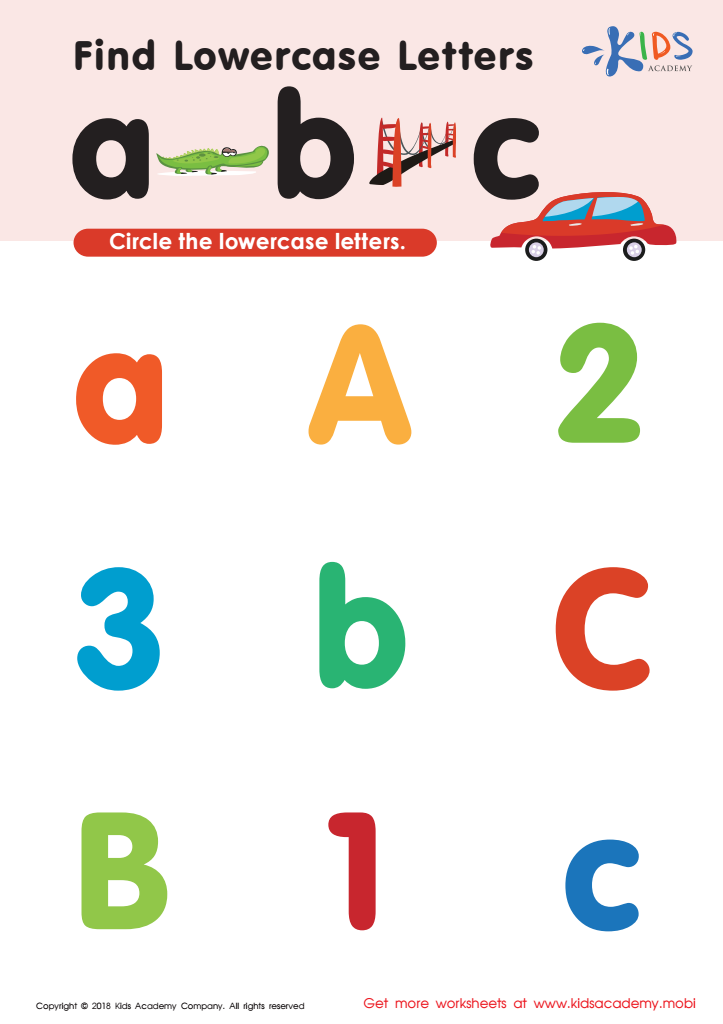
Find lowercase letters a b c Worksheet
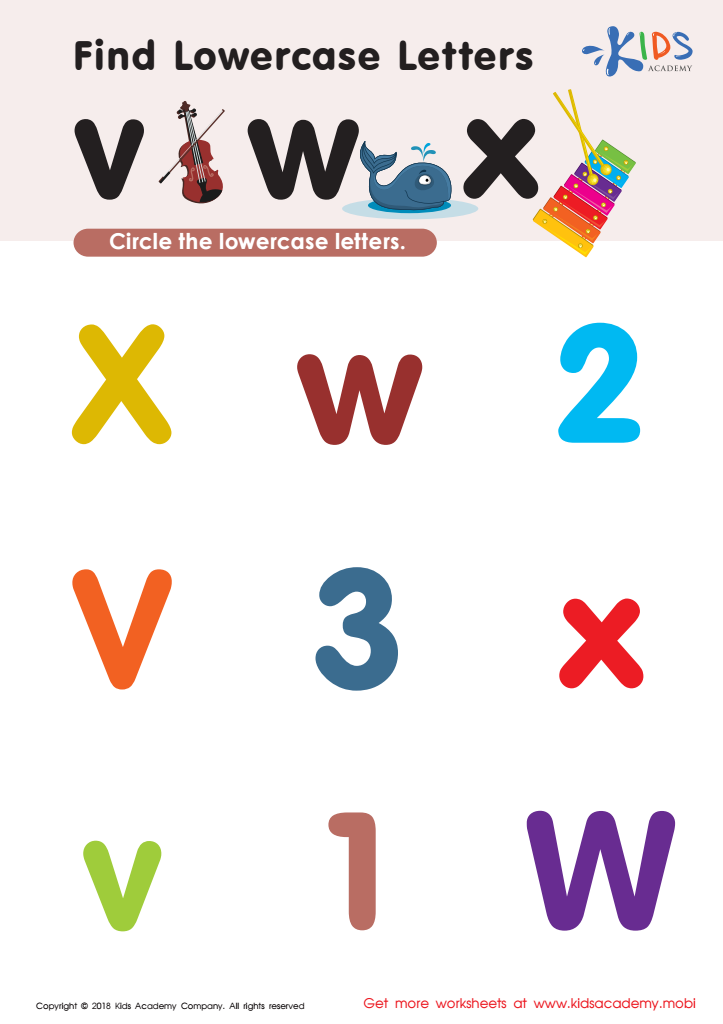
Find Lowercase Letters v w x Worksheet


Letter recognition is a foundational skill crucial for early literacy development in children aged 5-9. This ability to identify normal lowercase or small letters directly impacts a child’s success in reading and writing, which are essential components of their educational journey.
Parents and teachers should care about letter recognition because it sets the stage for decoding words. When children can effortlessly recognize letters, they are more likely to smoothly blend these letters to form words, a key step in early reading. Additionally, early proficiency in letter recognition supports letter-sound correspondence, which enhances phonemic awareness—a critical predictor of future reading achievement.
Furthermore, confident letter recognition can significantly boost a child’s writing skills. Being able to distinguish and reproduce lowercase letters accurately helps with writing fluency, thereby enabling children to express their thoughts coherently and effectively.
Lastly, fostering strong letter recognition skills can enhance a child’s overall cognitive development. It improves visual processing and fine motor skills, both of which contribute to better academic performance. Encouraging letter recognition at this critical age not only aids immediate educational goals but also fosters a lifelong love for reading and learning, providing a strong foundation for future literacy and academic success. Regular practice in playful and engaging ways can make this learning process enjoyable and effective.