Cognitive Development Normal Phonics Worksheets for Ages 5-9
6 filtered results
-
From - To
Our "Cognitive Development Normal Phonics Worksheets for Ages 5-9" focus on nurturing cognitive skills through practical phonics exercises. Designed specifically for young learners, these worksheets help children recognize letters, understand sounds, and form words, enriching both literacy and cognitive development. Activities are engaging and age-appropriate, ensuring that learning phonics is both effective and enjoyable. With a blend of visual and auditory tasks, kids can improve their reading abilities while also boosting their critical thinking and problem-solving skills. Perfect for a home or school setting, our worksheets are an invaluable resource for early education.
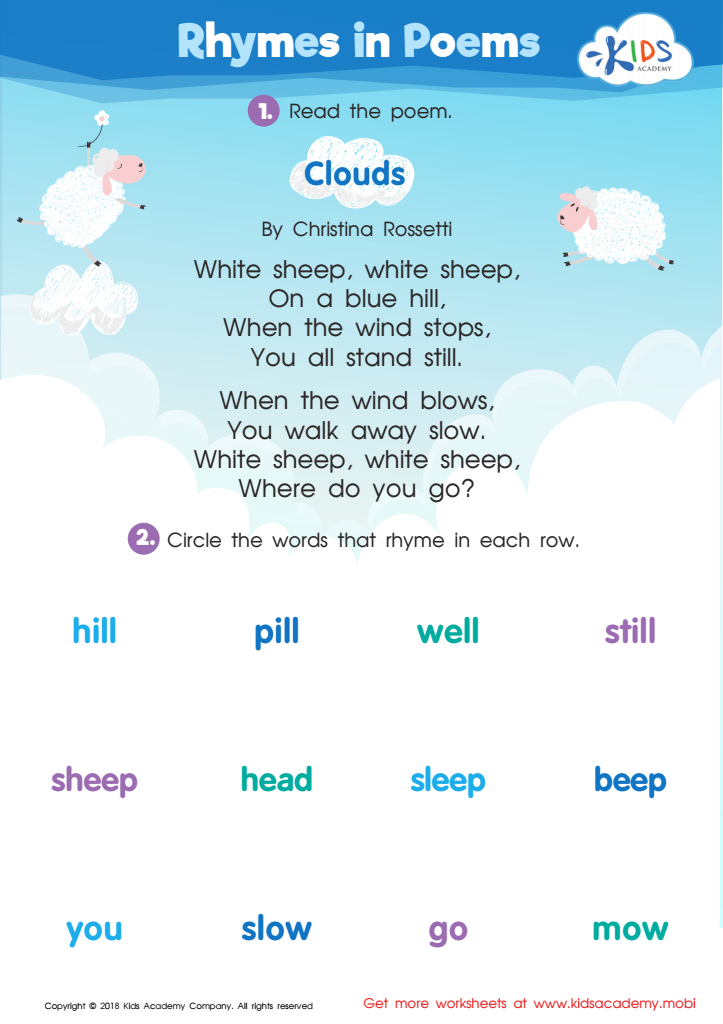
Rhymes in Poems Worksheet
 Assign to My Students
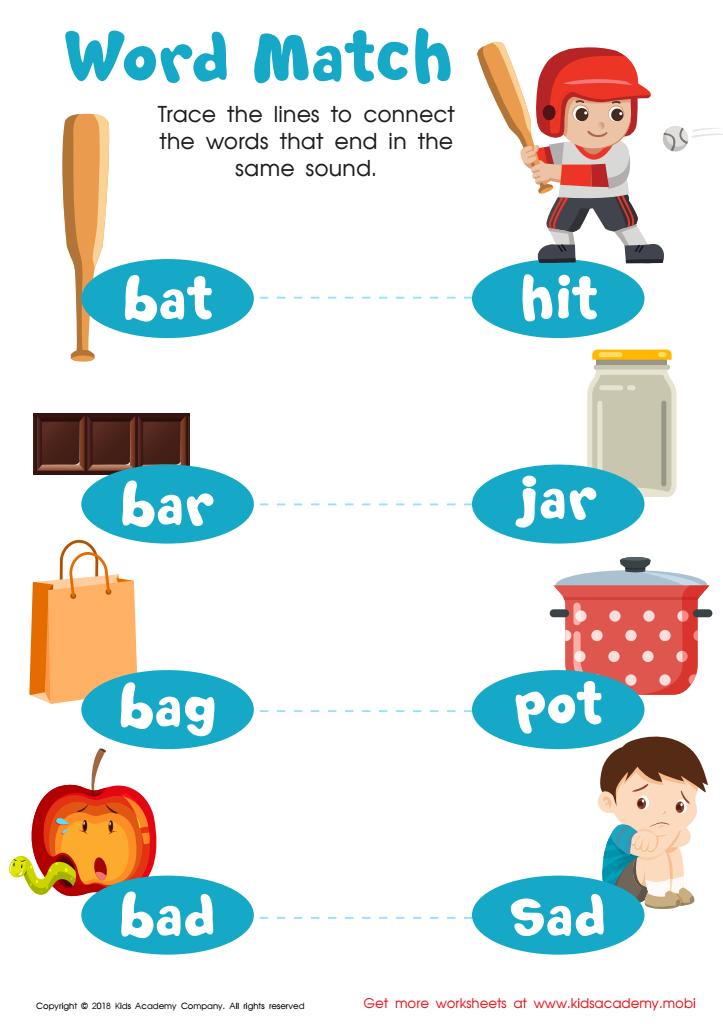
Word Match Reading Worksheet
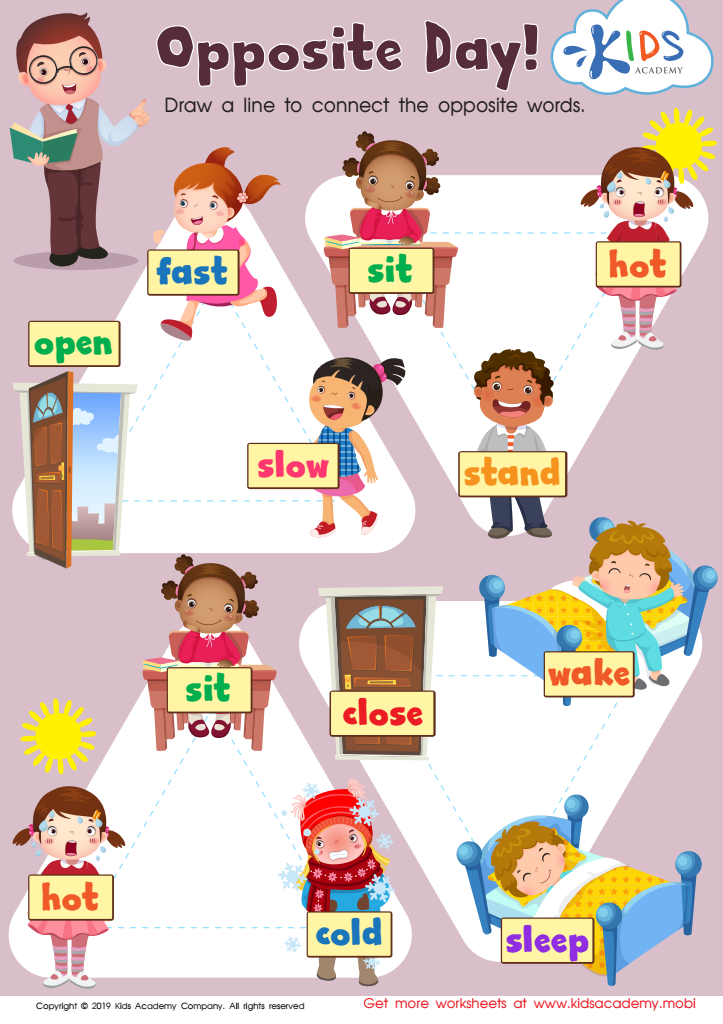
Opposite Day Worksheet
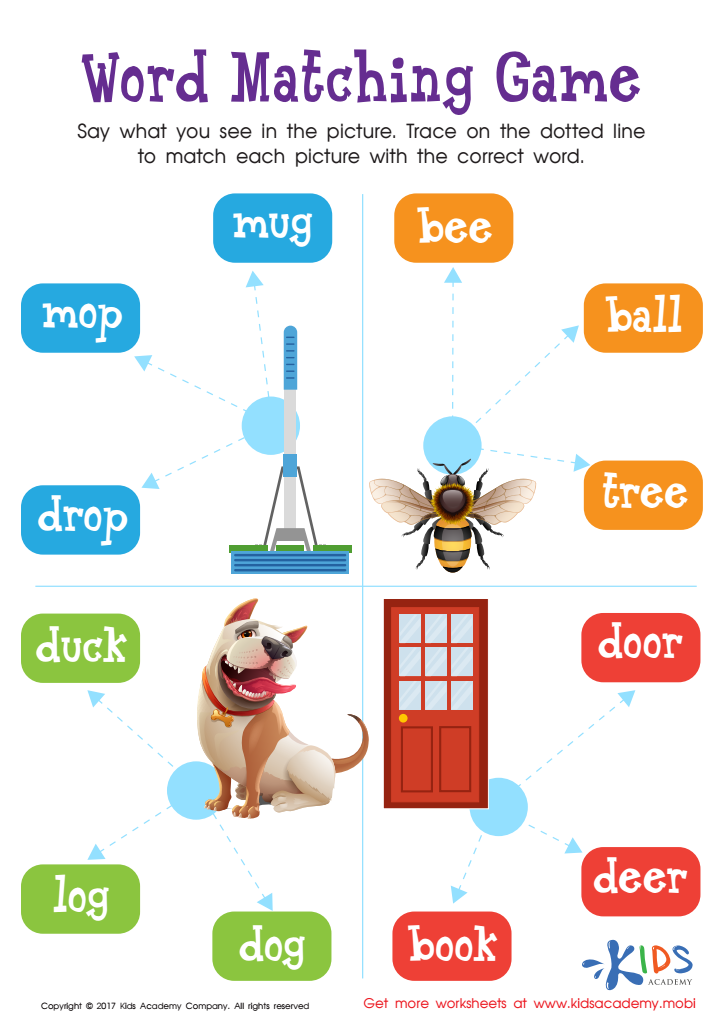
Word Matching Game Worksheet
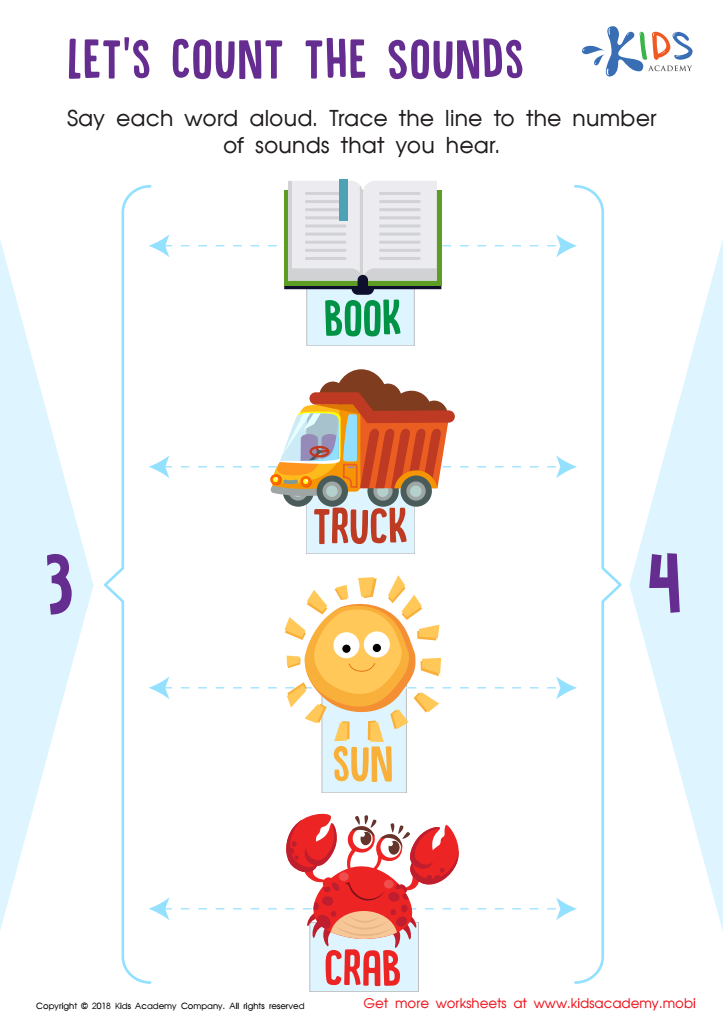
Let's Count the Sounds Worksheet
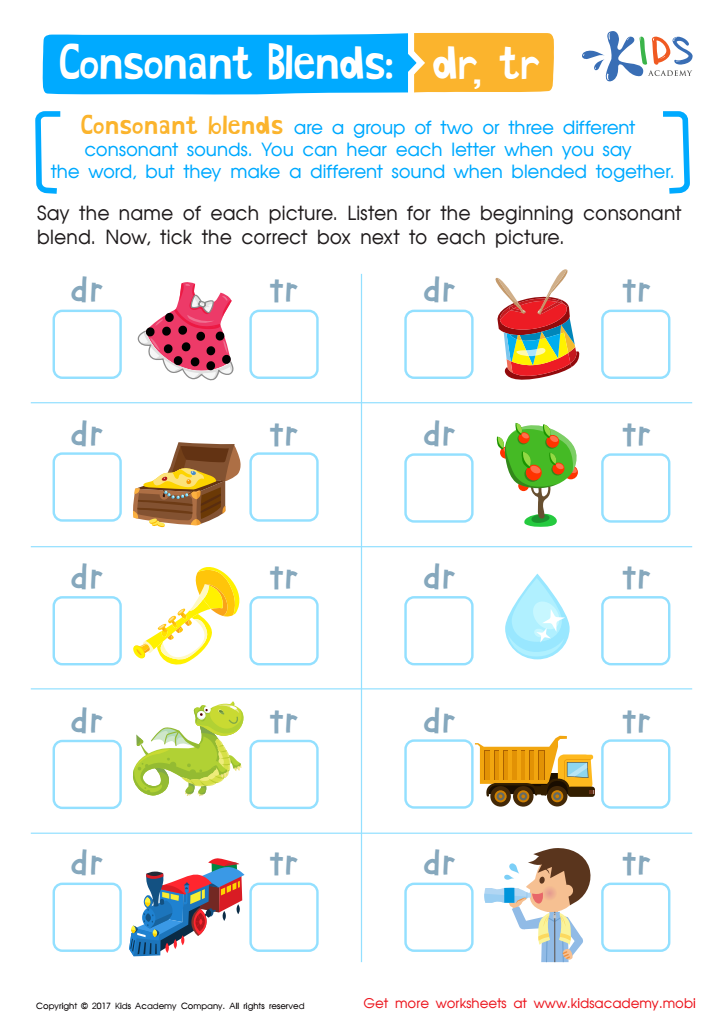
Consonant Blends: "Dr" and "Tr" Printable








Cognitive development and normal phonics for children aged 5-9 are crucial because they form the foundation for all future learning. At these ages, children's brains are rapidly developing, and their ability to process information is increasing. Cognitive development during these formative years helps children improve their thinking, understanding, learning, and problem-solving skills. This impacts not only academic success but also social and emotional well-being.
Phonics, on the other hand, is directly related to reading ability. Understanding how letters correlate with sounds enables children to decode words accurately, which is the first step toward fluent reading. Early proficiency in phonics leads to better reading comprehension, enabling students to access information and learn about various subjects more effectively.
When parents and teachers focus on cognitive development and normal phonics, they are ensuring that children have the necessary tools to succeed in more complex tasks later on, such as critical thinking and analytical reasoning. Furthermore, a strong foundation in these areas builds confidence, reduces frustration related to learning difficulties, and fosters a lifelong love of learning. Support from both parents and teachers during these crucial years creates an interconnected support system that enhances a child's educational experience and overall development.







