
Letter recognition Normal Phonics Worksheets for Ages 5-9
19 filtered results
Difficulty Level
Grade
Age
-
From - To
Subject
Activity
Standards
Help your child master letter recognition with our engaging Normal Phonics Worksheets tailored for ages 5-9. Designed by early education experts, these printable activities enhance letter-sound relationships, paving the way for fluent reading and spelling skills. Through a variety of interactive exercises, your child will enjoy tracing, matching, and identifying letters, solidifying their understanding of the alphabet. Suitable for young learners, our worksheets provide the perfect balance of fun and education, fostering a love for reading from an early age. Make learning seamless and enjoyable with these essential phonics sheets. Download yours today and watch your child's skills soar!
Favorites
With answer key
Interactive
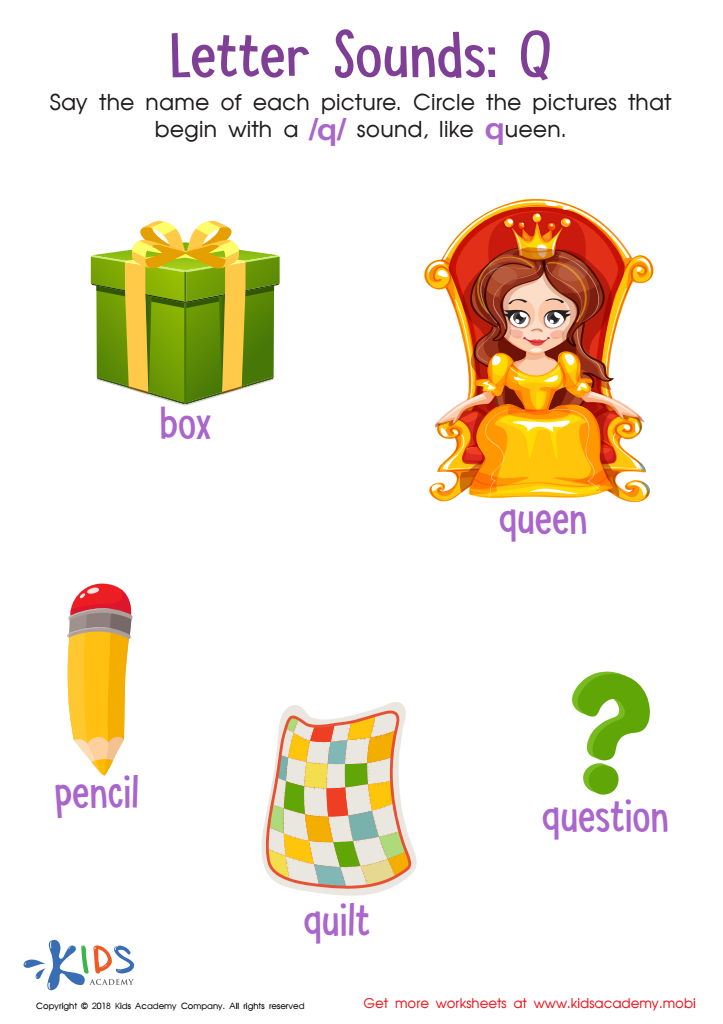
Letter Q Sounds Worksheet
Kids can get confused between "K" and "Q" sounds. Help them learn with this phonics worksheet. They'll name each image and read the word underneath. Point out that words with "Q" also have a "U" which affects how it sounds. Have them circle the matching pictures and watch as they learn this unique letter sound.
Letter Q Sounds Worksheet
Worksheet
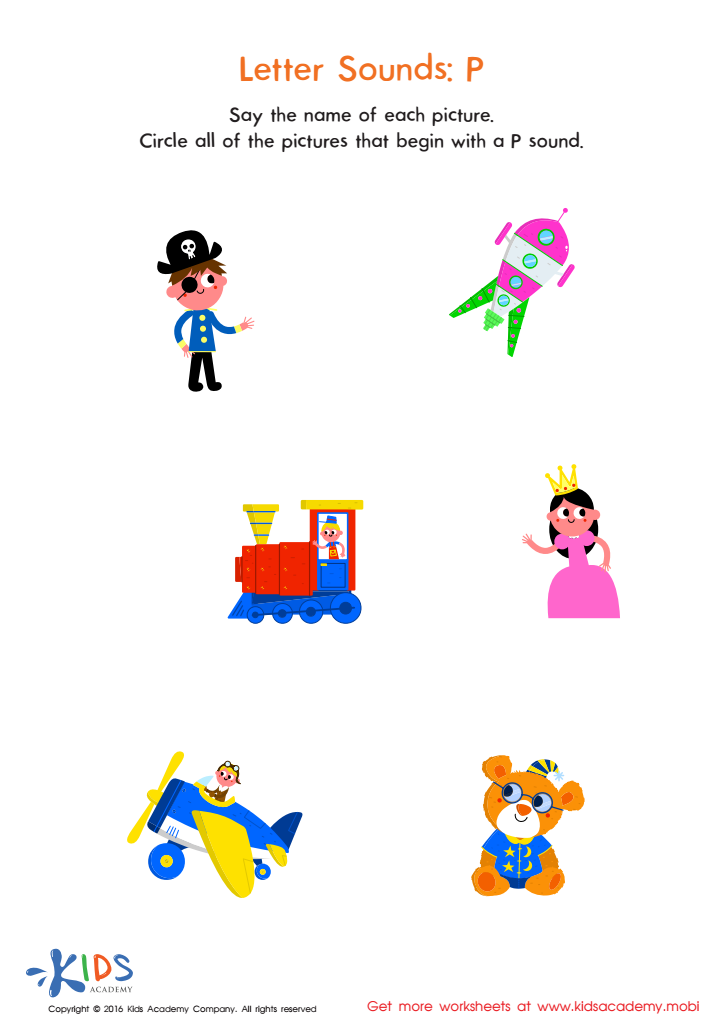
Letter P Sound Worksheet
Think P! Kids practice phonics with this fun letter P worksheet. With delightful illustrations, they'll sound out simple words and get closer to reading.
Letter P Sound Worksheet
Worksheet
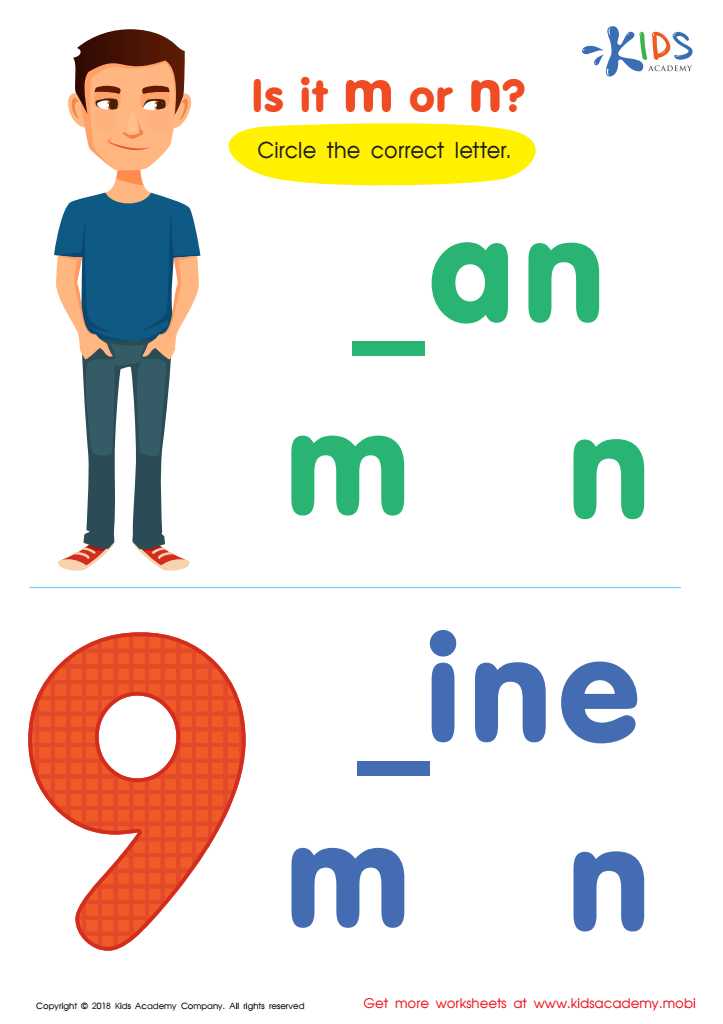
Is It m or n? Worksheet
Help your child circle the letter that begins the words "man" and "nine" in the picture. This is a great way for them to learn the alphabet.
Is It m or n? Worksheet
Worksheet
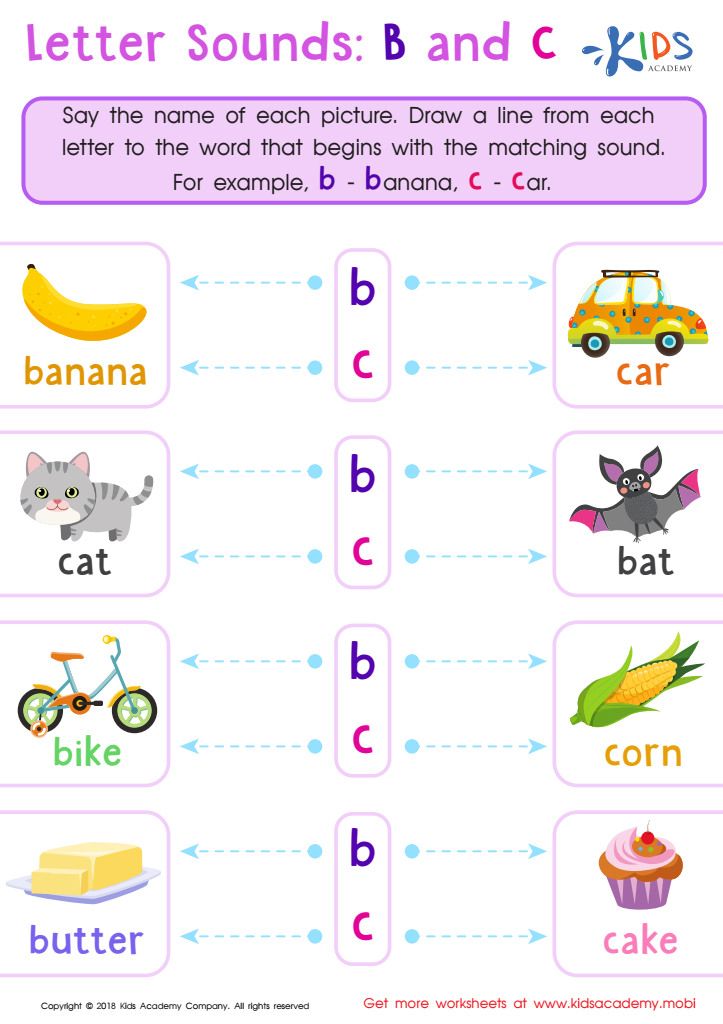
Letter B and C Sounds Worksheet
This fun worksheet offers bright, engaging pictures and helps kids learn to distinguish between the sounds of "B" and "C". With the use of pictures and familiar items, kids will trace lines to the correct initial consonant sound, while also developing fine-motor skills. It's a great way to build decoding ability!
Letter B and C Sounds Worksheet
Worksheet
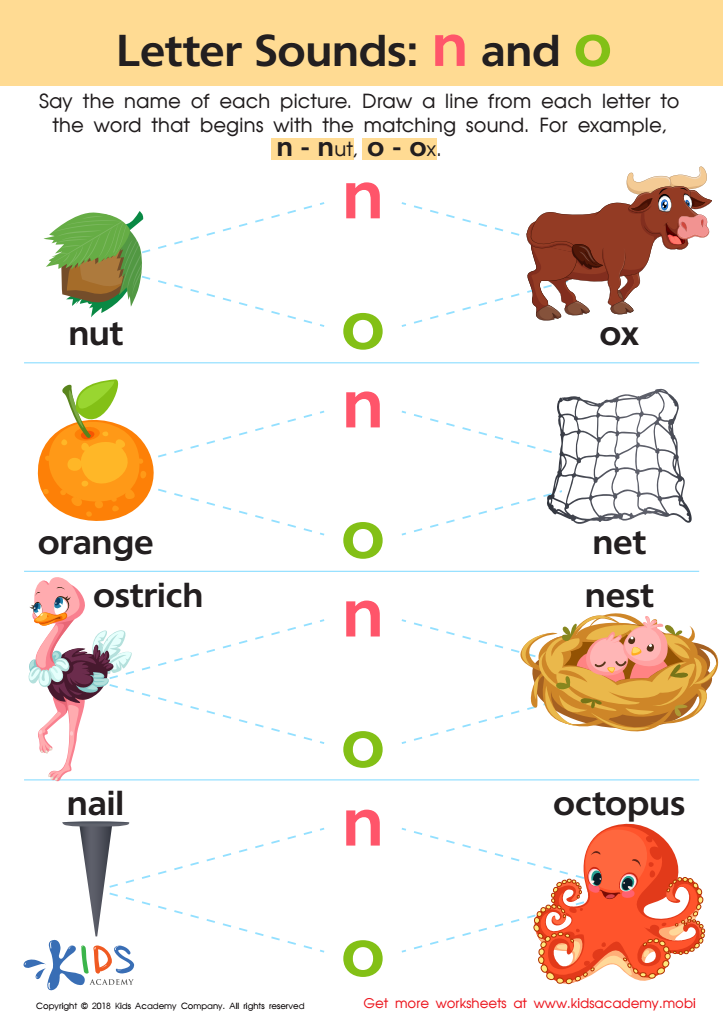
Letter N and O Sounds Worksheet
Help your preschooler learn to recognize the N and O letter sounds with this vibrant worksheet from Kids Academy! Have them say the name of each picture and listen for N or O. Trace the dotted line from letter to its match to complete the phonics review. It's a fun way to help them master the difference between the two sounds!
Letter N and O Sounds Worksheet
Worksheet
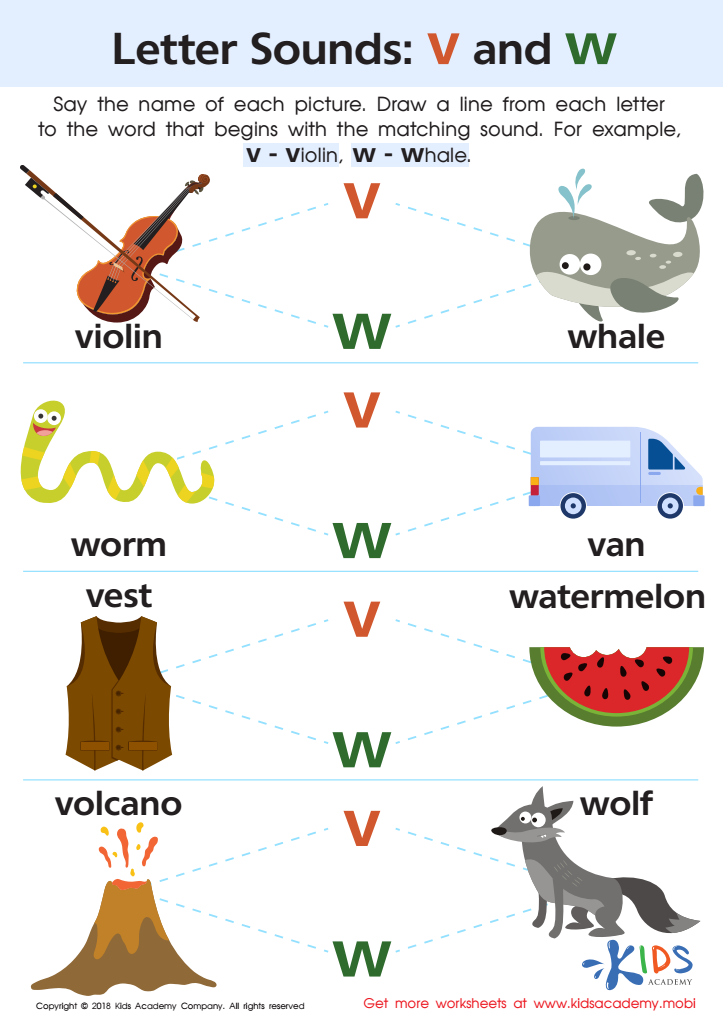
Letter V and W Sounds Worksheet
Help your child master the sounds of W & V while completing this fun phonics worksheet. Have them trace the dotted line from letter to picture while saying words like "worm", "violin" and "van" aloud to notice how each word begins with either W or V. Listen and pay attention to the pronunciation to complete the practice.
Letter V and W Sounds Worksheet
Worksheet
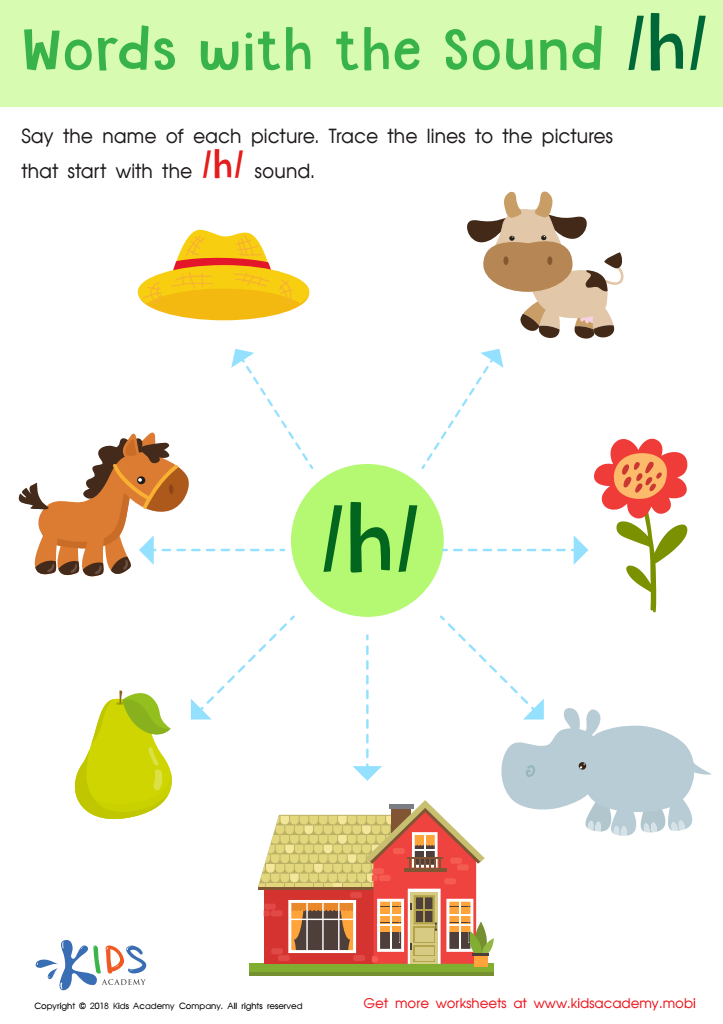
Words with sound h Reading Worksheet
The letter H can often be heard in words! Check your child's knowledge with an engaging worksheet from Kids Academy. Ask them to go around a circle and name each image aloud. Listen for the starting sound and trace the line from the middle letter to the images with the sound. This is a great way to practice phonics!
Words with sound h Reading Worksheet
Worksheet
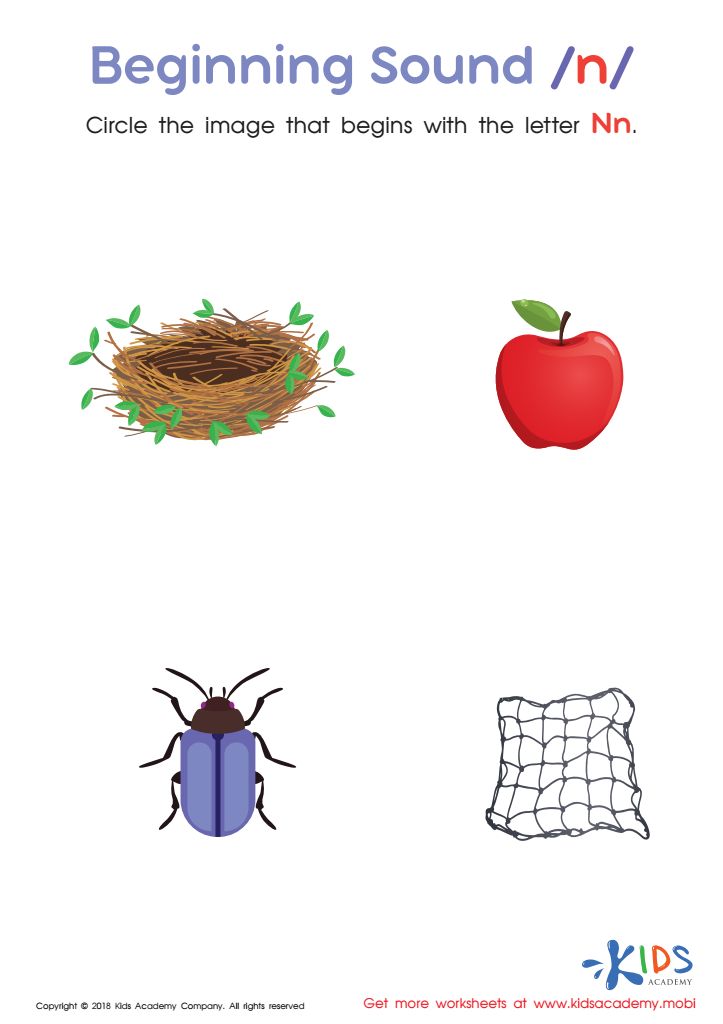
Beginning Sound «n» Worksheet
Help your emerging reader learn the initial «n» sound with this free PDF worksheet! Strengthen fine motor skills by tracing circles around words beginning with «n». Pictures are clear and engaging, giving beginning Phonics learners the right amount of practice and the confidence to succeed.
Beginning Sound «n» Worksheet
Worksheet
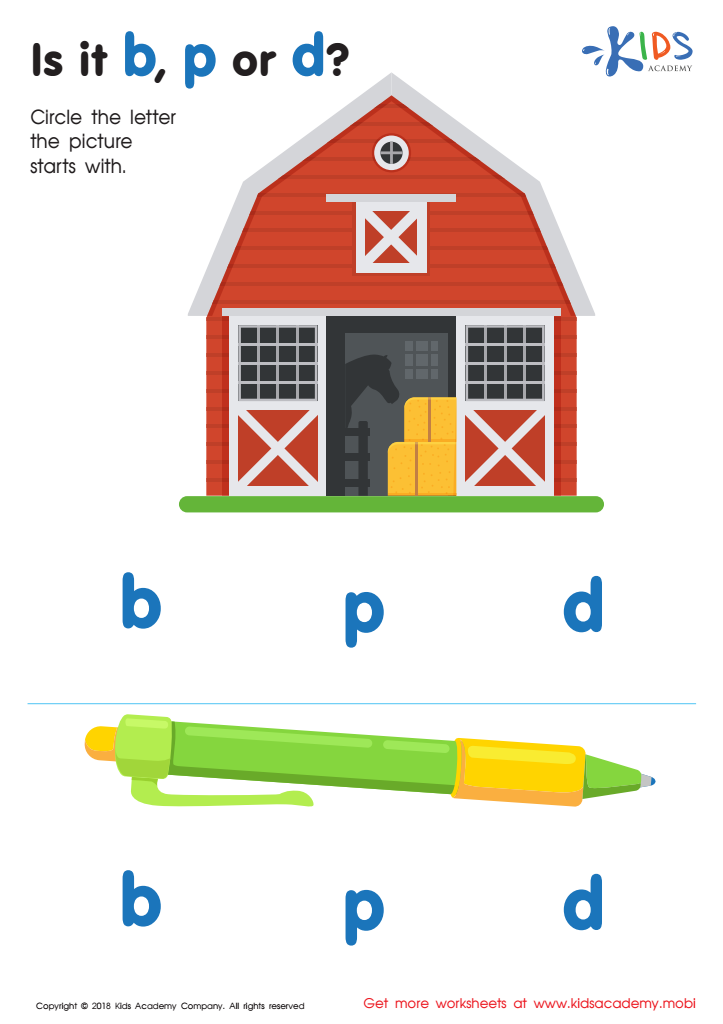
Is it b, p or d? Worksheet
Test your child's identification skills with this worksheet. They must identify the image and then circle the letter it begins with: 'b', 'p', or 'd' (e.g. an image of the sun would mean they circle 's').
Is it b, p or d? Worksheet
Worksheet
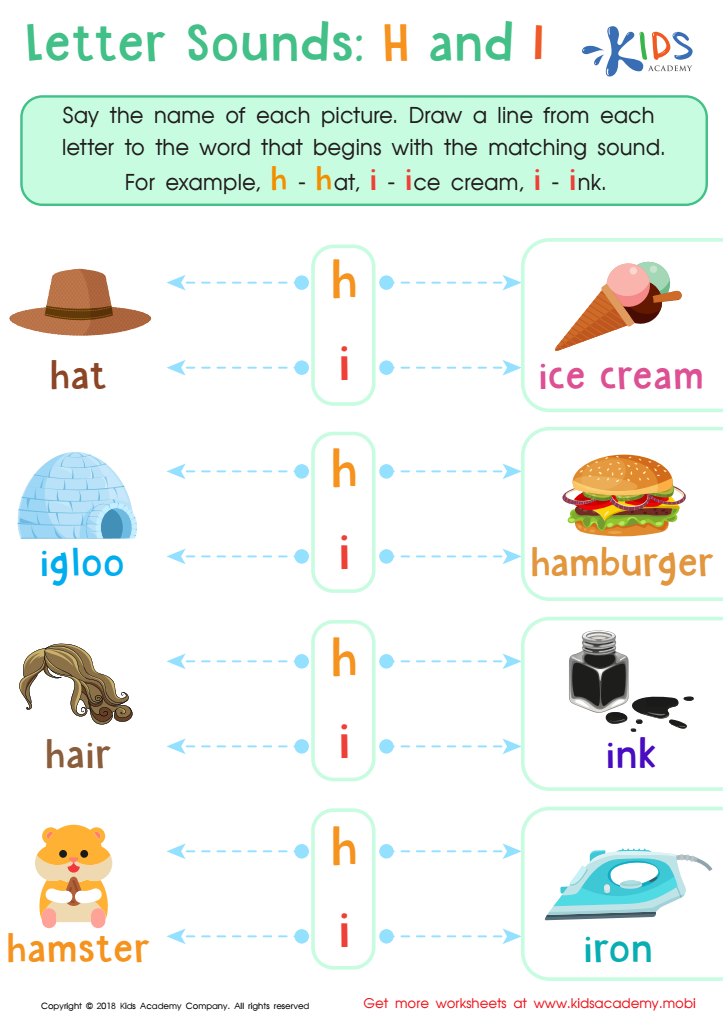
Letter H and I Sounds Worksheet
Preschoolers will have fun and develop reading and writing skills at the same time! They'll use pictures to recognize familiar words and differentiate between 'H' and 'I' sounds. Then they'll trace lines to connect each sound to the picture, improving their fine-motor skills. Bright and cheerful visuals make learning a breeze!
Letter H and I Sounds Worksheet
Worksheet
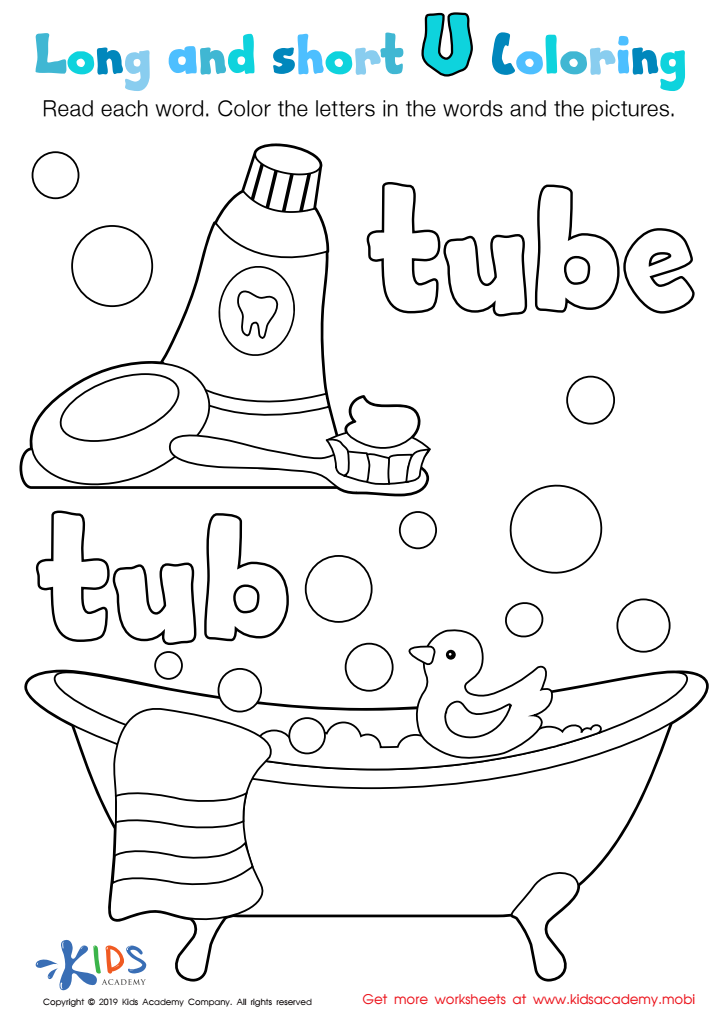
Long and Short U Worksheet
Revised: Spice up your lesson on long and short vowels with this fun printout! Kids read the words "tube" and "tub," then reinforce the sound by coloring in the words and pictures. It's a great way to make phonics class enjoyable!
Download (PDF)
 Assign to My Students
Assign to My Students
Long and Short U Worksheet
Worksheet
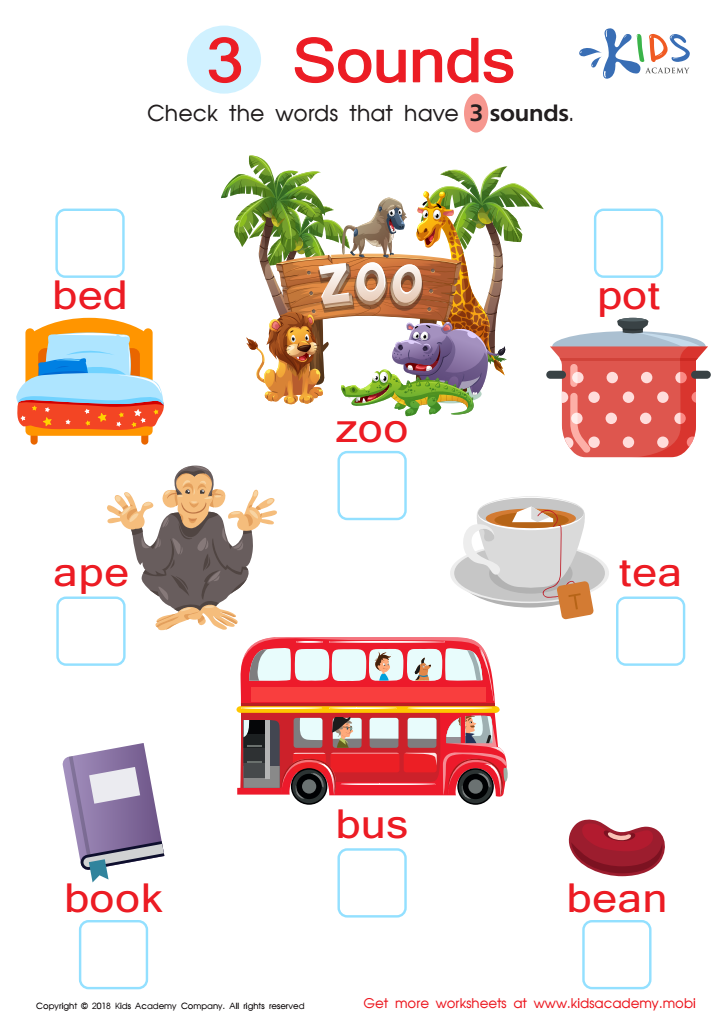
3 Sounds Worksheet
Kids will love learning with this free, colorful worksheet. It's full of familiar words they can name and sound out with three distinct sounds. This helps build decoding skills, plus they get to check off words they read. It's a fun way to teach children to identify and use sounds.
3 Sounds Worksheet
Worksheet
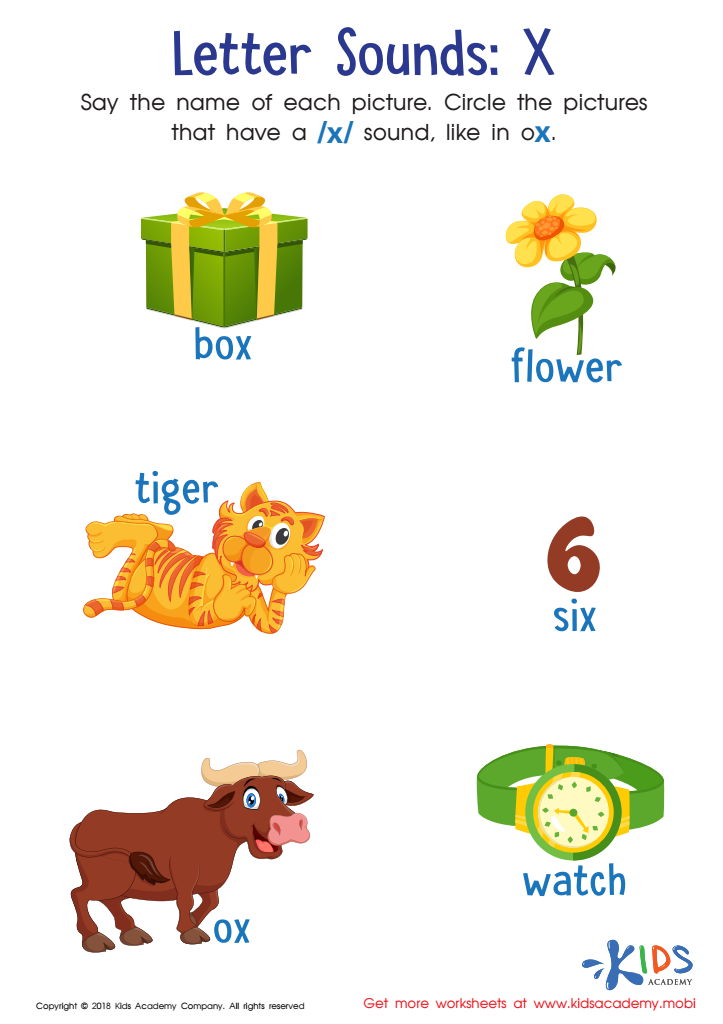
Letter X Sounds Worksheet
Help your early learner master the letter X sound with this fun, illustrated phonics worksheet. Have kids name the pictures, listening for the pronunciation of each. Have them circle only the pictures with the X sound, then double check by looking for the letter in the word below.
Letter X Sounds Worksheet
Worksheet
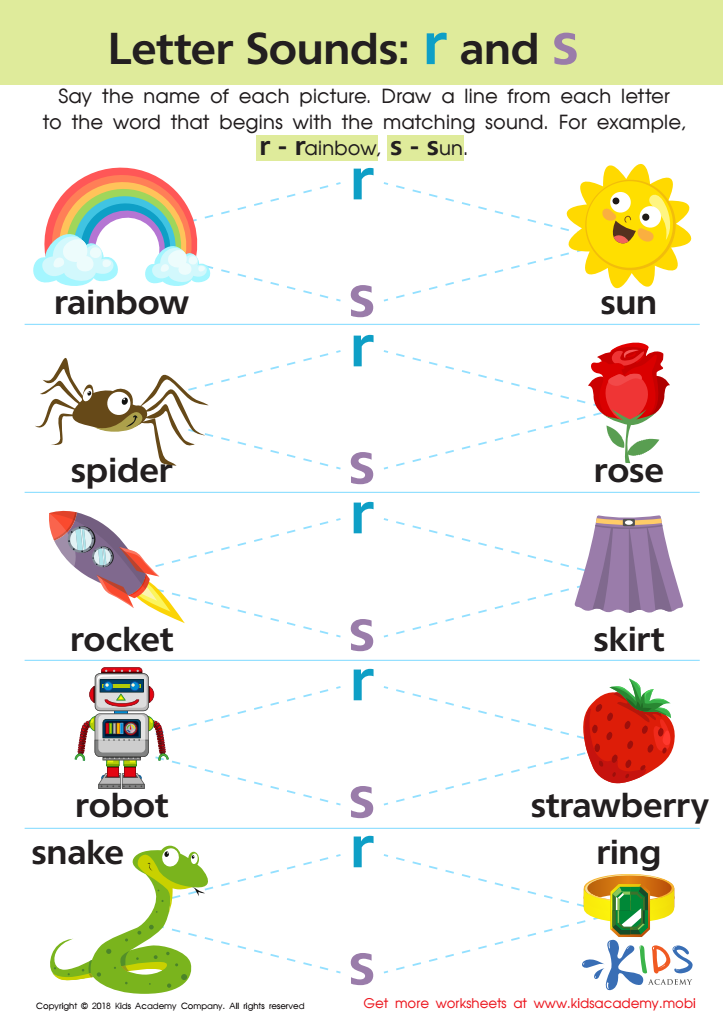
Letter R and S Sounds Worksheet
Kids Academy's phonics worksheet is full of fun and color! Help your child name the pictures and read the words under each one. Does it begin with an R or S? Then, use a pencil to trace the dotted line from the letter to its image. It's a great way to practice phonics skills!
Letter R and S Sounds Worksheet
Worksheet
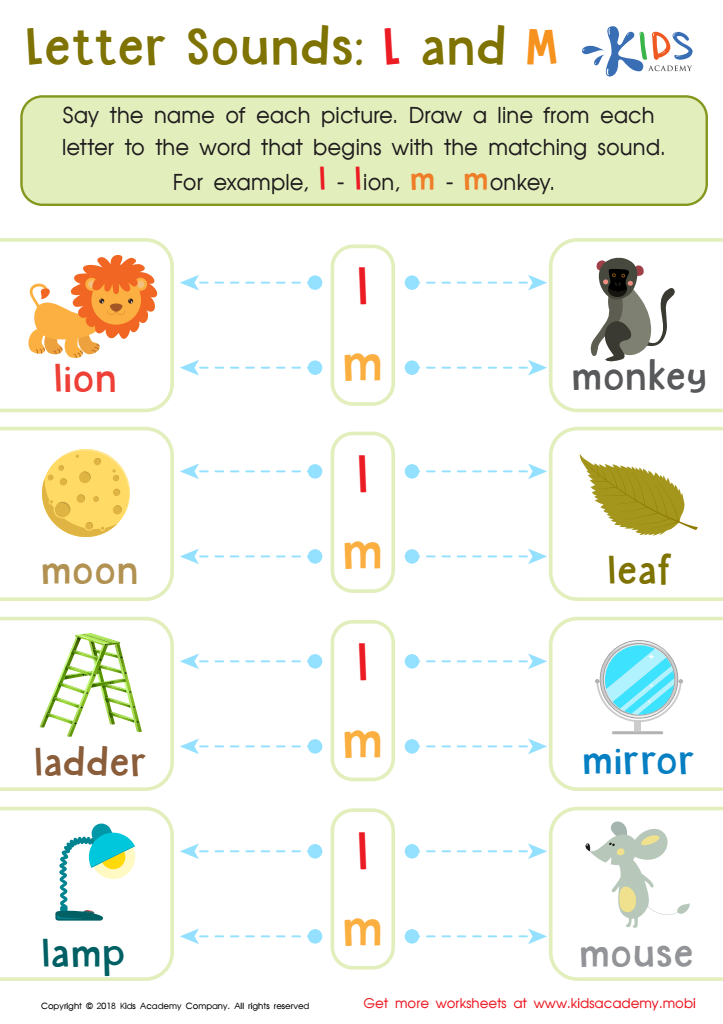
Letter l and M Sounds Worksheet
Our Kids Academy phonics practice pages give clear instructions and captivating pictures to pique children's interest. This fun worksheet helps kids identify a picture, then match its beginning sound. Listen and say each word - does it start with "L" or "M"? Trace the dotted line from the letter to the correct match and listen closely to the sound it makes.
Letter l and M Sounds Worksheet
Worksheet
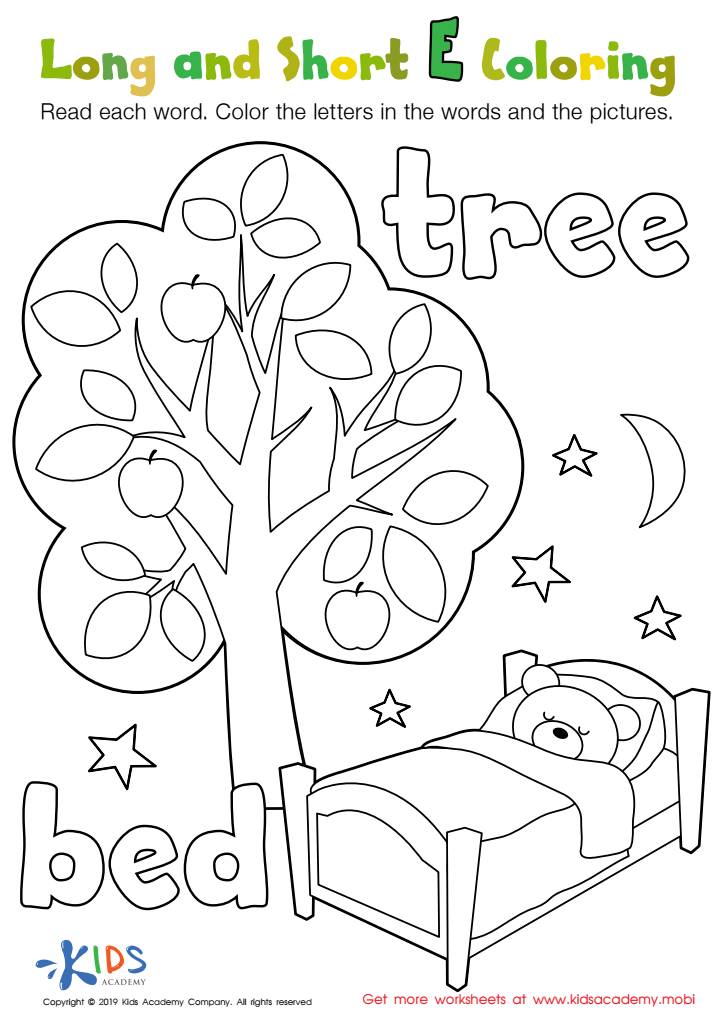
Long and Short E Worksheet
This fun printout makes learning phonics enjoyable for Grade 3 students. Get them to read the words “tree” and “bed” to recognize the different sounds of the letter “E”. After hearing the words they can color the words and the pictures to understand differences between long and short vowels.
Download (PDF)
Assign to My Students
Assign to My Students
Long and Short E Worksheet
Worksheet
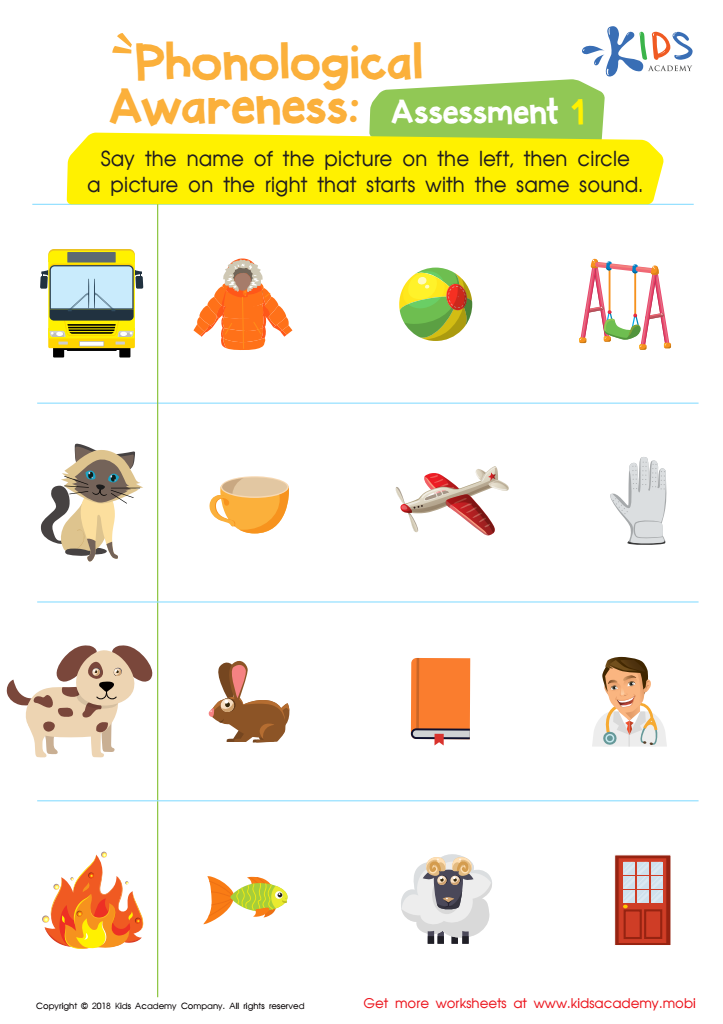
Phonological Awareness: Assessment 1 Worksheet
This worksheet helps kids build key phonics skills for pre-reading. They say each picture name aloud, focusing on the starting sound. Then, they match the sound with an image in the same row. Use as a checkpoint for kindergarten or grade 1 phonics readiness.
Phonological Awareness: Assessment 1 Worksheet
Worksheet
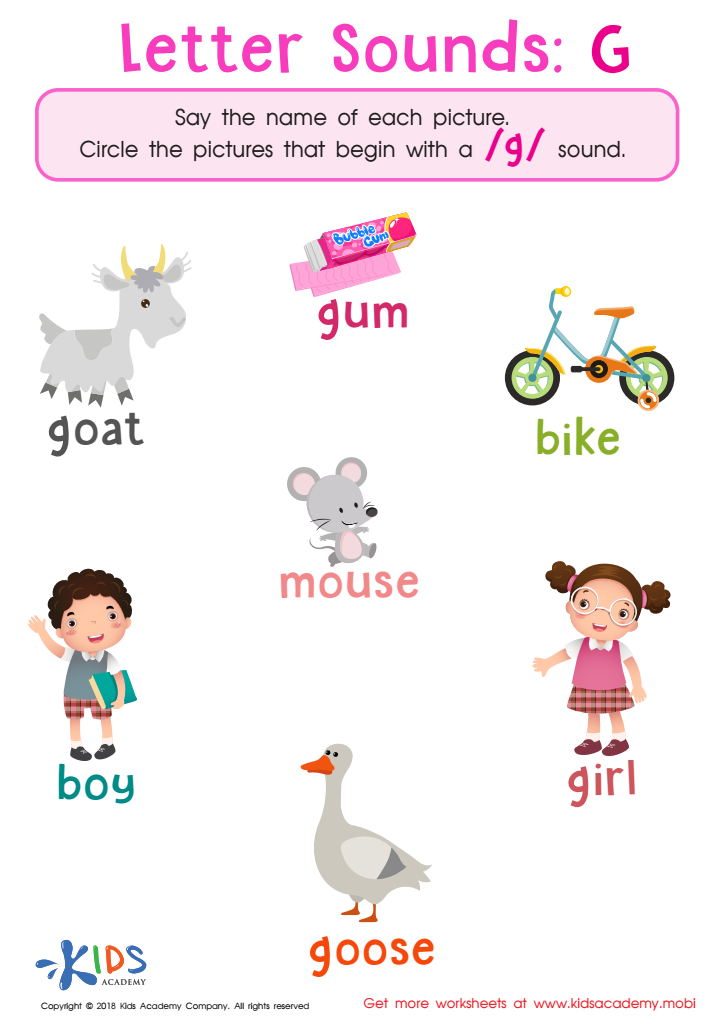
Letter G Sounds Worksheet
Help emerging readers build confidence by giving them practice identifying hard "G" with this free PDF worksheet. They'll use picture clues to name the words, and practice fine-motor skills tracing circles around the corresponding pics. It's a great way to introduce or reinforce hard "G" words.
Letter G Sounds Worksheet
Worksheet
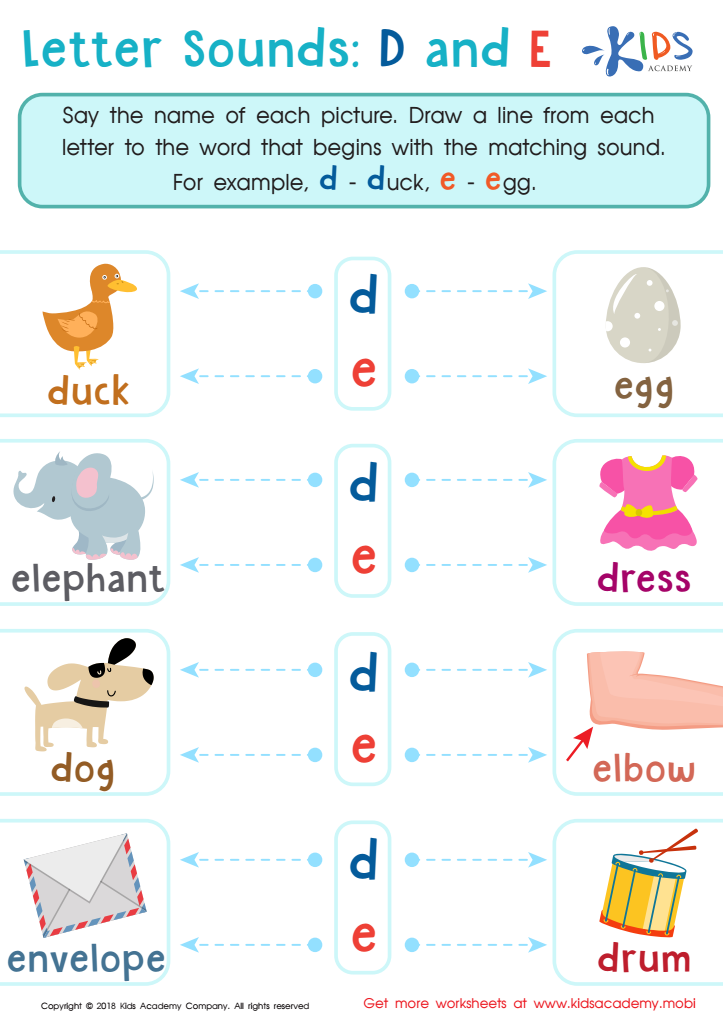
Letter D and E Sounds Worksheet
Kids can use picture clues and visual discrimination to name cheerful pics and isolate the beginning sound. This free PDF worksheet will help them develop phonological awareness, differentiate between "D" and "E", and hone fine-motor skills. It'll also boost their confidence as they become readers.
Letter D and E Sounds Worksheet
Worksheet
Join Kids Academy for Free
Who is primarily going to use this learning content?








Letter recognition and phonics are the foundational blocks upon which successful reading skills are built, making them crucial for children aged 5-9. During these formative years, children typically transition from recognizing letters to beginning to read independently. Understanding letter recognition means that a child can distinguish between uppercase and lowercase letters and associate each with its corresponding sound. This is the first step toward fluency in reading.
Phonics instruction goes a step further by linking these letters to sounds, helping children understand how to decode new words. This becomes essential for their word identification skills and lays the groundwork for spelling and vocabulary development. When children comprehend phonics rules, they can make sense of new terms by breaking them down into individual sounds, leading to more confident and fluent reading.
Parents and teachers who focus on letter recognition and phonics help children develop critical literacy skills that are predictors of long-term academic success. Engaging, age-appropriate activities that bolster these skills can also make learning enjoyable, instilling a positive attitude toward reading. This involvement impacts a child's later performance in school and their ability to absorb and comprehend information, which are key for effective learning across all subjects. Therefore, elevating the importance of these early literacy skills sets children on a path of lifelong learning and academic achievement.







