
Identifying differences Normal Worksheets for Ages 5-9
3 filtered results
Difficulty Level
Grade
Age
-
From - To
Subject
Activity
Standards
Discover our "Identifying Differences Normal Worksheets for Ages 5-9" designed to enhance young learners' observational and analytical skills. These engaging printable worksheets help children distinguish between similar and different objects, improving their attention to detail and critical thinking. Tailored for kids aged 5-9, our resources are perfect for classroom use or at-home practice, ensuring foundational skills are developed in fun, interactive ways. Boost your child's learning experience with exercises that challenge their perception and cognitive abilities, preparing them for more advanced academic tasks. Visit Kids Academy for high-quality learning tools that make education enjoyable.
Favorites
With answer key
Interactive
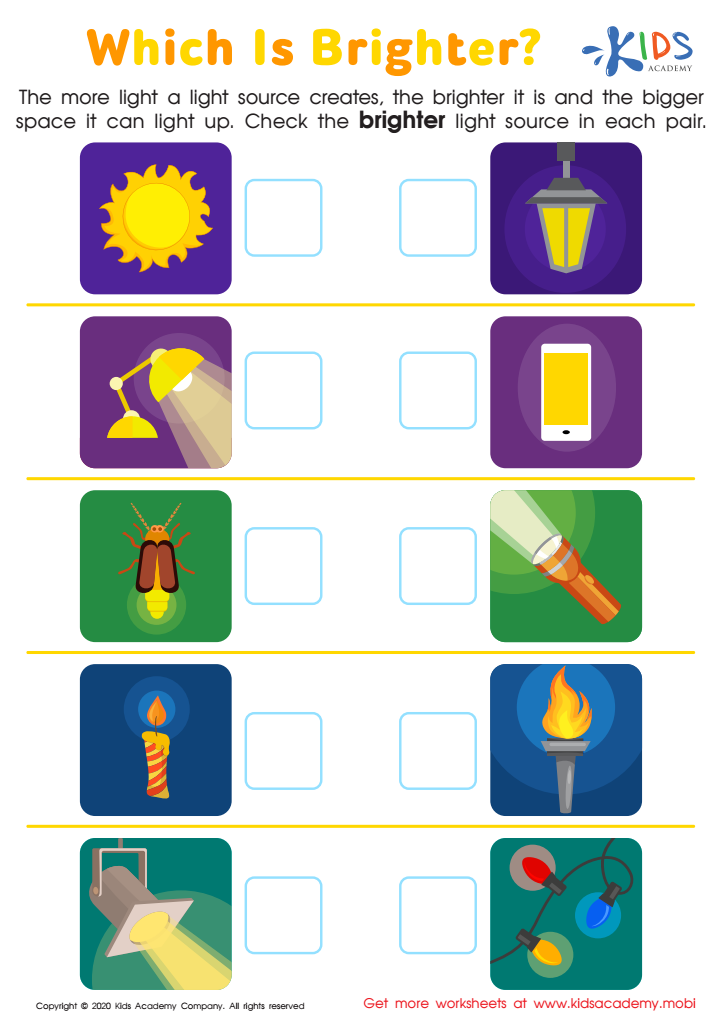
Which Is Brighter? Worksheet
Before the exercise, ask students to recall sources of light. Use this worksheet to explain that the brighter the light source, the more space it can light up. Identify the different light sources in the pictures, then check the brighter light source in each pair. The biggest natural source of light is the sun.
 Assign to My Students
Which Is Brighter? Worksheet
Worksheet
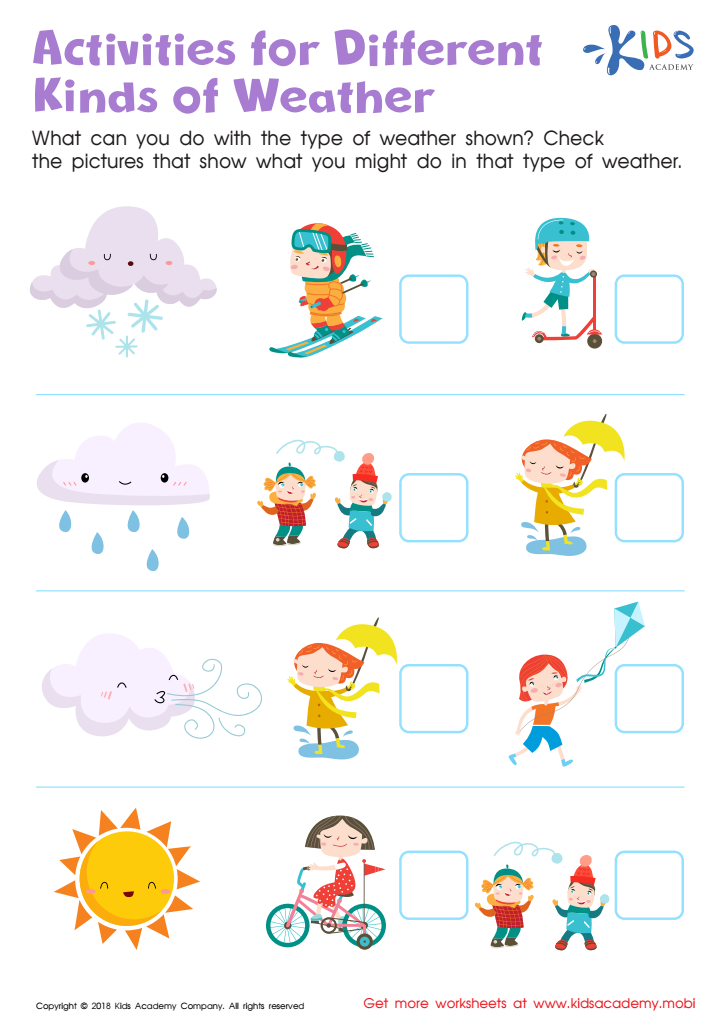
Activities for Different Kinds of Weather Worksheet
Help your child explore the changing seasons with this interactive worksheet. Ask them to name the different seasons and activities associated with each type of weather. Show the pictures and explain what they can do in that kind of weather. Have them check off the activities to help them learn and enjoy the changing seasons.
Activities for Different Kinds of Weather Worksheet
Worksheet
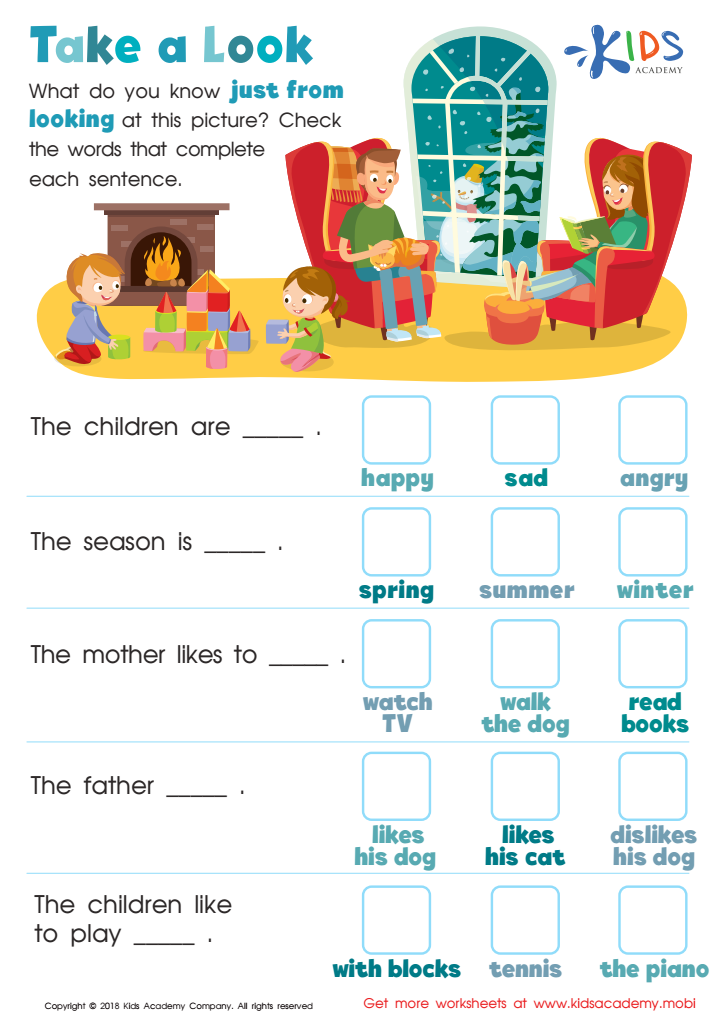
Take a Look - Part 1 Worksheet
Young learners gain understanding when using picture clues when reading. Looking at illustrations can help students learn the meaning of key vocabulary when reading fiction or informational text. Ask your students to look at the worksheet and observe what they can learn from the picture. It's a great comprehension strategy for early readers.
Take a Look - Part 1 Worksheet
Worksheet
Join Kids Academy for Free
Who is primarily going to use this learning content?







Understanding and identifying developmental differences among children aged 5-9 is fundamental for both parents and teachers. These early years are pivotal in a child's cognitive, social, and emotional growth. Recognizing whether a child is developing within the typical range can inform effective support strategies tailored to their needs.
For teachers, awareness of developmental norms ensures they can craft age-appropriate curricula and activities that foster optimal learning and engagement. This allows teachers to identify students who may require additional help, advanced material, or different teaching methods, promoting an inclusive and nurturing classroom environment. Early identification of a learning disability, for example, can lead to timely interventions that significantly improve a child's educational outcomes.
Parents benefit by understanding typical developmental milestones, thus better supporting their child's growth at home and identifying early signs of potential challenges. If a child shows delays or behaviors that deviate significantly from expected norms, parents can seek professional guidance sooner, leading to early intervention. This not only enhances a child’s skill acquisition but also mitigates future frustration and self-esteem issues.
Ultimately, recognizing developmental differences promotes a collaborative approach to a child's education and well-being, ensuring that every child receives the support they need to thrive both academically and personally.








