Interpreting data Normal Worksheets for Ages 5-9
4 filtered results
-
From - To
Discover engaging and educational "Interpreting Data" worksheets designed for children ages 5-9. Each worksheet combines fun activities and colorful graphics to help young learners master essential data interpretation skills. From bar graphs to pictograms, kids will enhance their ability to read, understand, and analyze various data formats. Ideal for home or classroom use, these worksheets align with early grade curriculums to promote critical thinking and problem-solving abilities. By incorporating playful exercises, Kids Academy's resources make learning about data both effective and enjoyable, ensuring kids build a strong mathematical foundation while nurturing a love for learning.
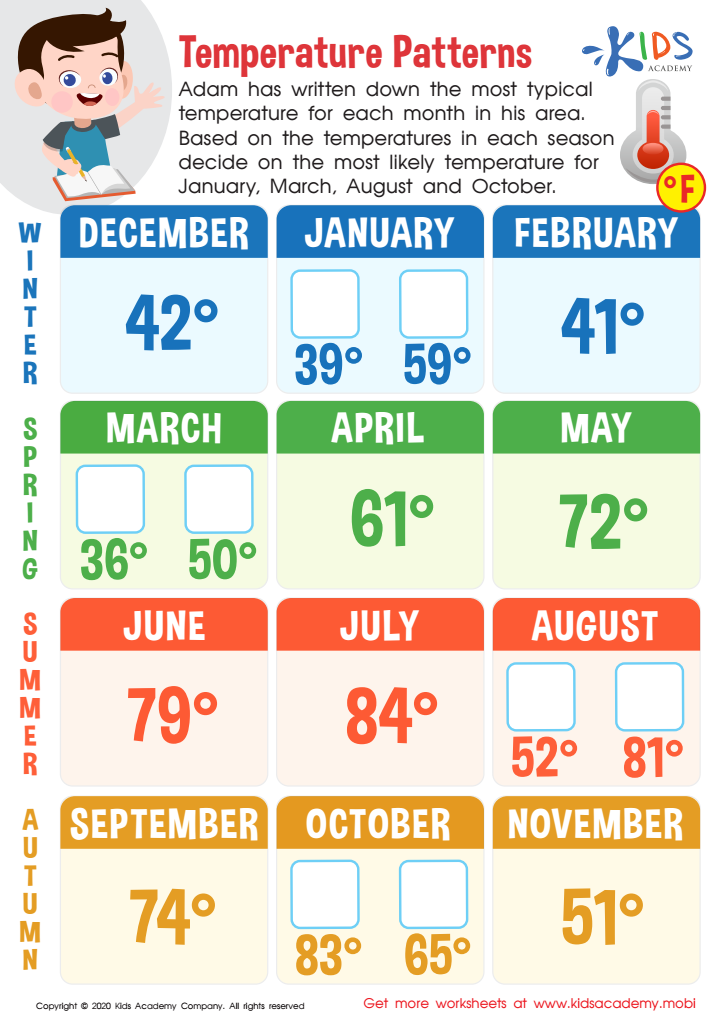
Temperature Patterns Worksheet
 Assign to My Students
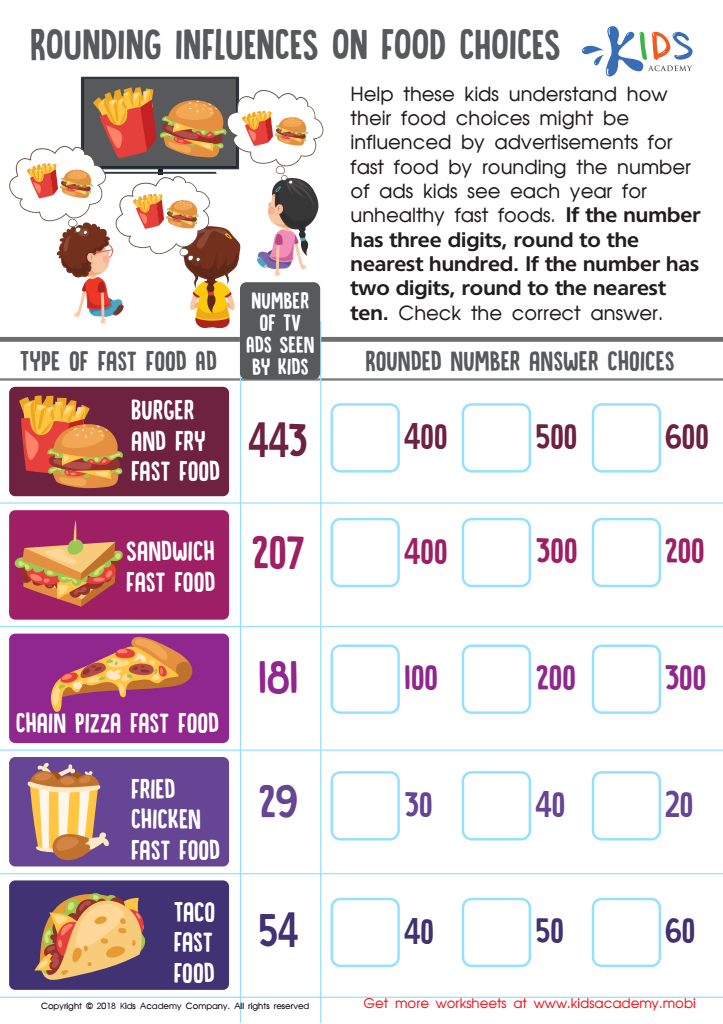
Rounding Influences Food Choices Worksheet
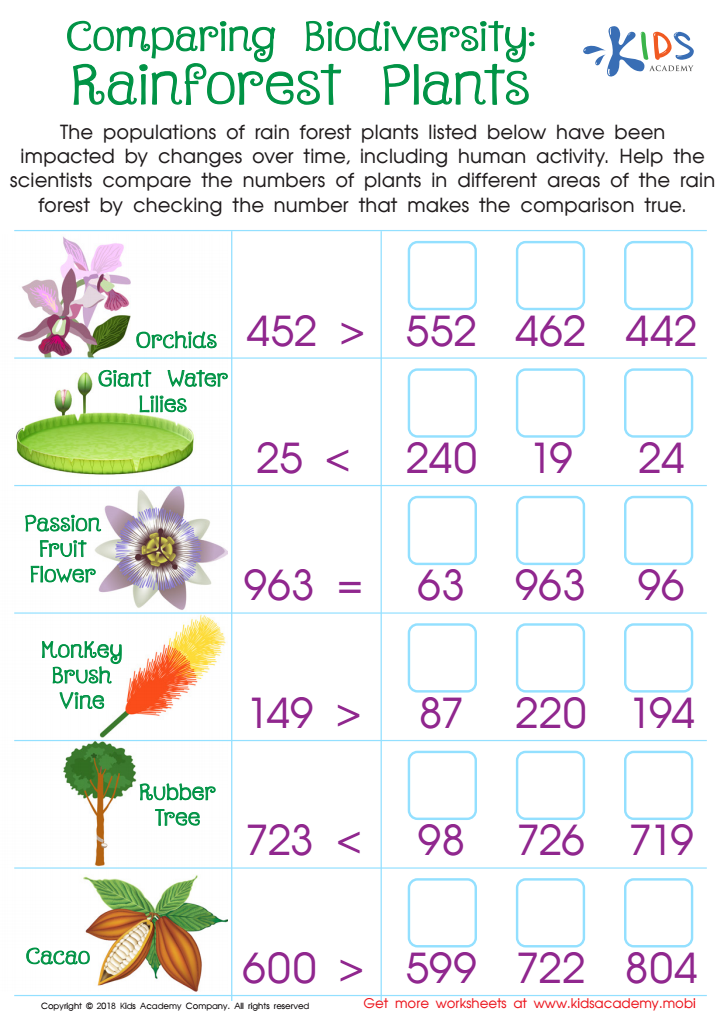
Comparing Biodiversity: Rainforest Plants Worksheet
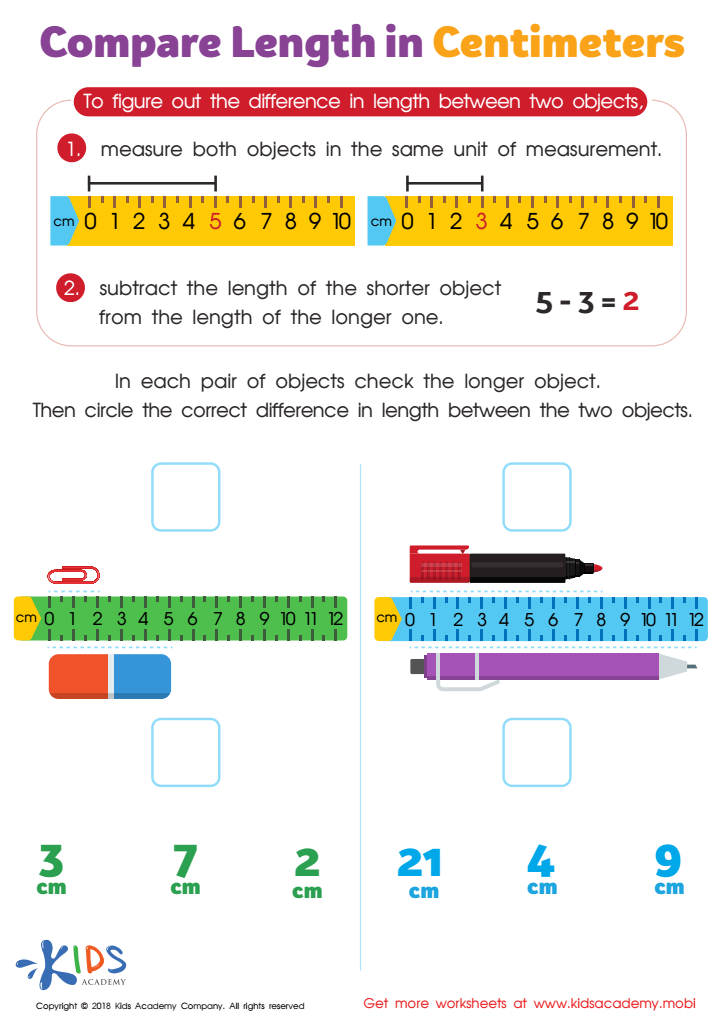
Compare Length in Centimeters Worksheet




.jpg)

Interpreting data is a crucial skill that can greatly benefit children, even at the early ages of 5-9. For parents and teachers, fostering an understanding of data interpretation within this age group can yield significant long-term advantages.
Firstly, data interpretation enhances critical thinking and problem-solving skills. Young children naturally enjoy sorting, classifying, and making sense of information from their surroundings. By guiding them to interpret data, either through simple charts, graphs, or patterns, adults help children to organize their thoughts and draw logical conclusions, abilities that are foundational for later academic success in subjects like math and science.
Secondly, understanding data can aid in real-world comprehension and decision-making. Whether it’s interpreting weather charts to decide what to wear or understanding family schedules, children learn to make reasoned decisions based on the information they see. This grounding in analytical thinking helps develop their independence and confidence.
Thirdly, early exposure to data interpretation can foster a positive attitude toward learning. Engaging, hands-on activities involving charts or simple datasets can make learning interactive and fun. Such positive experiences can enhance a child’s curiosity and enthusiasm for other educational pursuits.
Overall, caring about data interpretation skills for ages 5-9 equips children with vital intellectual tools and sets a strong foundation for their future educational and everyday life challenges.








