
Phonics development Normal Worksheets for Ages 5-9
3 filtered results
Difficulty Level
Grade
Age
-
From - To
Subject
Activity
Standards
Our Phonics Development Normal Worksheets for ages 5-9 are expertly designed to enhance your child's reading and pronunciation skills. These engaging and colorful activities introduce crucial phonics concepts such as letter sounds, blends, digraphs, and word families. Tailored to support young learners, each worksheet fosters a love for reading through interactive and fun exercises. Whether practicing at home or in the classroom, these aids act as an excellent resource to build foundational literacy skills, ensuring your child develops strong, confident reading abilities. Empower your child's learning journey with our thoughtfully crafted phonics development worksheets!
Favorites
With answer key
Interactive
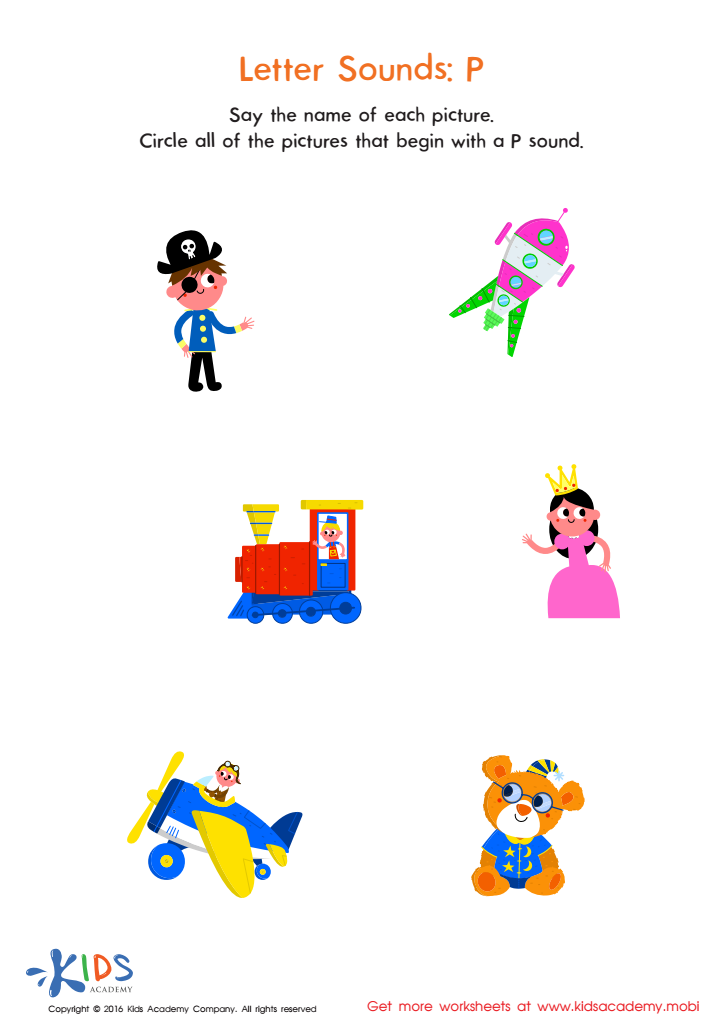
Letter P Sound Worksheet
Think P! Kids practice phonics with this fun letter P worksheet. With delightful illustrations, they'll sound out simple words and get closer to reading.
 Assign to My Students
Letter P Sound Worksheet
Worksheet
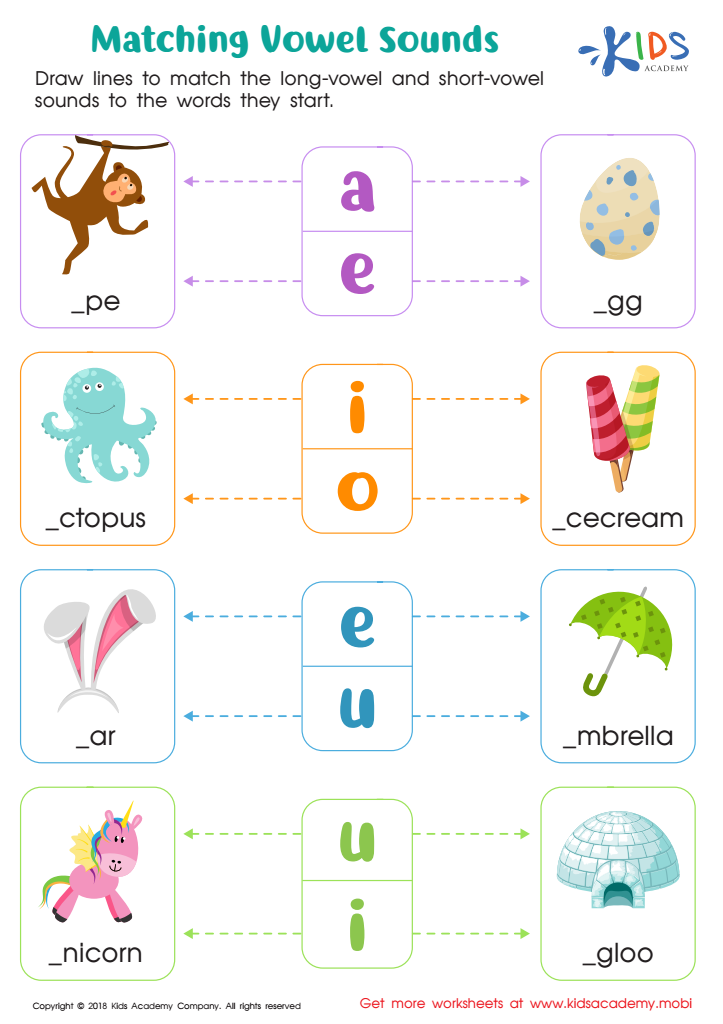
Matching Vowel Sounds Worksheet
Teach your child phonics with a fun worksheet! Ask your child to name a vowel sound and listen if it's long or short. Differentiating between long and short vowel sounds can be tricky, but this matching worksheet makes it easy for kids to understand. Have fun and master phonics - the worksheet will help them understand the difference between long and short vowel sounds!
Matching Vowel Sounds Worksheet
Worksheet
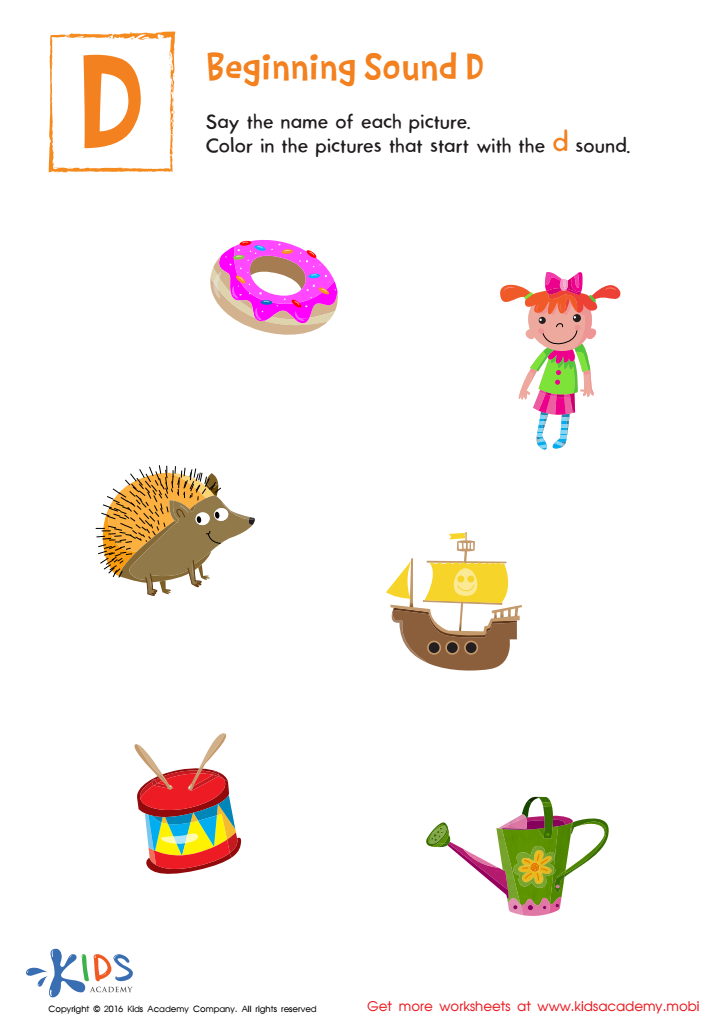
Beginning Sound D Worksheet
Reinforce phonics with this vibrant beginning sound d worksheet! Pictures help kids identify words beginning with 'd' and develop early reading skills. Sounding out each word increases literacy!
Beginning Sound D Worksheet
Worksheet
Join Kids Academy for Free
Who is primarily going to use this learning content?








Phonics development is essential for children ages 5-9 as it lays the foundation for proficient reading and writing skills. During these formative years, children transition from recognizing letters to understanding that different letters and combinations of letters produce distinct sounds. This foundational knowledge aids in decoding new words, fostering smoother and more confident reading experiences.
Parents and teachers play a crucial role in this development. When children receive systematic phonics instruction, they are better equipped to decode unfamiliar words, contributing to improved reading fluency and comprehension. This early competence in reading not only bolsters academic performance across subjects but also ignites a love for learning and reading that can last a lifetime.
From a developmental perspective, ages 5-9 are a critical window for cognitive growth and language acquisition. Effective phonics instruction harnesses this natural developmental phase, ensuring children build a robust vocabulary and strong spelling skills. Moreover, confidence gained through phonics can enhance a child's self-esteem and educational enthusiasm.
So, dedicating time and resources to phonics development during these critical years helps ensure children possess the necessary tools for academic success and lifelong learning. It's an investment in their cognitive development, academic potential, and future literacy.








