Recognition skills Normal Worksheets for Ages 5-9
3 filtered results
-
From - To
Recognition skills are vital for a child's educational foundation, and our Regular Worksheets for Ages 5-9 are designed to enhance these crucial abilities. These worksheets offer engaging activities that help kids recognize shapes, numbers, colors, and letters through fun and interactive exercises. Perfect for both classroom and home use, our printable sheets foster a love for learning while developing essential skills. From matching and sorting to identifying patterns and sequences, our curated content ensures progressive learning tailored for young minds. Visit Kids Academy now for expertly crafted materials that make learning enjoyable and effective!
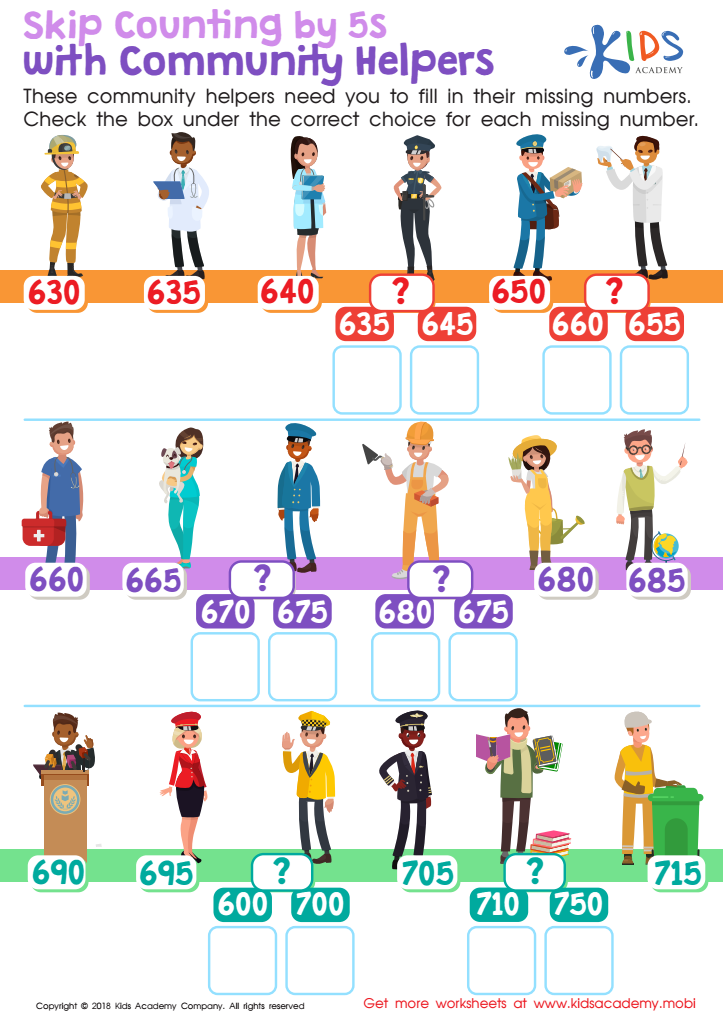
Skip Counting by 5s With Community Helpers Worksheet
 Assign to My Students
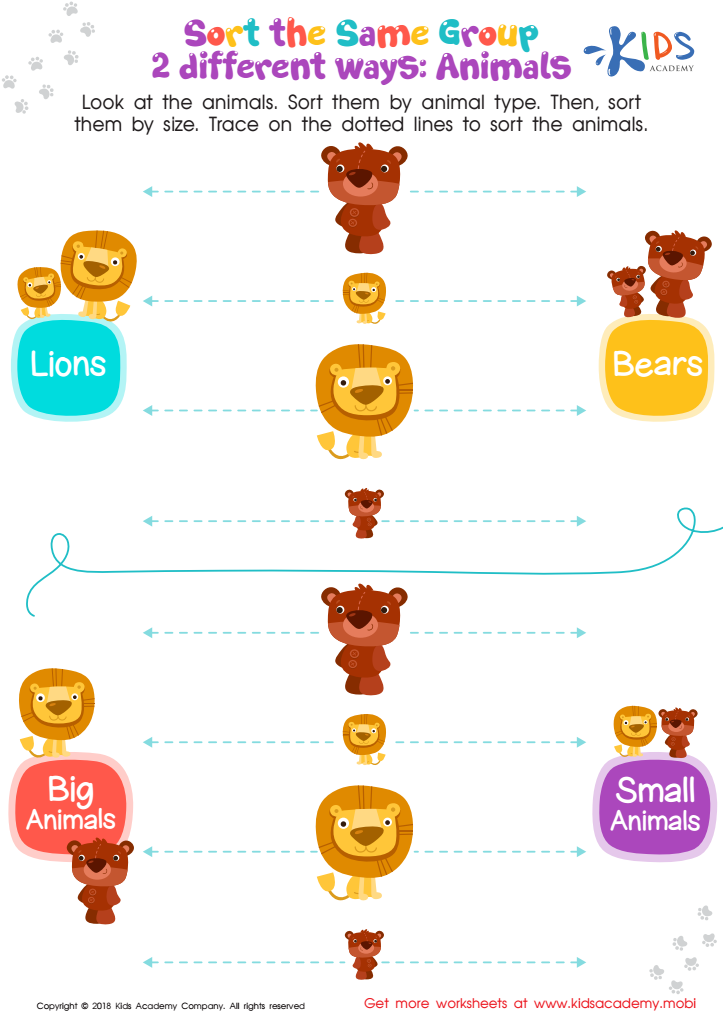
Sort the Same Group 2 Different Ways: Animals Worksheet





.jpg)

Recognition skills are a cornerstone of early childhood development and are crucial for ages 5-9 because they lay the foundation for academic and social success. At this stage, children learn to identify letters, numbers, colors, shapes, and other basic elements of their environment. These skills are integral to their ability to read, write, and perform basic arithmetic, forming the bedrock of their educational journey.
For parents and teachers, nurturing recognition skills in children is essential. Firstly, these skills directly impact a child's academic performance. Early proficiency in recognizing letters and numbers, for example, is closely linked to later success in reading and math. Secondly, recognition skills aid in cognitive development, helping children to organize and categorize information, which enhances memory and problem-solving abilities.
Moreover, recognition skills contribute to social development. Being able to recognize social cues and facial expressions helps children to navigate interpersonal interactions, fostering better communication and empathy. This can lead to more positive relationships with peers and adults.
Lastly, developing these skills can boost a child's confidence and self-esteem. As children become more adept at recognizing and understanding their world, they feel more competent and capable, which encourages a lifelong love of learning.
In sum, prioritizing recognition skills in early childhood sets the stage for a robust educational and social foundation.








