Sound discrimination Normal Worksheets for Ages 5-9
3 filtered results
-
From - To
Enhance your child's auditory skills with our engaging Sound Discrimination Normal Worksheets, specially designed for ages 5-9. These worksheets provide fun and interactive exercises that help kids identify and differentiate between various sounds. By participating in exciting activities, children will improve their listening skills, develop phonemic awareness, and boost their ability to distinguish between similar sounds. Perfect for educators and parents alike, our resources cater to diverse learning needs and levels. Support your child's educational journey and foster a love for learning with these creative and stimulating sound discrimination worksheets. Make sound recognition enjoyable and impactful today!
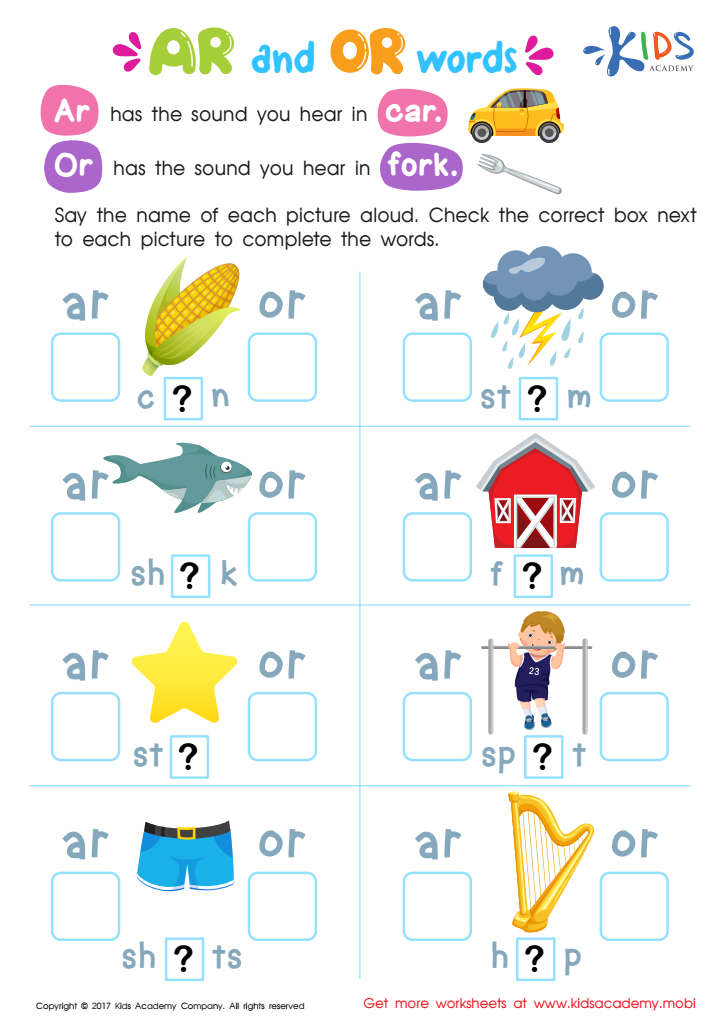
Ar and Or Words Phonics Worksheet
 Assign to My Students
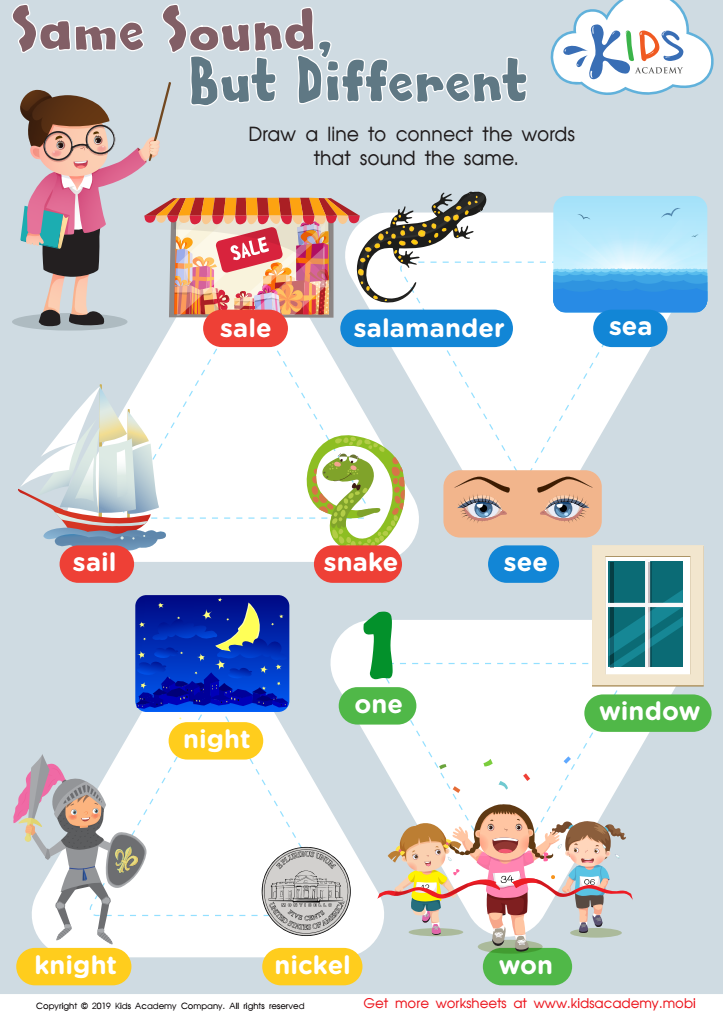
Sound Different Worksheet
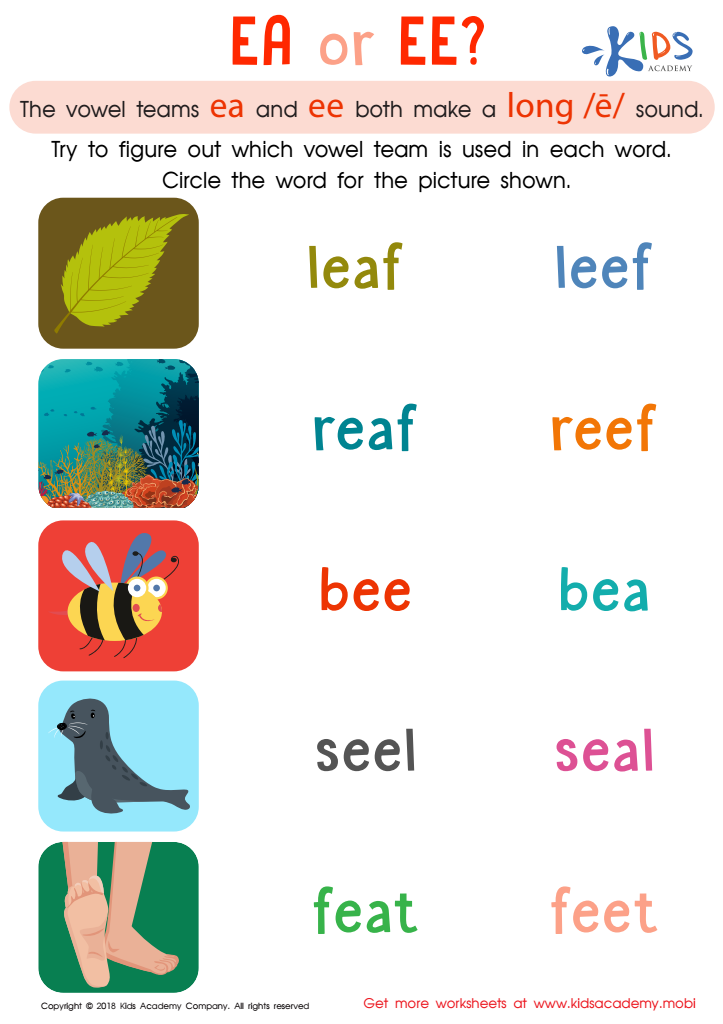
Reading: EA and EE Worksheet






Sound discrimination is a critical skill for children aged 5-9 as it forms the foundation for effective reading and communication. This ability allows children to identify, differentiate, and process various sounds, which significantly influences their literacy development. When children can distinguish between similar sounds, they improve their phonemic awareness—an essential component of learning to read. Parents and teachers should care about enhancing sound discrimination because mastering this skill directly impacts a child's ability to decode words, comprehend language, and articulate thoughts clearly.
Furthermore, sound discrimination contributes to overall cognitive development. Children who excel in recognizing and manipulating sounds are more likely to experience success in language-related tasks across subjects. The ability to identify differences in sounds also supports listening skills, which are crucial for following directions, engaging in conversations, and fostering social interactions.
Additionally, children facing challenges with sound discrimination may struggle academically, leading to anxiety and frustration. By focusing on this area, parents and teachers can provide targeted support and interventions, promoting confidence and a love for learning. In summary, prioritizing sound discrimination in young learners is essential for their academic success, confidence, and overall communication skills.








