
Understanding magnetism Normal Worksheets for Ages 5-9
4 filtered results
Difficulty Level
Grade
Age
-
From - To
Subject
Activity
Standards
Discover the fascinating world of magnetism with our "Understanding Magnetism Normal Worksheets" designed for kids ages 5-9. These engaging and age-appropriate worksheets introduce young learners to the concepts of magnet attraction, magnetic fields, and the properties of magnets through fun activities and visuals. Perfect for enhancing science understanding, our resources encourage exploration and creativity while reinforcing critical thinking skills. Easy to download and print, these worksheets are ideal for classrooms, homeschool settings, or supplementary learning at home. Foster curiosity and a love for science in your child with our comprehensive magnetism worksheets that make learning an enjoyable adventure!
Favorites
With answer key
Interactive
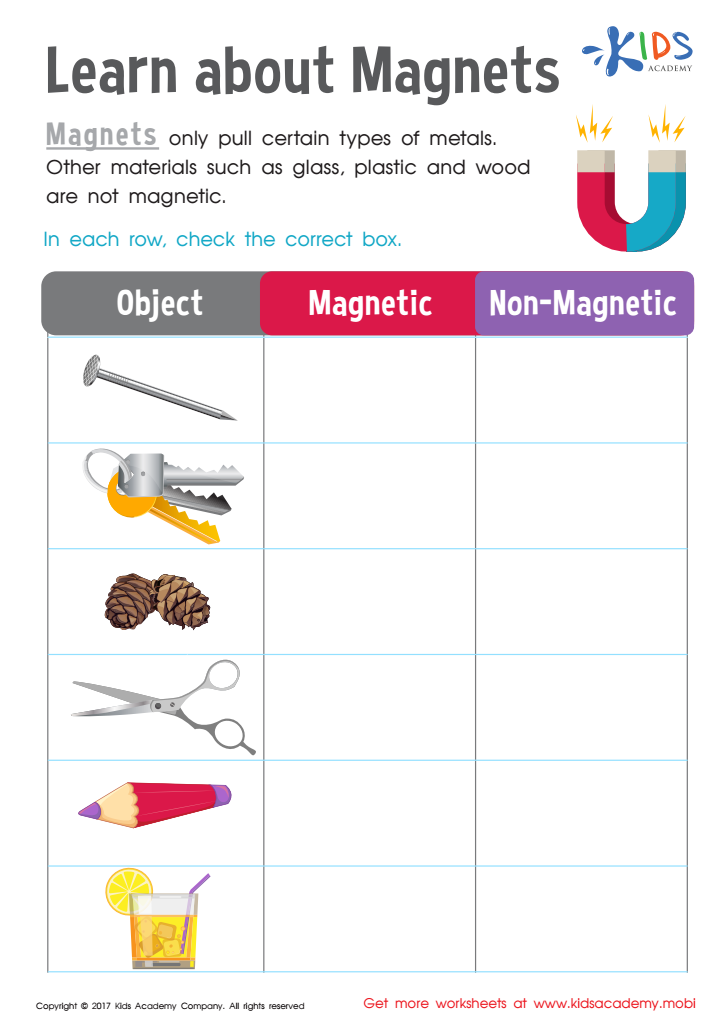
Magnetic Or Not Worksheet
Kids will love discovering the magical power of magnetism with this fun worksheet.
Uncover the magic of magnetism with this fun worksheet! Kids will love identifying objects that are magnetic and those that are not. Objects made of metal and those that aren't can be identified, helping your child to gain valuable practice and explore the mysterious power of magnetism!
 Assign to My Students
Magnetic Or Not Worksheet
Worksheet
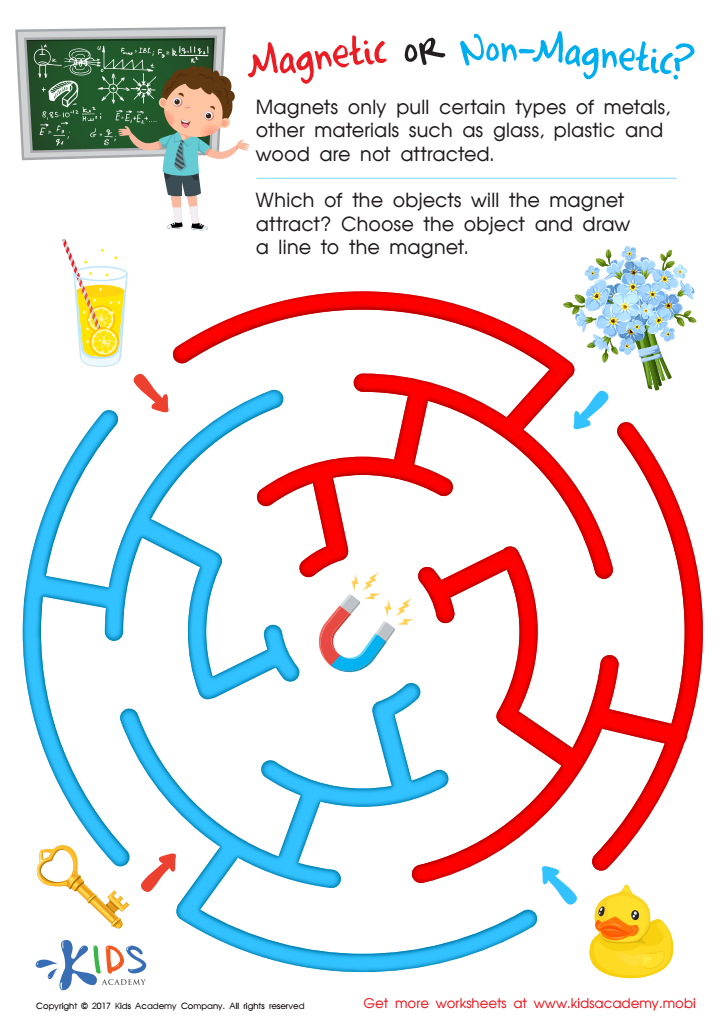
Magnetic or Non–Magnetic Worksheet
Introduce your child to magnetism with this fun maze! Read the summary to explain the concept, then help them find the magnetic object as they navigate the maze. It's a great way to learn and have fun!
Magnetic or Non–Magnetic Worksheet
Worksheet
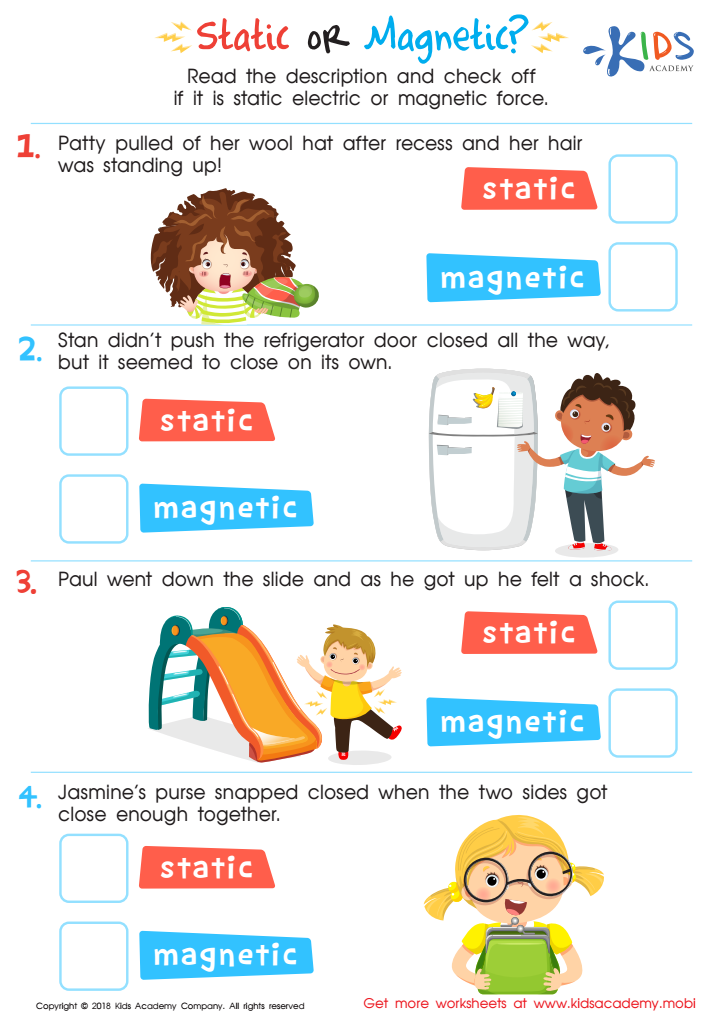
Static or Magnetic Printable Worksheet
Ever wondered if a situation involved static or magnetic force? This printable worksheet has the answer! Read the scenarios and check out the illustrations to decide which force is in play for each. Learn about these two amazing forces with this fun activity!
Static or Magnetic Printable Worksheet
Worksheet
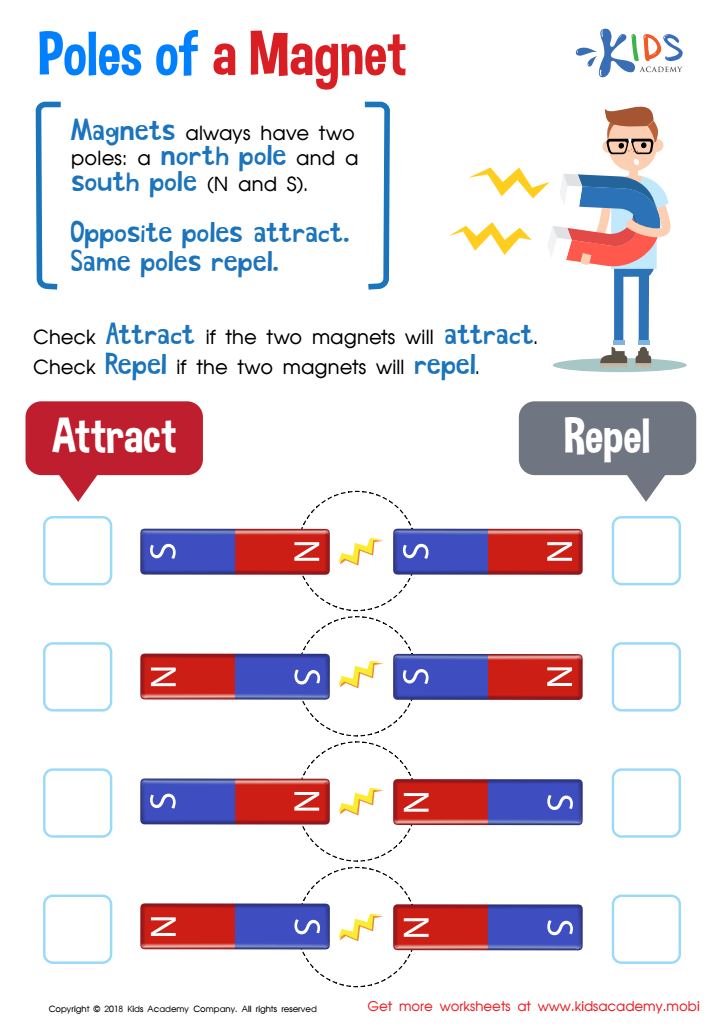
Magnet Poles Attract or Repel Worksheet
Kids can learn about magnets using this fun worksheet! They'll identify the polarities of magnets and see if they attract or repel. Pictures of magnets will help them understand the concept and get them excited about scientific exploration!
Magnet Poles Attract or Repel Worksheet
Worksheet
Join Kids Academy for Free
Who is primarily going to use this learning content?







Understanding magnetism is important for children aged 5-9 as it lays the foundation for their exploration of science and the natural world. At this young age, children are naturally curious and eager to learn about the forces around them. Magnetism, with its intriguing properties, offers a hands-on way for children to discover important scientific concepts.
By engaging with magnets, children develop observational skills and critical thinking as they explore “what happens when” with different materials. This exploration enhances their comprehension of cause and effect, investigation, and experimentation—all vital components of scientific learning. Furthermore, the experience of manipulating magnets can foster creativity and imagination, as children dream up new ways to use magnets in play.
For parents and teachers, introducing magnetism helps in promoting STEM (science, technology, engineering, mathematics) education at an early age. It encourages collaborative learning, as children often work together to experiment, share discoveries, and problem-solve. Additionally, understanding magnetic principles is applicable in everyday life, from electronic devices to kitchen tools, reinforcing the relevance of science in the real world. Overall, nurturing an interest in magnetism supports young learners' cognitive development and empowers them with skills beneficial for their future education.








