Understanding plant growth Normal Worksheets for Ages 5-9
3 filtered results
-
From - To
Explore our engaging "Understanding Plant Growth Normal Worksheets" designed specifically for kids aged 5-9. These worksheets provide a fun and interactive way for young learners to grasp the basics of plant growth and biology. Through colorful illustrations and easy-to-understand challenges, students will learn about essential topics such as the life cycle of plants, their needs for thriving, and the importance of photosynthesis. Perfect for both classroom settings and home learning, these worksheets foster curiosity and encourage children to connect with nature. Enhance your child's learning experience with our comprehensive and educational resources on plant growth today!
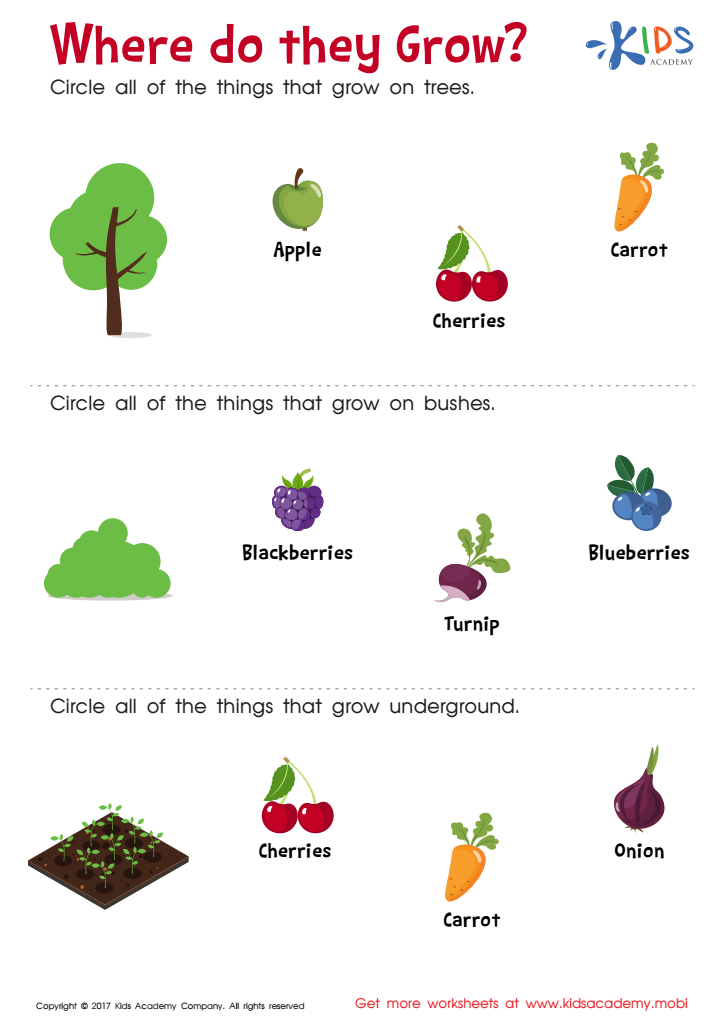
Where Do They Grow Worksheet
 Assign to My Students
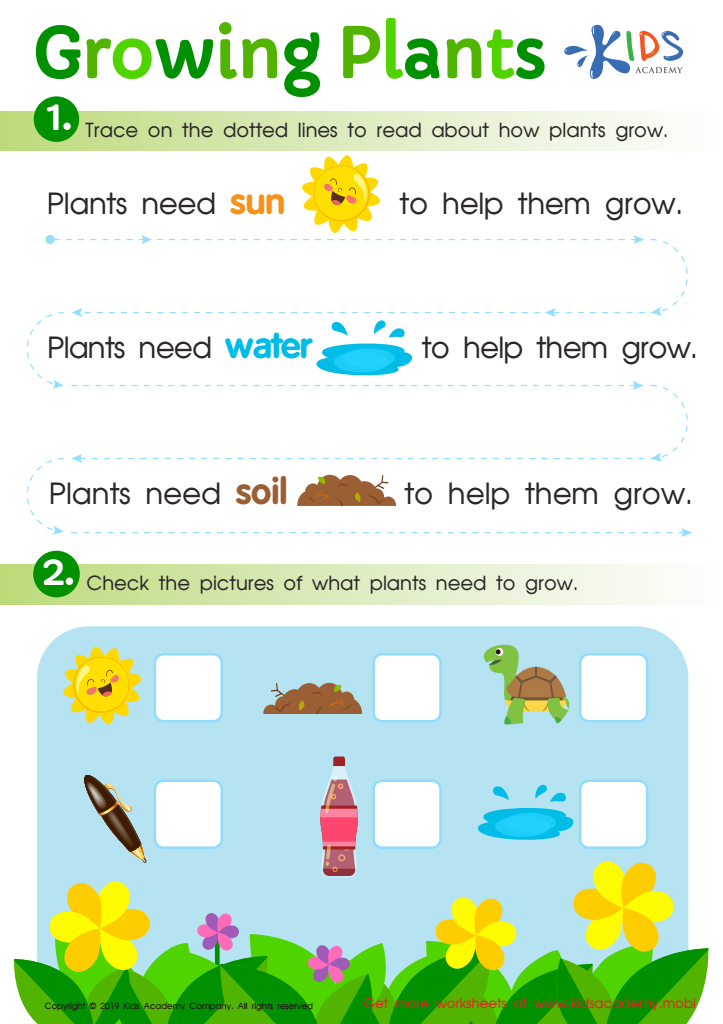
Growing Plants Worksheet
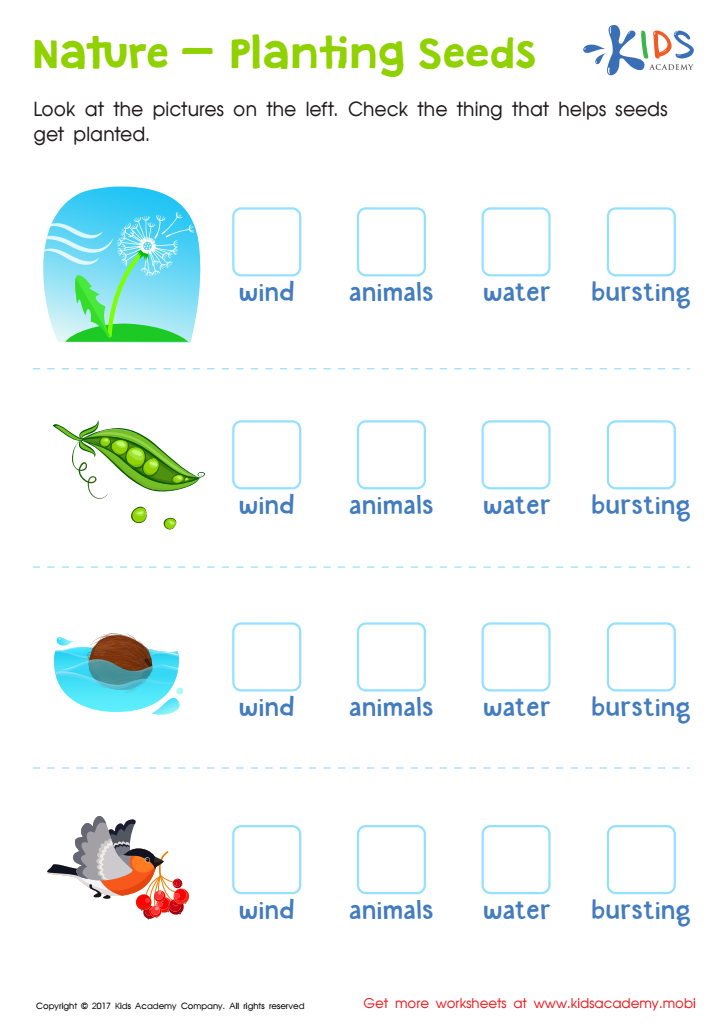
Nature Planting Seeds Worksheet


.jpg)



Understanding plant growth is essential for children aged 5-9 as it lays the foundation for their appreciation of nature and the environment. At this developmental stage, children are naturally curious and eager to explore the world around them. Learning about plants can foster this curiosity, helping them make connections between science and everyday life.
When parents and teachers focus on plant growth, they engage children in hands-on activities, such as planting seeds and observing their development. This experiential learning nurtures critical thinking and observation skills, as children learn to identify the needs of plants—such as sunlight, water, and healthy soil. It also encourages responsibility, as they care for their plants over time.
Additionally, understanding plant growth instills a sense of wonder about ecosystems and the importance of plants for life on Earth. This knowledge can lead to lifelong habits of environmental stewardship, prompting children to appreciate biodiversity and the role of plants in sustaining life. Ultimately, fostering an understanding of plant growth not only enriches a child's education but also cultivates a generation that values nature and its preservation.








