Visual discrimination skills Normal Worksheets for Ages 5-9
5 filtered results
-
From - To
Our Visual Discrimination Skills Normal Worksheets for ages 5-9 are designed to enhance children’s ability to recognize differences and similarities in shapes, patterns, objects, and colors. Using engaging activities that stimulate critical thinking and observational skills, these worksheets are perfect for young learners to practice vital visual processing abilities. Ideal for various educational settings, our resources make learning fun and impactful, helping children sharpen their attention to detail and develop essential skills that contribute to successful reading, writing, and math performance. Support your child’s growth with our expertly crafted, age-appropriate visual discrimination worksheets.
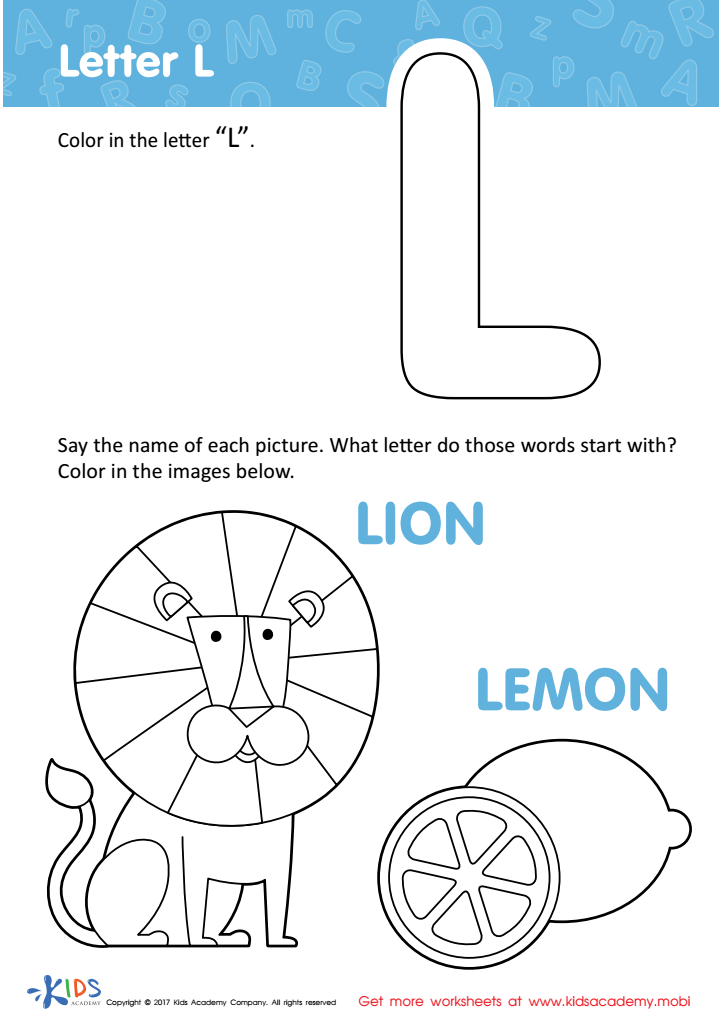
Letter L Coloring Sheet
 Assign to My Students

Find Uppercase Letters A, B, and C Worksheet
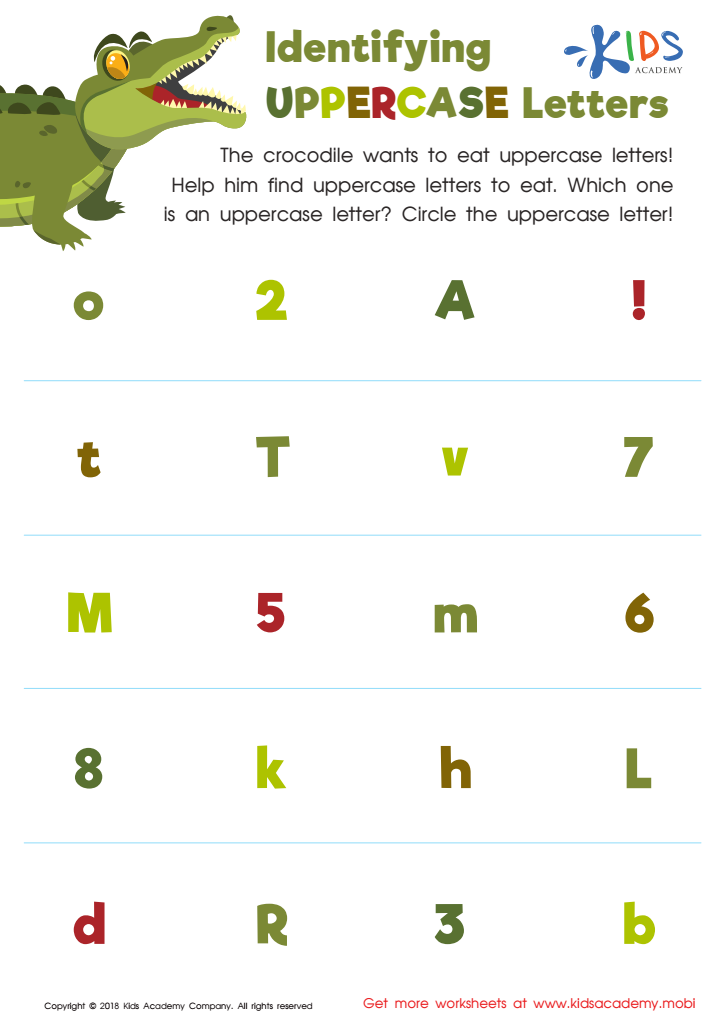
Identifying Uppercase Letters Worksheet

Find lowercase letters a b c Worksheet

Find Lowercase Letters v w x Worksheet







Visual discrimination skills are crucial for children aged 5-9 as they significantly impact learning and overall development. These skills enable children to distinguish between different shapes, sizes, colors, and spatial orientations, which are fundamental for reading and writing. For instance, being able to differentiate between letters like 'b' and 'd' or 'p' and 'q' is essential in literacy. Without strong visual discrimination skills, a child may struggle with recognizing words, leading to difficulties in reading fluency, comprehension, and eventually, overall academic performance.
Moreover, visual discrimination plays a vital role in mathematics. Identifying different numbers, shapes, and patterns requires the ability to visually distinguish details accurately. This skill also extends to problem-solving, as it allows children to match, sort, and categorize objects based on visual features.
Visual discrimination impacts everyday activities beyond academics, such as following instructions, navigating environments, and developing spatial awareness. It is also crucial for social interactions, where the ability to recognize facial expressions and body language helps children interpret social cues and build relationships.
Teachers and parents should thus prioritize activities that enhance visual discrimination, like puzzles, matching games, and drawing exercises. By fostering these skills, children will be better prepared for educational challenges and daily life, leading to increased confidence and success in various endeavors.








