Reading comprehension Normal Addition and Subtraction Word Problems Worksheets for Ages 5-9
6 filtered results
-
From - To
Enhance your child's learning with our Reading Comprehension Normal Addition and Subtraction Word Problems Worksheets, designed for ages 5-9. These engaging worksheets help young learners improve their reading skills while tackling fun and relatable math problems. Each worksheet presents age-appropriate scenarios that challenge students to read, interpret, and solve addition and subtraction word problems, fostering critical thinking and comprehension abilities. Perfect for classroom use or at-home practice, these resources make learning math enjoyable and interactive. Support your child's educational journey by combining literacy and math skills with our creative and accessible worksheets tailored for early learners!
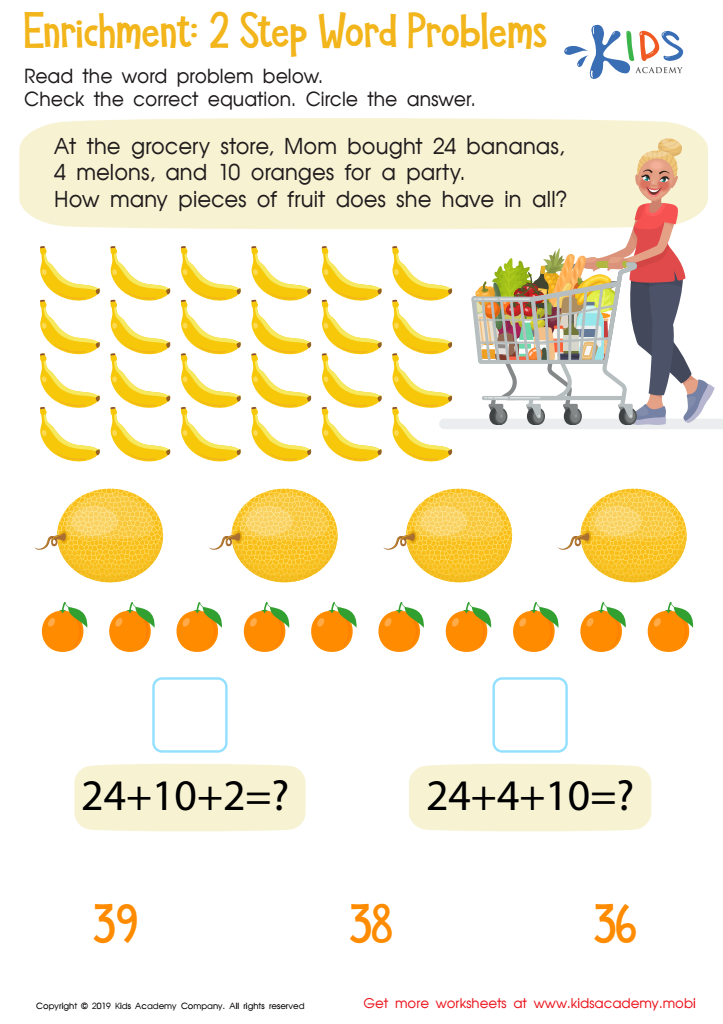
Enrichment -2 Step Word Problems Worksheet
 Assign to My Students
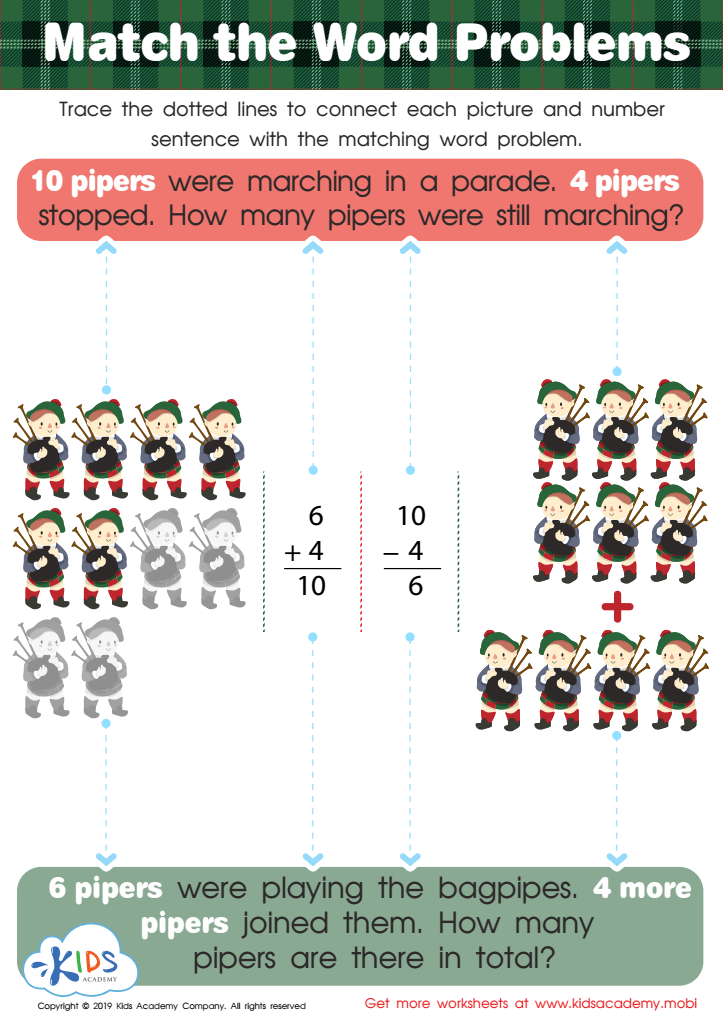
Match the Word Problems Worksheet
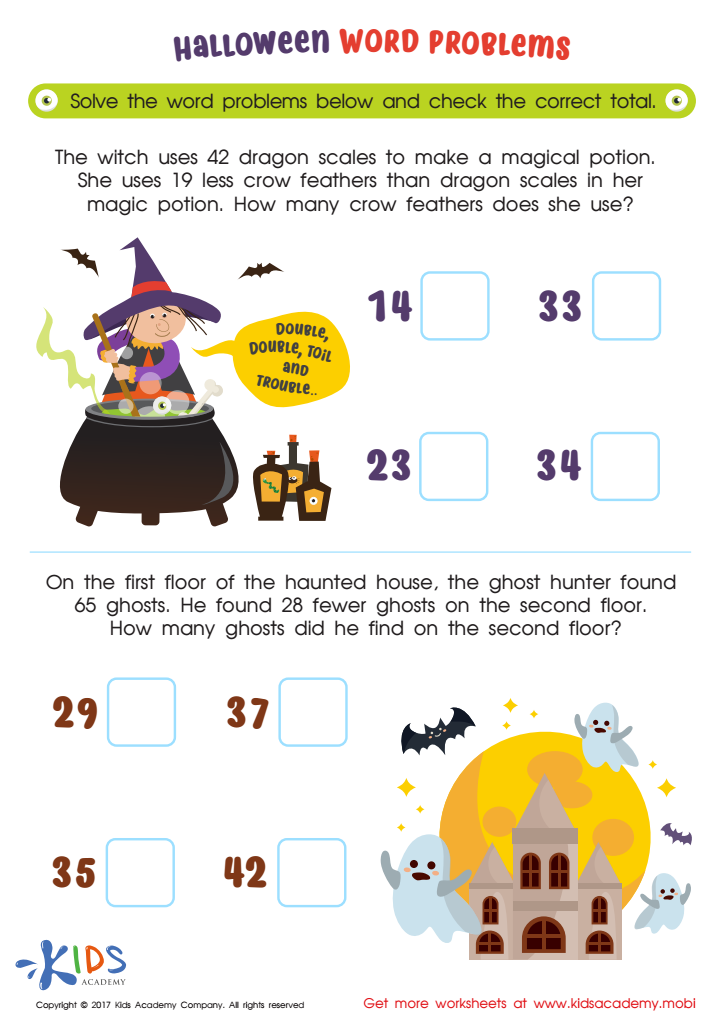
Halloween Word Problems Printable
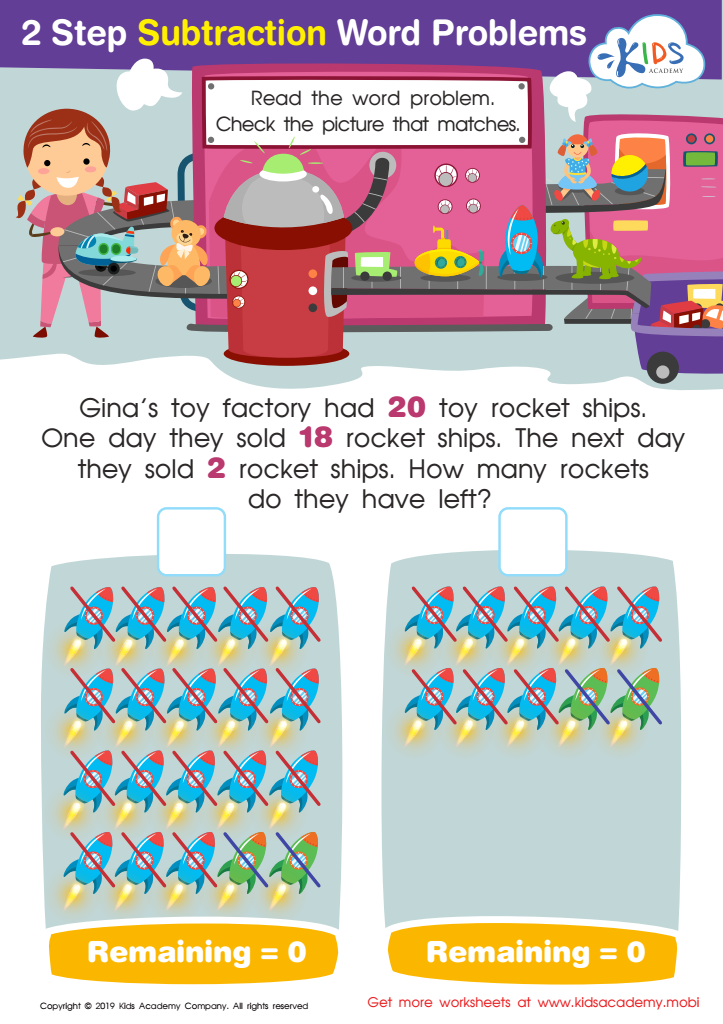
Step Subtraction Word Problems Worksheet
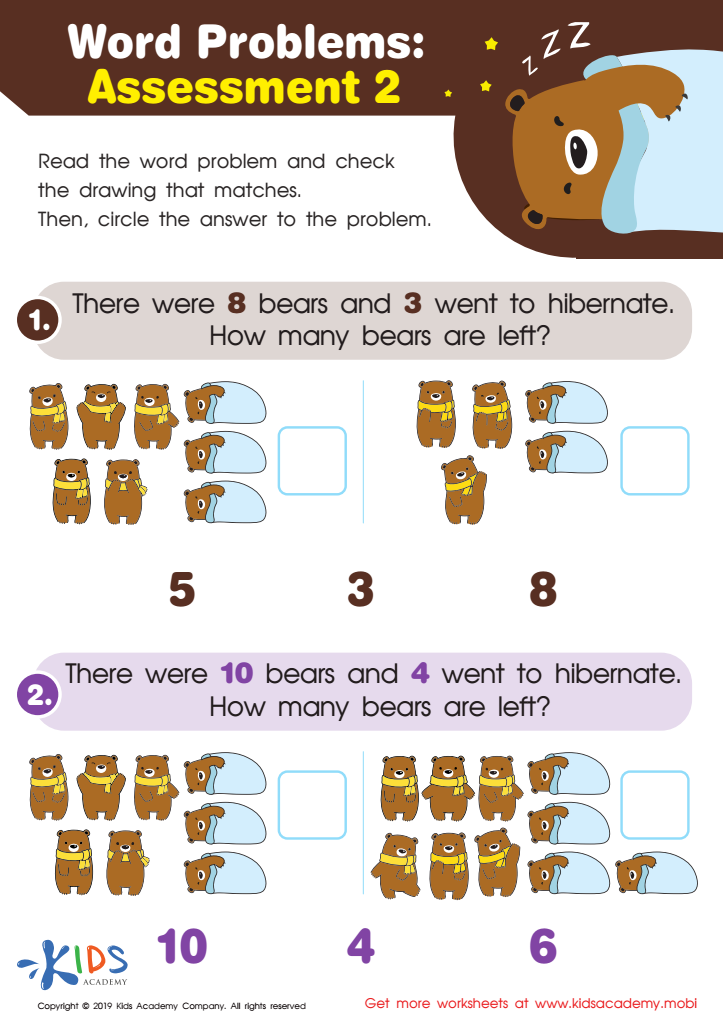
Word Problems: Assessment 2 Worksheet
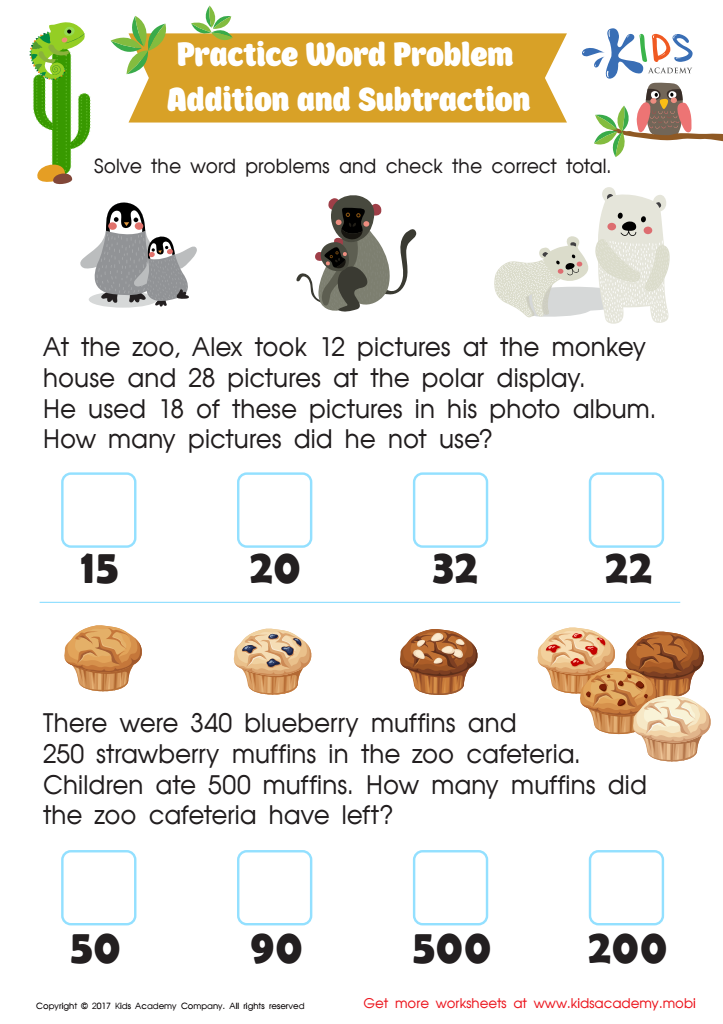
Addition and Subtraction: Word Problems Worksheet








Reading comprehension in the context of normal addition and subtraction word problems is crucial for children aged 5-9, as it lays the foundation for their mathematical understanding and overall literacy skills. At this developmental stage, children are transitioning from concrete operations to more abstract thinking. Word problems require them not only to perform arithmetic operations but also to decode and comprehend language.
Parents and teachers should care about this because strong reading comprehension skills facilitate problem-solving and critical thinking. When children can effectively understand a word problem, they are equipped to identify the necessary mathematical operations, recognize key details, and apply those skills in real-life scenarios.
Moreover, integrating reading and math encourages a holistic approach to learning, demonstrating the interconnectedness of different subject areas. When students struggle with word problems, it can lead to frustrations in both math and reading, potentially hindering their overall academic confidence and performance.
Fostering a strong foundation in reading comprehension and mathematical reasoning in early childhood is essential, not only for immediate success in school but also for lifelong learning and adaptability in an increasingly complex world. Engaging in these skills early helps children become competent readers and thinkers, setting them up for future success.