
Normal Advanced Times Tables up to 12 Worksheets for Ages 5-9
12 filtered results
Difficulty Level
Grade
Age
-
From - To
Subject
Activity
Standards
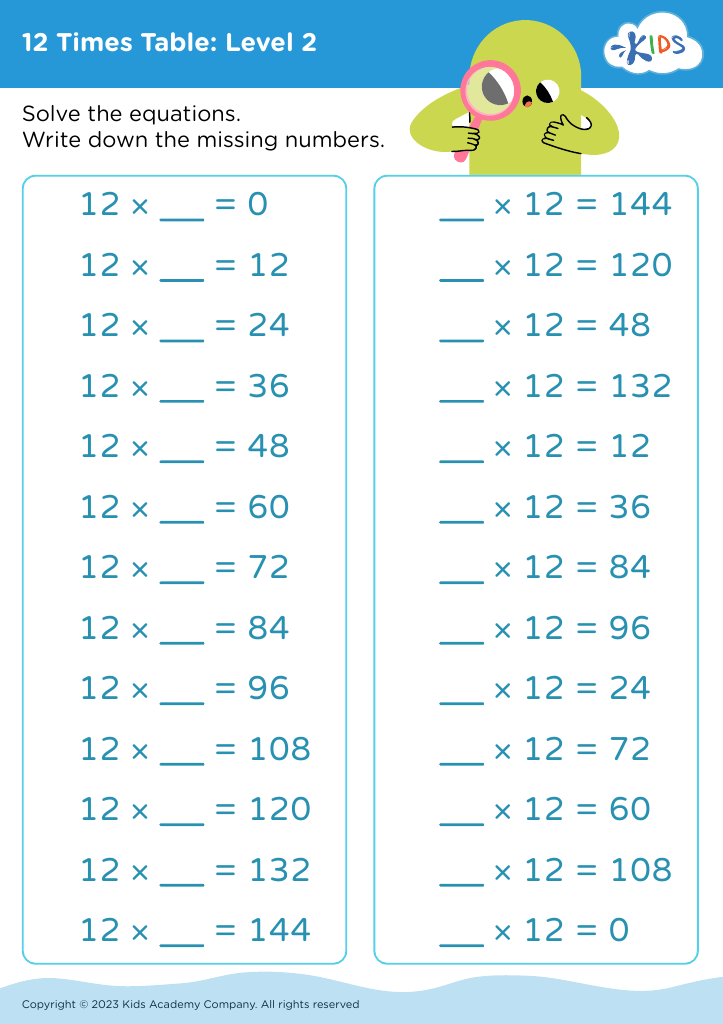
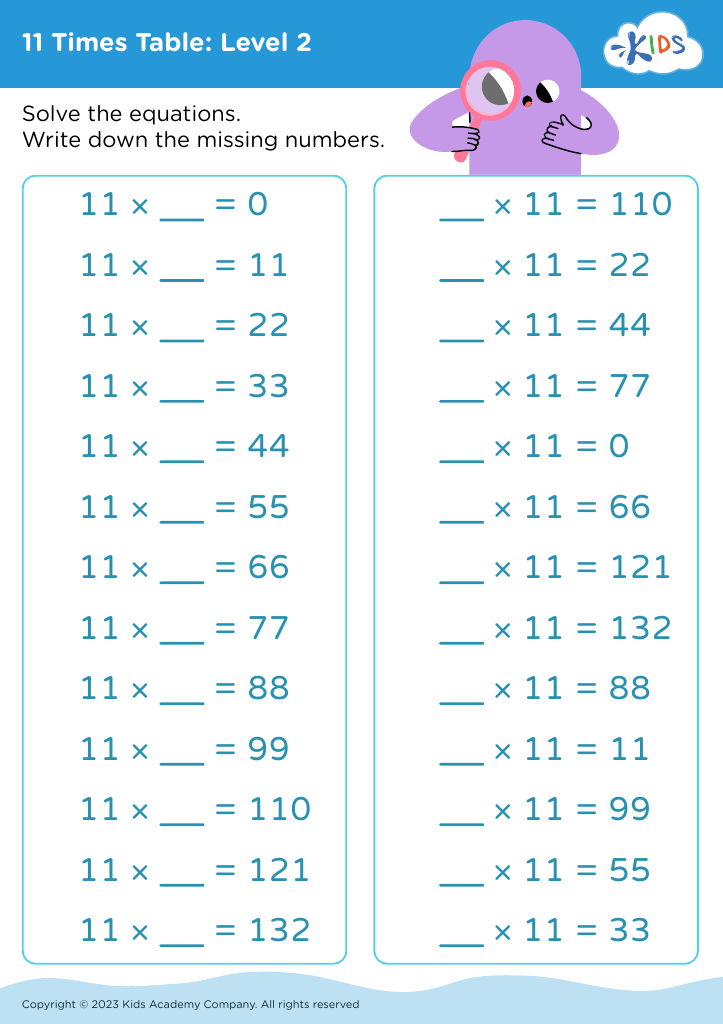
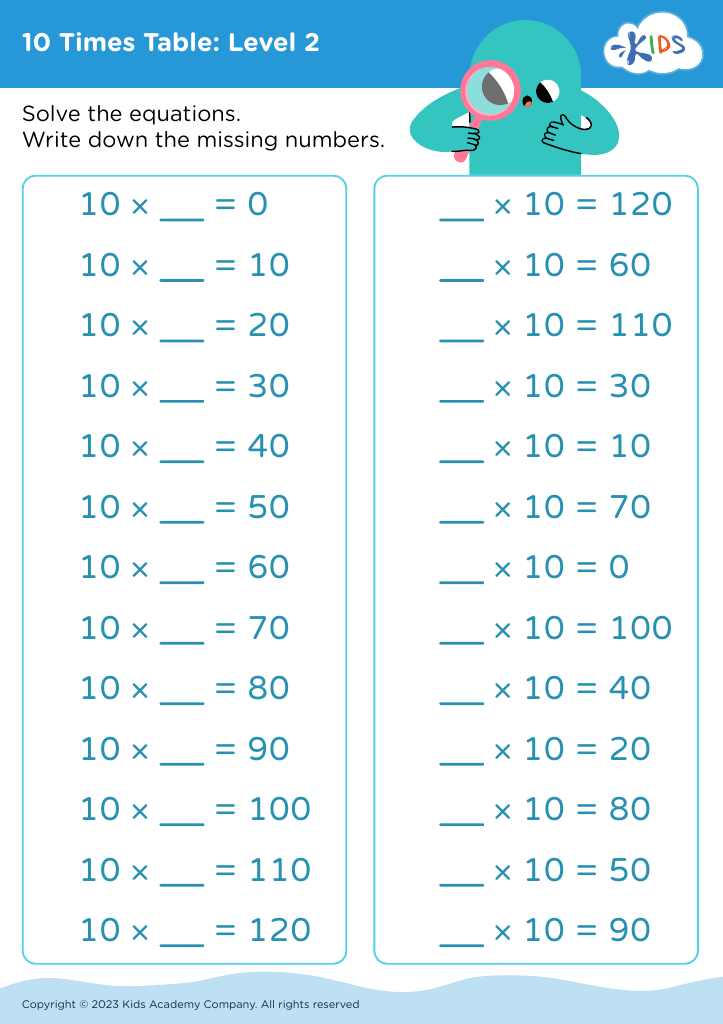
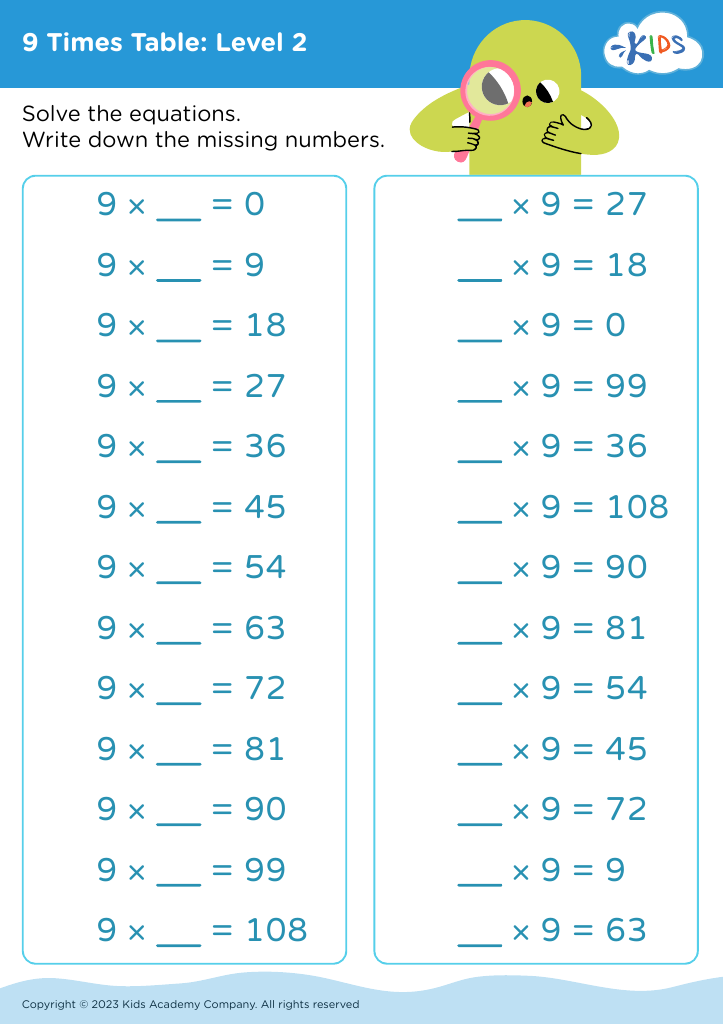
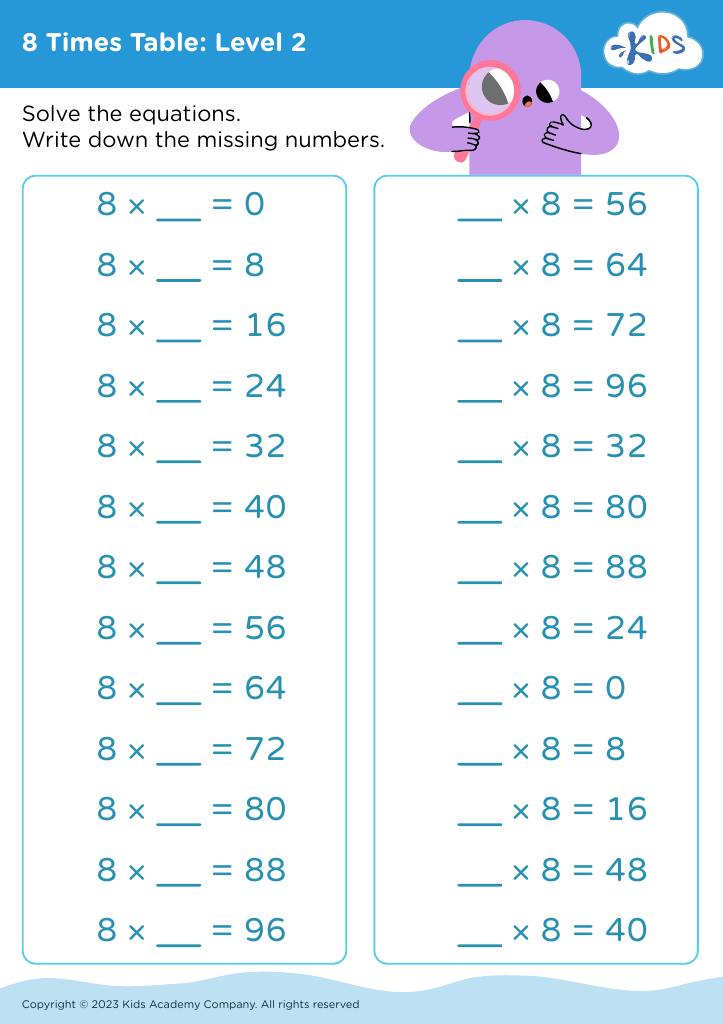
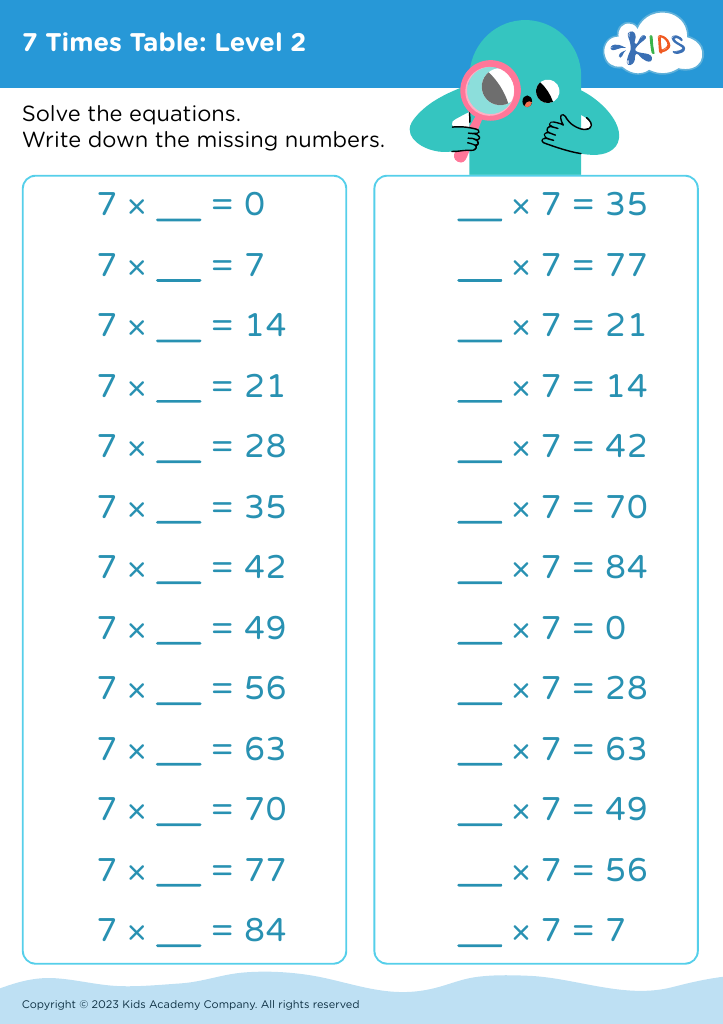
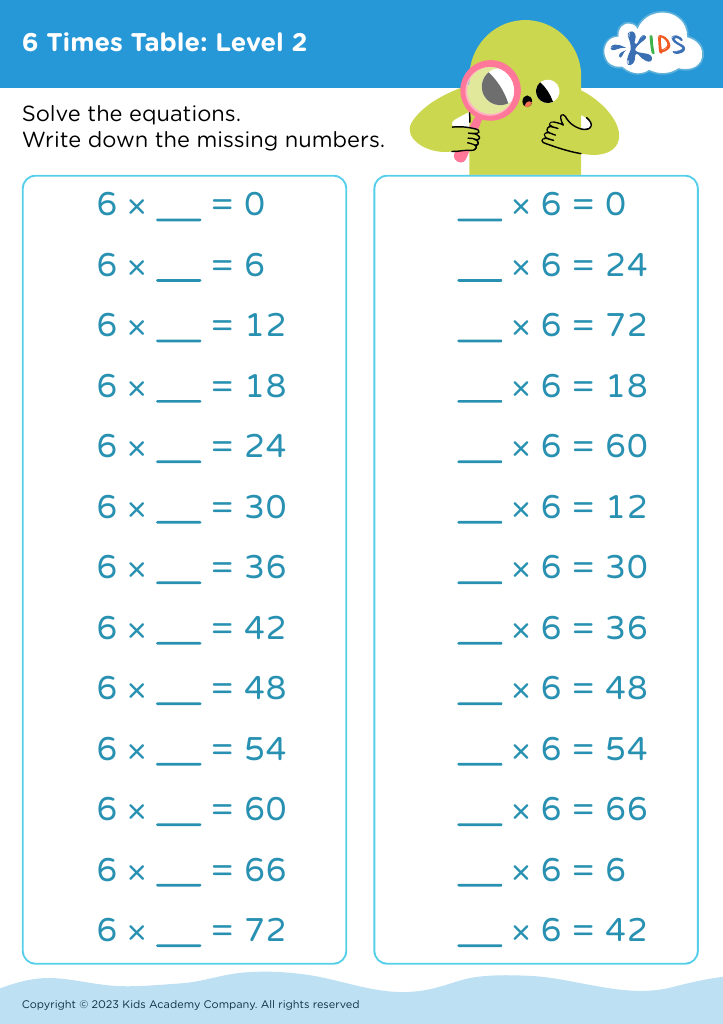
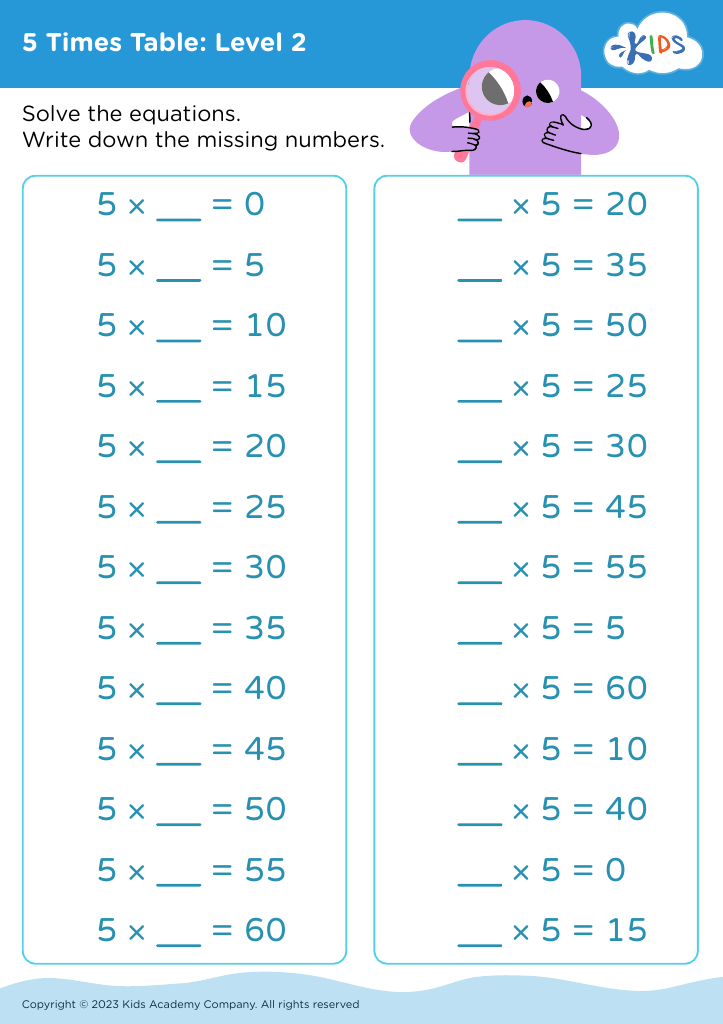
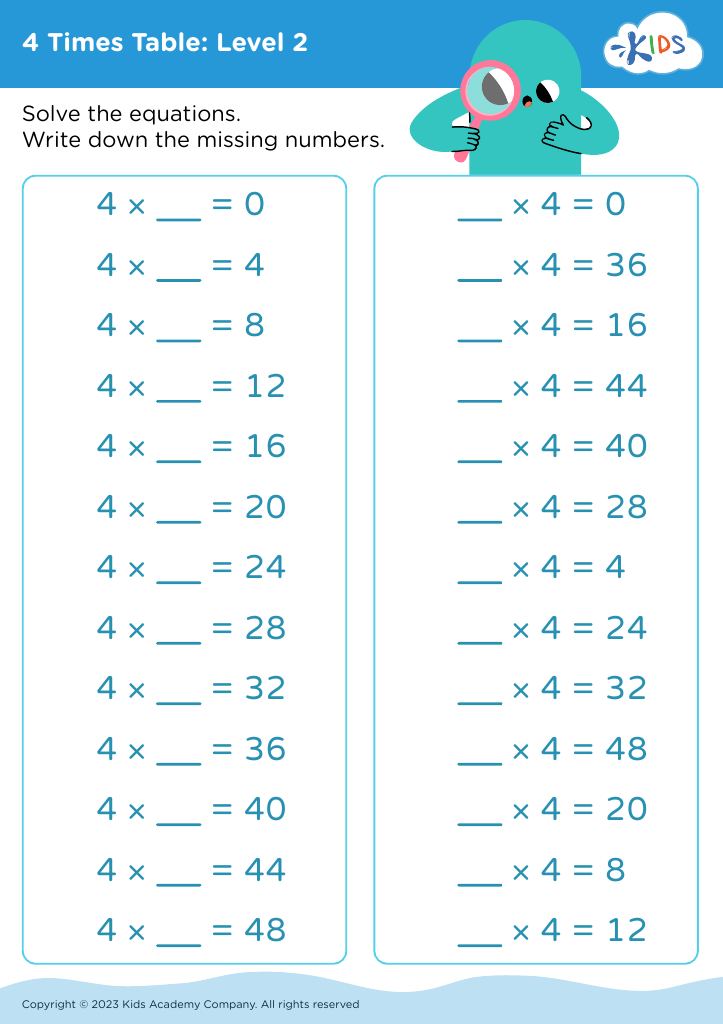
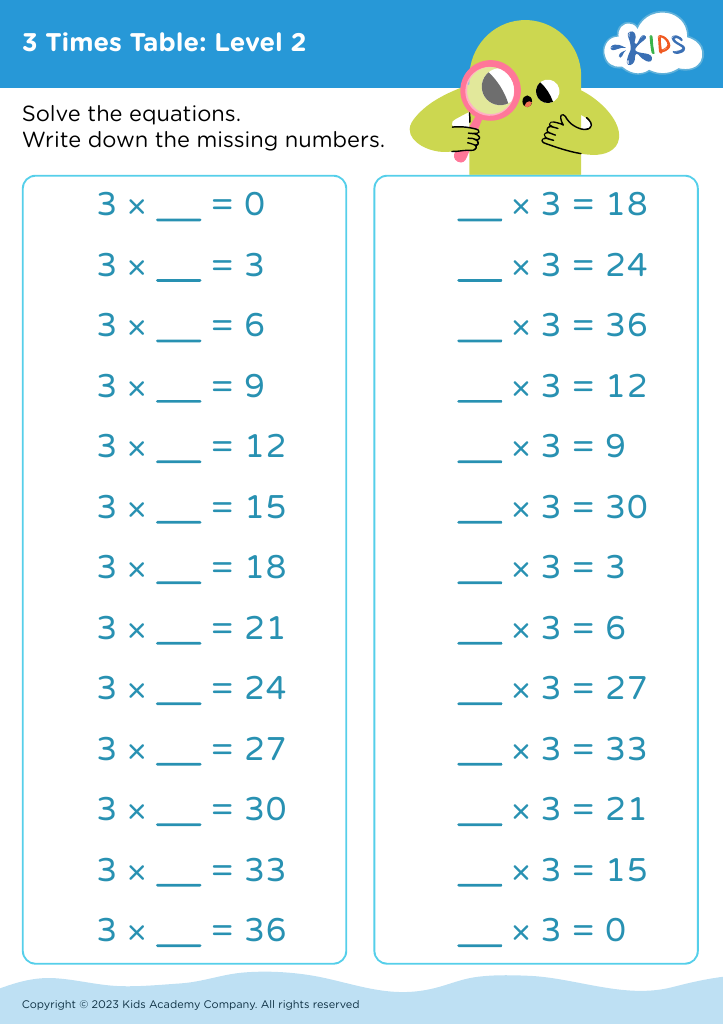
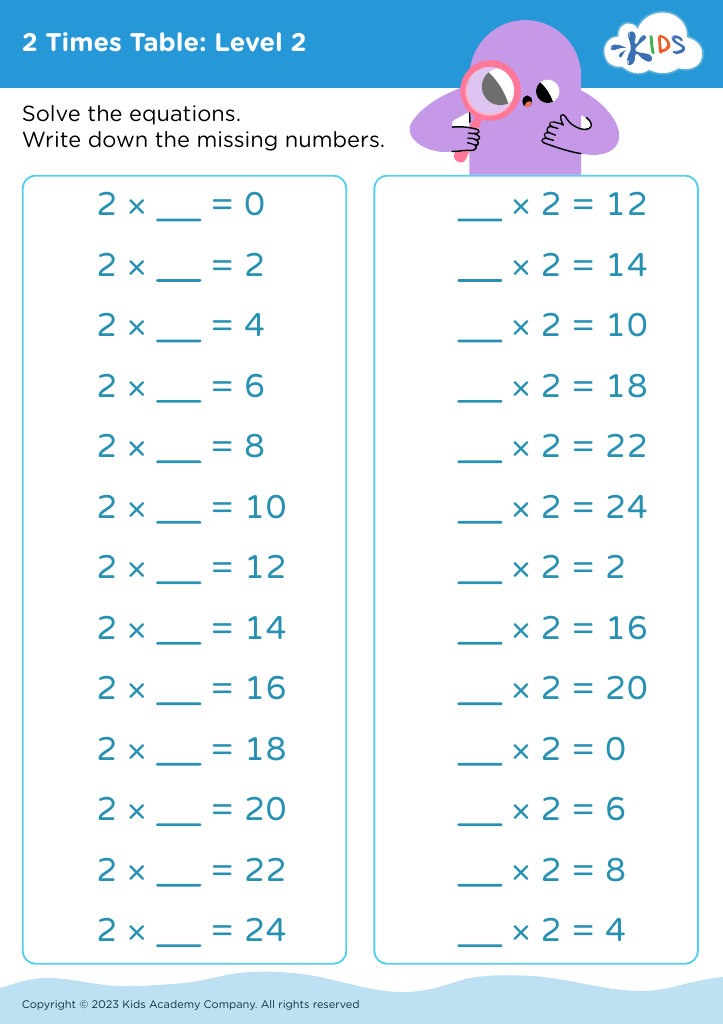
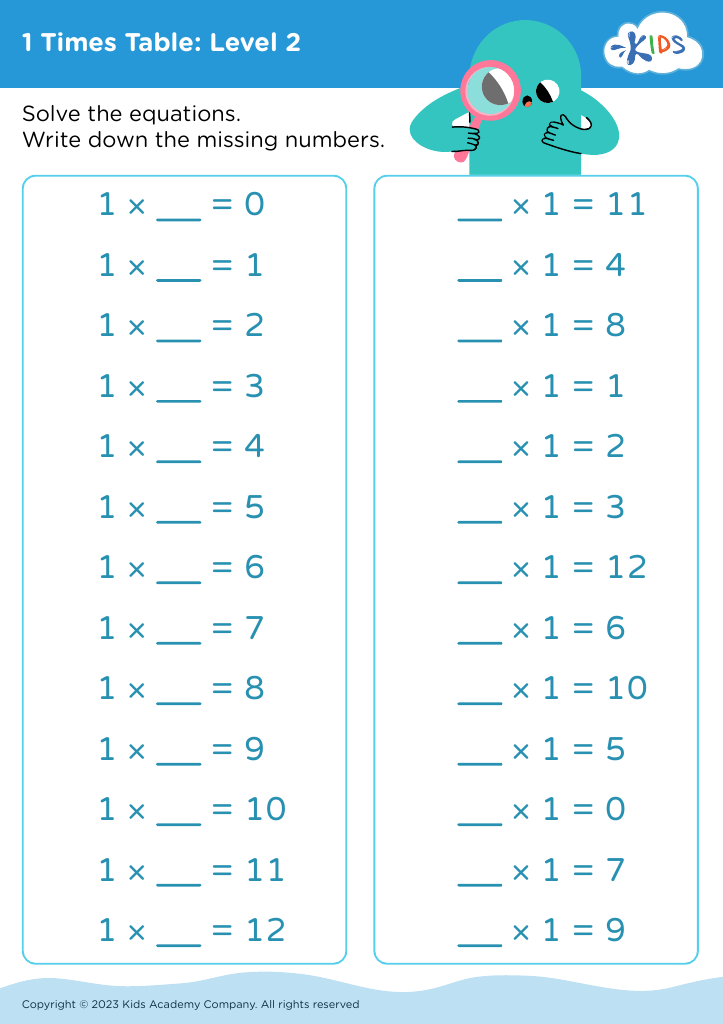
Boost your child's math skills with our engaging Normal Advanced Times Tables up to 12 worksheets, designed for ages 5-9! These printable resources help young learners grasp multiplication concepts effectively, fostering confidence and proficiency. Filled with fun activities, our worksheets encourage interactive learning, allowing kids to explore times tables in an enjoyable, stress-free way. With colorful illustrations and varying difficulty levels, these worksheets cater to different learning styles and needs. Perfect for home or classroom use, these resources will make mastering multiplication both fun and educational. Help your child excel in math with our comprehensive collection of times tables worksheets today!
Favorites
With answer key
Interactive
Join Kids Academy for Free
Who is primarily going to use this learning content?



Understanding normal and advanced times tables up to 12 is crucial for children aged 5-9, as it lays a strong foundation for their mathematical skills. At this age, children are beginning to grasp fundamental concepts, and mastering multiplication supports their cognitive development in several key ways.
Firstly, multiplication is an essential math operation that forms the basis for more complex skills, such as division, fractions, and algebra. By becoming proficient in times tables, children increase their numerical fluency and enhance their problem-solving abilities.
Secondly, knowing times tables boosts confidence in math, reducing anxiety around numbers. This self-assurance encourages positive attitudes toward learning, helping children engage in more advanced mathematical concepts later on.
Moreover, the ability to calculate quickly and accurately aids in everyday activities, from understanding shopping discounts to measuring ingredients in cooking. Building these skills early also encourages critical thinking and logical reasoning, laying the groundwork for success in STEM-related fields.
Finally, a collaborative effort between parents and teachers can create a supportive environment for children. Engaging them in fun, interactive lessons helps reinforce these skills, ensuring they not only learn multiplication but also develop a love for mathematics.








