
Basic geometry understanding Normal Geometry Worksheets for Ages 5-9
3 filtered results
Difficulty Level
Grade
Age
-
From - To
Subject
Activity
Standards
Unlock the world of shapes and spatial understanding with our "Basic Geometry Understanding Normal Geometry Worksheets" designed for ages 5-9! These engaging worksheets help young learners grasp essential geometry concepts through fun, interactive activities. Kids will explore shapes, patterns, symmetry, and spatial reasoning, building a solid math foundation. Ideal for classroom use or at-home practice, Our printable worksheets are perfect for fostering a love for math. Aligned with educational standards, these activities make learning geometry enjoyable and effective. Start your child's geometric journey today and watch their confidence and skills soar!
Favorites
With answer key
Interactive
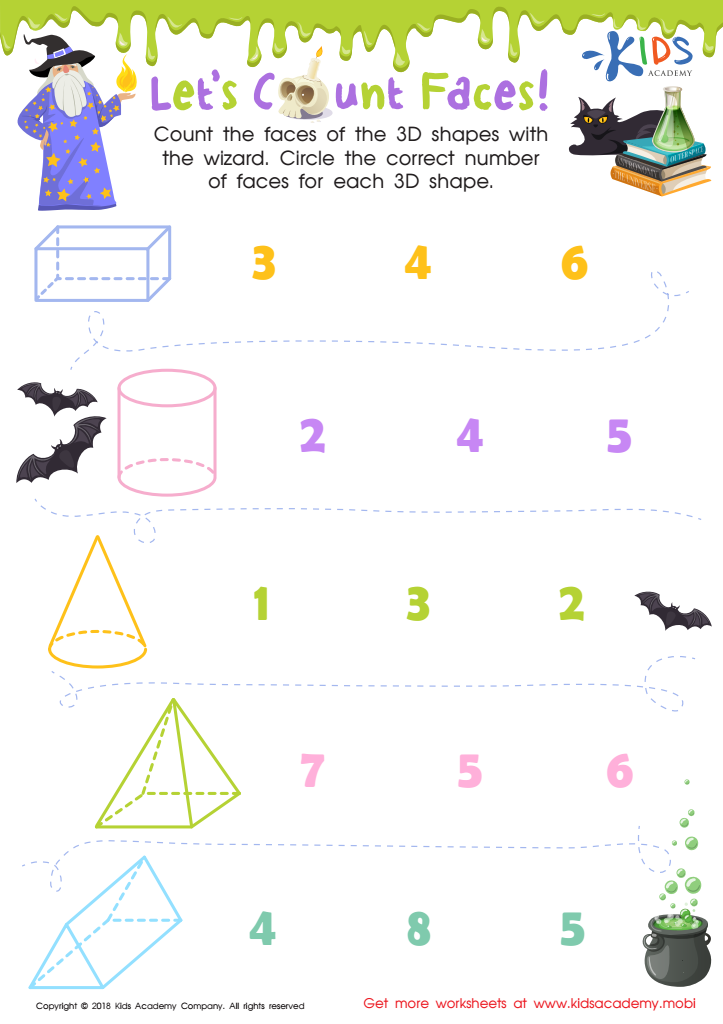
Let's Count Faces! Worksheet
Help the wizard count the faces of 3D shapes! Ask your kids to identify the shapes before beginning, then have them circle the correct number of faces. Enjoy this fun wizard-themed worksheet with your kids!
 Assign to My Students
Let's Count Faces! Worksheet
Worksheet











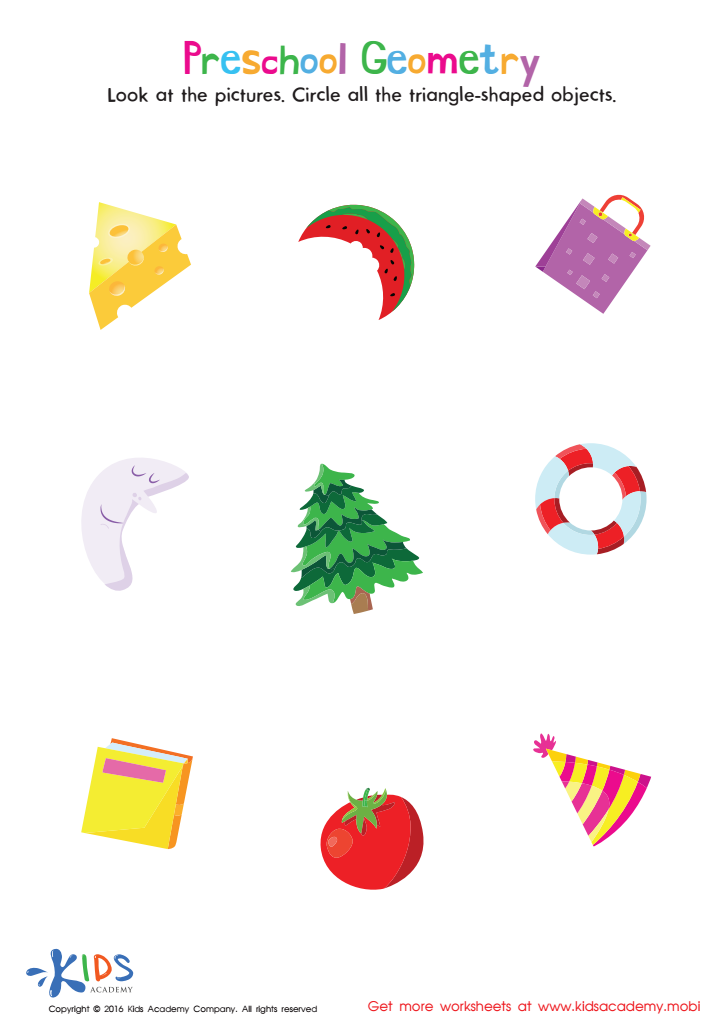
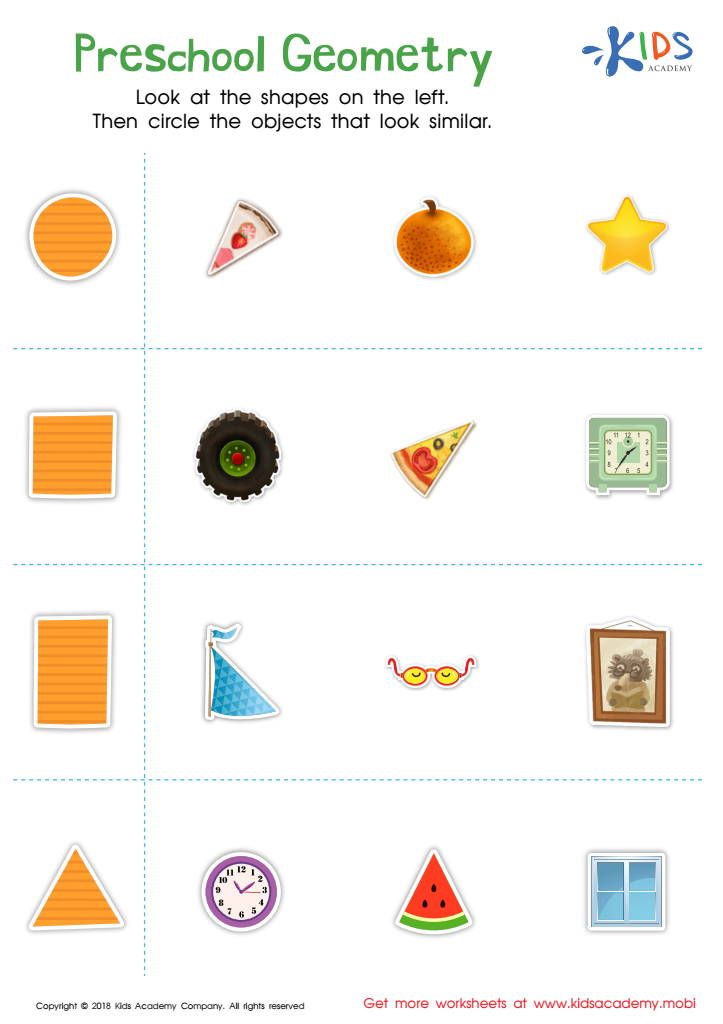
Preschool Geometry Worksheet
This worksheet gives 3rd graders the basics of geometry. Kids match everyday objects to shapes they know, e.g. an orange to a circle, a square to a slice of watermelon and a rectangle to a picture frame. It's a fun way to give them confidence to tackle more complex geometry in the future.
Preschool Geometry Worksheet
Worksheet
Join Kids Academy for Free
Who is primarily going to use this learning content?








Understanding basic geometry at an early age, specifically between ages 5-9, is crucial for several reasons. First and foremost, geometry helps young children strengthen essential cognitive skills such as spatial reasoning, problem-solving, and critical thinking. These foundational skills are not only vital for succeeding in math but also apply to everyday tasks and future learning experiences in both STEM and non-STEM fields.
During these formative years, children are naturally curious and perceptive, making it an optimal time to introduce geometric concepts like shapes, sizes, and patterns. Recognizing and naming shapes such as circles, squares, and triangles can enhance their vocabulary, while activities like puzzles build their ability to visualize and manipulate objects mentally.
Additionally, early exposure to geometry can foster a positive attitude towards mathematics, reducing anxiety and building confidence. Games, hands-on activities, and interactive learning help maintain enthusiasm and engagement, transforming complex ideas into fun challenges.
Parents and teachers play a pivotal role in this process, guiding children through playful yet educational experiences that solidify their comprehension. Encouraging a robust understanding of basic geometry thus lays the groundwork for more advanced math concepts, bridging everyday experiences with academic learning and helping children see the world from multiple perspectives.








