Differentiating shapes Normal Geometry Worksheets for Ages 5-9
3 filtered results
-
From - To
Explore our engaging Differentiating Shapes Normal Geometry Worksheets tailored for children ages 5 to 9! Designed to cultivate essential geometry skills, these worksheets encourage young learners to identify, compare, and differentiate various shapes including circles, squares, triangles, and more. With colorful illustrations and fun activities, your child will stay motivated while developing critical thinking abilities. Ideal for both classroom and home use, our resources foster an interactive learning experience that aligns with educational standards. Let your little ones embark on an exciting journey of shape exploration and boost their confidence in geometry today!
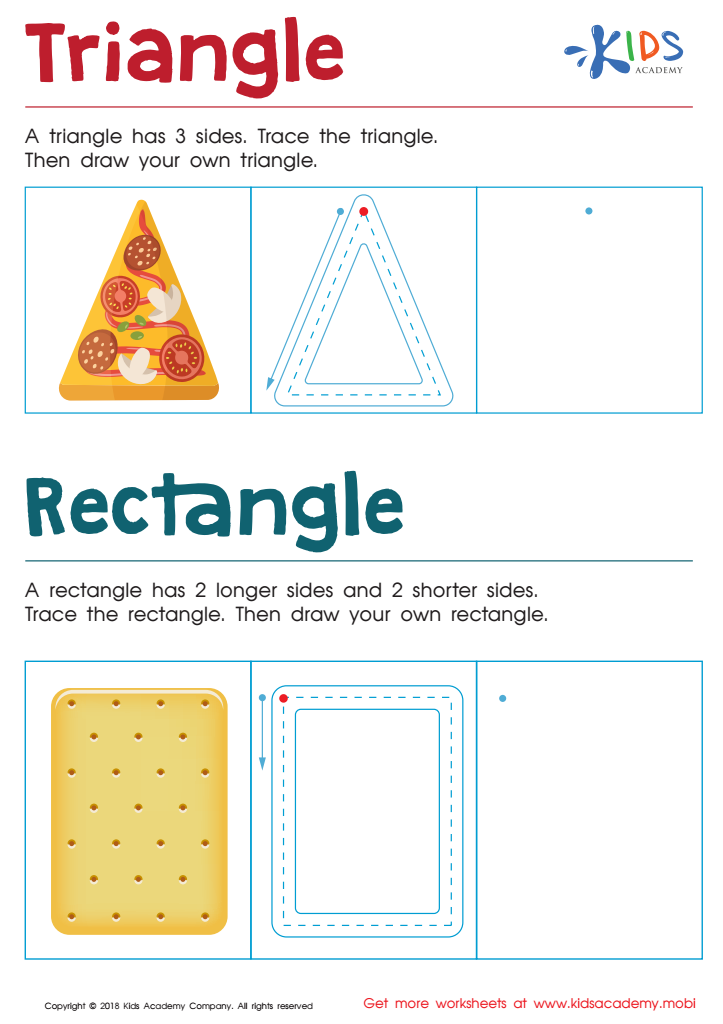
Triangle Rectangle Worksheet
 Assign to My Students











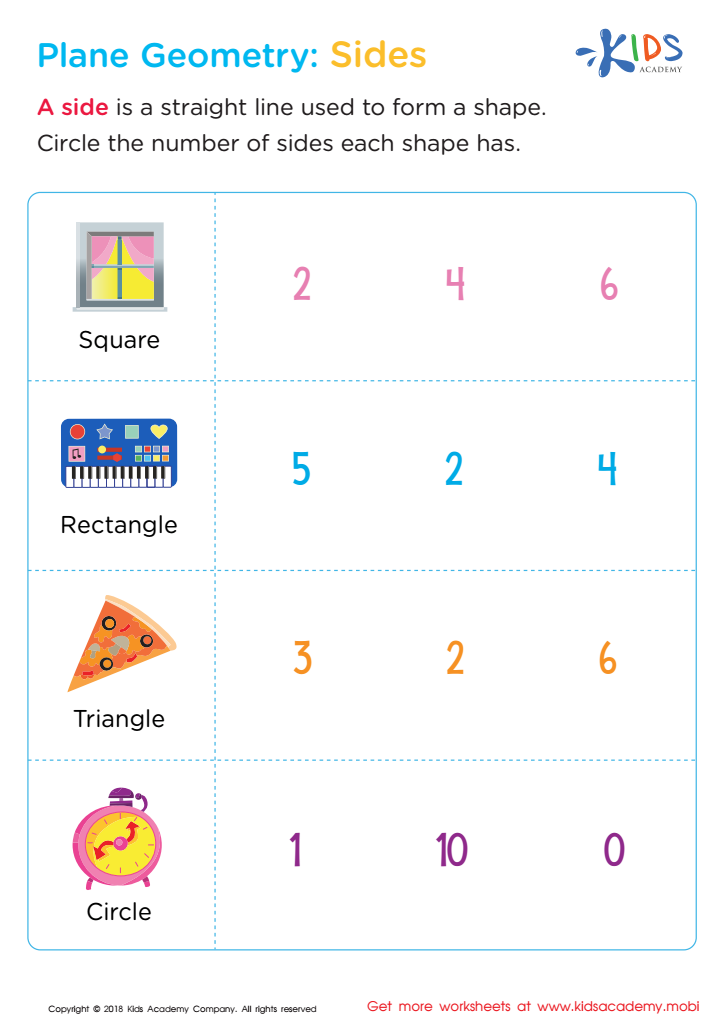
Plane Geometry: Sides Worksheet
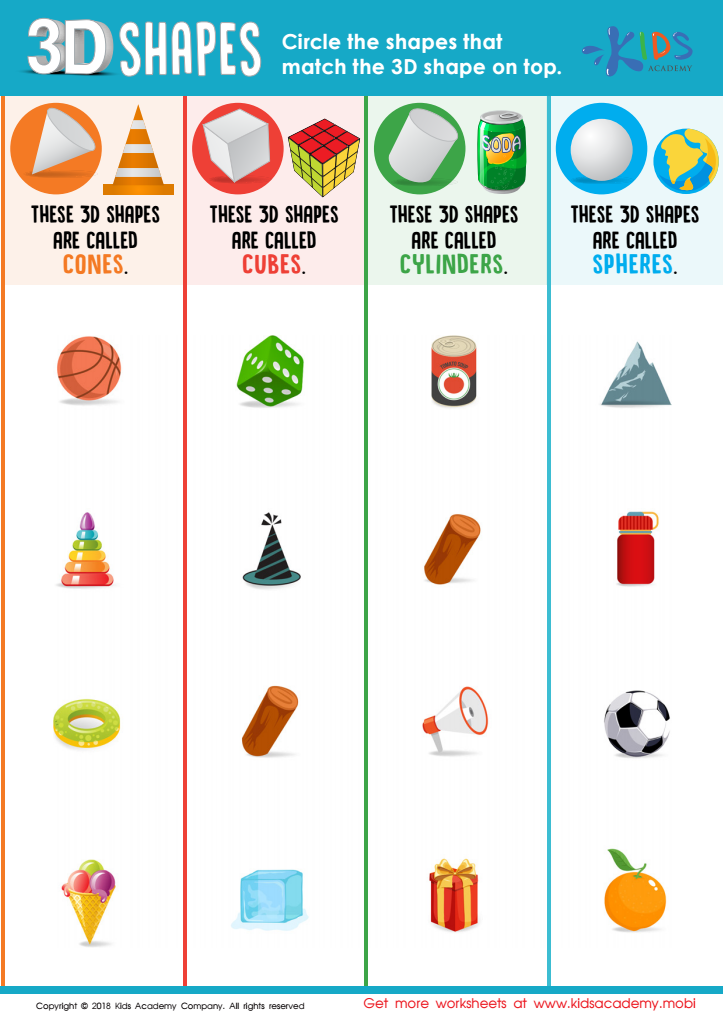
3D Shapes Worksheet








Differentiating shapes in normal geometry for children aged 5-9 is crucial for several reasons. First, this age group lays the foundation for spatial reasoning and mathematical understanding. Introducing shapes in varied and engaging ways helps children grasp key concepts, making learning accessible to all, regardless of their developmental stage. Differentiation allows educators and parents to cater to diverse learning needs, fostering a supportive environment.
Moreover, understanding shapes enhances cognitive skills, as children learn to identify, sort, and categorize geometric figures. This foundational knowledge not only promotes confidence in math but also encourages critical thinking and problem-solving skills essential for academic success.
Additionally, exploring shapes facilitates real-world connections. Children recognize geometric forms in their surroundings, which reinforces learning and makes it more meaningful. As they progress, strong shape recognition can lead to understanding measurements, area, and volume, concepts critical for advanced mathematics.
By giving attention to shape differentiation, parents and teachers can nurture creativity and exploration in their young learners. It fosters a love for math and geometry, empowering children to engage more passionately with the subject as they grow. Investing in these foundational skills directly impacts their future academic and life success.








