Enhancing Counting Skills Normal Numbers Worksheets for Ages 5-9
5 filtered results
-
From - To
Boost your child’s counting skills with our engaging "Enhancing Counting Skills Normal Numbers Worksheets" designed specifically for ages 5-9! These worksheets offer a fun and interactive approach to learning numbers, making it easy for young learners to grasp foundational math concepts. Featuring colorful illustrations and diverse activities, your child will enjoy counting, recognizing, and writing numbers. Each worksheet is tailored to reinforce numerical proficiency and foster confidence in math skills. Perfect for home practice or classroom use, these resources nurture a love for learning while preparing children for future academic success. Start your counting journey today!
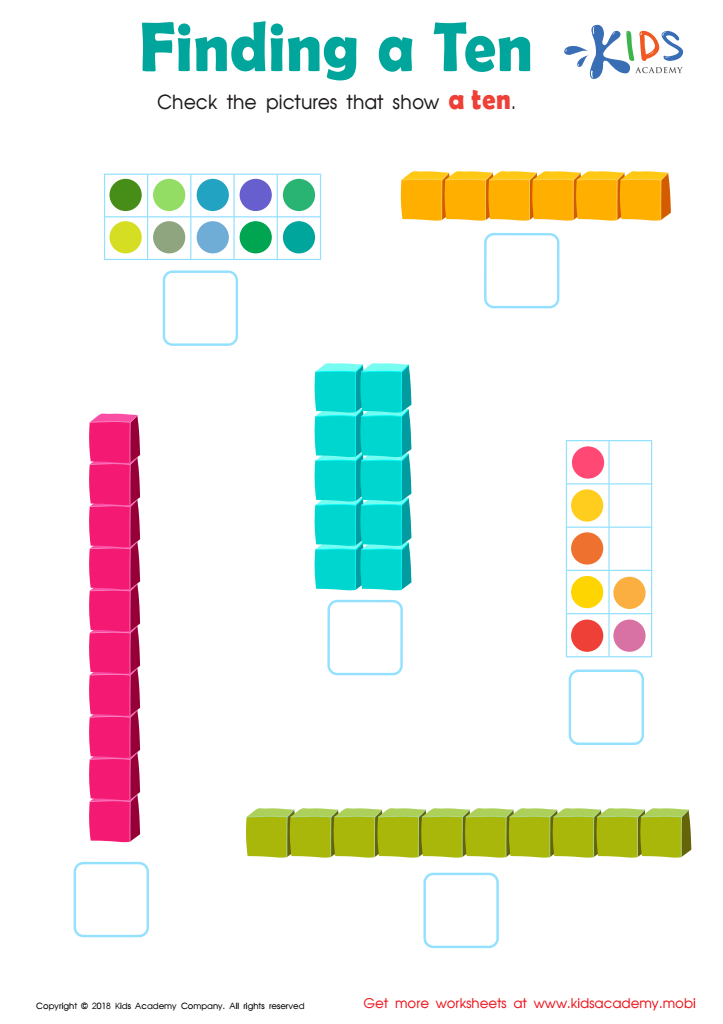
Finding a Ten Worksheet
 Assign to My Students
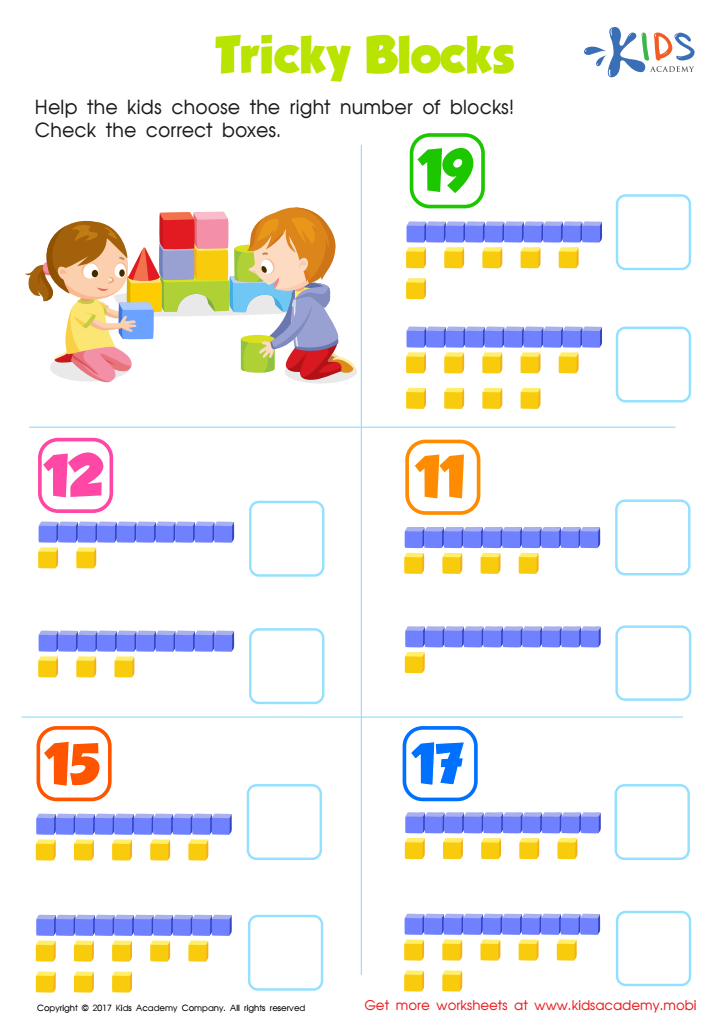
Tricky Blocks Worksheet
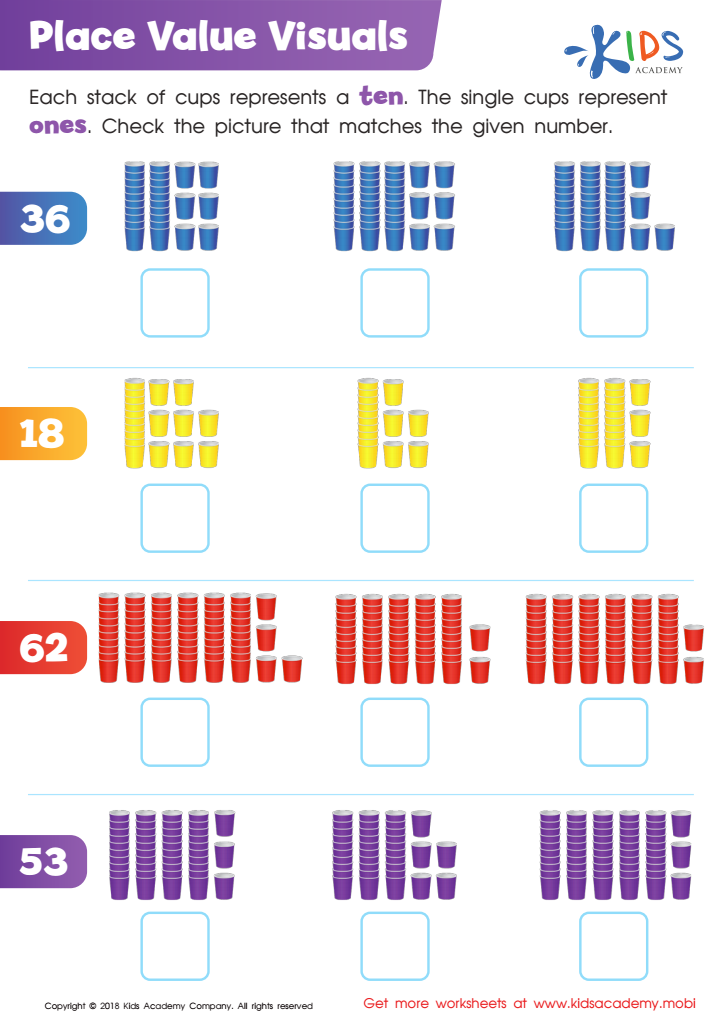
Place Value Visuals Worksheet
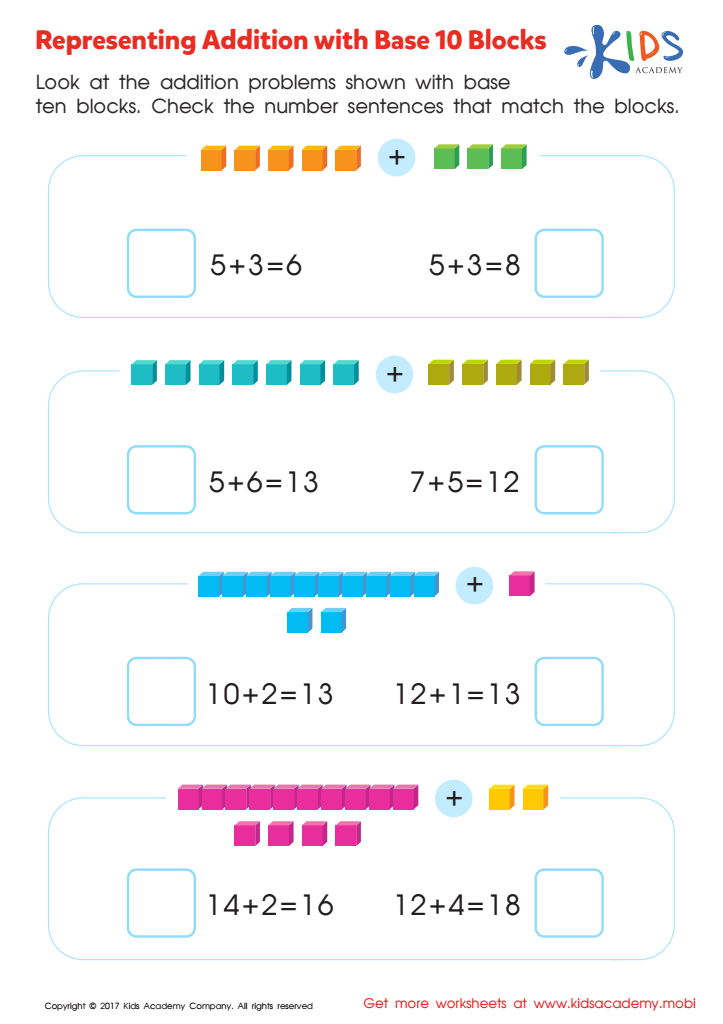
Representing Addition with Base 10 Blocks Worksheet
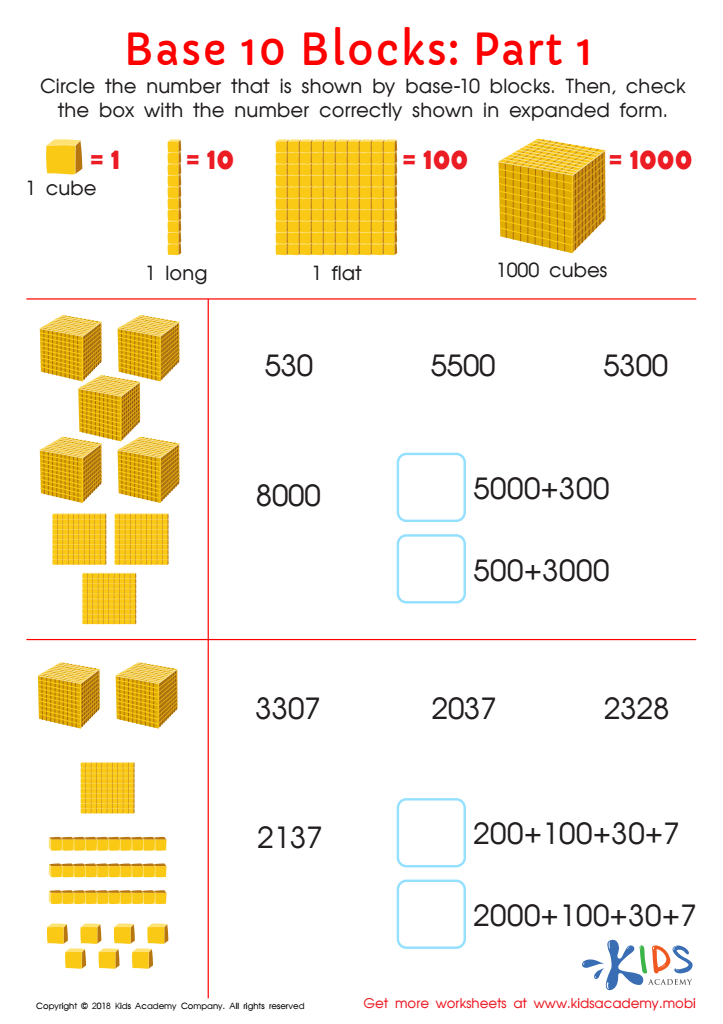
Base 10 Blocks Worksheet: Part 1








Enhancing counting skills in children aged 5-9 is crucial for several reasons. First, these foundational skills form the basis for all future mathematics learning. Mastery of counting helps children understand number concepts, shape their ability to perform operations like addition and subtraction, and supports more complex tasks such as multiplication and division.
Furthermore, counting skills bolster cognitive development by improving memory, attention, and problem-solving abilities. Engaging in counting activities also fosters a sense of accomplishment and confidence, which can enhance a child’s overall attitude towards learning.
Additionally, these skills have real-world applications. Children use counting when managing money, measuring ingredients in cooking, or organizing toys, making mathematics relevant to their daily lives. Beyond academic benefits, counting supports social development, as children often count in group activities and games, promoting cooperation and teamwork.
Thus, parents and teachers should prioritize enhancing counting skills through playful, engaging, and diverse activities. By doing so, they not only lay a strong mathematical foundation but also contribute to a holistic development in cognitive, social, and emotional domains, ultimately setting children on a path towards success in school and life.








