Animal Classification Normal Math Worksheets for Ages 5-9
4 filtered results
-
From - To
Discover our engaging Animal Classification Normal Math Worksheets designed specifically for children aged 5-9! These worksheets make learning math exciting by incorporating fun animal themes that capture young learners’ attention. Students will enhance their math skills while identifying and classifying animals, improving their critical thinking and problem-solving abilities. Each worksheet features age-appropriate questions that challenge kids in counting, sorting, and recognizing animal groups in interactive ways. Perfect for at-home practice or classroom activities, our worksheets create a playful, educational experience that fosters a love for learning in early grade students. Get started today and watch their math skills soar!
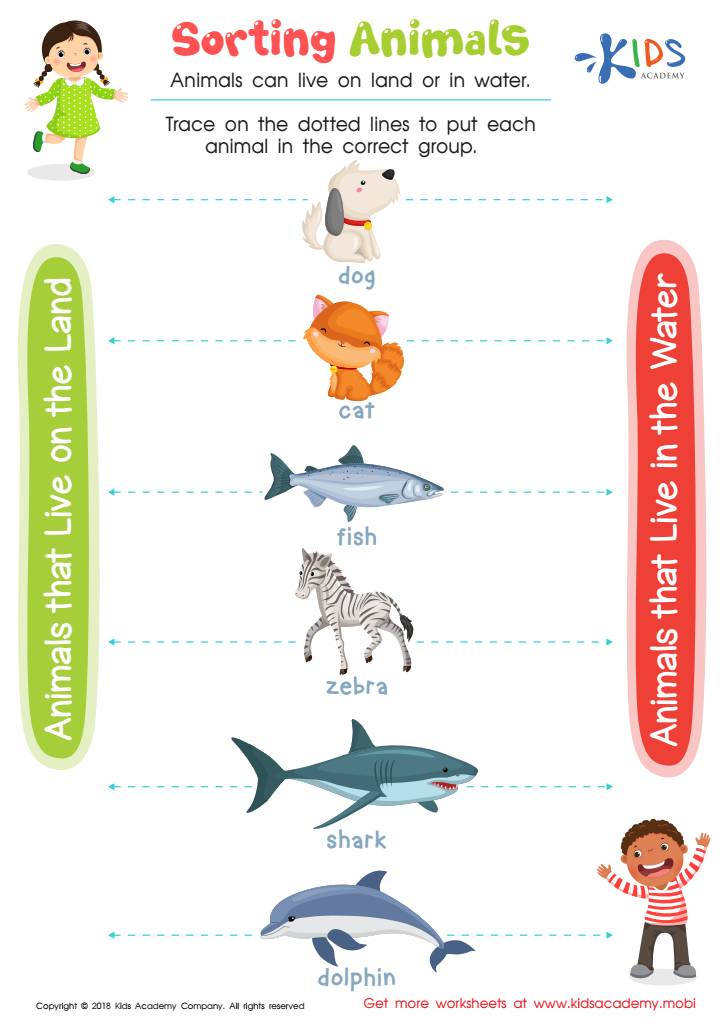
Sorting Animals Worksheet
 Assign to My Students
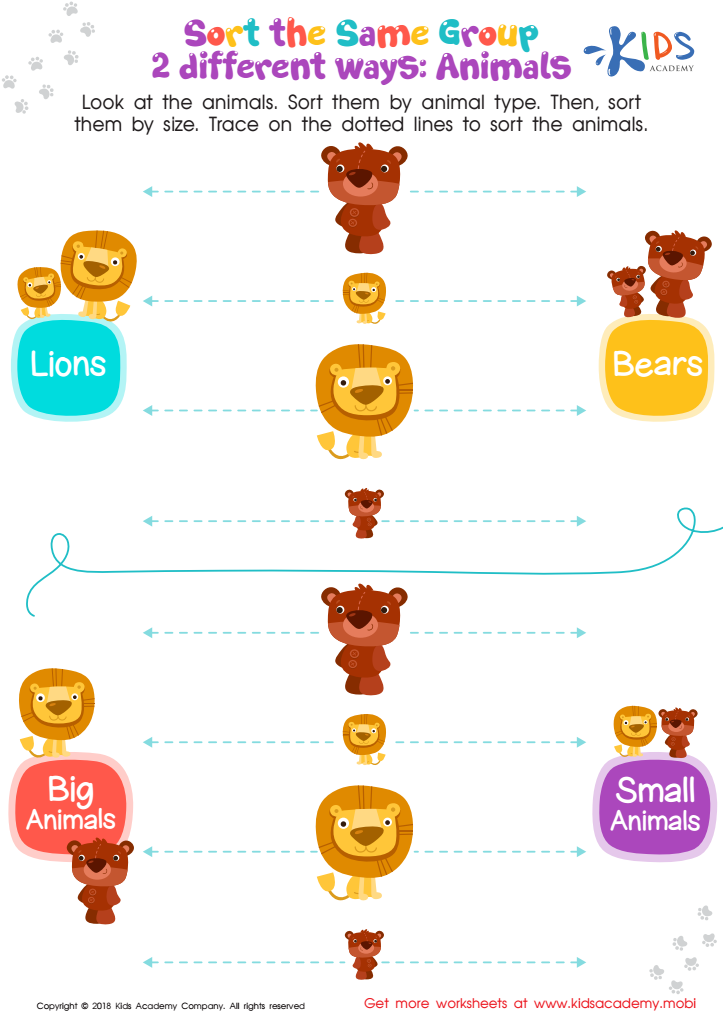
Sort the Same Group 2 Different Ways: Animals Worksheet
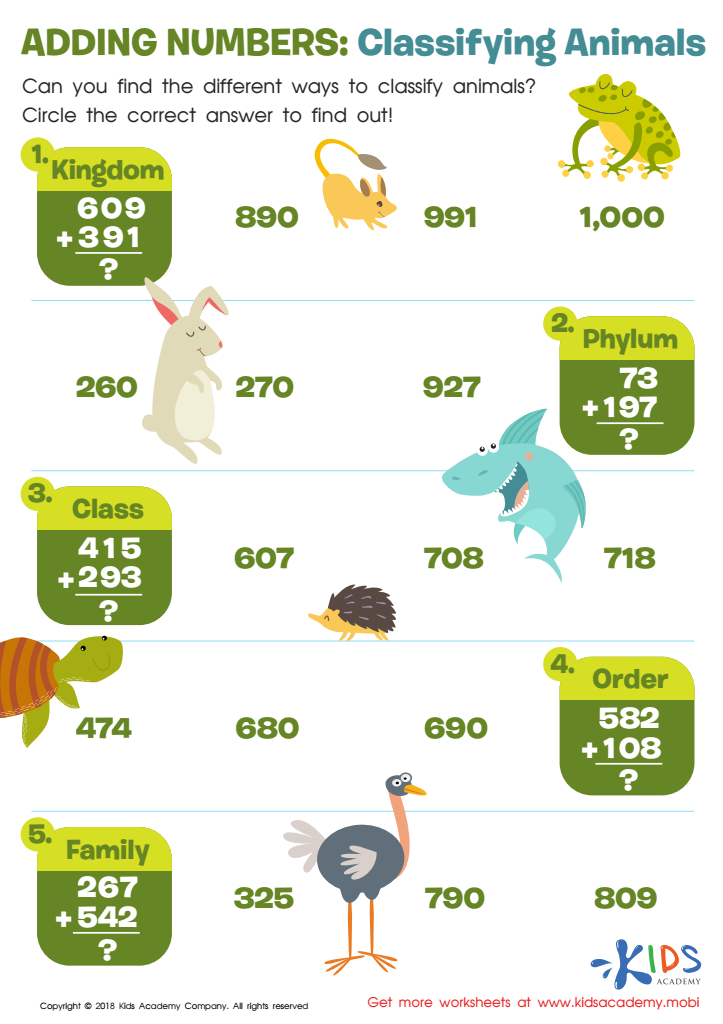
Adding Numbers: Classifying Animals Worksheet
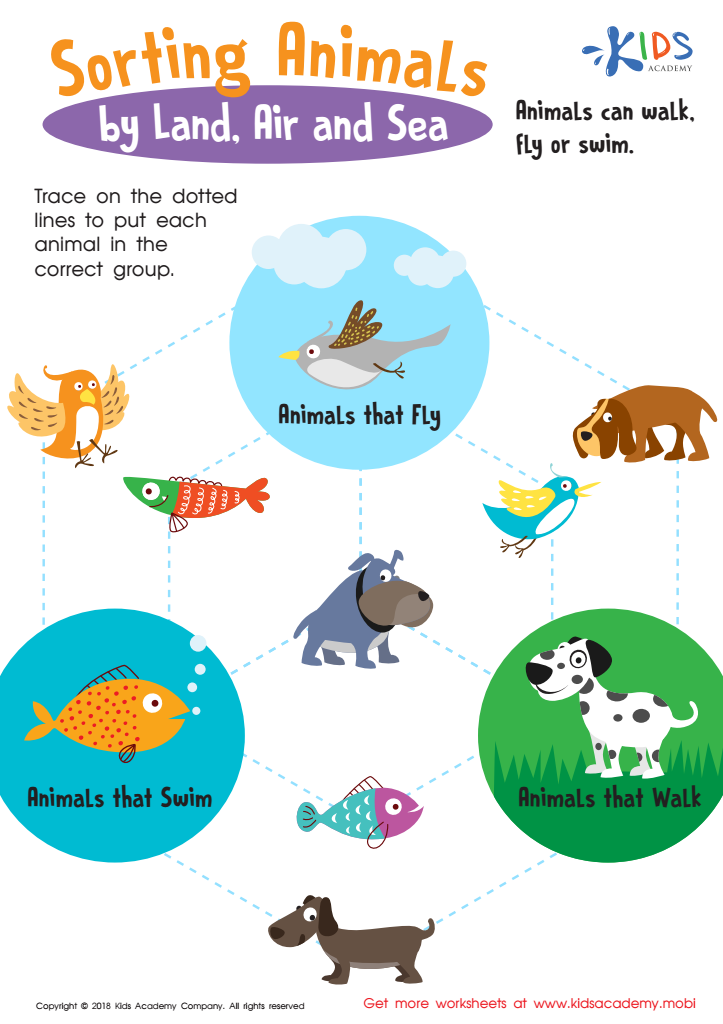
Sorting Animals by Land, Air and Sea Worksheet







Parents and teachers should care about Animal Classification Normal Math for ages 5-9 because it serves a foundational role in developing critical thinking and analytical skills in young learners. At this age, children are naturally curious about the world around them, and integrating math with animal classification encourages exploration of both mathematics and biology. Understanding how to categorize animals based on characteristics like habitat, diet, and physical traits not only enriches their comprehension of the natural world but also fosters logical reasoning and problem-solving abilities.
Moreover, this approach can significantly enhance engagement and retention. Young students often relate better to concepts presented in a hands-on and tangible way, such as through animals they adore. It illuminates math as a useful tool rather than an abstract concept. Furthermore, animal classification encourages enthusiasm for science, nurturing future generations of informed individuals who might explore careers in biology, conservation, or environmental sciences.
Ultimately, by teaching children about animal classification through mathematical principles, educators and parents can help create a well-rounded educational experience that emphasizes the interconnectedness of diverse knowledge fields, laying a solid groundwork for lifelong learning.








