Conversion skills Normal Math Worksheets for Ages 5-9
3 filtered results
-
From - To
Discover our "Conversion Skills Normal Math Worksheets" designed for children aged 5-9! These engaging and interactive worksheets focus on enhancing young learners' understanding of conversion skills, enabling them to tackle various mathematical challenges with confidence. Whether it's converting units or grasping essential measurement concepts, our resources provide age-appropriate practice that aligns with developmental milestones. Perfect for both classroom and home use, these worksheets encourage exploration and boost problem-solving abilities. Foster a love for math in your child as they enjoy fun activities and build essential skills! Download and inspire your kids to thrive in mathematics today!
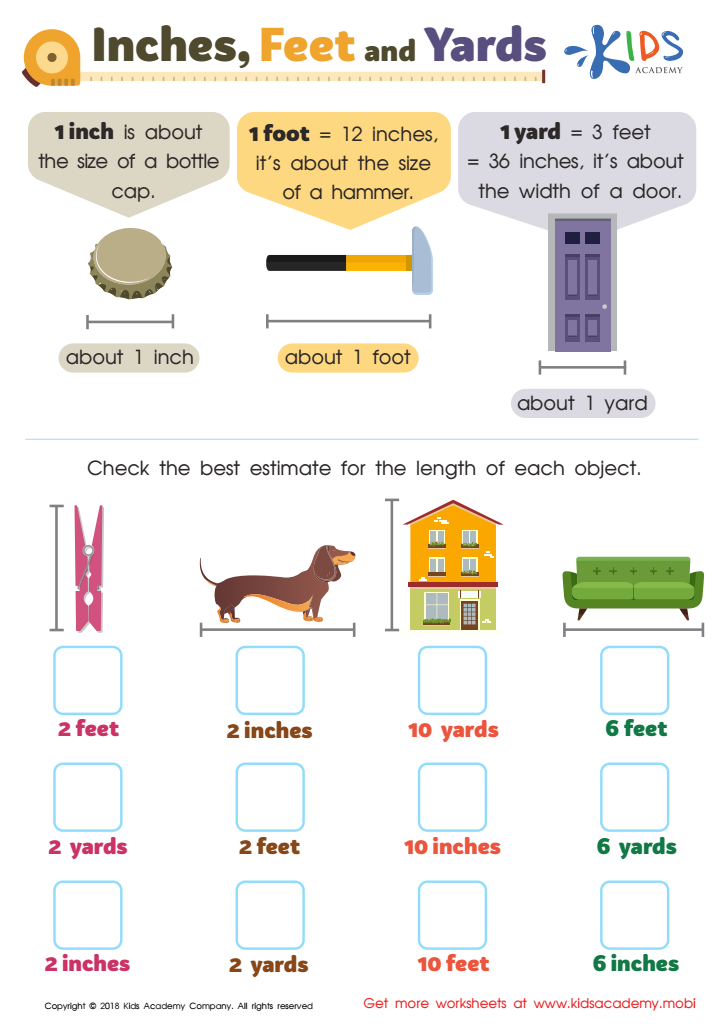
Inches, Feet and Yards Worksheet
 Assign to My Students
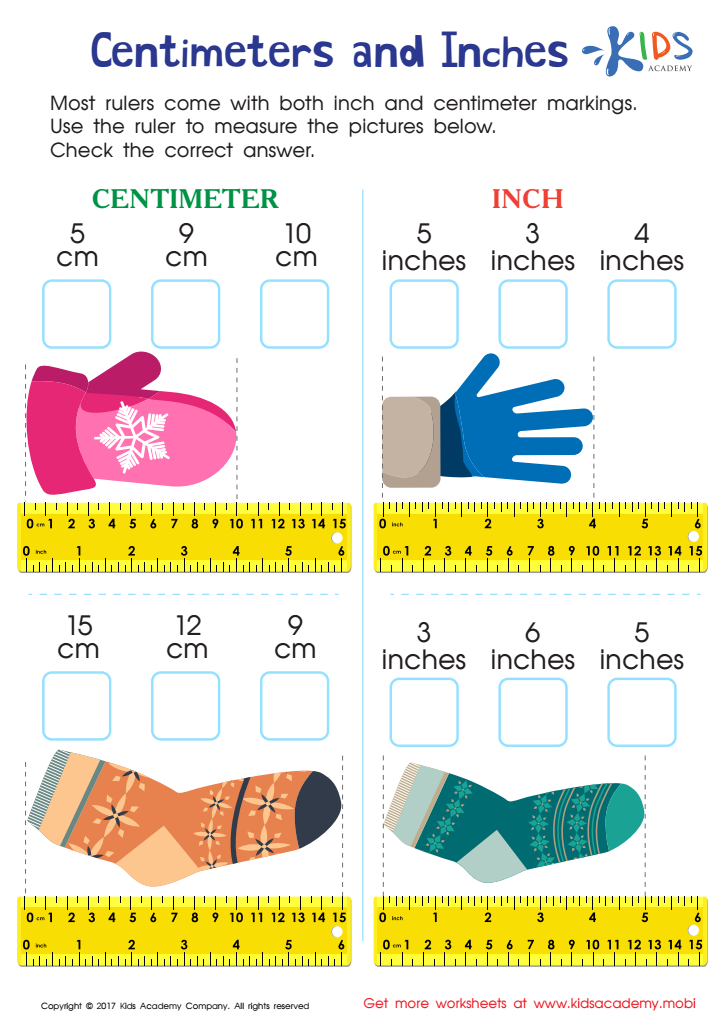
Centimeters and Inches Worksheet
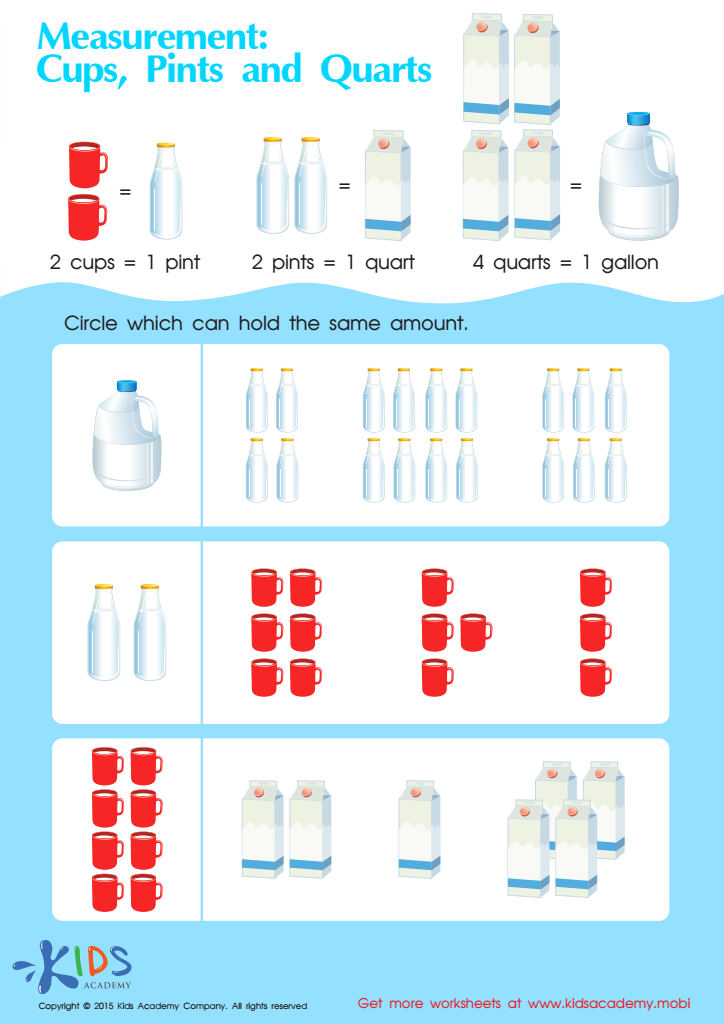
Cups, Pints and Quarts 2 Worksheet








Parents and teachers should prioritize Conversion Skills in Normal Math for children aged 5-9 because these foundational abilities foster critical thinking, problem-solving, and everyday life applications. At this age, children are like sponges, eager to absorb new concepts, and mastering conversion skills helps them understand relationships between different units of measurement, such as time, length, and weight.
Understanding conversions enhances a child's confidence in math. It allows them to tackle more complex problems as they progress in their studies. For instance, knowing how to convert inches to feet or grams to kilograms equips students with the knowledge to navigate real-world situations, from measuring ingredients for a recipe to understanding distances.
Moreover, these skills lay the groundwork for future math proficiency, encouraging analytical skills that are essential in STEM fields (Science, Technology, Engineering, Math). Competencies acquired in these early years can significantly influence a child’s attitude towards mathematics, helping to dispel the anxiety often associated with the subject.
Ultimately, fostering conversion skills not only enhances a child’s mathematical ability but also prepares them for adult responsibilities and promotes a lifelong appreciation for learning and problem-solving. For teachers and parents, supporting these skills is essential for nurturing well-rounded, mathematically competent individuals.








