Counting practice Normal Math Worksheets for Ages 5-9 - Page 2
28 filtered results
-
From - To
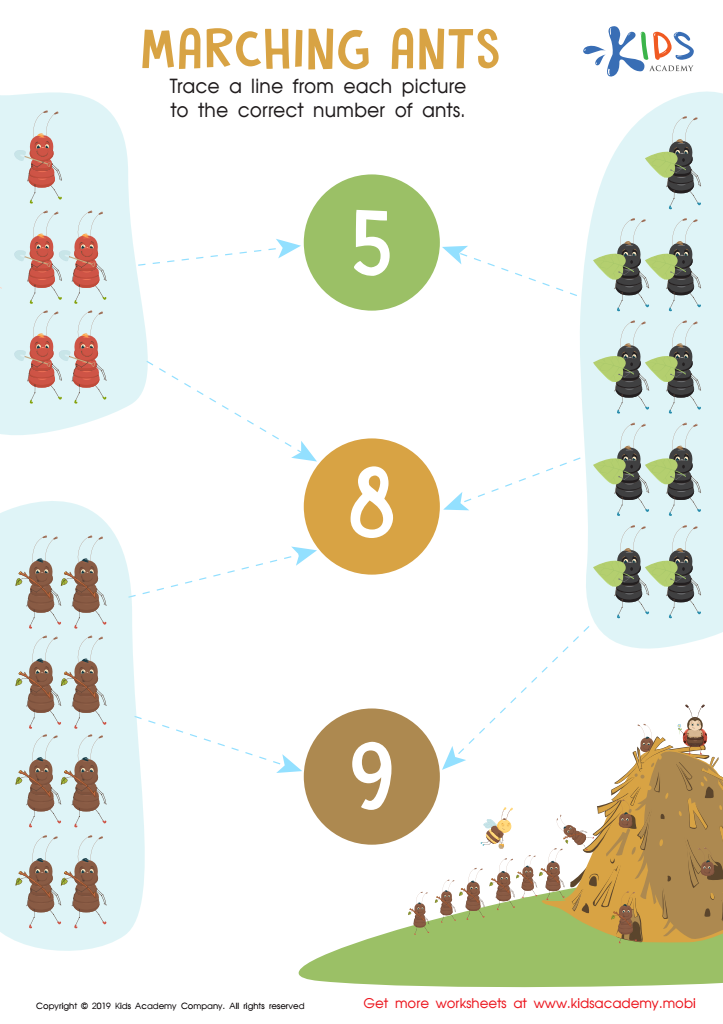
Marching Ants Worksheet
 Assign to My Students
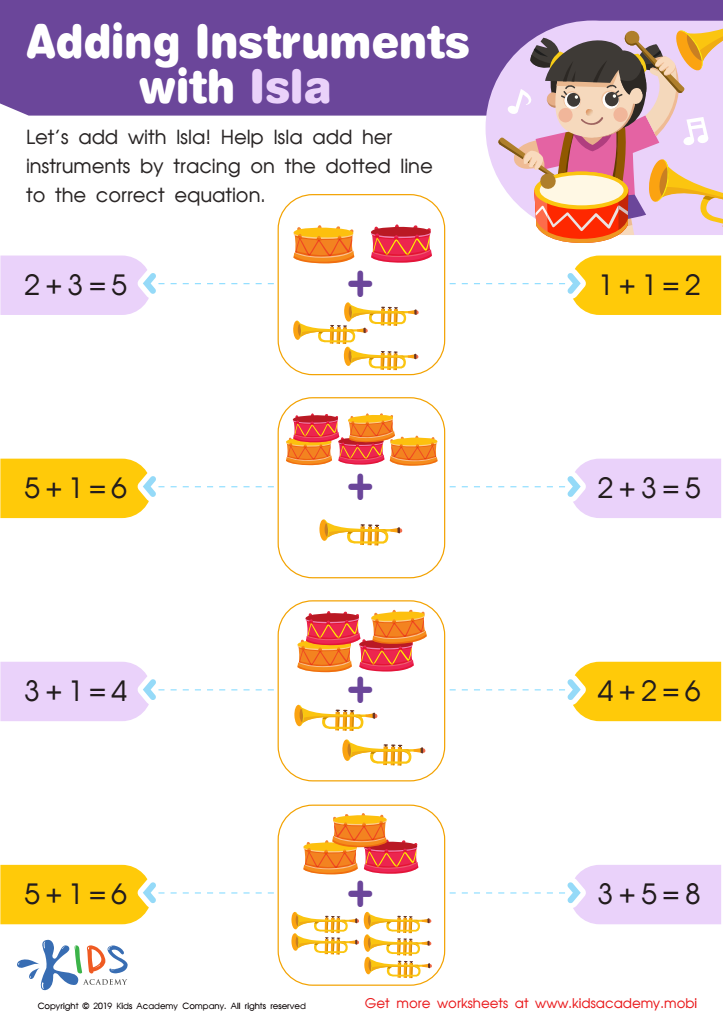
Adding Instruments with Isla Worksheet
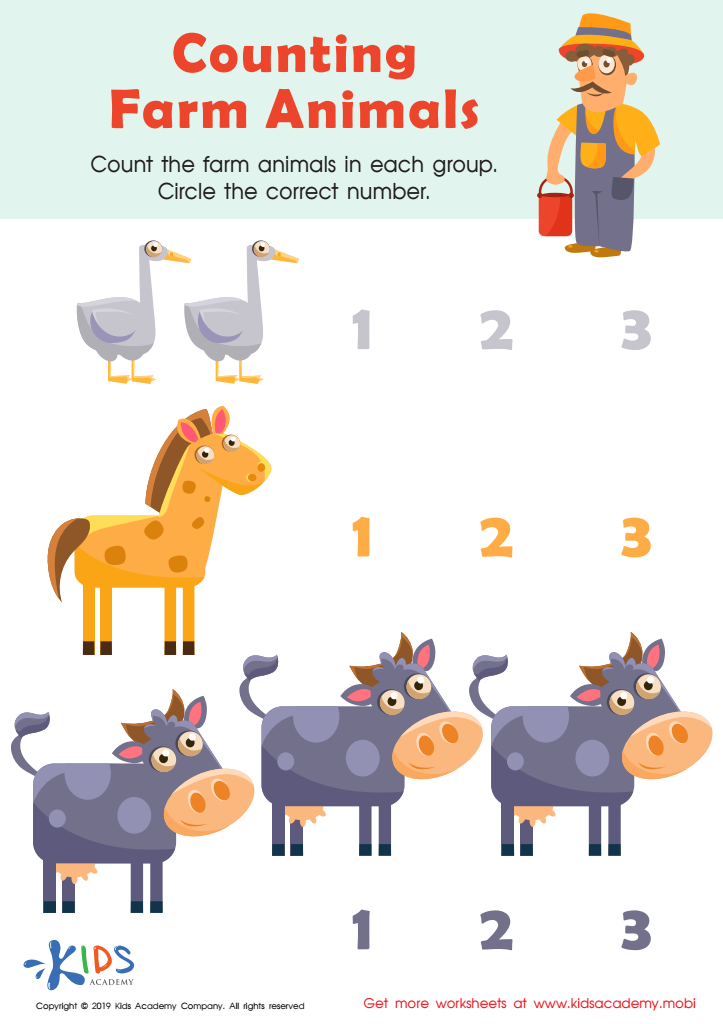
Counting Farm Animals Worksheet
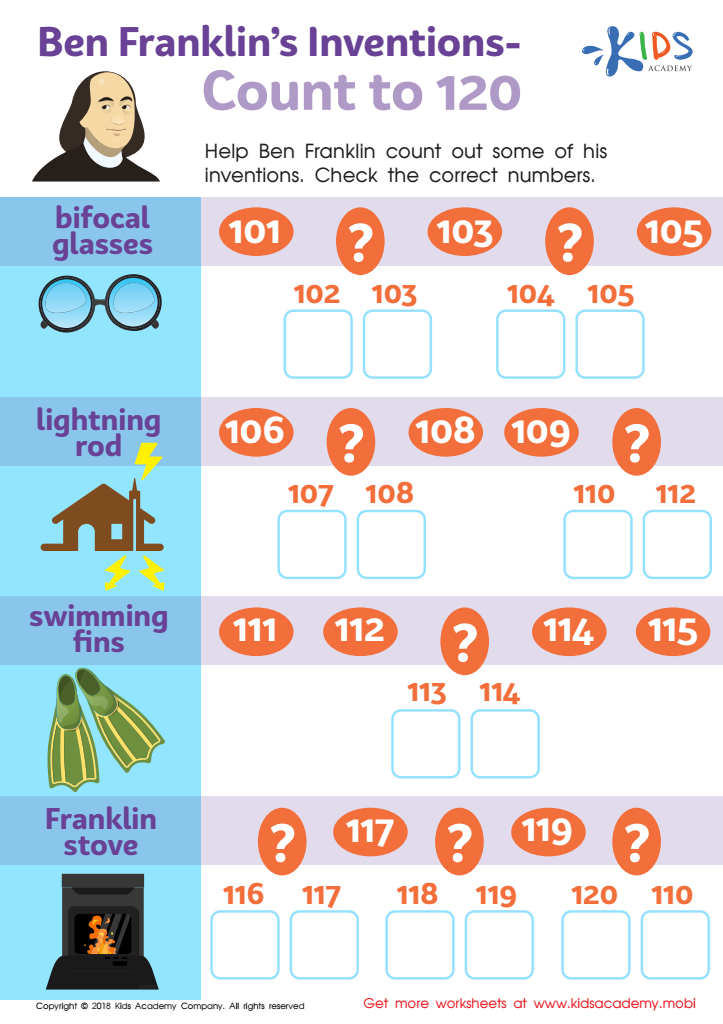
Ben Franklin’s Inventions – Count to 120 Worksheet







Counting practice in early math education is crucial for children aged 5-9, as it forms the foundation for their future arithmetic skills and overall mathematical understanding. During these formative years, children develop cognitive skills that enable them to recognize quantities, understand number relationships, and learn basic operations such as addition and subtraction. Engaging in counting not only reinforces these concepts but also boosts memory and concentration.
For parents and teachers, fostering a solid counting practice is essential. It equips children with the tools they need to tackle more complex math topics in later grades, which in turn can positively impact their academic performance and confidence. Moreover, counting can be integrated into everyday activities, making learning both fun and relevant; for example, counting toys during playtime, measuring ingredients while cooking, or tallying scores during games.
Furthermore, counting practice fosters problem-solving skills and critical thinking, essential life skills beyond mathematics. By actively supporting children in counting exercises, parents and educators promote a positive attitude towards math, reduce anxiety surrounding the subject, and help cultivate a generation of confident learners equipped for future success. Ultimately, early counting practice plays a vital role in ensuring a well-rounded education and lifelong enjoyment of mathematics.








