Handwriting practice Normal Math Worksheets for Ages 5-9
6 filtered results
-
From - To
Enhance your child's writing and math skills with our Handwriting Practice Normal Math Worksheets, specifically designed for ages 5-9. These engaging worksheets combine essential math concepts with fun handwriting activities, allowing young learners to practice forming letters and numbers while solving simple problems. Each worksheet is thoughtfully crafted to promote clarity in writing, improve fine motor skills, and foster a love for learning. Perfect for home or classroom use, these printable resources provide ample opportunities for repetition and reinforcement. Help your child master handwriting alongside math fundamentals, paving the way for academic success and confidence! Extend their learning journey today!
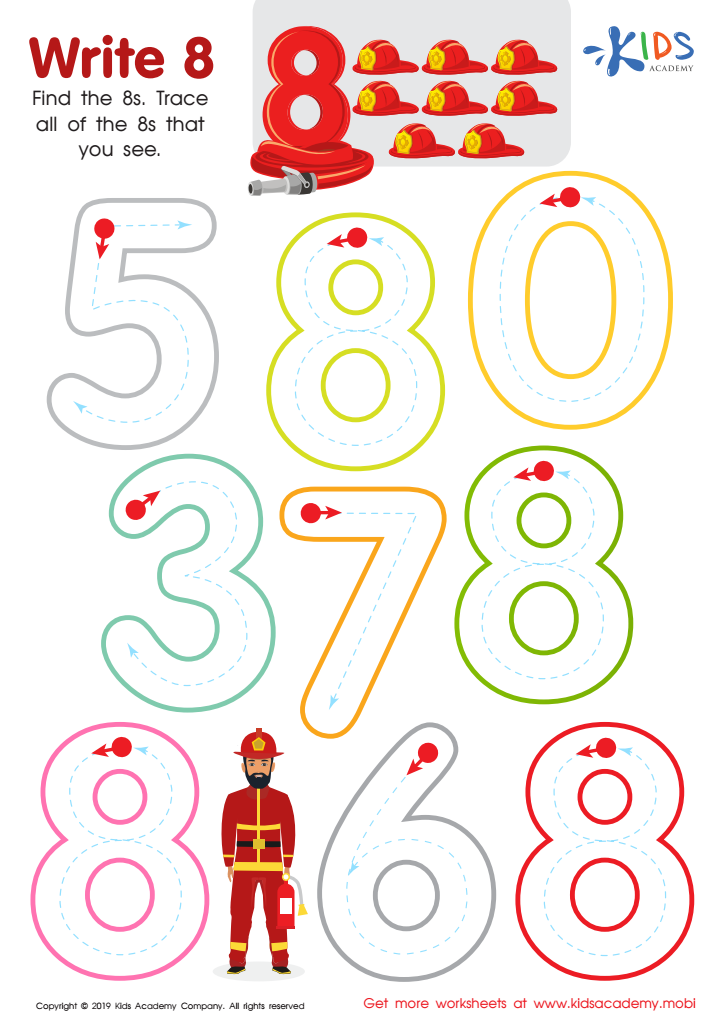
Write 8 Worksheet
 Assign to My Students
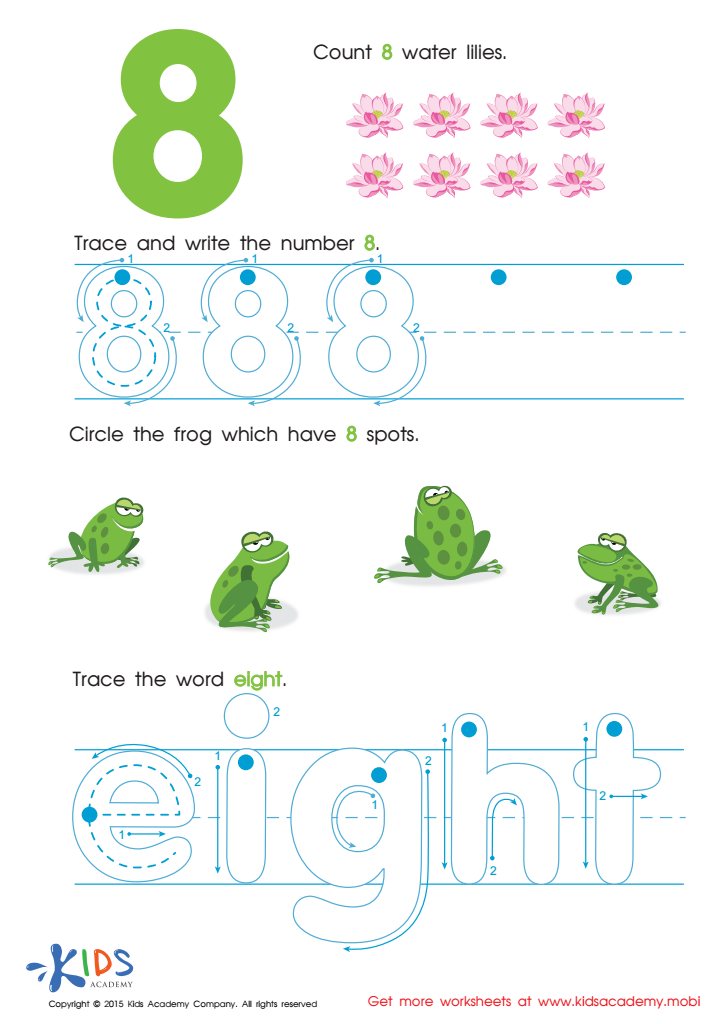
Learn Number 8 Easily Worksheet
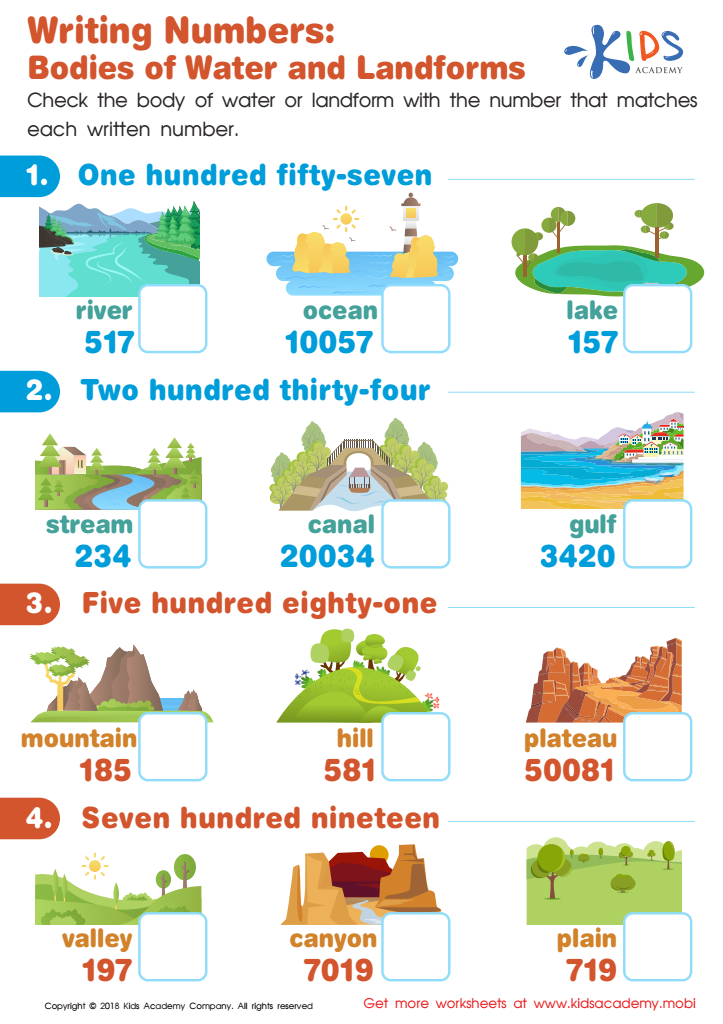
Bodies of Water and Landforms Writing Numbers Worksheet
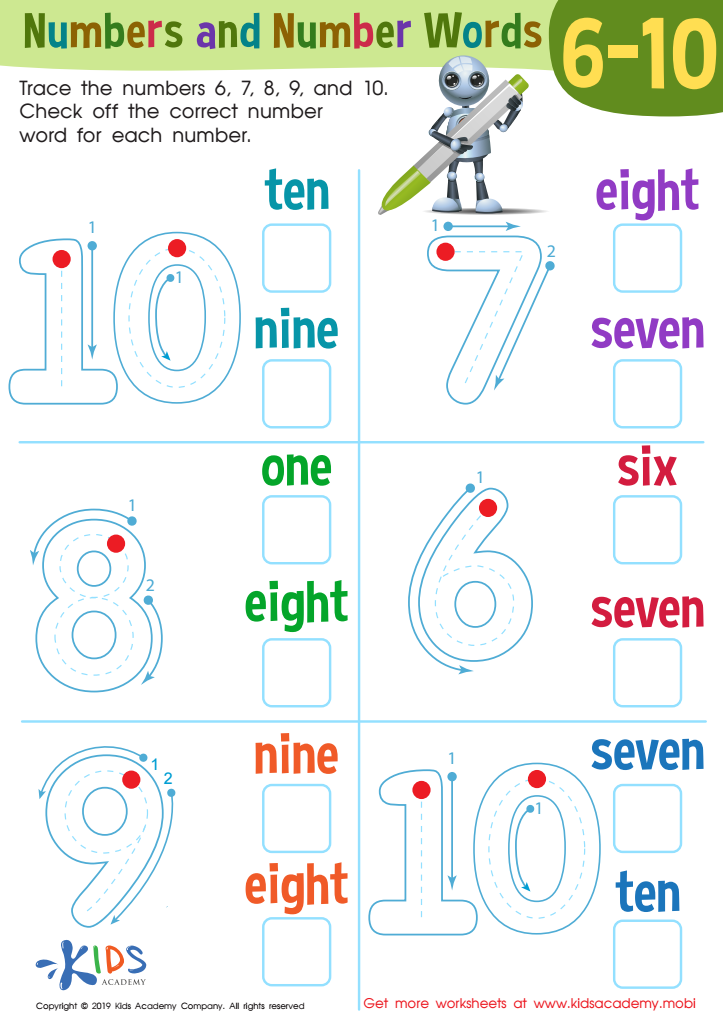
Numbers and Number Words 6–1 Worksheet
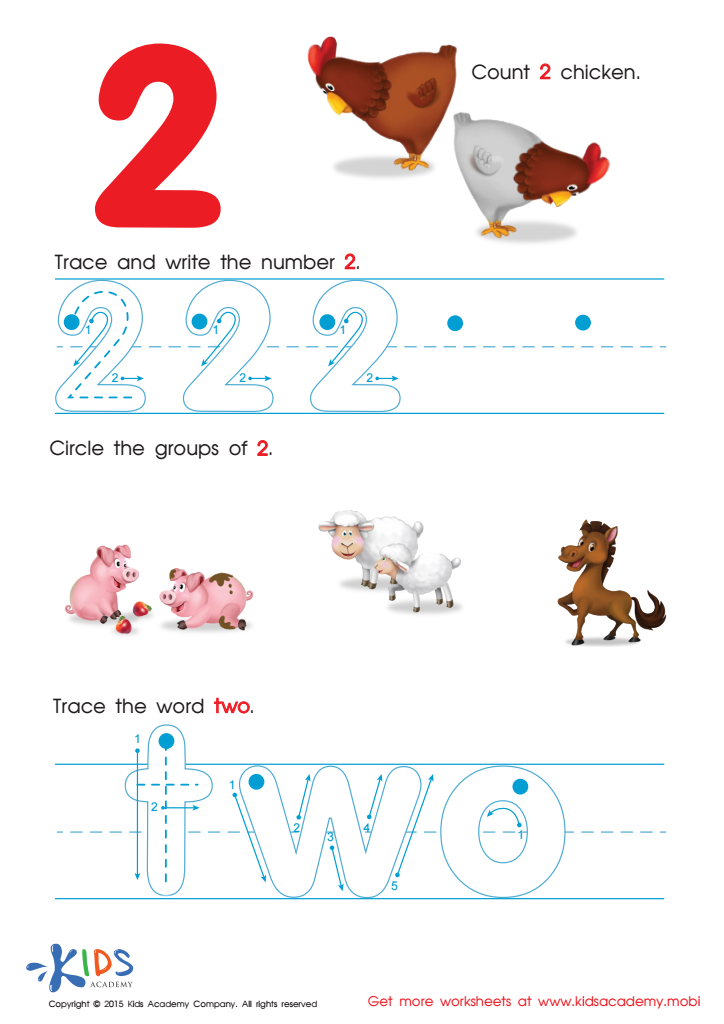
Learn to Write the Number 2 Worksheet
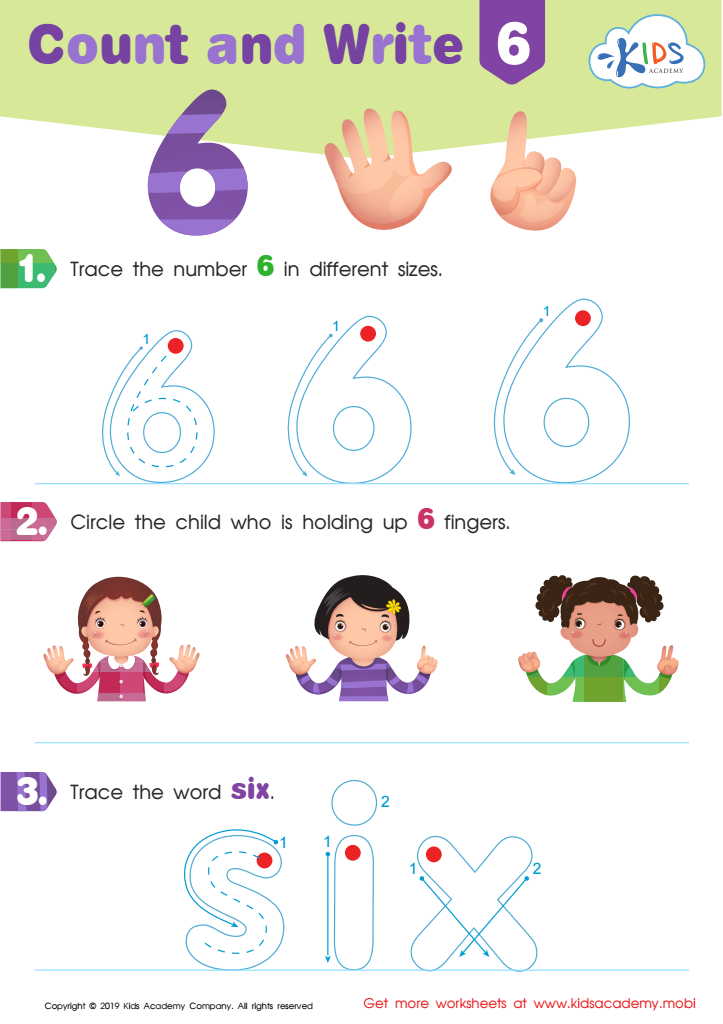
Count and Write 6 Worksheet








Handwriting practice, particularly in conjunction with practicing math skills for ages 5-9, plays a vital role in children’s development, and both parents and teachers should prioritize it. First, handwriting reinforces fine motor skills crucial for overall dexterity and coordination. As children learn to form letters and numerals correctly, they enhance their hand-eye coordination and muscle memory, laying the groundwork for writing skills used in future academic endeavors.
Second, handwriting practice can improve cognitive skills. Writing something down activates different areas in the brain, promoting better retention and understanding of the material. For young learners, coupling handwriting practice with math exercises enhances their comprehension and application of mathematical concepts, fostering an integrated learning environment.
Furthermore, establishing a good handwriting foundation instills confidence in children. Issues with handwriting can lead to frustration, which may discourage them from writing or tackling math problems altogether. A focus on neat and organized handwriting encourages pride in their work and supports their overall motivation.
Ultimately, handwriting practice serves as a crucial stepping stone to advanced learning, social skills, and future achievements. Both parents and teachers play essential roles in nurturing these skills to support holistic development.








