Cognitive Development Normal Matching Worksheets for Ages 5-9
4 filtered results
-
From - To
Unlock your child’s potential with our Cognitive Development Normal Matching Worksheets, designed for ages 5-9! These engaging worksheets promote essential cognitive skills such as critical thinking, problem-solving, and pattern recognition through fun and interactive matching activities. Tailored to encourage young learners, our worksheets seamlessly blend learning with play, making it easier for children to grasp foundational concepts while having fun. Ideal for home or classroom use, our resources help foster independent thinking and enhance memory capabilities. Download today to support your child's cognitive growth and watch them thrive in a well-rounded educational journey! Start matching and learning now!
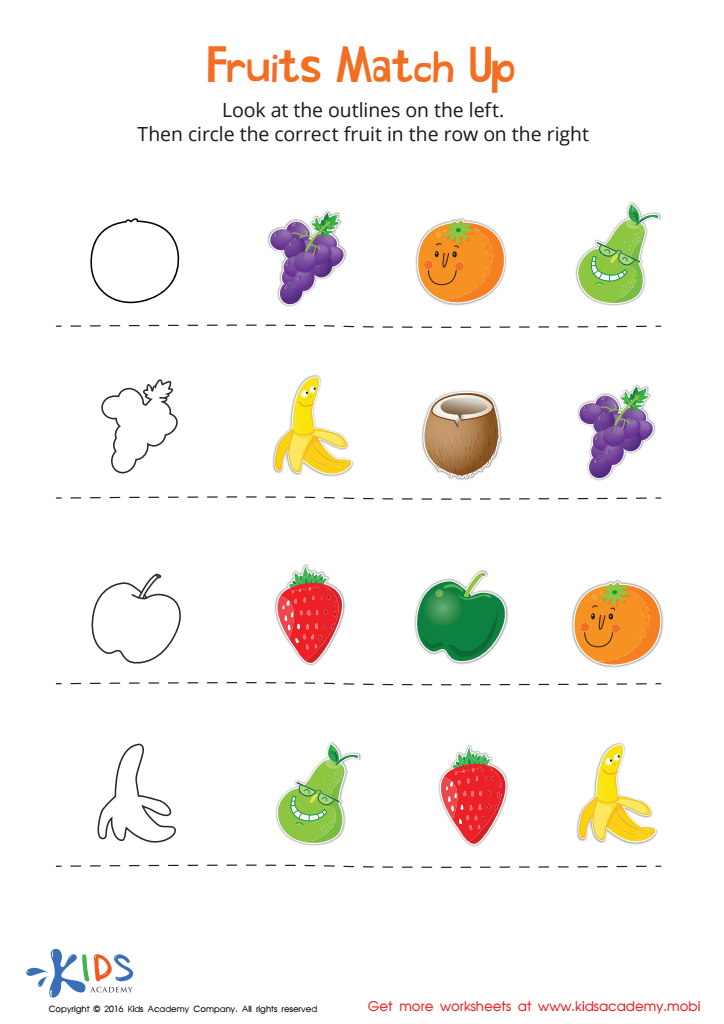
Fruits Match Up Worksheet
 Assign to My Students
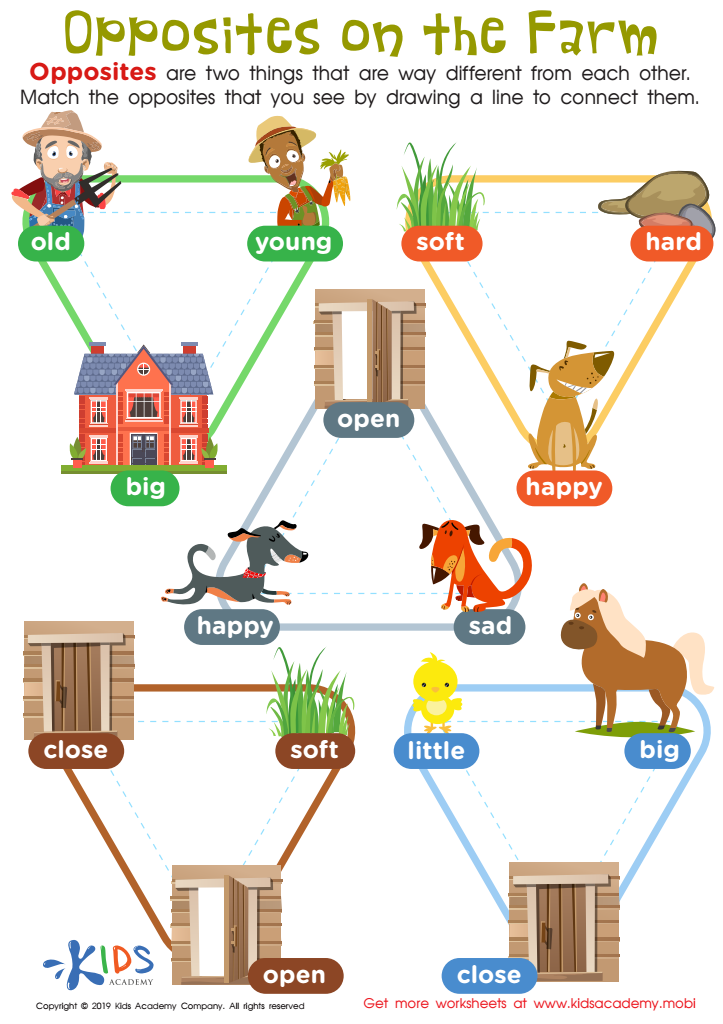
Opposites on the Farm Worksheet
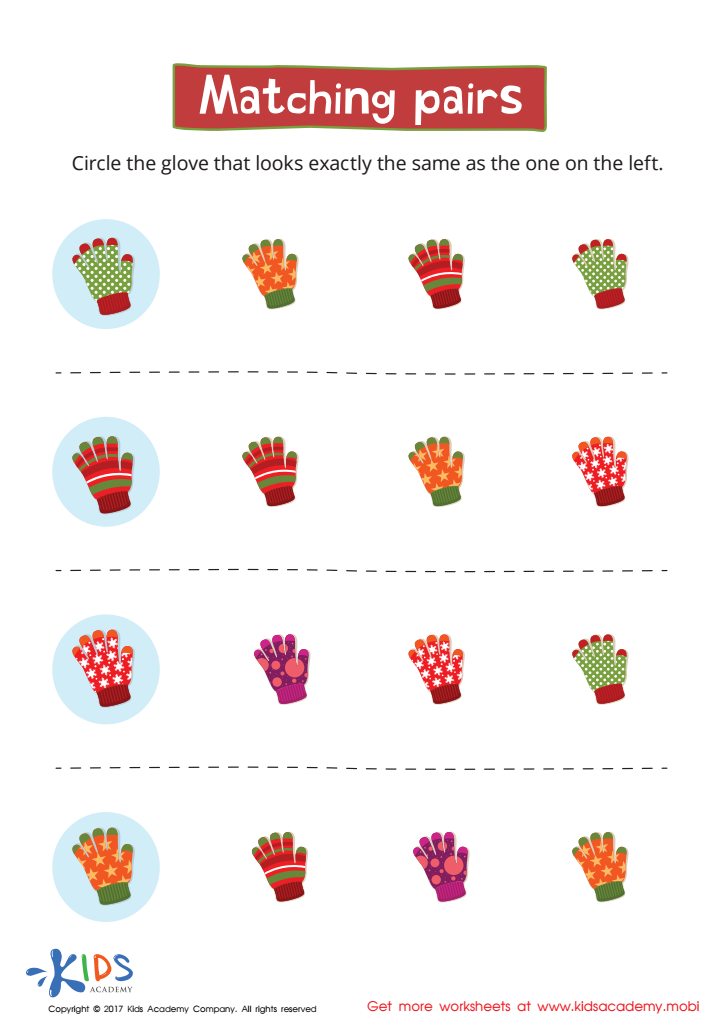
Matching: Matching Pairs Worksheet
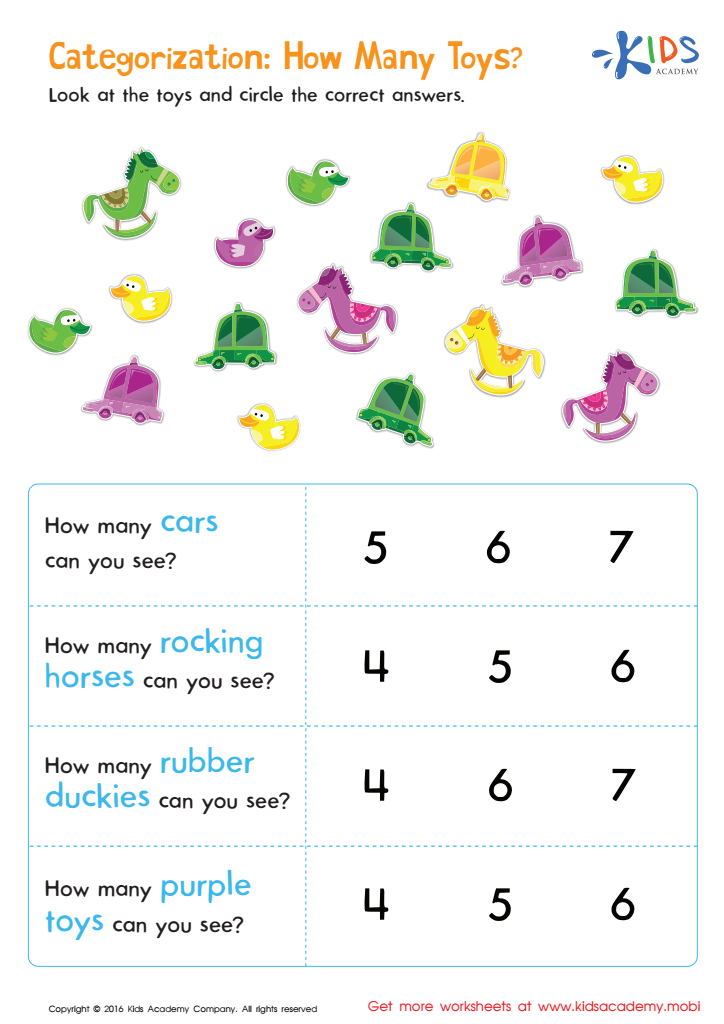
Classifying Toys by Type and Color Sorting Worksheet








Cognitive development is crucial during ages 5-9, as this is a time when children transition from preschool to more structured learning environments. Parents and teachers should care about cognitive development because it lays the foundation for children's future learning, social interactions, and problem-solving skills. During these formative years, children improve their ability to think logically, understand abstract concepts, and develop critical thinking skills, which are essential for academic success.
Normal cognitive development ensures that children are meeting age-appropriate milestones in reasoning, memory, and attention. If a child is lagging behind or surpassing these milestones, early intervention can help address potential learning challenges or advanced needs through tailored approaches. Understanding these cognitive benchmarks enables adults to provide supportive learning environments that encourage exploration, curiosity, and independence. Moreover, recognizing disparities in cognitive development can help identify children who may require additional support or enrichment activities, fostering a more inclusive and effective educational experience.
By nurturing cognitive development, parents and teachers can better guide children in making sense of the world around them, enhancing their ability to communicate, collaborate, and engage meaningfully with peers and adults, thus promoting overall well-being and lifelong learning.








