
Fine Motor Skills Normal Matching Worksheets for Ages 5-9
4 filtered results
Difficulty Level
Grade
Age
-
From - To
Subject
Activity
Standards
Unlock your child's potential with our Fine Motor Skills Matching Worksheets for ages 5-9. Designed to boost dexterity and precision, these engaging activities are perfect for young learners. Each worksheet provides fun matching exercises that not only improve fine motor skills but also bolster cognitive development and hand-eye coordination. With appealing visuals and diverse topics, our worksheets make learning enjoyable and effective. Ideal for parents and educators striving to nurture young minds, explore our collection today to help your child achieve essential developmental milestones while having fun. Start your educational journey with Kids Academy now!
Favorites
With answer key
Interactive
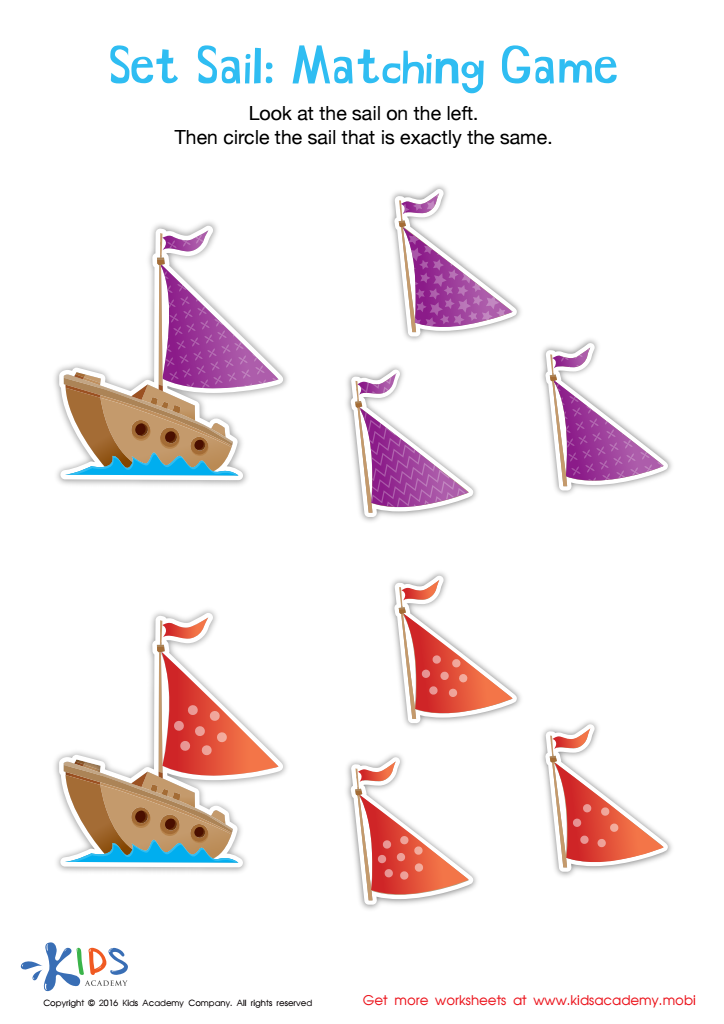
Set Sail Worksheet
Set sail with this fun matching game for toddlers! Kids will love finding the same pattern on the sails, improving their problem-solving and counting skills. Enjoy this bright and engaging worksheet!
 Assign to My Students
Set Sail Worksheet
Worksheet

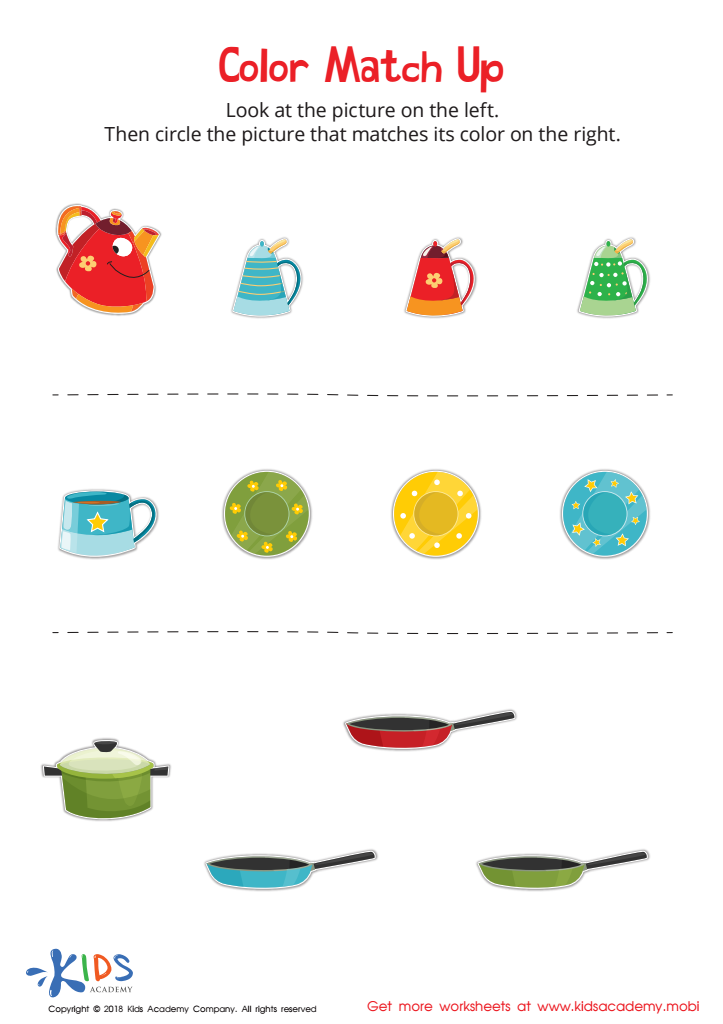
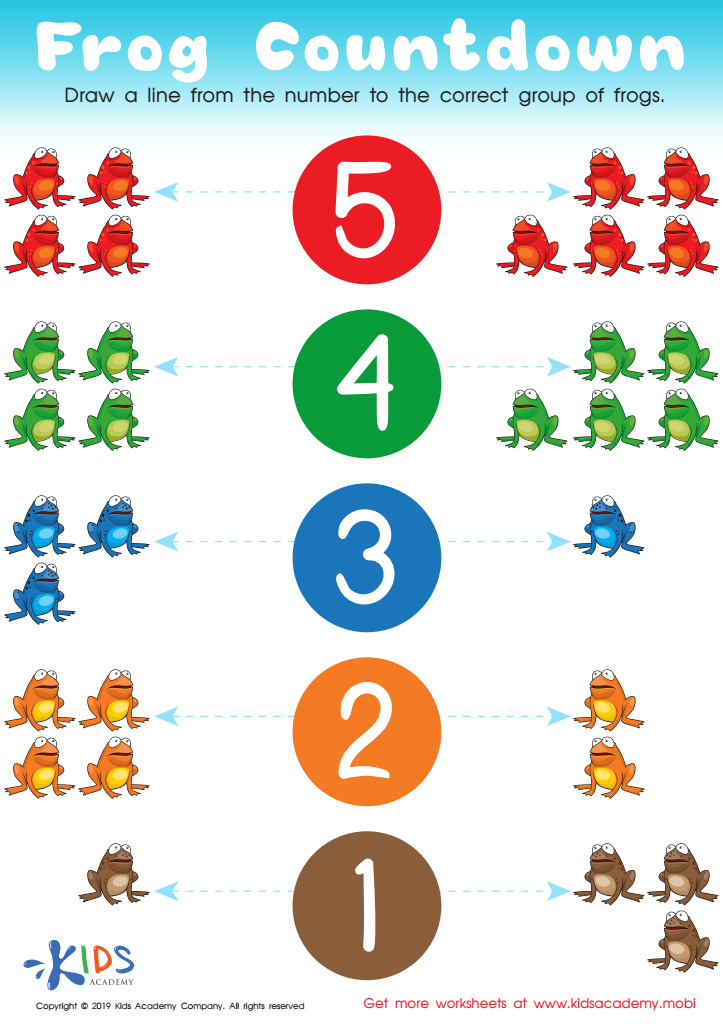
Frog Countdown Worksheet
Make learning fun for kids with traceable printouts! This exercise has kids counting frogs and drawing a line to match the number. Expand their knowledge with activities like this, beyond the basics they learn in school. Help them explore new ways of learning and make it enjoyable.
Frog Countdown Worksheet
Worksheet
Join Kids Academy for Free
Who is primarily going to use this learning content?








Fine motor skills are crucial for children ages 5-9, as they directly impact daily activities and academic success. These skills involve the coordination of small muscles, particularly in the hands and fingers, with the eyes, allowing children to perform tasks like writing, buttoning clothes, and using utensils.
Firstly, fine motor skills are fundamental for writing. At this age, children transition from basic scribbling to forming letters and numbers. Proper development ensures they can hold a pencil correctly and write legibly, promoting better communication and learning.
Secondly, these skills are essential for independence. Tasks such as tying shoelaces, brushing teeth, and getting dressed require dexterity and control. Proficient fine motor skills foster self-reliance and boost self-esteem, as children feel confident in managing their personal routines.
Moreover, fine motor skills enhance cognitive development. Activities like cutting with scissors or assembling puzzles necessitate problem-solving and planning. These challenges stimulate brain growth and improve hand-eye coordination, positively influencing academic achievements and overall intellectual growth.
For teachers and parents, supporting fine motor development in children aged 5-9 ensures they are set up for success in school and everyday life. Through play and structured activities, they can nurture these skills, providing a foundation for more complex tasks and lifelong learning.








