
Basic Math Skills Normal Measurement Worksheets for Ages 5-9
3 filtered results
Difficulty Level
Grade
Age
-
From - To
Subject
Activity
Standards
Enhance your child's fundamental math abilities with our "Basic Math Skills Normal Measurement Worksheets for Ages 5-9." These engaging and educational worksheets are designed to make learning measurements fun and approachable for young students. Focusing on essential concepts such as length, weight, and volume, the worksheets encourage hands-on practice and real-world problem-solving. Ideal for both classroom settings and at-home learning, the activities help children develop a strong foundation in measurements. Boost your child's confidence and competence in math with our expertly crafted resources tailored to support and challenge young learners. Available now for easy download.
Favorites
With answer key
Interactive
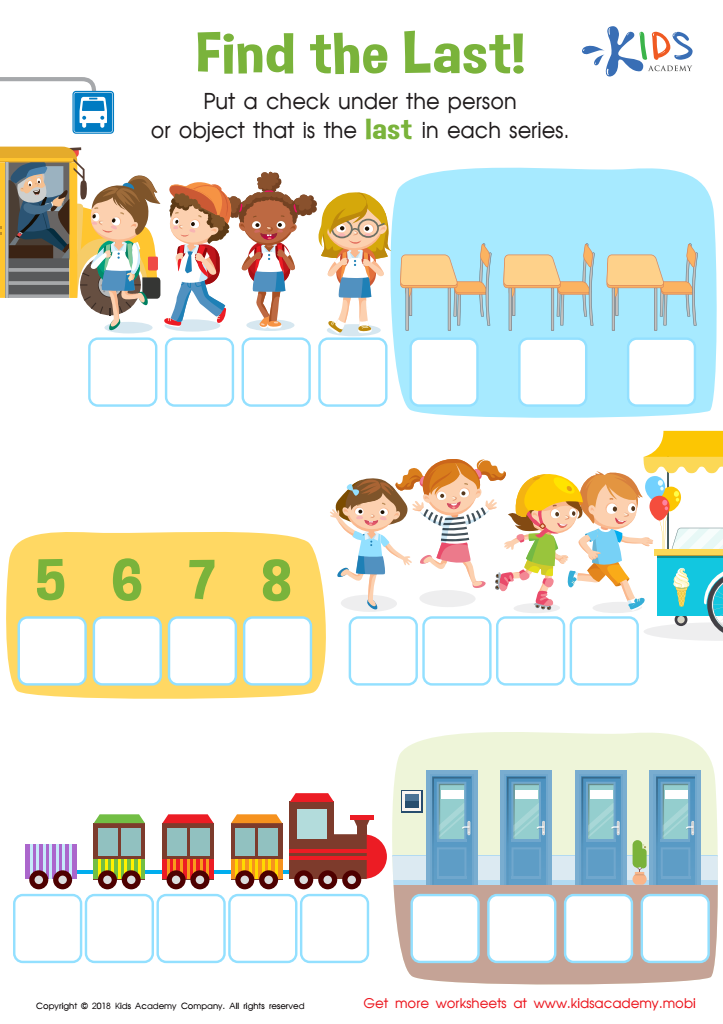
Find the Last! Worksheet
Teach young students about sequence words with this free worksheet. Have them look at sets of people or objects and choose the one that is last. Engage them further by having them describe or act out their day, and what happens last? Enjoy this printout and have fun!
 Assign to My Students
Find the Last! Worksheet
Worksheet
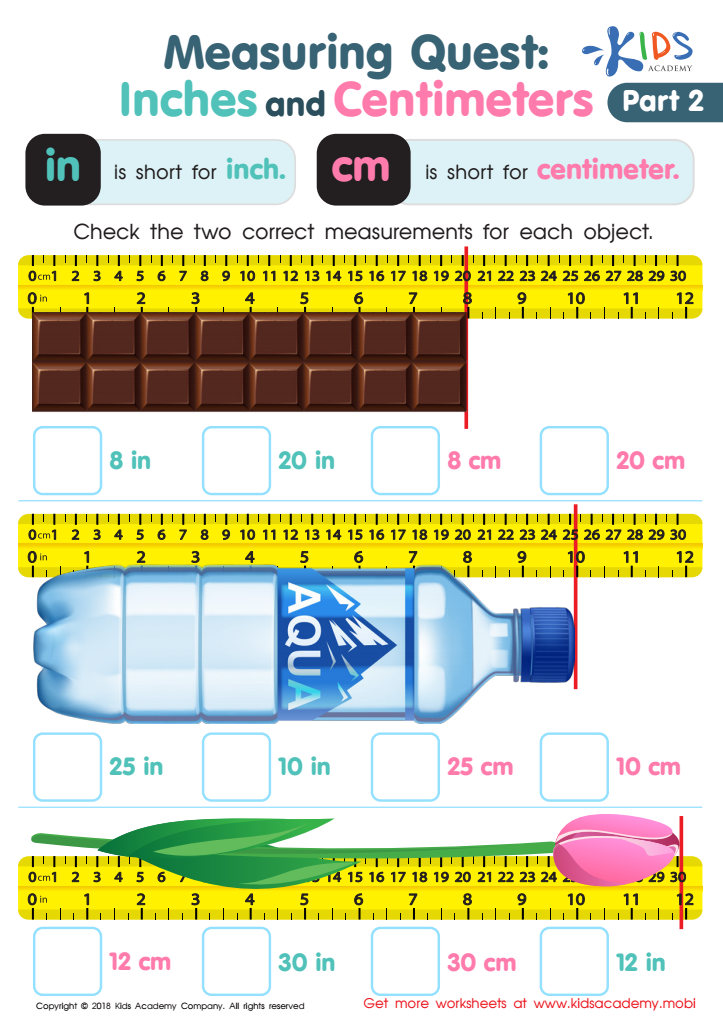
Measuring Quest: Inches and Centimeters - Part 2 Worksheet
This worksheet teaches kids how inches and centimeters measure up. It features rulers with centimeter measurements at the top, and inches at the bottom. Kids must choose the correct measurement for each object among the options provided.
Measuring Quest: Inches and Centimeters - Part 2 Worksheet
Worksheet
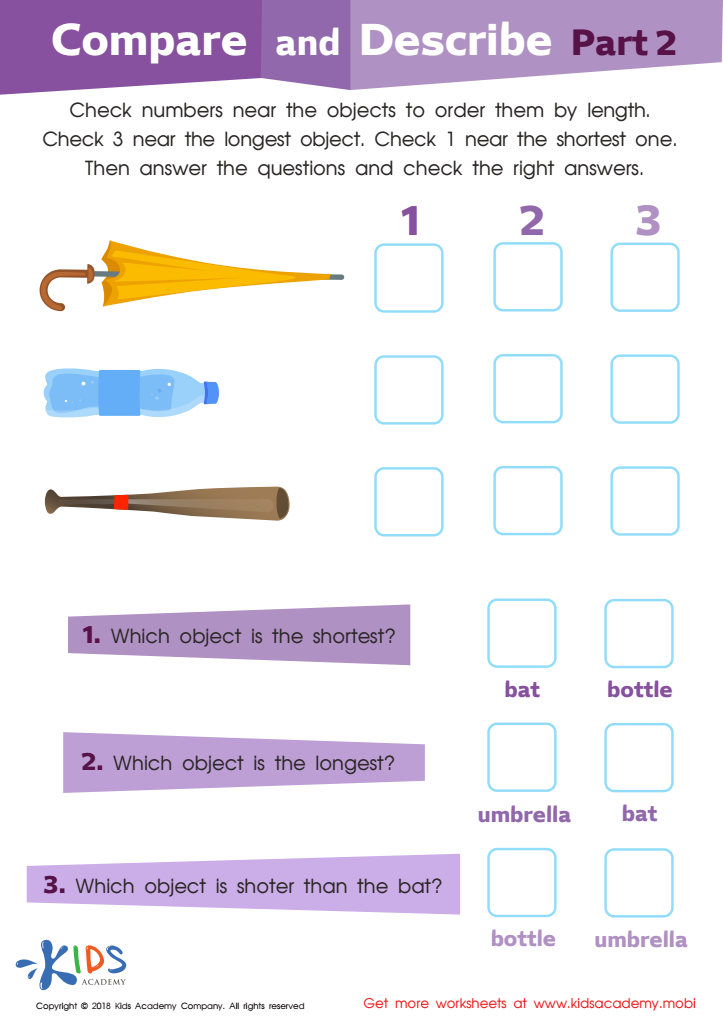
Compare and Describe: Part 2 Worksheet
Help kids hone their comparison skills with this fun measurement worksheet! Kids will sort objects by length and check off the boxes as they go. At the bottom, they'll read the questions and take a final look at the images to complete the exercise. An exciting way to learn measurement!
Compare and Describe: Part 2 Worksheet
Worksheet
Join Kids Academy for Free
Who is primarily going to use this learning content?








Basic math skills are crucial for children aged 5-9 due to their foundational role in a child's overall cognitive development and academic progress. At this developmental stage, kids are rapidly absorbing and processing new information, making it an ideal time for laying a strong mathematical groundwork. Basic math skills, such as counting, recognizing numbers, understanding simple addition and subtraction, and grasping concepts of time, weight, and volume, form the bedrock upon which more complex mathematical concepts are built.
By mastering these skills early, children develop problem-solving abilities and logical thinking, which enhance their capability to tackle academic tasks effectively. These skills extend beyond the classroom, aiding in everyday activities like handling money, understanding schedules, and following recipes. Children who struggle with basic math may face difficulties in more advanced subjects, potentially leading to academic and self-esteem issues.
Moreover, fostering an engaging and supportive learning environment encourages a positive attitude towards mathematics, reducing math anxiety and fostering a growth mindset. Both parents and teachers play an essential role in this process. Through activities like playing math-related games, celebrating small achievements, and integrating math into daily routines, they can help children build confidence and competence in these fundamental skills.








