Animal Classification Normal Animals Worksheets for Ages 5-9
6 filtered results
-
From - To
Our "Animal Classification Normal Animals Worksheets" for ages 5-9 provide exciting and educational activities to help young learners understand animal categories. These engaging worksheets introduce children to the basics of animal classification, allowing them to differentiate between mammals, birds, reptiles, amphibians, and fish through interactive exercises and colorful illustrations. Suitable for classroom or home use, our worksheets foster critical thinking and observational skills. Kids will love the hands-on activities and fun animal facts, making education a delightful adventure. Perfect for budding young scientists, these resources are ideal for reinforcing early science concepts and nurturing a love for nature.
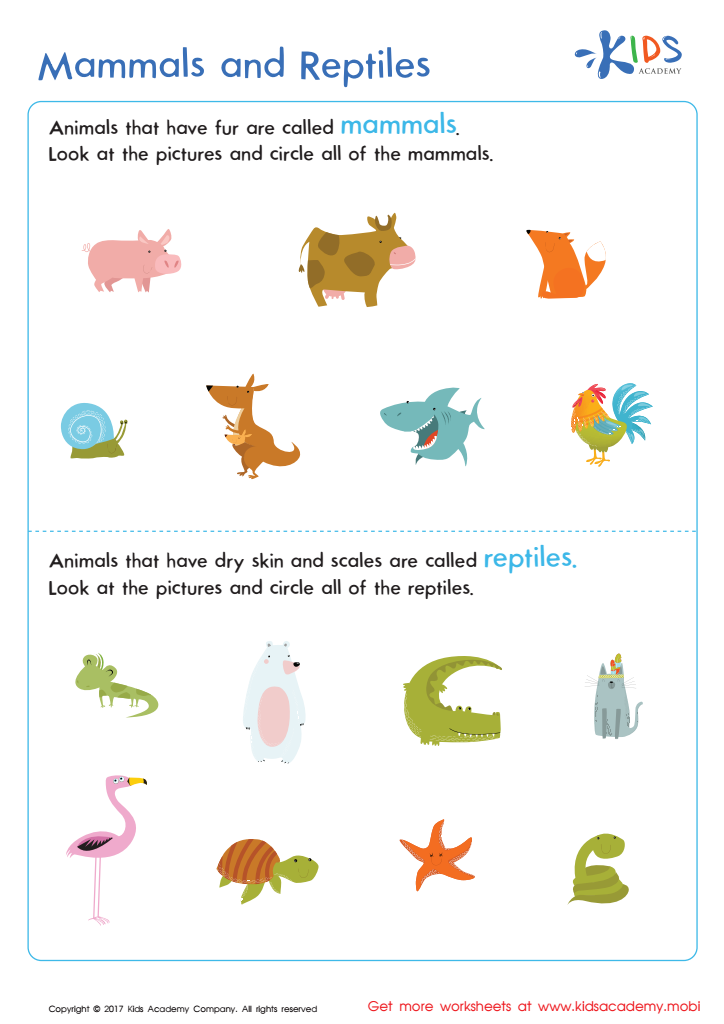
Mammals and Reptiles Worksheet
 Assign to My Students
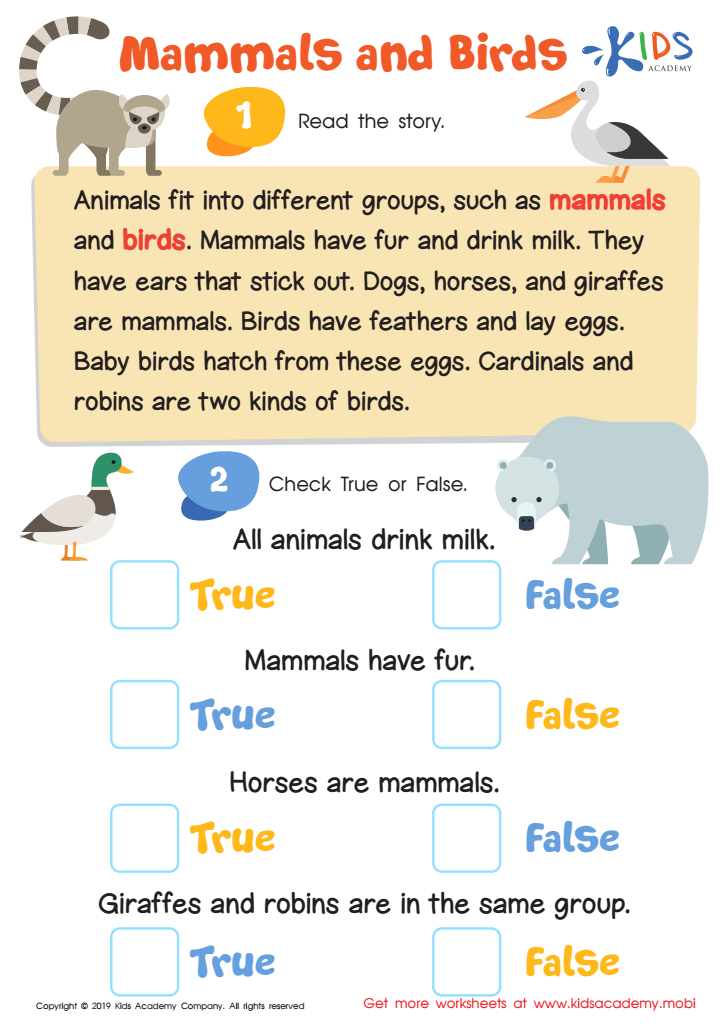
Mammals and Birds Worksheet
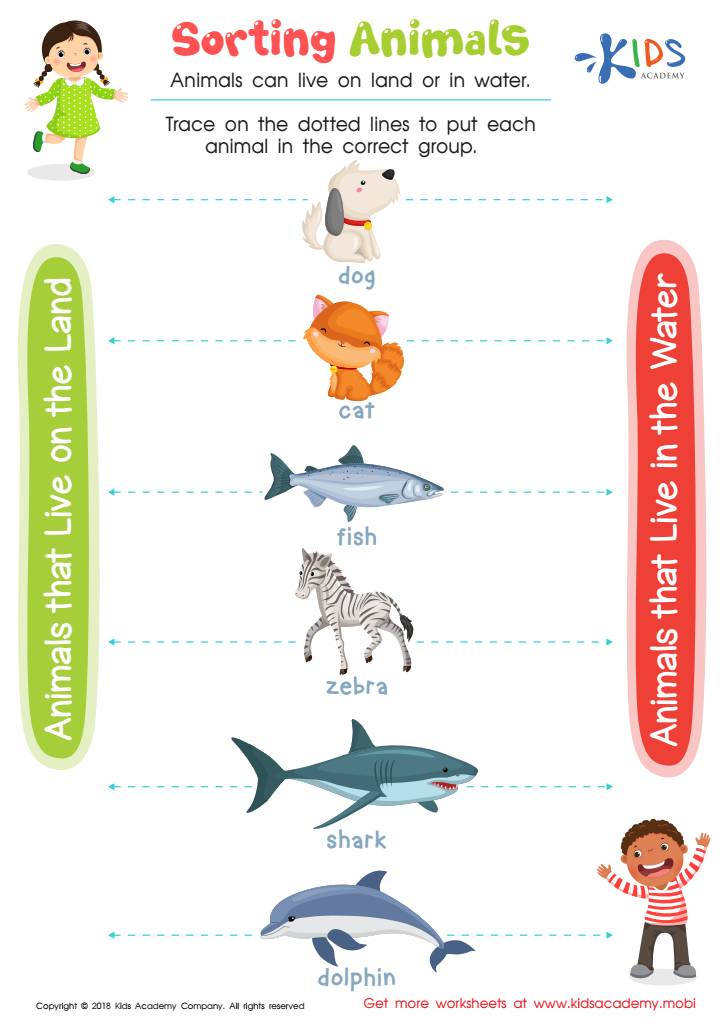
Sorting Animals Worksheet
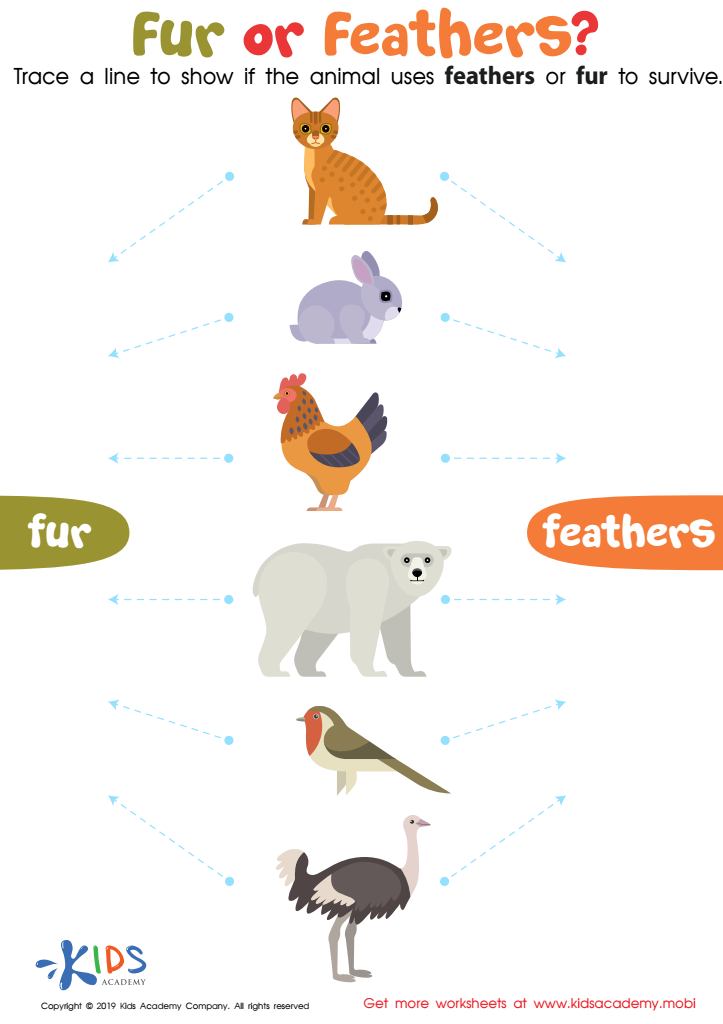
Fur or Feathers? Worksheet
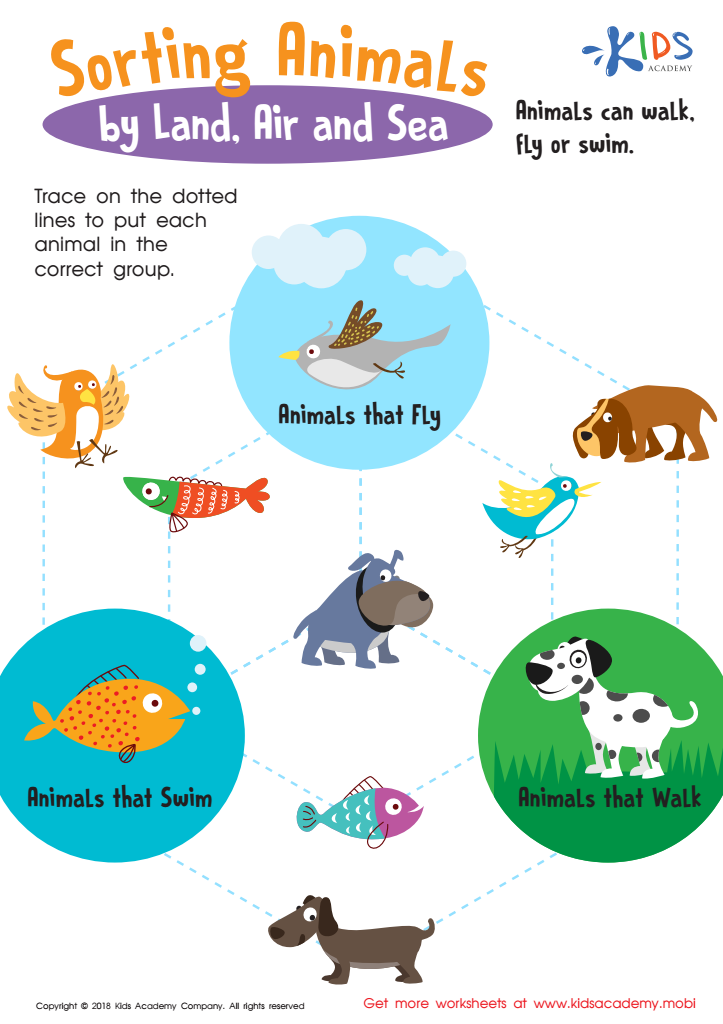
Sorting Animals by Land, Air and Sea Worksheet
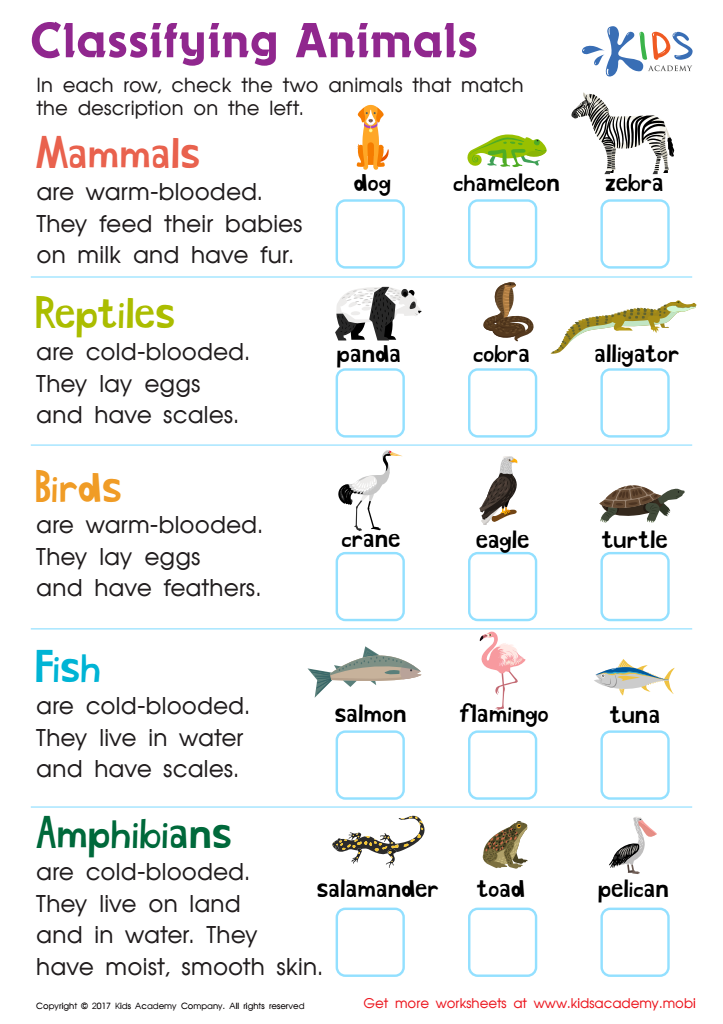
Classifying Animals Worksheet







Teaching children ages 5-9 about animal classification is vital for several reasons, both for parents and teachers. Firstly, it nurtures scientific curiosity and critical thinking. When children learn to classify animals, they begin to grasp basic scientific concepts and can better understand the diversity in the natural world.
Understanding different categories like mammals, reptiles, birds, fish, and amphibians helps children make sense of the world around them. They start to observe characteristics such as body structure, habitats, and life cycles, fostering observational skills and attention to detail.
Additionally, learning about animal classification promotes empathy and conservation awareness. When kids become familiar with various animals and their roles in ecosystems, they develop an appreciation for biodiversity and are more likely to support conservation efforts in the future.
Moreover, animal classification fits neatly into interdisciplinary learning. It can be incorporated into reading activities, art projects, social studies, and even basic math, enriching overall education. For example, reading stories about different animals can enhance literacy skills, while drawing and labeling animals can improve fine motor skills.
Engaging with animal classification in early childhood sets the foundation for a love of science and nature that can last a lifetime. It prepares children for more complex scientific learning and fosters responsible, informed attitudes toward wildlife and the environment.








