Visual discrimination skills Normal Alphabet Worksheets for 5-Year-Olds
5 filtered results
-
From - To
Enhance your child's learning experience with our Visual Discrimination Skills Normal Alphabet Worksheets for 5-year-olds! Designed to make letter recognition fun and engaging, these worksheets help young learners distinguish between similar-looking letters and improve their visual processing abilities. With vibrant illustrations and interactive activities, children will explore the alphabet through matching, sorting, and identifying letters in various contexts. Our straightforward approach guides kids through essential skills that lay the foundation for reading and writing proficiency. Perfect for both classroom and home learning, these worksheets are an essential resource for early childhood education. Start the journey to literacy today!
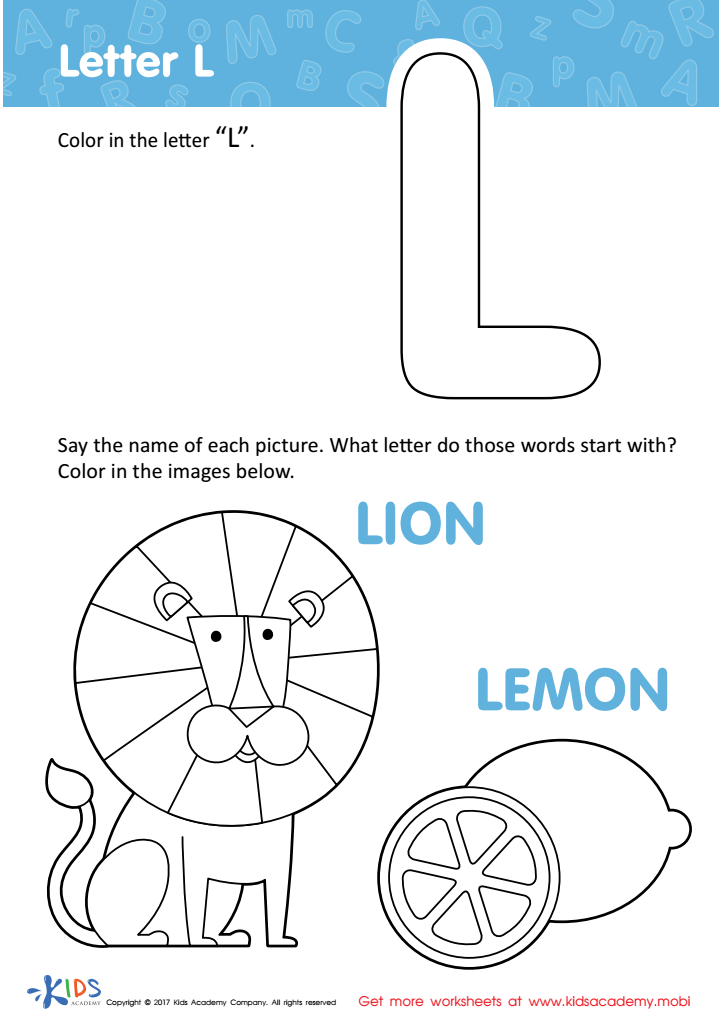
Letter L Coloring Sheet
 Assign to My Students

Find Uppercase Letters A, B, and C Worksheet
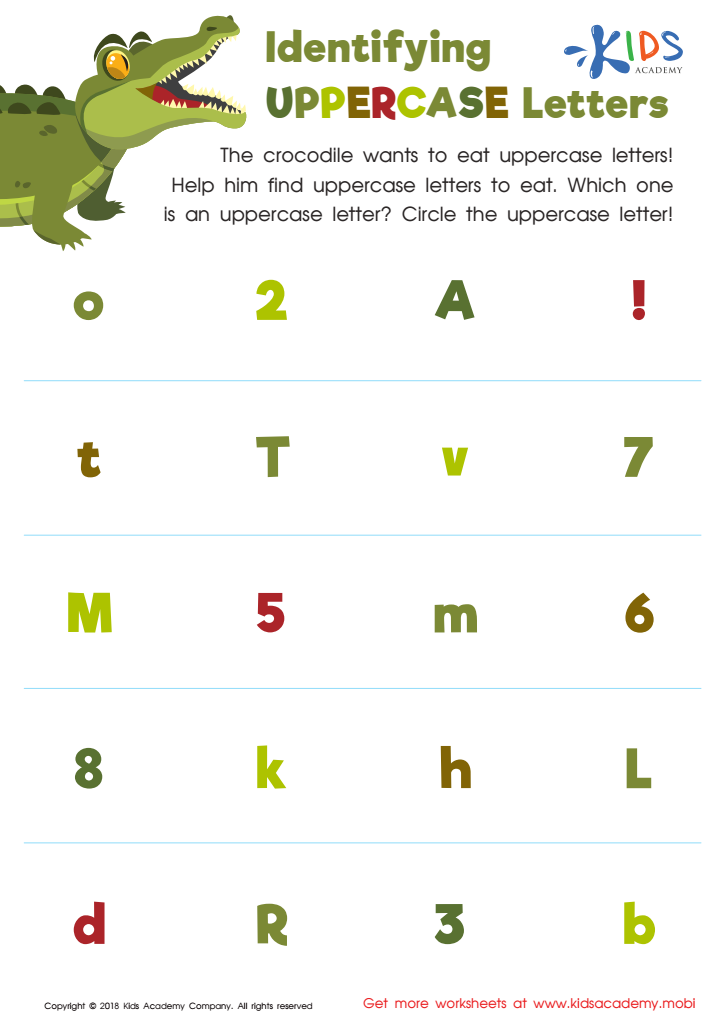
Identifying Uppercase Letters Worksheet
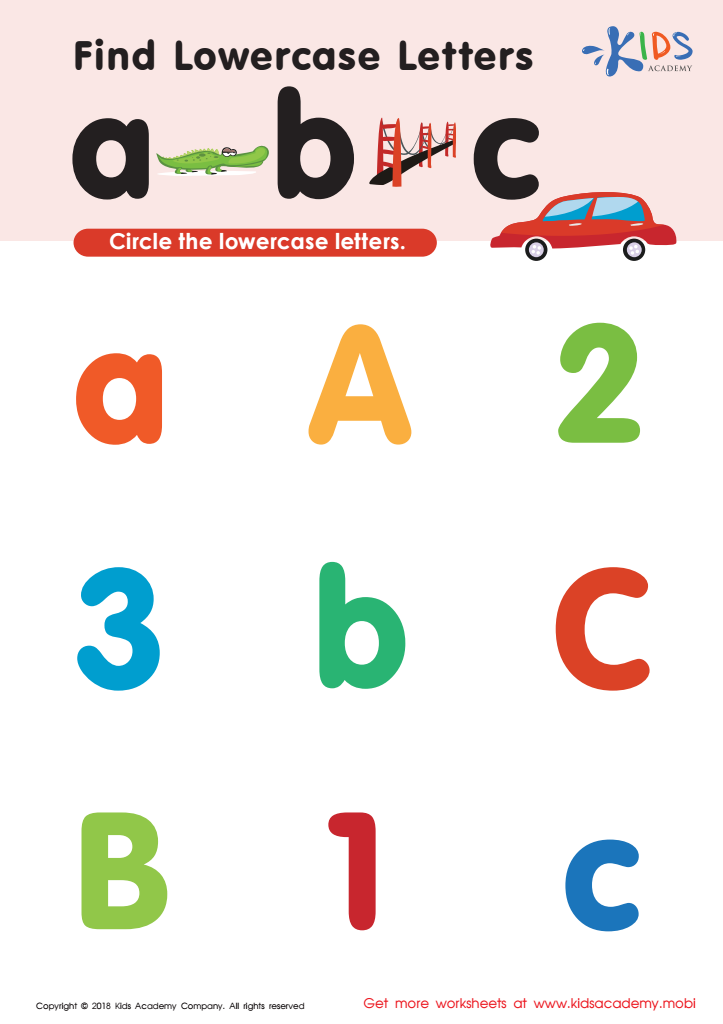
Find lowercase letters a b c Worksheet
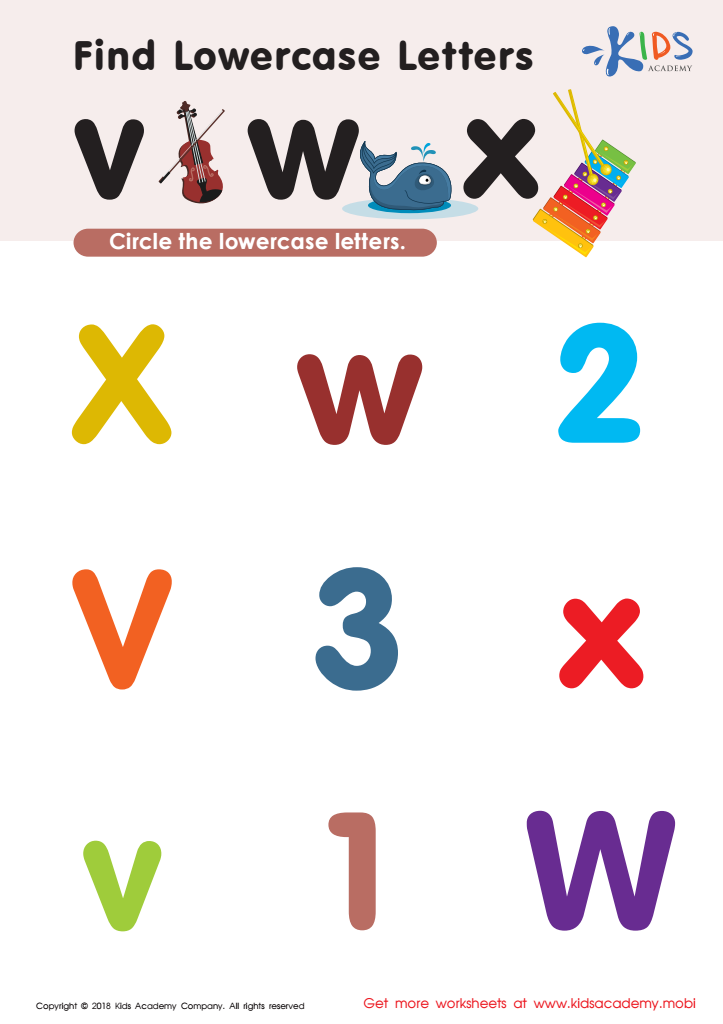
Find Lowercase Letters v w x Worksheet


.jpg)




Visual discrimination skills are crucial for 5-year-olds as they serve as the foundation for effective learning, particularly in reading and writing. These skills enable children to identify and differentiate between various shapes, letters, and objects, which are essential for recognizing letters of the alphabet and understanding their corresponding sounds. When children can accurately distinguish between similar letters, such as 'b' and 'p' or 'q' and 'g,' they are less likely to struggle with reading and writing tasks later on.
Parents and teachers should prioritize the development of visual discrimination skills because these abilities boost a child's confidence and foster independence in learning. A solid grasp of visual discrimination helps children follow instructions, complete tasks, and engage in classroom activities more successfully. Moreover, establishing these skills at an early age contributes to overall cognitive development, enhancing problem-solving and critical thinking abilities.
Additionally, visual discrimination skills support the acquisition of math skills, as children learn to recognize numbers and patterns. By emphasizing these skills, parents and teachers lay the groundwork for academic achievement and lifelong learning, ensuring children are better prepared for their educational journey ahead. Cultivating these essential skills means empowering young learners to succeed and thrive in a diverse and visually rich world.







