Letter tracing skills Normal Uppercase Letters Worksheets for 5-Year-Olds
3 filtered results
-
From - To
Enhance your child's handwriting with our Letter Tracing Skills: Normal Uppercase Letters Worksheets designed for 5-year-olds. At Kids Academy, our expertly crafted worksheets provide guided practice to help young learners master uppercase alphabets. Each worksheet features dotted letter outlines for accurate tracing, colorful visuals to engage children, and ample space for independent writing. These activities not only hone fine motor skills but also build a strong foundation for reading and writing. Ideal for both parents and educators, our worksheets make learning fun and effective, ensuring your child gains confidence in their writing abilities. Get started today!
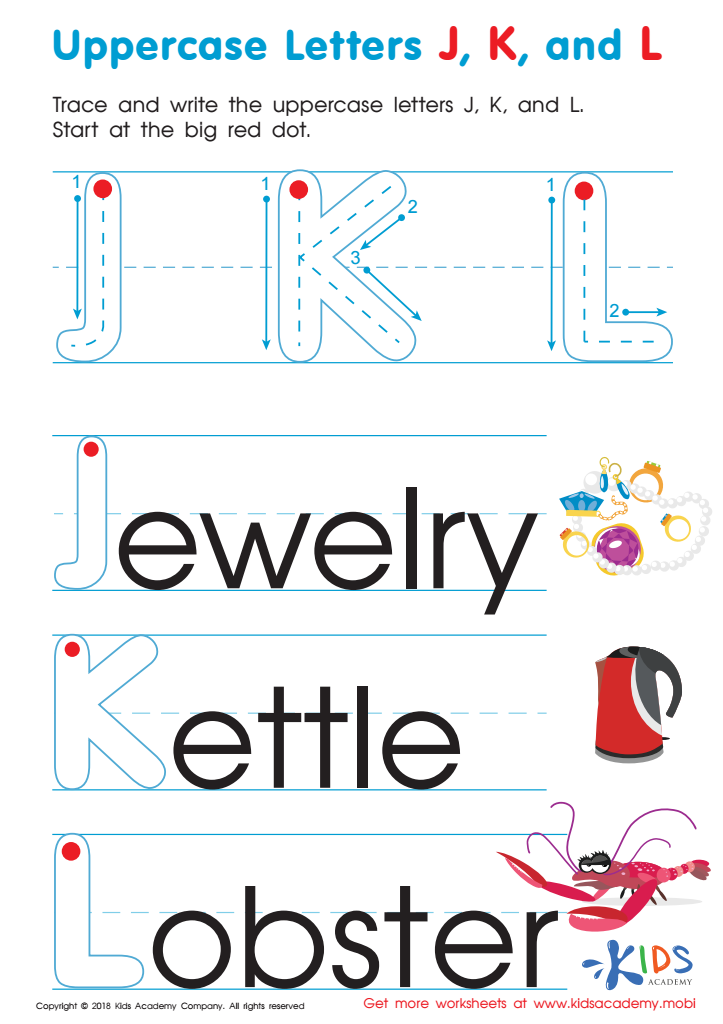
Uppercase Letters J, K, and L Worksheet
 Assign to My Students
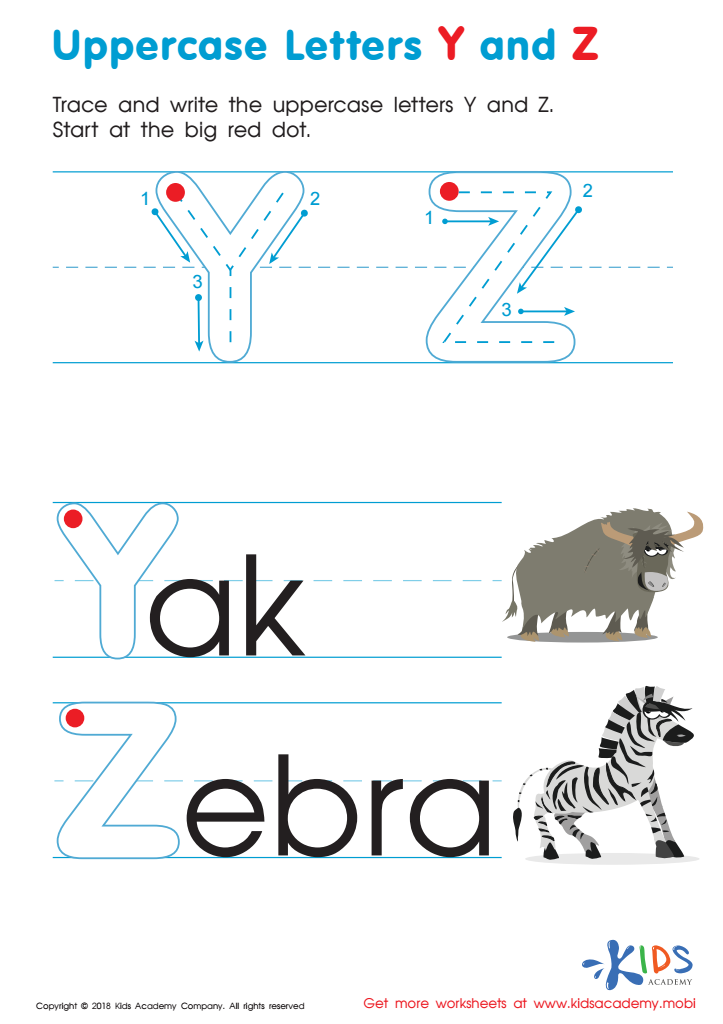
Uppercase Letters Y Z Worksheet
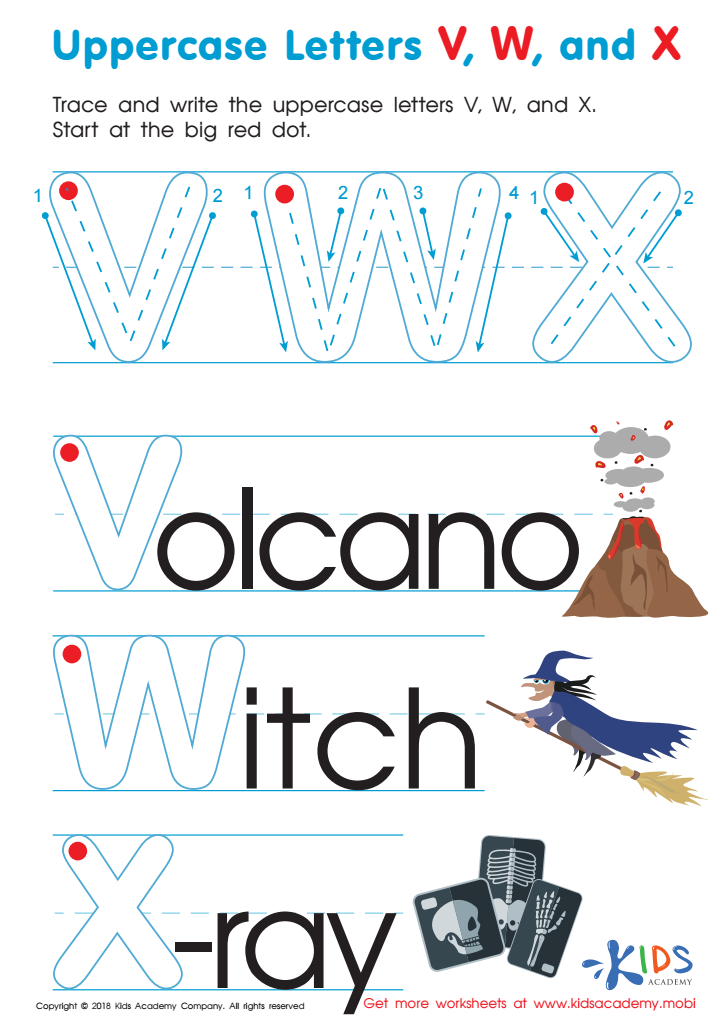
Uppercase Letters V, W, and X Worksheet








Letter tracing important for 5-year-olds because it lays the foundation for essential literacy skills. At this age, children are typically starting to develop fine motor skills, hand-eye coordination, and an understanding of the alphabet—building blocks critical to academic success. Here are several key reasons why parents and teachers should care about letter tracing:
-
Fine Motor Development: Letter tracing helps children refine their fine motor skills, which are essential for writing and other tasks requiring dexterity.
-
Letter Recognition: By repeatedly tracing letters, children become more familiar with the shapes and forms. This not only aids in letter recognition but also in distinguishing between different letters.
-
Hand-Eye Coordination: Tracing requires children to use their eyes to guide their hands, enhancing their hand-eye coordination.
-
Early Literacy: Mastery of letter tracing translates to better reading and writing skills. Recognizing and being able to write uppercase letters are critical milestones in early literacy.
-
Boosts Confidence: Successfully tracing letters builds confidence. Children gain a sense of accomplishment, encouraging further learning.
-
Prepares for School: Many educational frameworks use these skills as entry-level competencies. Being proficient in letter tracing gives children a head start and can make the transition to formal schooling smoother.
Investing time in improving these skills thus supports overall cognitive development and readiness for future academic challenges.