Animal Classification Normal Worksheets for 5-Year-Olds
5 filtered results
-
From - To
Welcome to our vibrant collection of Animal Classification Normal Worksheets designed specifically for 5-year-olds! These engaging worksheets introduce young learners to the fascinating world of animals by helping them identify and categorize various species. Through colorful illustrations and age-appropriate activities, children will explore different animal types, such as mammals, birds, reptiles, and aquatic life. Our resources promote critical thinking, fine motor skills, and promote early science education in a fun, interactive way. Perfect for home or classroom use, these worksheets provide a wonderful opportunity for kids to discover, learn, and enjoy the animal kingdom! Explore our worksheets today!
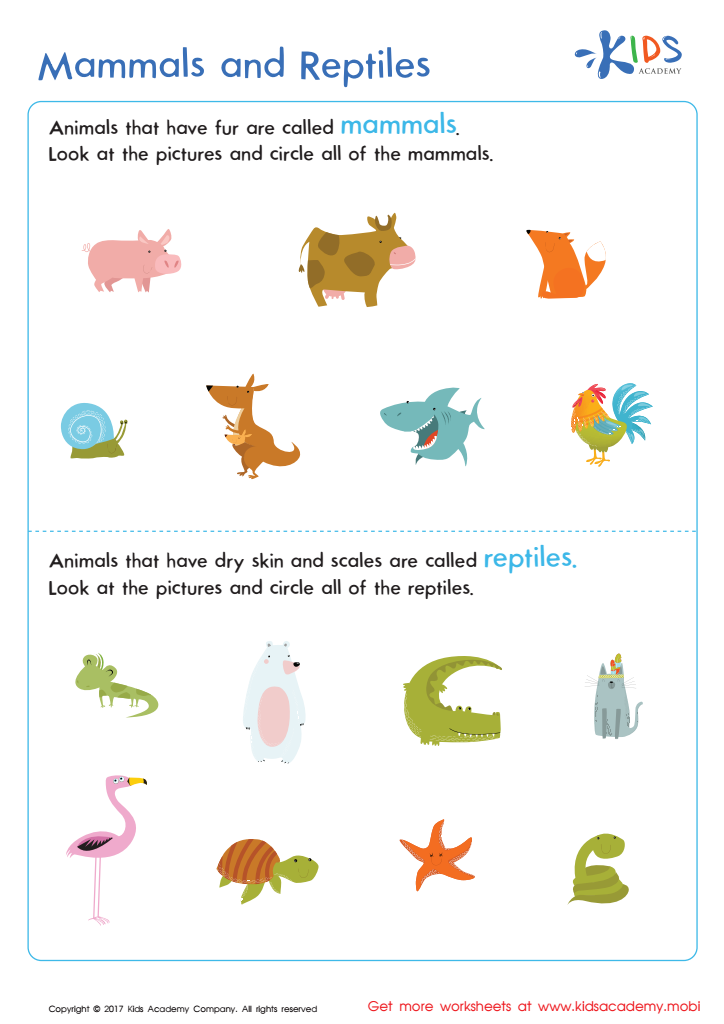
Mammals and Reptiles Worksheet
 Assign to My Students
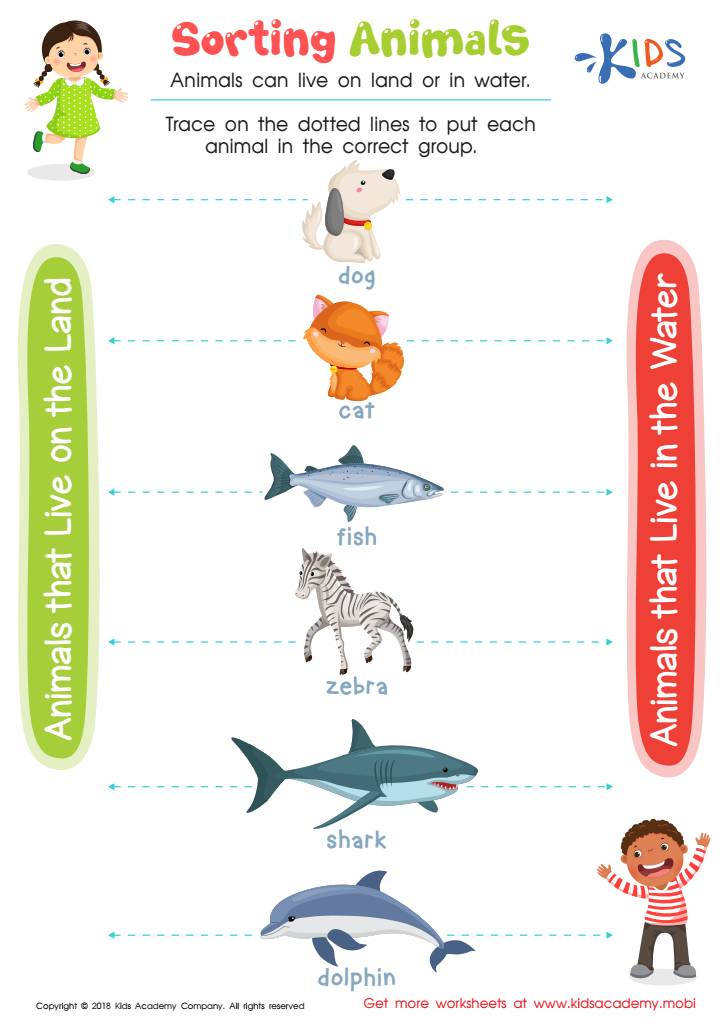
Sorting Animals Worksheet
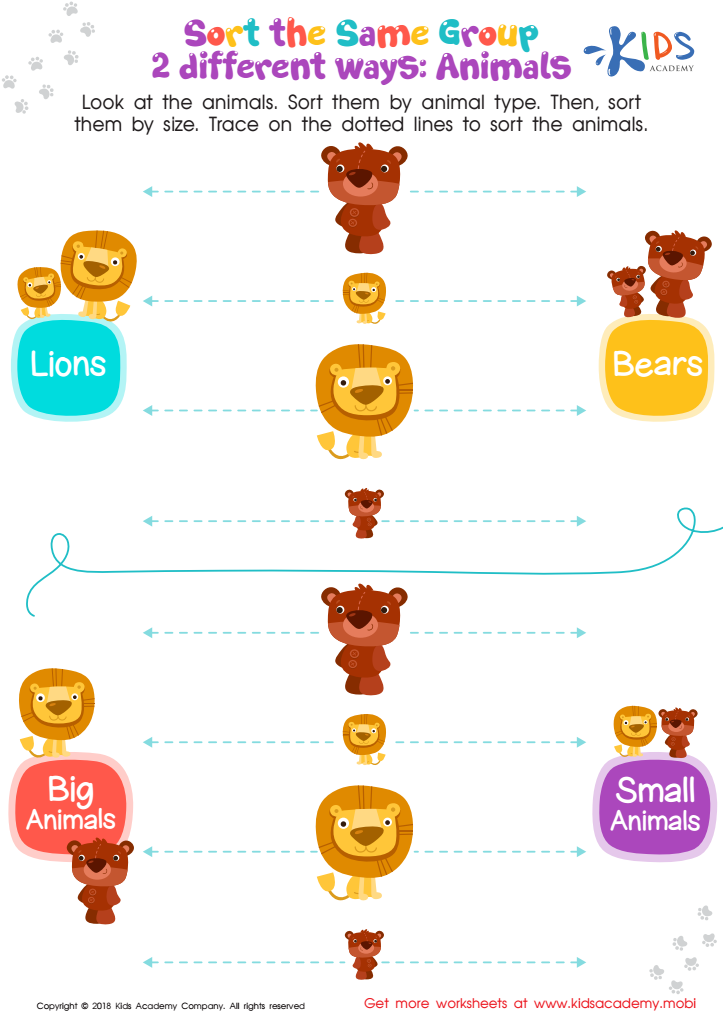
Sort the Same Group 2 Different Ways: Animals Worksheet
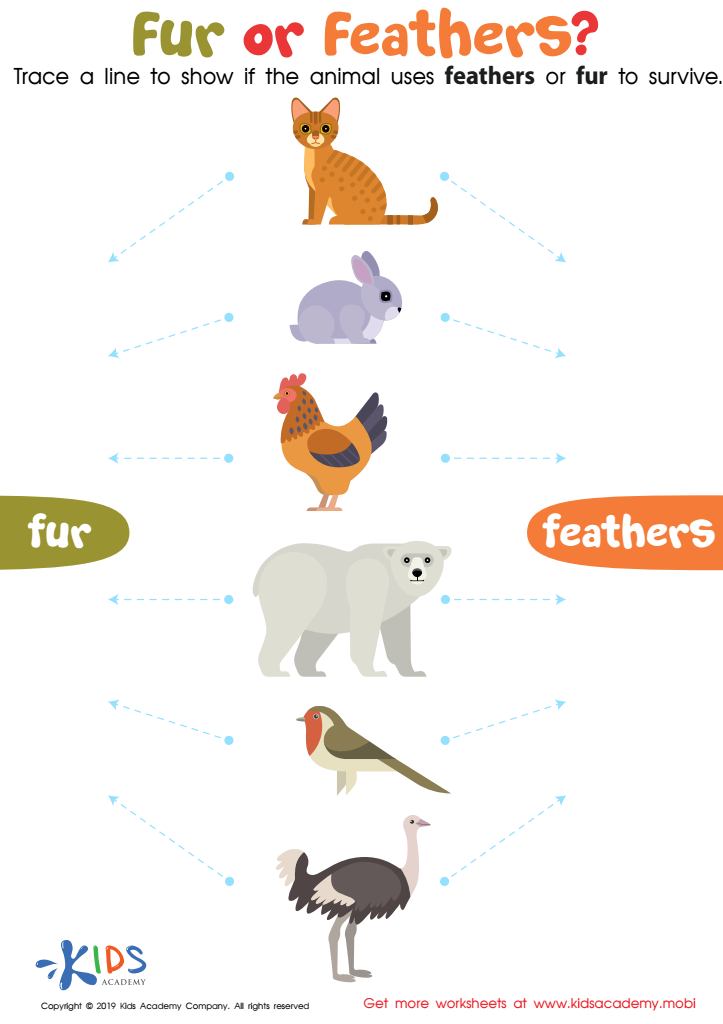
Fur or Feathers? Worksheet
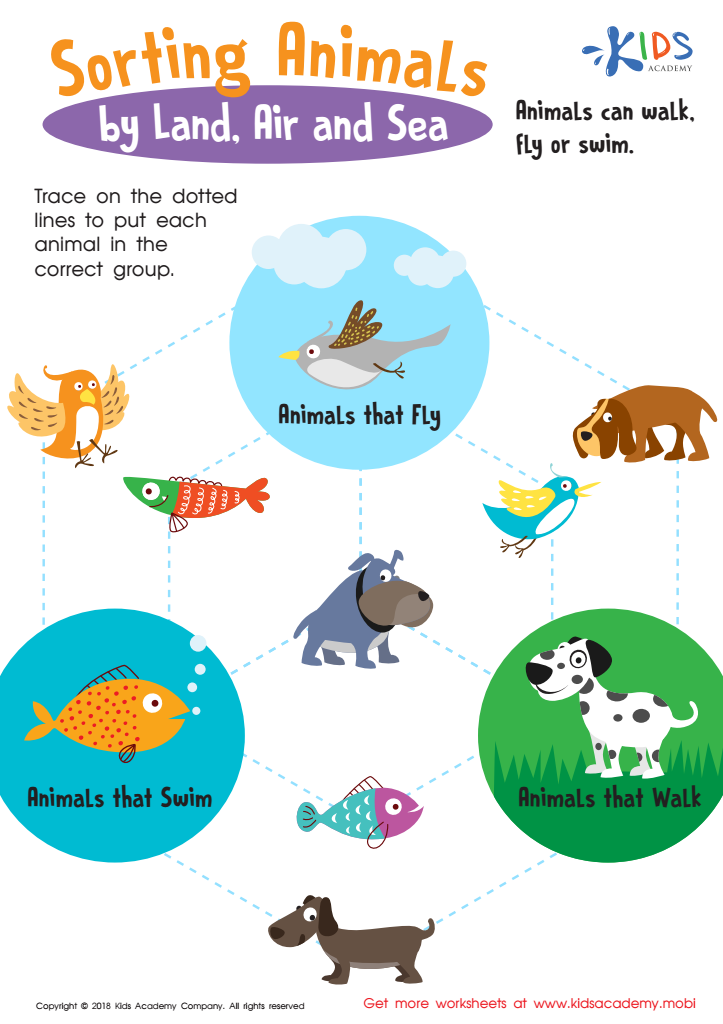
Sorting Animals by Land, Air and Sea Worksheet




.jpg)


Understanding animal classification is vital for 5-year-olds because it lays the foundation for critical thinking and observational skills. When parents and teachers introduce young children to the concept of grouping animals, it opens up exciting avenues for learning about the natural world. Children may learn to classify animals as mammals, birds, reptiles, and so on, which not only enhances their vocabulary but also enhances their cognitive development.
Moreover, discussing animal classification encourages curiosity and a love for nature. Kids are naturally inquisitive, and when they learn about different animals’ characteristics, habitats, and behaviors, they develop a connection to the environment. This knowledge fosters empathy and respect for living creatures, promoting conservation awareness early on.
Additionally, animal classification can aid in socialization. Group activities related to sorting animals can help children learn teamwork, share ideas, and communicate, building their social skills. It can also be a fun, engaging way to incorporate art, storytelling, and interactive play into learning.
In summary, teaching young children about animal classification is both educational and exciting, enabling them to explore science in a way that feels playful and meaningful while fostering their curiosity about the world.








