
Division practice Normal Worksheets for 5-Year-Olds
4 filtered results
Difficulty Level
Grade
Age
-
From - To
Subject
Activity
Standards
Welcome to our "Division Practice Worksheets for 5-Year-Olds" page, designed to make math fun and engaging for early learners! These printable worksheets introduce basic division concepts through colorful, age-appropriate activities. Young learners will practice sharing objects and solving simple problems, helping them develop foundational math skills in a playful manner. Each worksheet is tailored to ensure that kids can grasp division intuitively while boosting their confidence in math. Perfect for home or classroom use, these resources provide a creative way to instill a love for learning. Explore our collection and support your child's journey into the world of numbers today!
Favorites
With answer key
Interactive
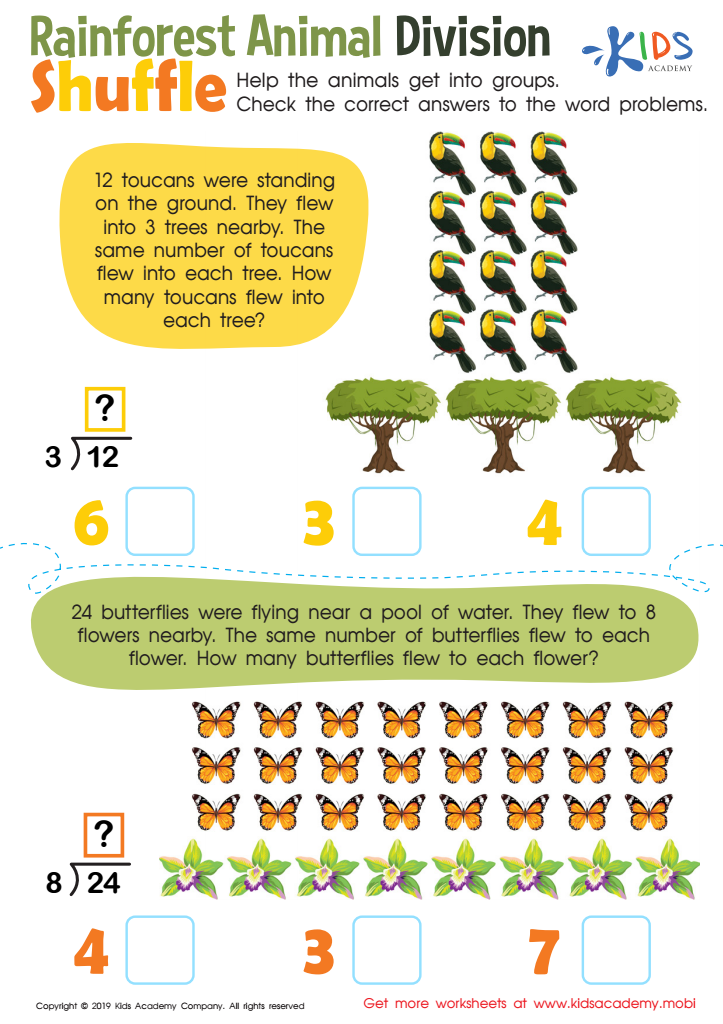
Rainforest Animal Division Worksheet
Children can save the rainforest and learn about division with this worksheet! It helps kids understand that division involves creating equal groups of specific numbers, and with its visual representation, they can grasp the concept more easily. They'll have fun learning about their place in the world and their role in protecting the environment.
 Assign to My Students
Rainforest Animal Division Worksheet
Worksheet
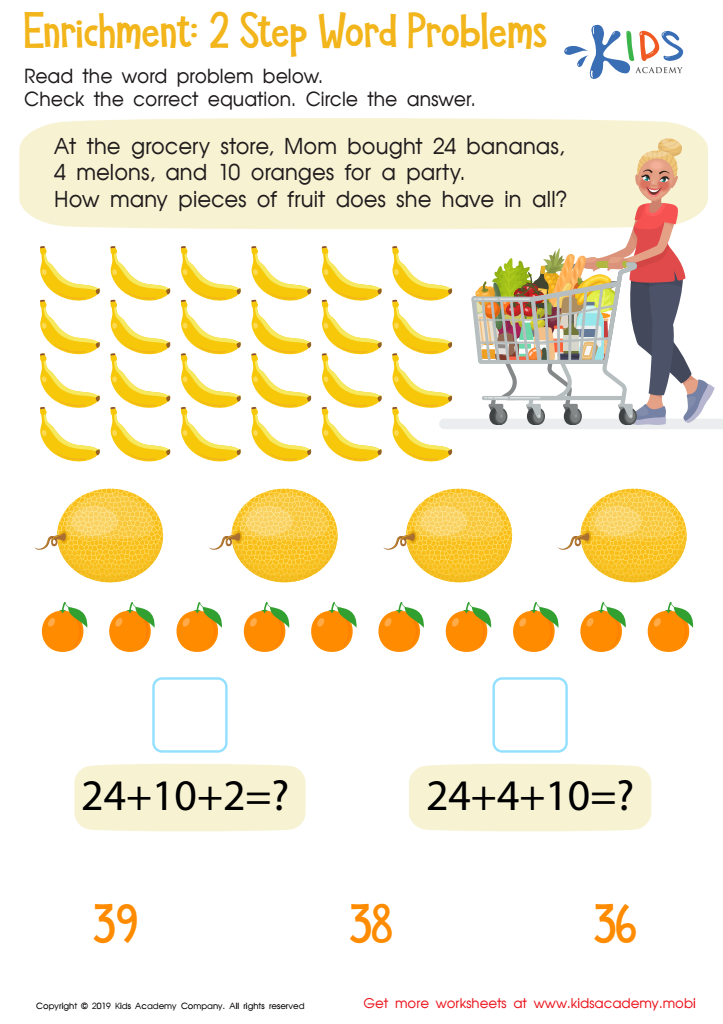
Enrichment -2 Step Word Problems Worksheet
Help your students learn math easier and faster with this colorful worksheet. Read the word problem and then guide them in checking the correct equation and finding the answer. Your students will benefit from the extra help, as they work through new concepts each day.
Enrichment -2 Step Word Problems Worksheet
Worksheet
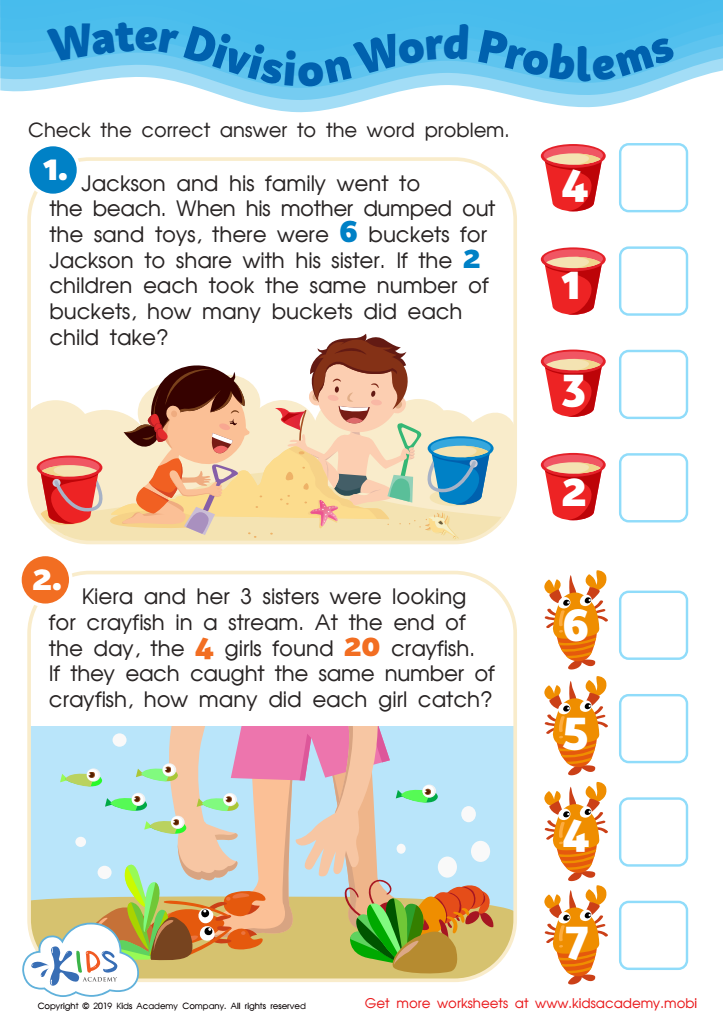
Water Division Word Problems Worksheet
Kids can sharpen their math skills with this fun PDF! They'll see pictures of friends at the beach, plus bold numbers and colorful pictures. All they need to do is read and understand the problem to find the answer - without even realizing they're doing division. A great way to make math enjoyable!
Water Division Word Problems Worksheet
Worksheet
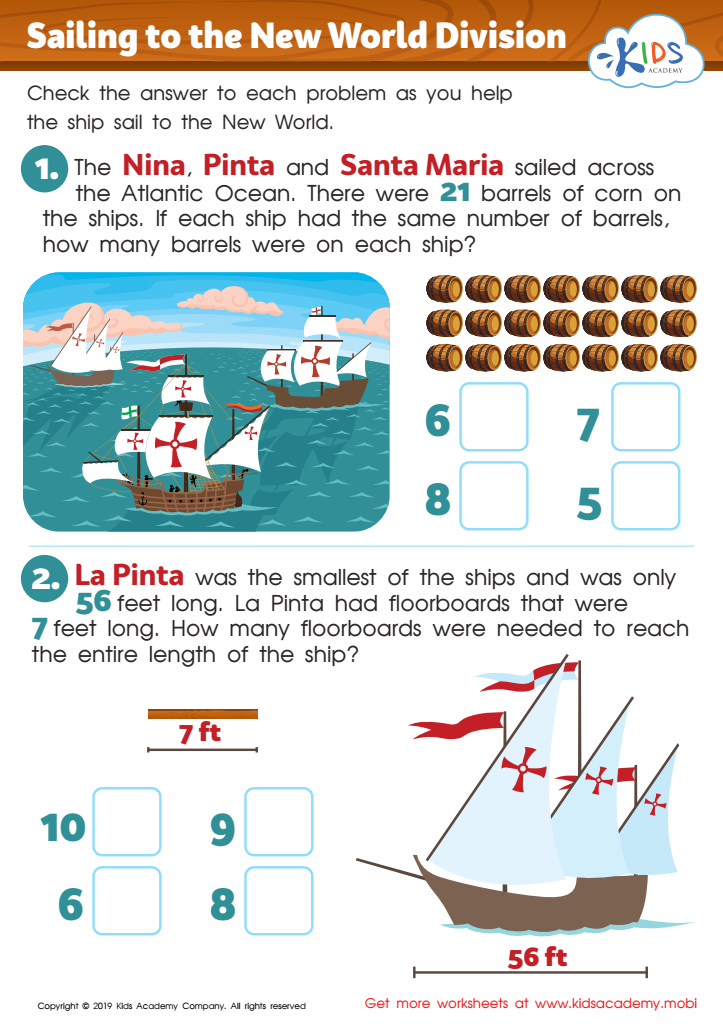
Sailing to the New World Division Worksheet
This worksheet combines history and math, helping kids make sense of problem-solving. Christopher Columbus sailing the ocean blue is combined with picture representations of division word problems in bold colors and highlighted numbers. Kids can learn while having fun figuring out the problems, regardless of whether it's math or history.
Sailing to the New World Division Worksheet
Worksheet
Join Kids Academy for Free
Who is primarily going to use this learning content?






Division practice is essential for 5-year-olds as it lays the groundwork for future mathematical understanding. At this early stage, children are starting to grasp basic number concepts, and introducing them to division, even in a playful and simplified manner, helps foster a solid foundation for arithmetic.
Understanding division aids in developing crucial skills such as problem-solving and critical thinking. Through engaging activities, like sharing toys or dividing snacks among friends, children can learn the concept of fairness and distribution, making math relatable and fun. This hands-on approach reinforces the idea that math is not just about numbers, but about real-life applications.
Moreover, teaching division practice helps to boost a child's confidence in tackling more complex math problems later on. When youngsters can divide small sets of objects, they gain a sense of accomplishment and an enthusiasm for learning. This positive experience can promote a lifelong love for mathematics.
Lastly, supporting children in early division practice encourages family engagement—parents and teachers can partner in reinforcing these early skills through games and interactive activities, fostering a joyful learning environment that cultivates both social and cognitive development. In essence, division practice is a critical stepping stone toward comprehensive mathematical literacy.








