Noun identification Normal Worksheets for 5-Year-Olds
3 filtered results
-
From - To
Discover our engaging Noun Identification Normal Worksheets designed specifically for 5-year-olds! These worksheets provide young learners with a fun and interactive way to identify and categorize nouns, enhancing their vocabulary and language skills. Each activity is tailored to spark creativity and curiosity, making the learning process enjoyable. Children will explore various images and words, helping them distinguish between people, places, and things. Whether at home or in the classroom, these worksheets foster independent learning and support early literacy development. Encourage your child's linguistic growth with our thoughtfully crafted noun identification worksheets today! Ideal for both at-home learning and educational settings.
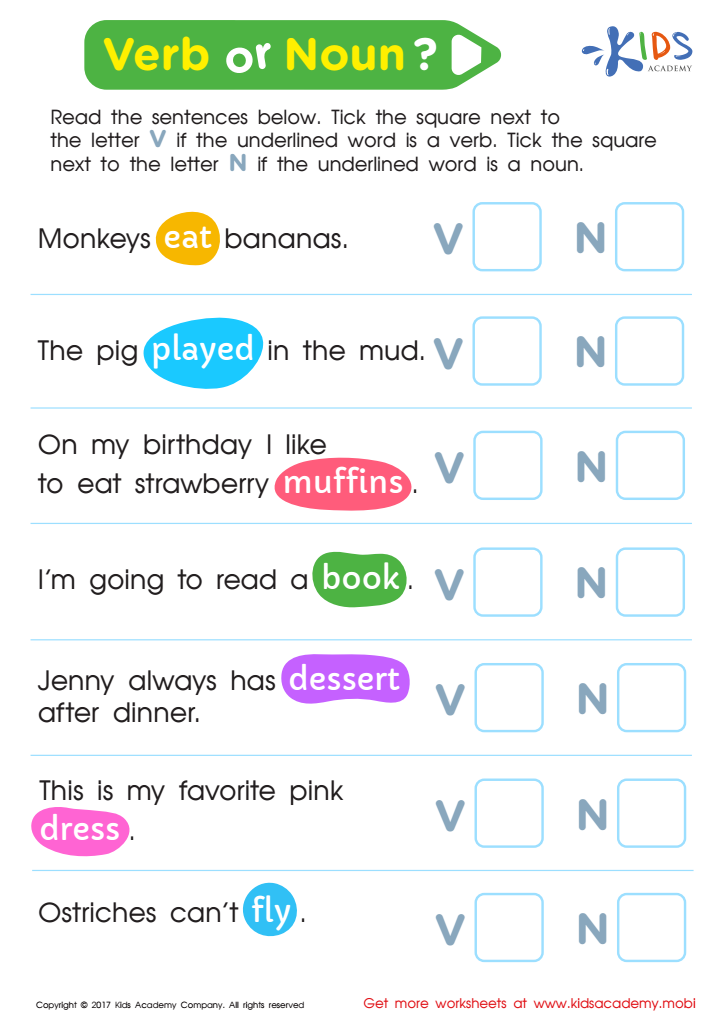
Verb or Noun Worksheet
 Assign to My Students
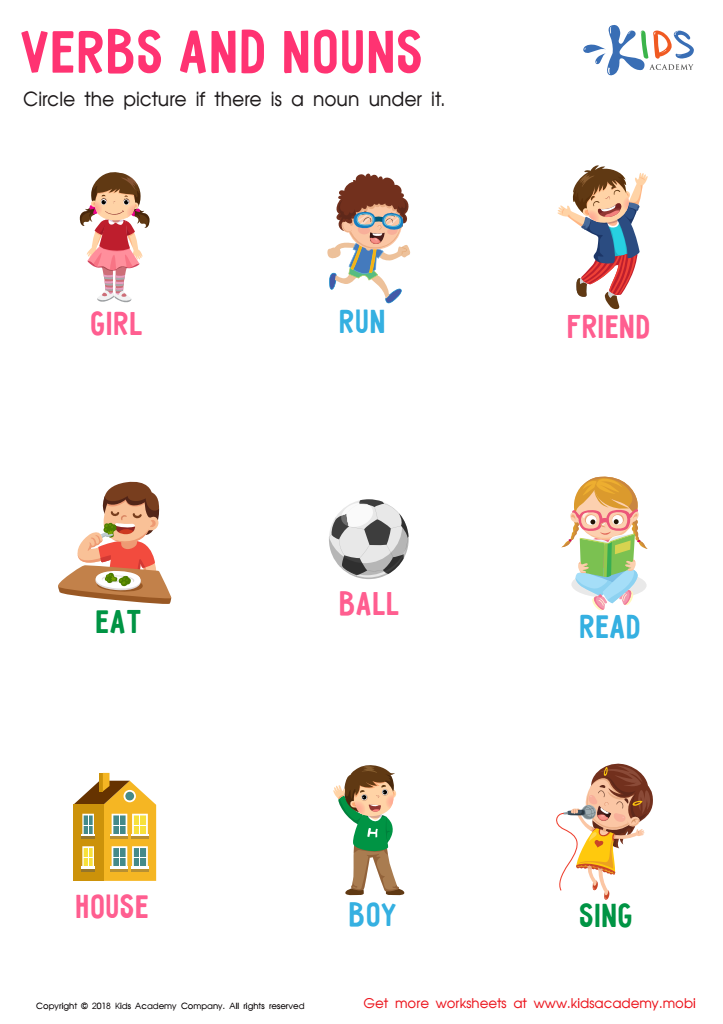
Verbs and Nouns Worksheet
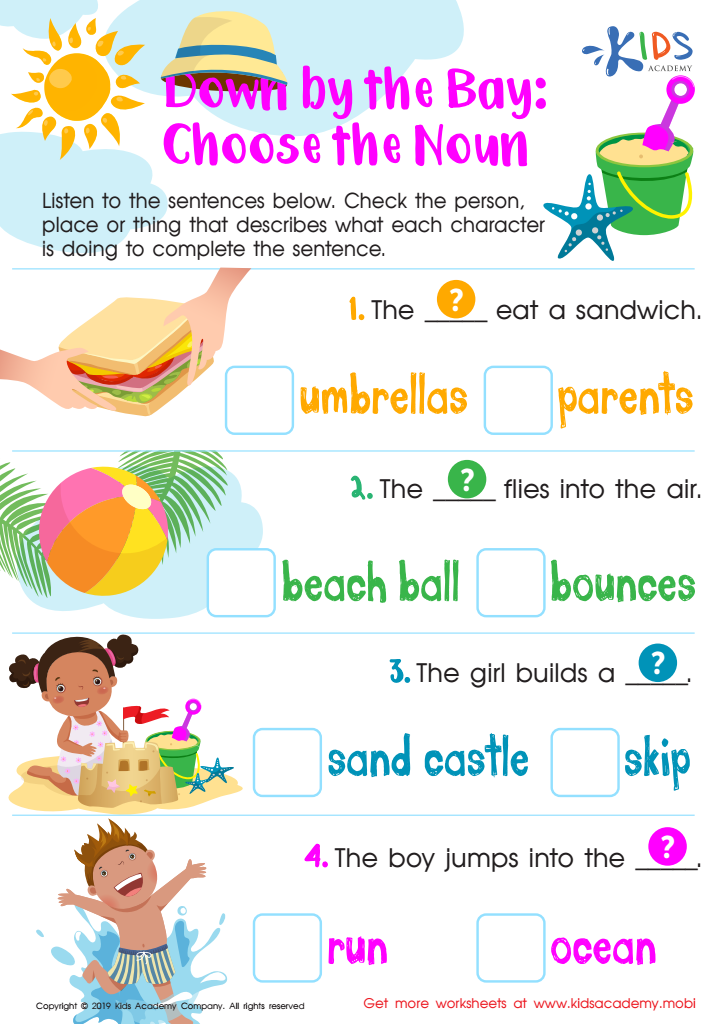
Down by the Bay: Choose the Noun Worksheet






Noun identification is a crucial developmental skill for 5-year-olds, as it serves as a foundation for language and literacy. Parents and teachers should care about teaching noun identification for several reasons.
Firstly, nouns are the building blocks of language, representing people, places, things, and animals. When children can identify nouns, they enhance their vocabulary, which is essential for effective communication and comprehension. This skill also supports their ability to construct sentences, ultimately aiding in both their spoken and written language development.
Secondly, noun identification encourages critical thinking and observation skills. As children learn to recognize nouns in their environment, they become more aware of the world around them. This process fosters curiosity, prompting them to ask questions and explore further.
Moreover, mastering noun identification can boost a child’s confidence in their language abilities. This newfound confidence often encourages children to participate in conversations, read more, and express their thoughts creatively, all of which are vital for their overall academic success.
Finally, by prioritizing noun identification, parents and teachers lay the groundwork for more complex language skills in the future. Engaging with nouns today will help children become proficient communicators tomorrow.








