Syllable identification Normal Worksheets for 5-Year-Olds
3 filtered results
-
From - To
Enhance your 5-year-old's literacy skills with our Syllable Identification Normal Worksheets! Designed with engaging activities, these worksheets aim to make learning fun and interactive. Children will explore syllables through a variety of exercises, including counting, clapping, and matching, helping them understand the rhythm of language. Our resources foster phonemic awareness while building essential reading skills. Perfect for use at home or in the classroom, these printables encourage early learners to develop confidence in their ability to identify and pronounce syllables correctly. Download today and witness the improvement in your child's reading skills, paving the way for their future academic success!
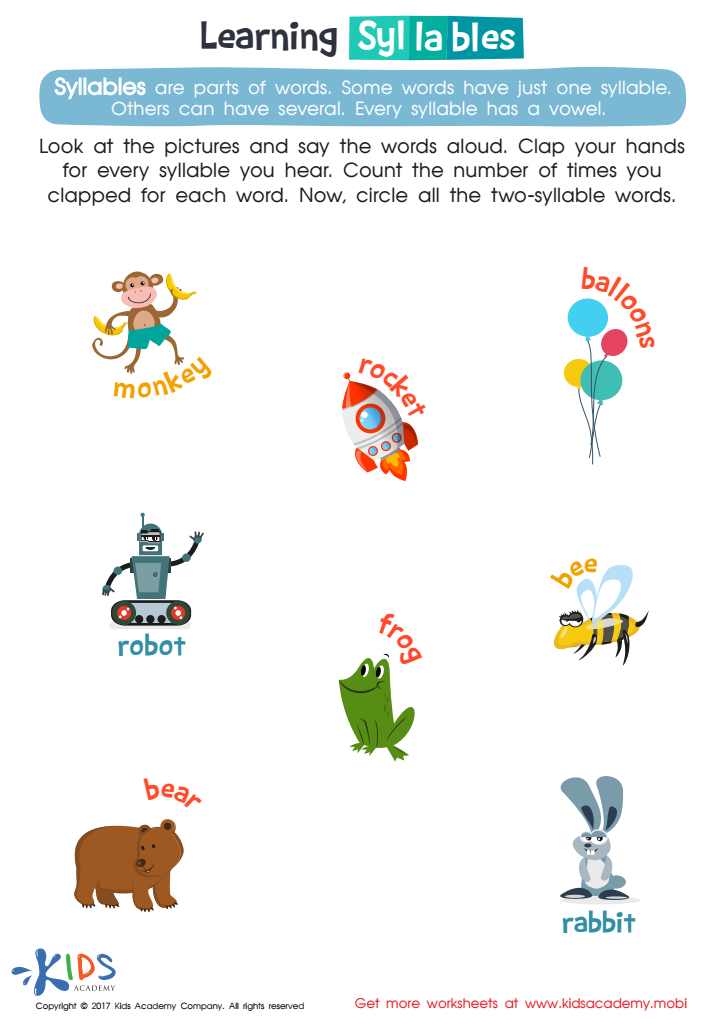
Learning Syllables Word Structure Worksheet
 Assign to My Students
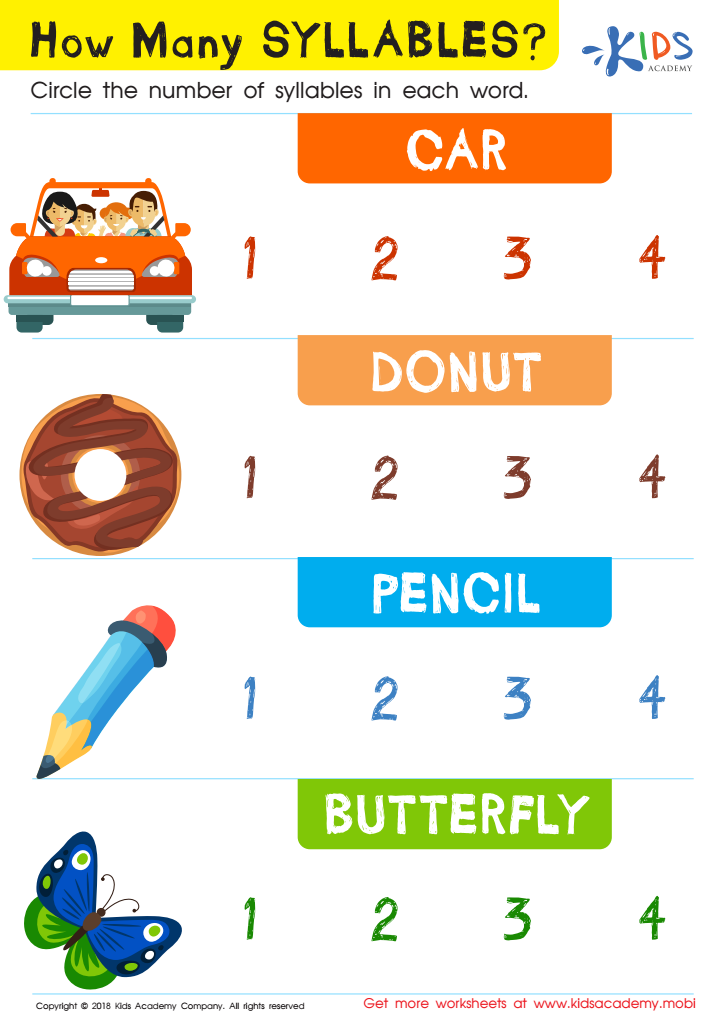
How Many Syllables? Worksheet
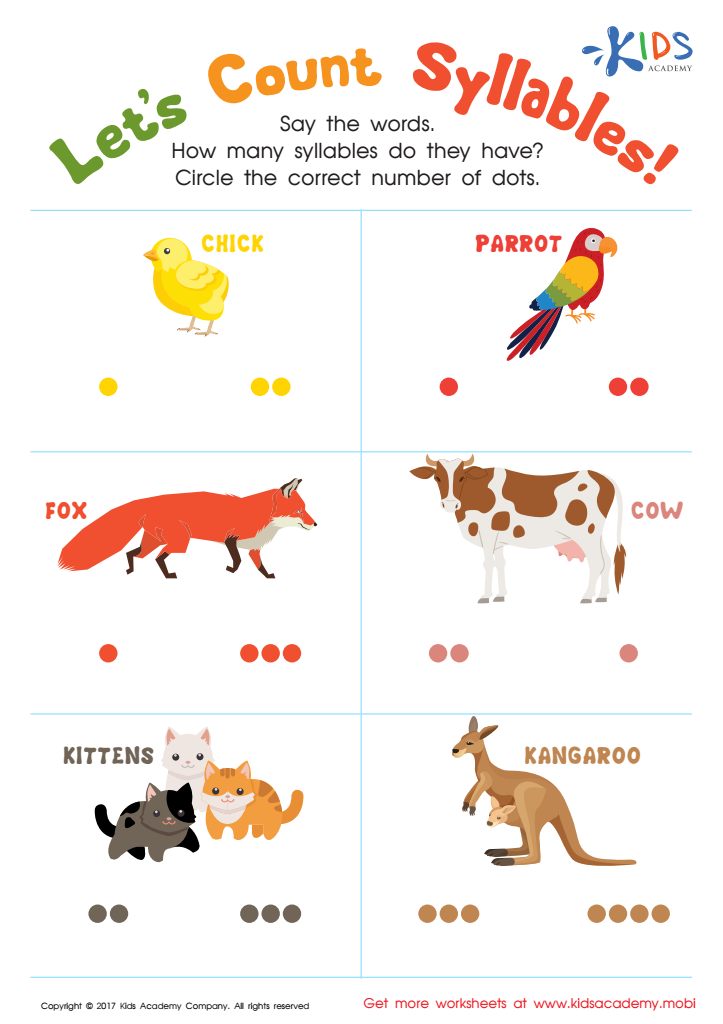
Lets Count Syllables Worksheet






Syllable identification is a crucial skill for 5-year-olds as it lays the foundation for reading and language development. Teaching young children to recognize syllables enhances their phonemic awareness, an essential building block for successful reading. By identifying syllables, children learn to break down words into manageable parts, making it easier to decode unfamiliar words.
When parents and teachers prioritize syllable identification, they are helping children develop essential literacy skills that contribute to better reading fluency and comprehension. Engaging in syllable activities also encourages participation and interaction, fostering a love for language and learning. Moreover, this skill aids in vocabulary expansion, allowing children to articulate words more clearly.
Additionally, early syllable recognition supports children in understanding word structure and rhyming, enriching their overall language experience. Parents who engage in syllable-focused activities reinforce classroom learning, creating a cohesive support system for their child's educational growth.
Ultimately, caring about syllable identification helps educators and parents equip children with the critical tools they need for academic success, promoting confidence and a lifelong love for reading. As they master this skill at an early age, children are set on a positive path toward literacy and effective communication.








