Understanding directions Normal Worksheets for 5-Year-Olds
7 filtered results
-
From - To
Our "Understanding Directions Normal Worksheets for 5-Year-Olds" are specially designed to bolster your child’s ability to follow and comprehend instructions. These engaging worksheets encompass fun activities that help young learners master spatial awareness and directional words like left, right, up, and down. By integrating puzzles, coloring tasks, and simple problem-solving scenarios, our worksheets make learning interactive and enjoyable. Perfect for use at home or within a classroom, these resources aim to boost confidence and cognitive skills. Equip your 5-year-old with essential navigational abilities through our well-crafted and stimulating worksheets!
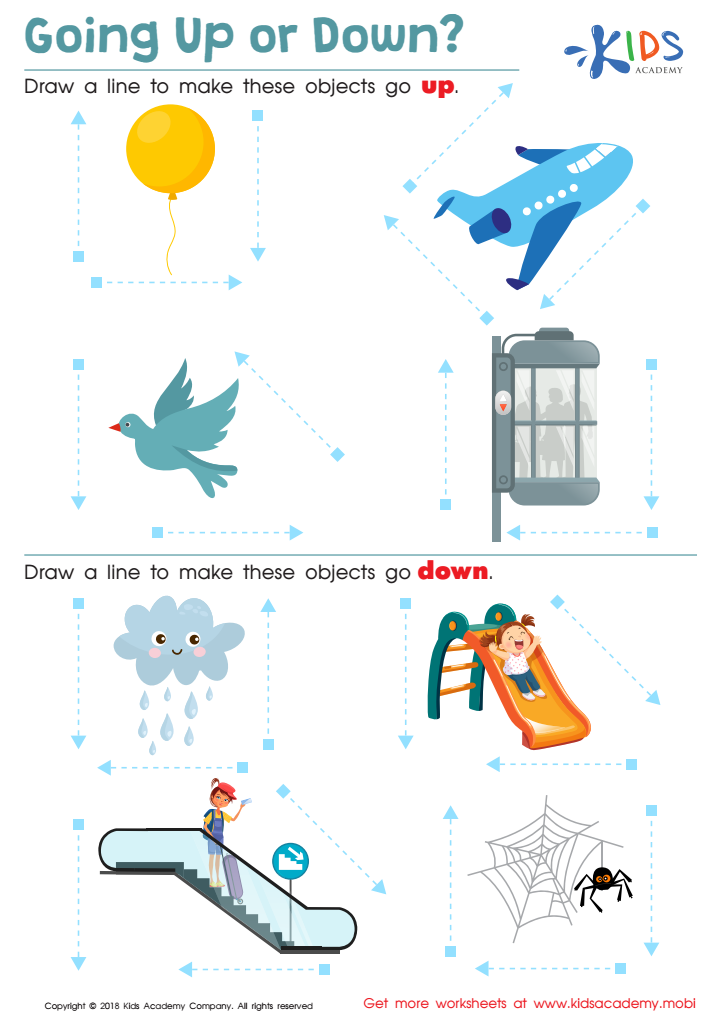
Going up or Down? Worksheet
 Assign to My Students
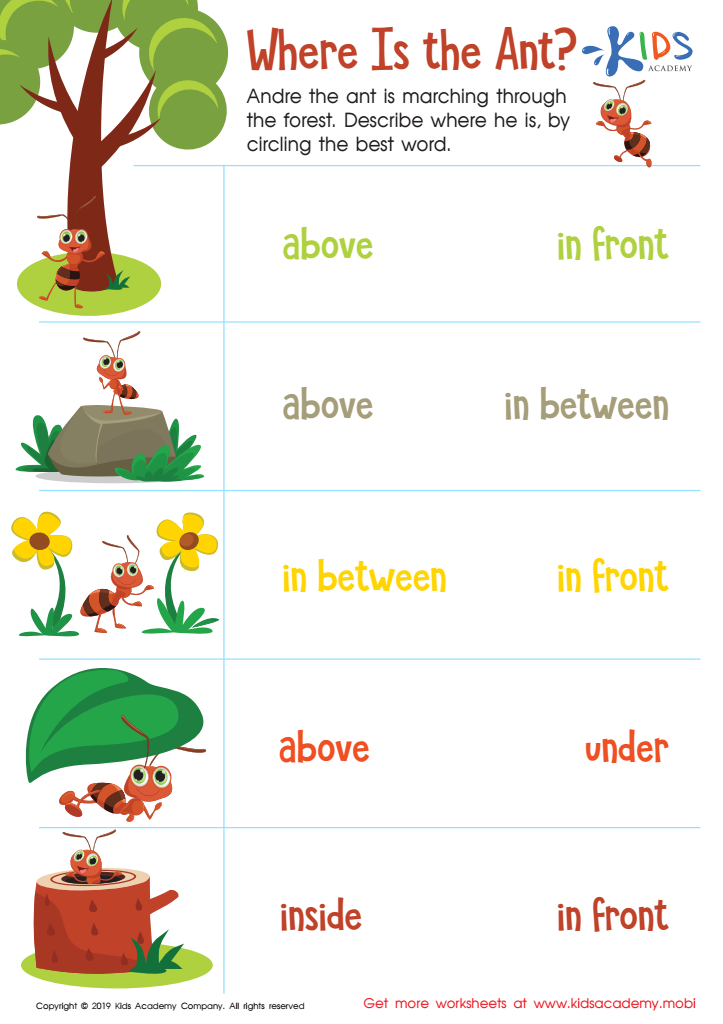
Where Is the Ant? Worksheet
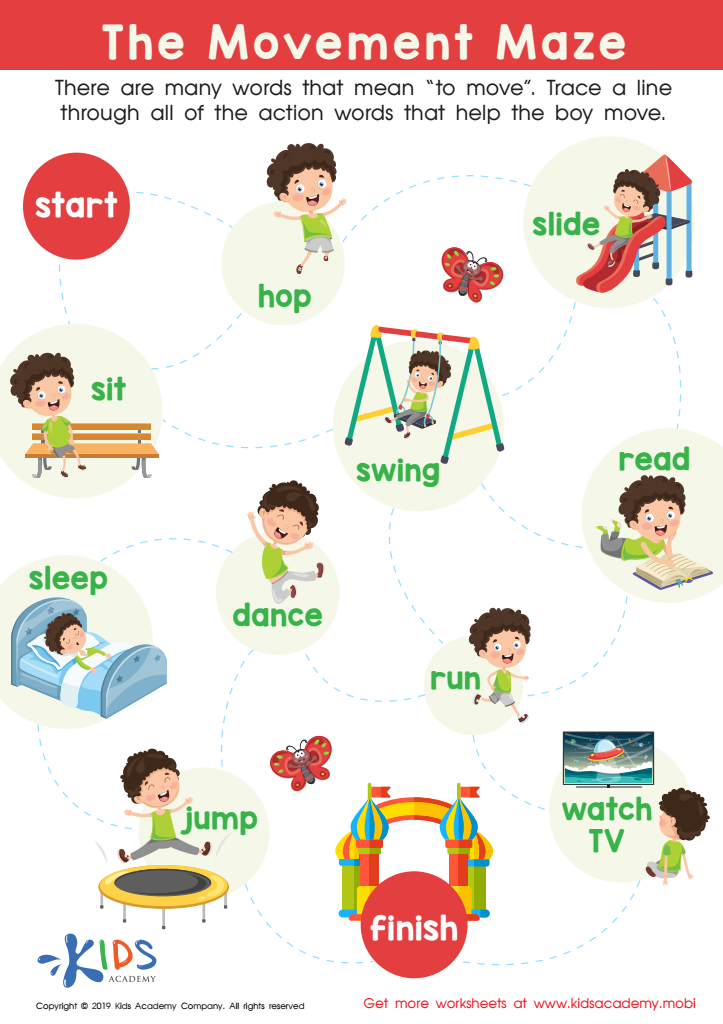
The Movement Maze Worksheet
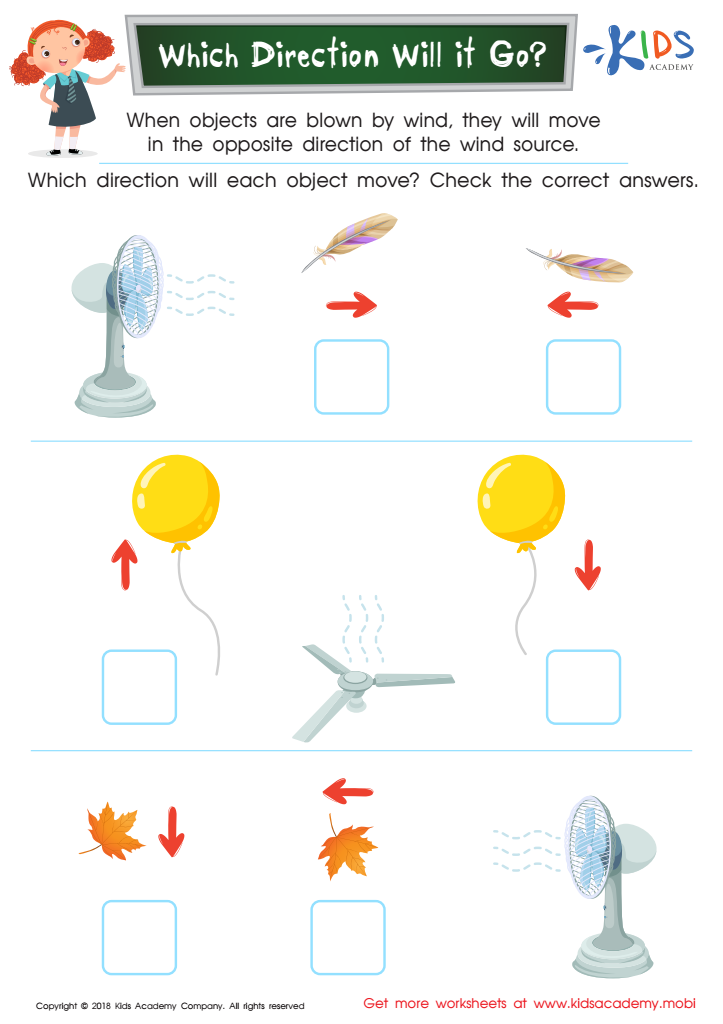
Which Direction Will it Go? Worksheet
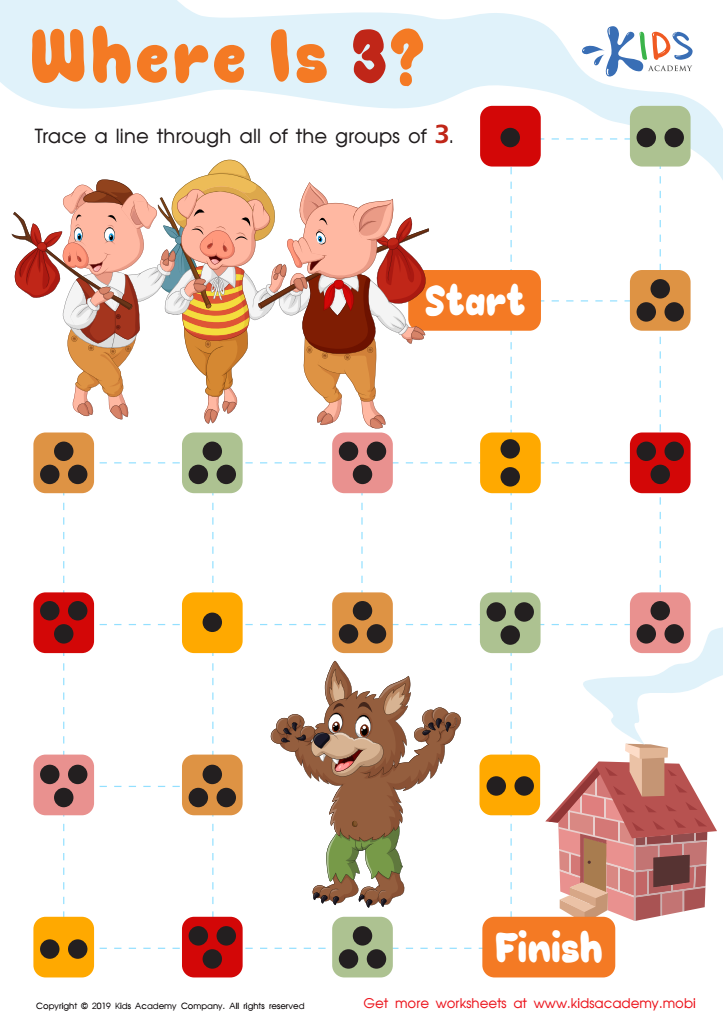
Where Is 3? Worksheet
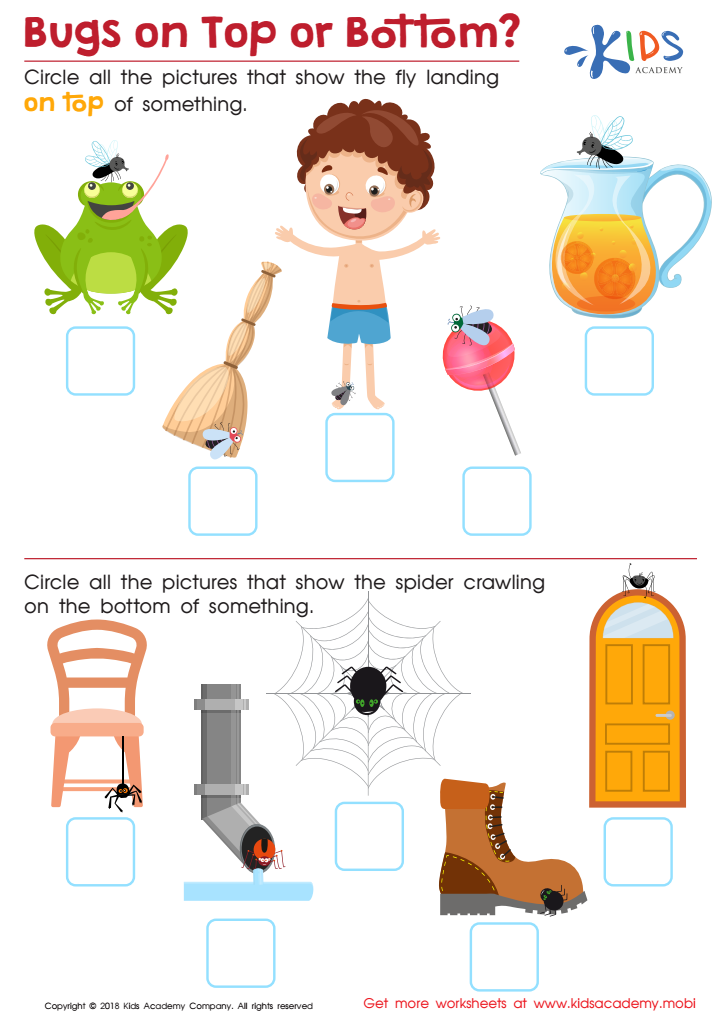
Bugs on Top or Bottom? Worksheet
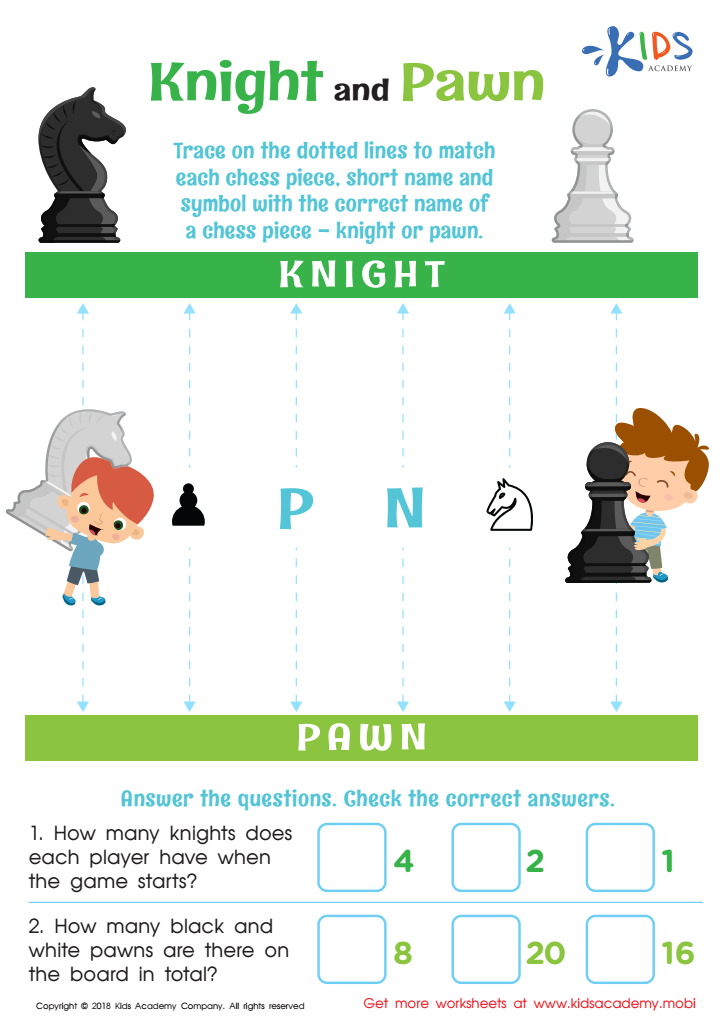
Knight and Pawn Worksheet







Understanding directions is crucial for the development of 5-year-olds, as it forms a foundational skill that ties into various aspects of learning and daily life. For parents and teachers, recognizing the importance of this skill can facilitate a child's overall growth. At this age, children are honing their listening abilities, which are integral to following instructions accurately. This ensures their safety, especially in a crowded environment like a school or playground, where immediate and clear responses to directions can prevent potential accidents.
Moreover, the ability to grasp and act on instructions paves the way for academic success. It enhances cognitive development by fostering attention, memory, and comprehension skills. For example, understanding directions is a precursor to literacy, as tasks often involve multi-step instructions that children must follow. This affects their capability to assimilate new information, solve problems, and engage in structured activities, making the learning process smoother and more effective.
In social contexts, following directions helps children to engage appropriately with peers and adults, promoting respectful interactions and cooperation in group settings. Teaching and reinforcing this skill at an early age encourages self-discipline and responsibility, helping children to navigate and manage their environments proficiently. Thus, parents' and teachers' investment in this area plays a critical role in a child's holistic development.








