Cognitive Development Normal 2D Shapes Worksheets for 5-Year-Olds
5 filtered results
-
From - To
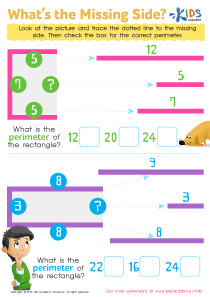
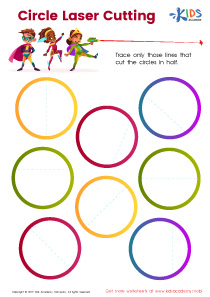
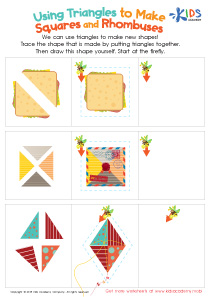
Explore our Cognitive Development Normal 2D Shapes Worksheets for 5-Year-Olds, designed to boost young minds. These engaging activities help children recognize and differentiate shapes like circles, squares, and triangles while promoting critical thinking and problem-solving skills. Each colorful worksheet features fun tasks that inspire creativity and enhance hand-eye coordination. Perfect for both classroom and home learning, our carefully curated content aligns with early childhood education standards, ensuring your child reaches essential developmental milestones. Visit Kids Academy for a wide variety of learning resources that make mastering 2D shapes an enjoyable adventure for your little ones.
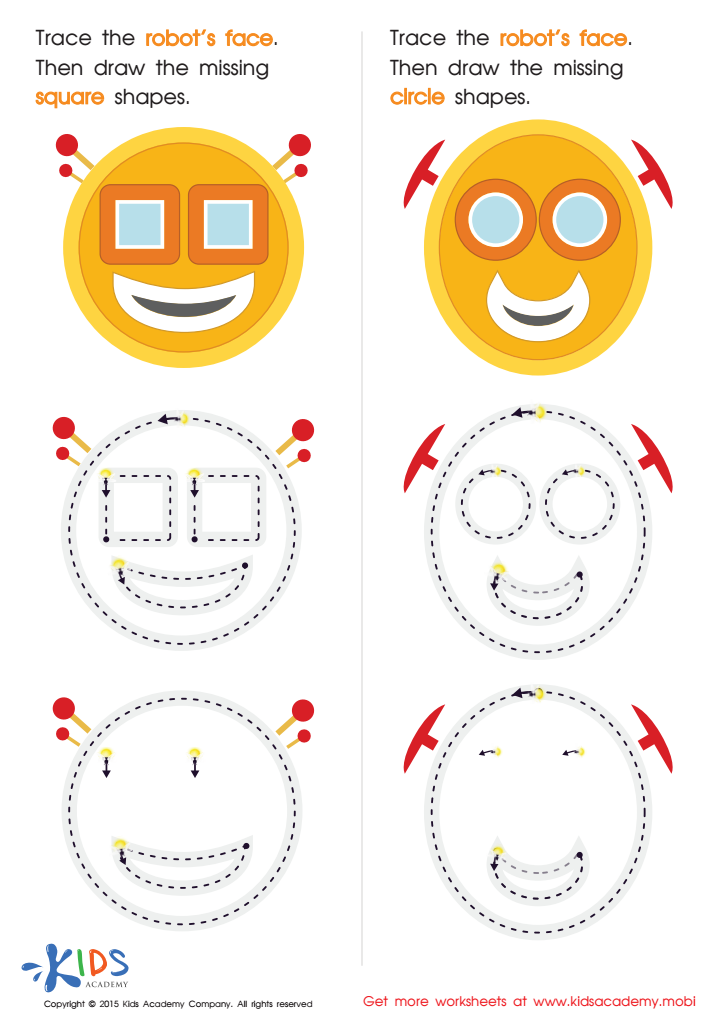
Practicing to Draw Circles And Squares Printable
 Assign to My Students











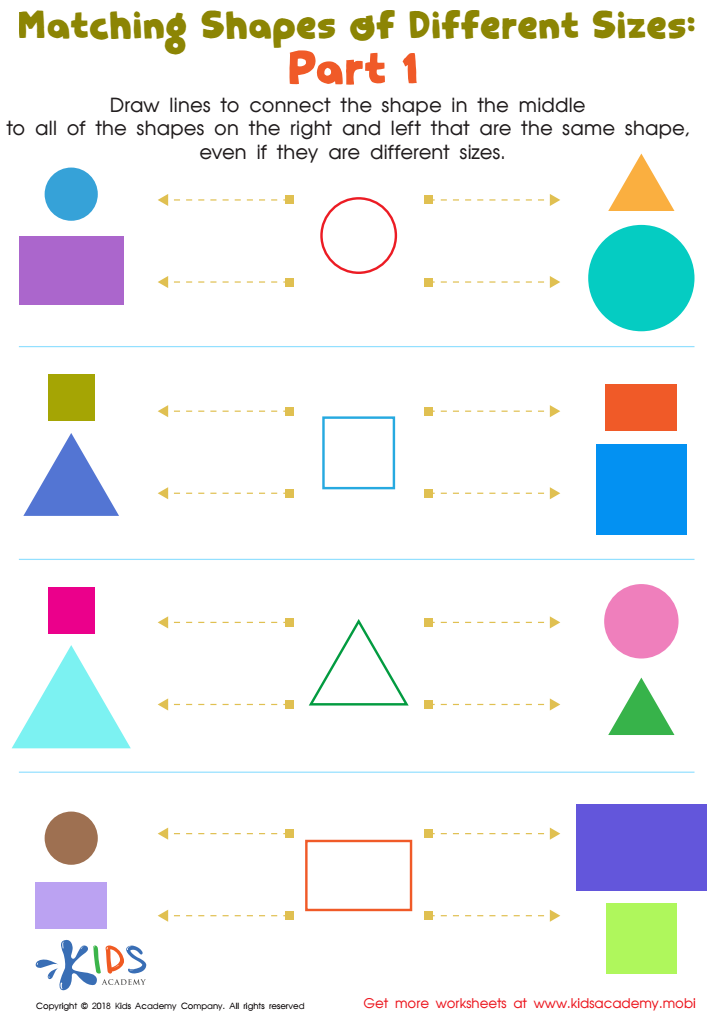
Geometry: part 1 Worksheet
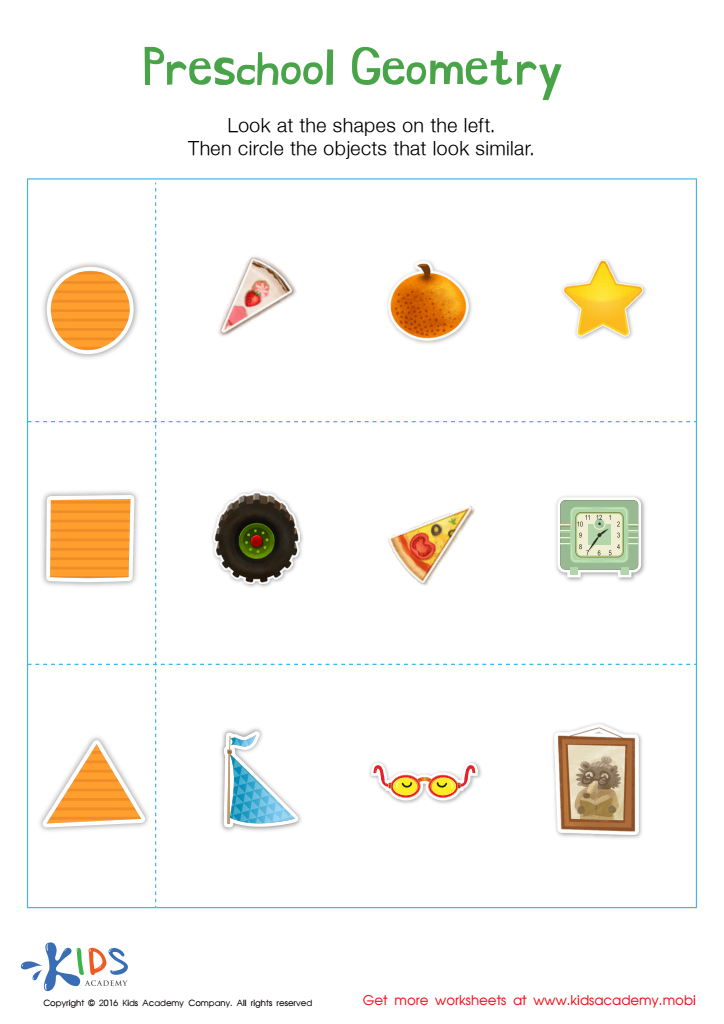
Preschool Geometry Match Up Worksheet
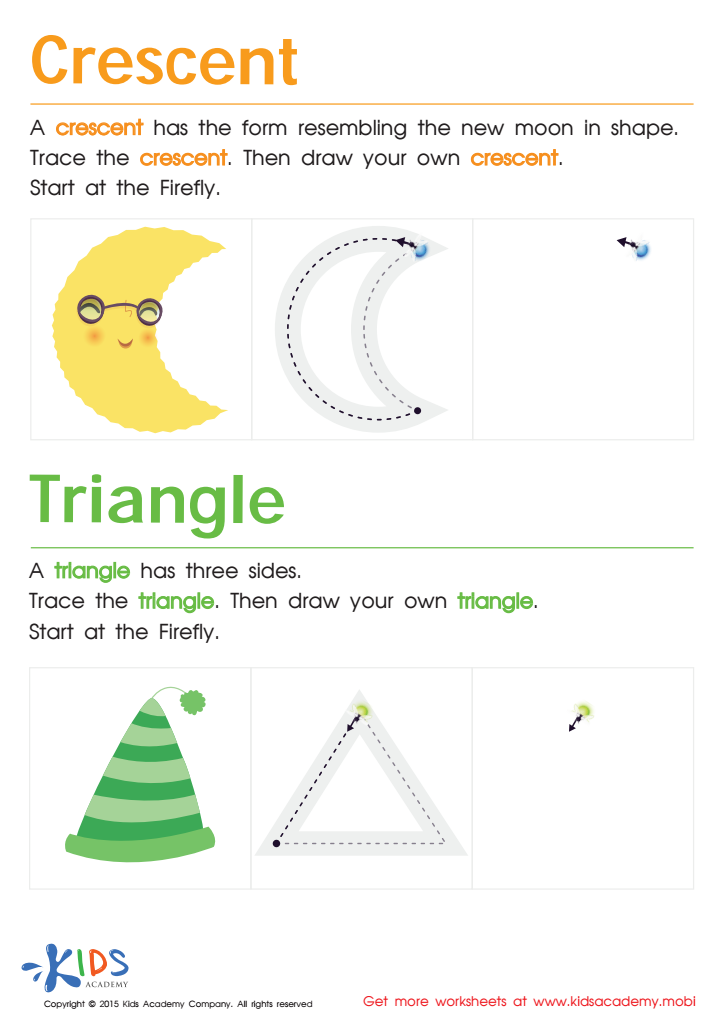
Learning to Draw Crescents And Triangles Worksheet
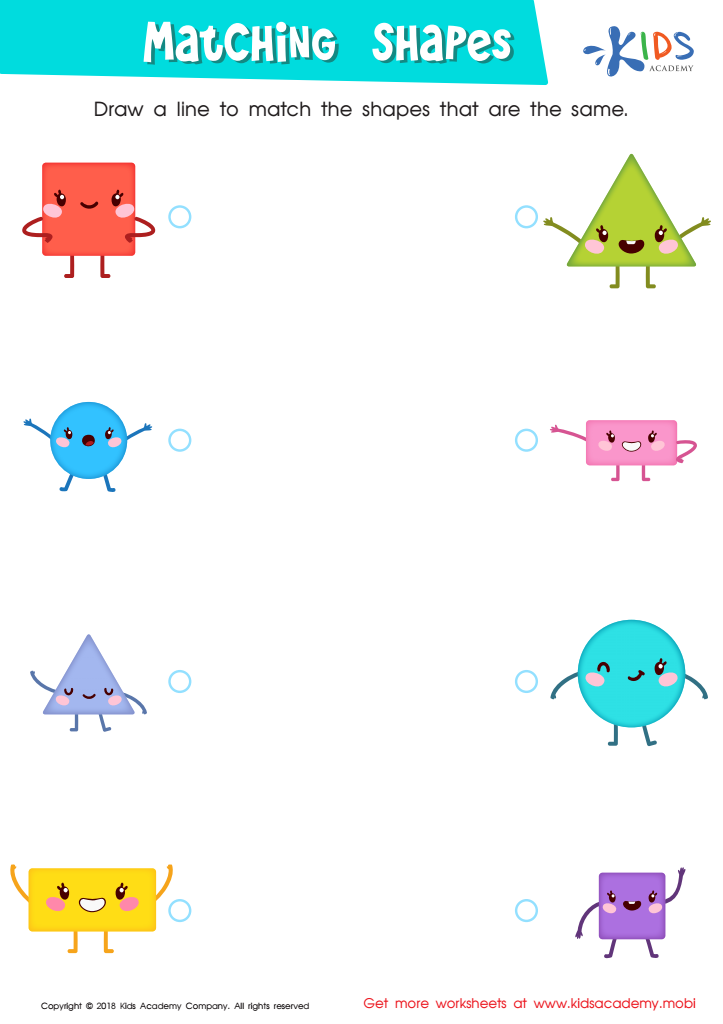
Matching Shapes Worksheet








Cognitive development at age 5 is crucial, as it sets the foundation for future learning and problem-solving skills. Exposing children to 2D shapes like circles, squares, and triangles plays a central role in enhancing their spatial awareness, a vital aspect of cognitive growth. By learning to recognize, name, and manipulate these shapes, children improve their ability to organize visual information and understand spatial relationships, which are essential skills for mathematics and science.
Engaging with shapes also nurtures other cognitive abilities, such as memory, attention to detail, and categorization. When children identify and differentiate between shapes, they're practicing critical observation and comparison skills that will aid them in more complex decision-making and reasoning tasks later in life.
Beyond cognitive skills, familiarity with shapes bolsters fine motor abilities through activities like drawing, puzzles, and cutting, which are important for overall development and school readiness. Emotional development benefits too, as mastering these early skills fosters self-confidence and a positive attitude toward learning.
Lastly, early shape recognition aligns with educational standards and sets a groundwork for early literacy and numeracy. Shapes make up the basis of letters and numbers, so recognizing them aids in early reading, writing, and arithmetic. Therefore, fostering an understanding of 2D shapes in 5-year-olds is integral to their holistic development.