Differentiating shapes Normal Geometry Worksheets for 5-Year-Olds
3 filtered results
-
From - To
Unlock your child's potential with our "Differentiating Shapes Normal Geometry Worksheets" designed for 5-year-olds. These engaging and educational printables focus on helping young learners recognize and differentiate basic shapes such as circles, squares, triangles, and rectangles. With vibrant visuals and simple instructions, our worksheets make learning fun and interactive, laying a strong foundation for future math skills. Perfect for both classroom and at-home activities, these worksheets support cognitive development, fine motor skills, and shape recognition. Give your child a head start in geometry with Kids Academy's expertly crafted educational resources.
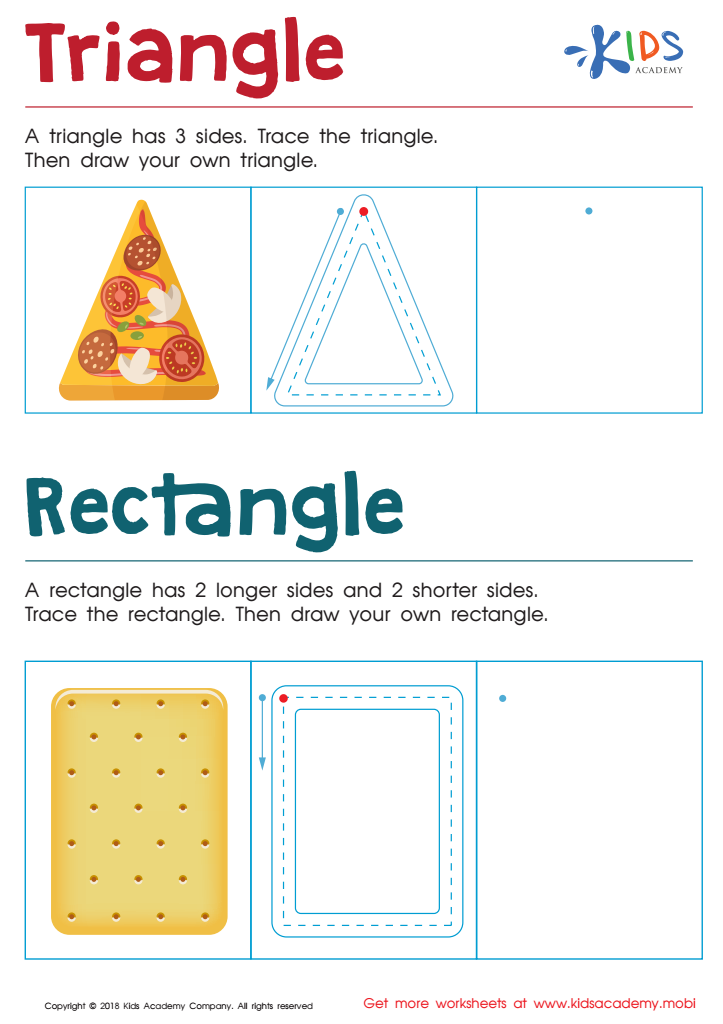
Triangle Rectangle Worksheet
 Assign to My Students











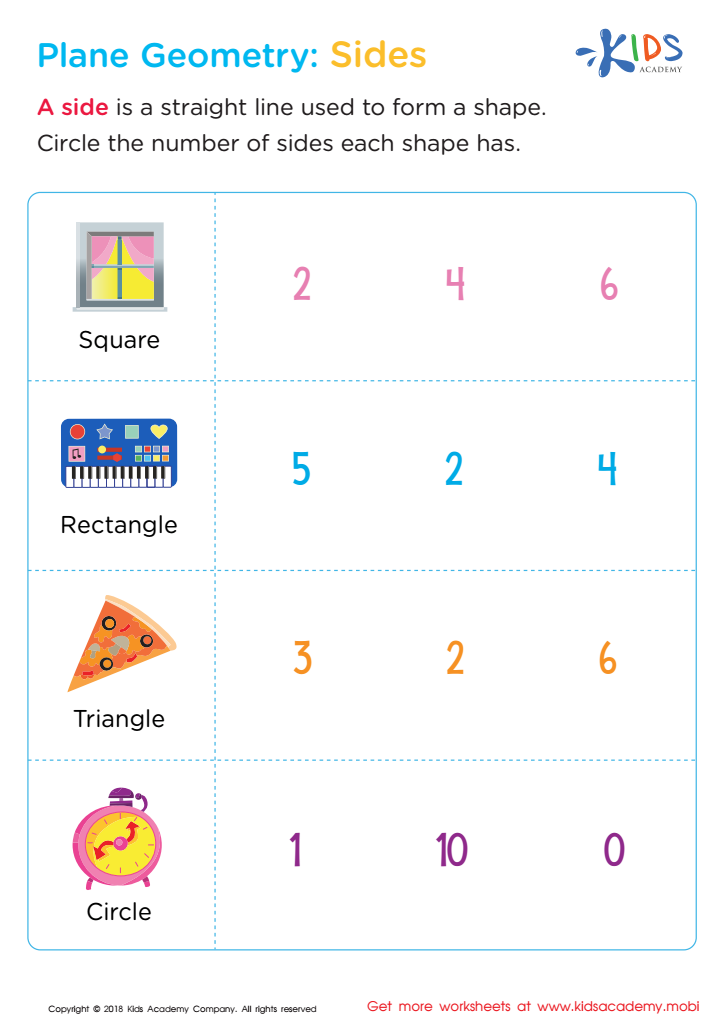
Plane Geometry: Sides Worksheet
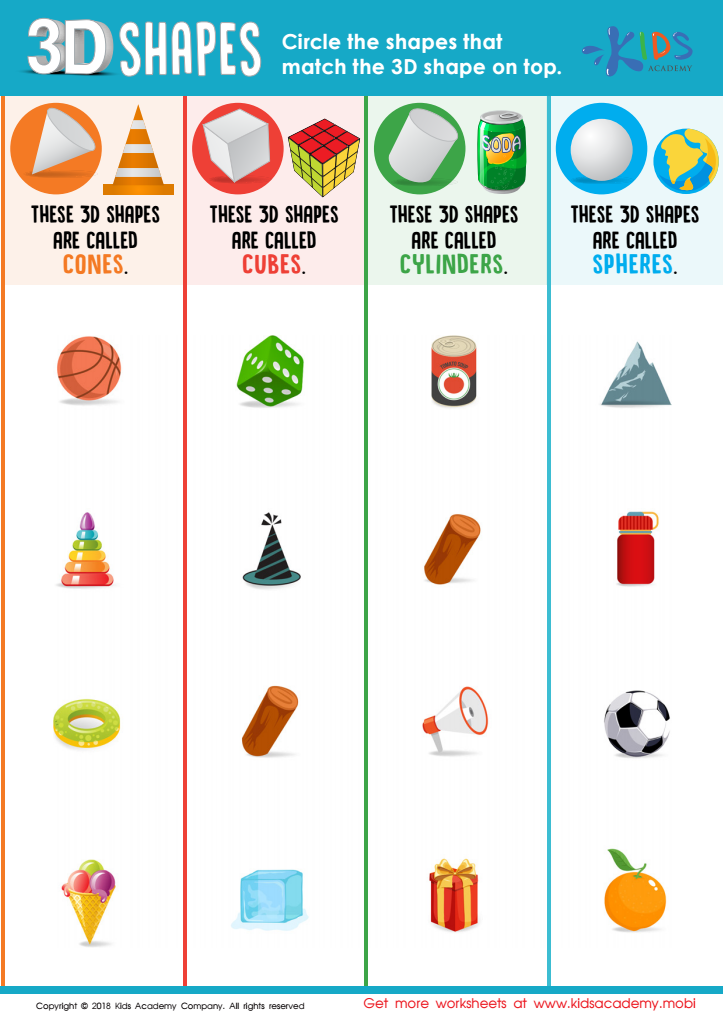
3D Shapes Worksheet








Differentiating shapes in early geometry instruction is crucial for the cognitive and conceptual development of 5-year-olds. At this formative age, children are developing foundational skills that support later learning in mathematics, literacy, and critical thinking. Parents and teachers play pivotal roles in this developmental stage.
Introducing young children to shapes helps them recognize and categorize the world around them, laying the groundwork for spatial awareness. For instance, when children learn to identify and differentiate circles, squares, and triangles, they are also learning about properties such as size, sides, angles, and curves. These basic skills are essential for understanding more advanced geometric concepts in later years.
Furthermore, shape differentiation enhances visual perception and memory, aiding children in distinguishing between different letters and numbers—thus directly supporting early literacy and numeracy. It also fosters problem-solving skills as children learn to compare and contrast shapes, realizing how they fit together to form more complex structures.
Moreover, engaging with shapes can be a fun, interactive, and creative activity that encourages curiosity and excitement about learning. This positive experience is pivotal in fostering a lifelong love of learning. Therefore, by prioritizing shape differentiation in early geometry, parents and teachers are investing in a child's broader intellectual development and confidence in learning foundational concepts.








