Shape identification Normal Geometry Worksheets for 5-Year-Olds
5 filtered results
-
From - To
Discover the engaging world of geometry with our Shape Identification Normal Geometry Worksheets tailored for 5-year-olds! These fun, printable worksheets are designed to help young learners recognize and name basic shapes like circles, squares, triangles, and rectangles. By offering a variety of interactive activities, children will build a solid foundation in geometry while enhancing their critical thinking and fine motor skills. Perfect for classroom use or at-home learning, our worksheets make mastering shape identification enjoyable and easy. Visit Kids Academy to download and ignite your child's passion for learning through these thoughtfully crafted educational tools.
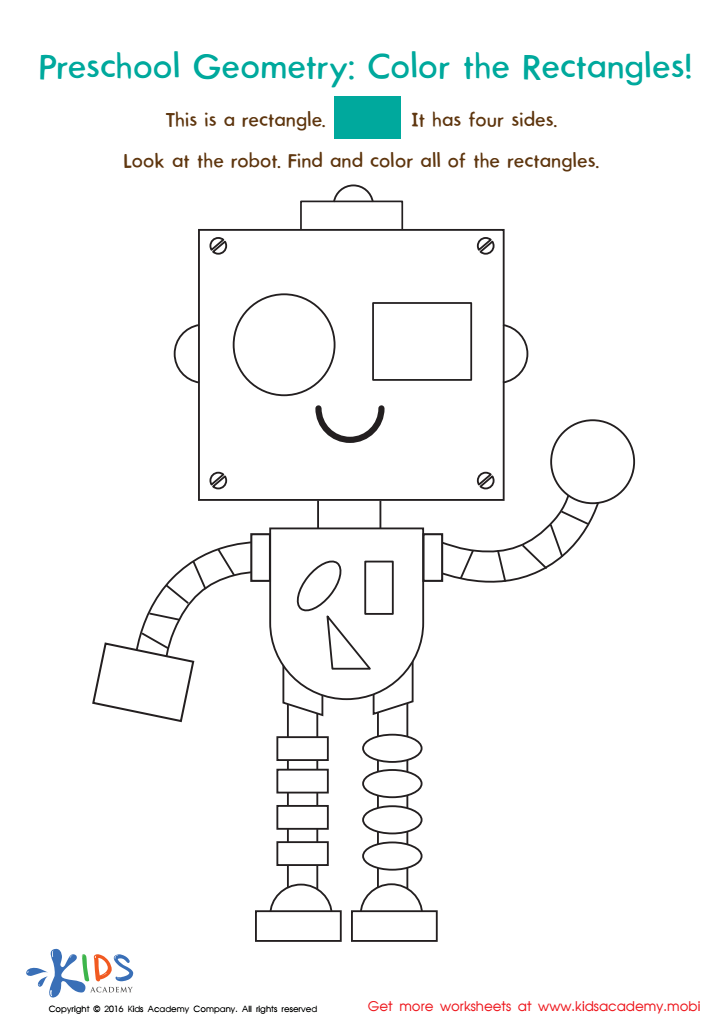
Geometry Worksheet
 Assign to My Students











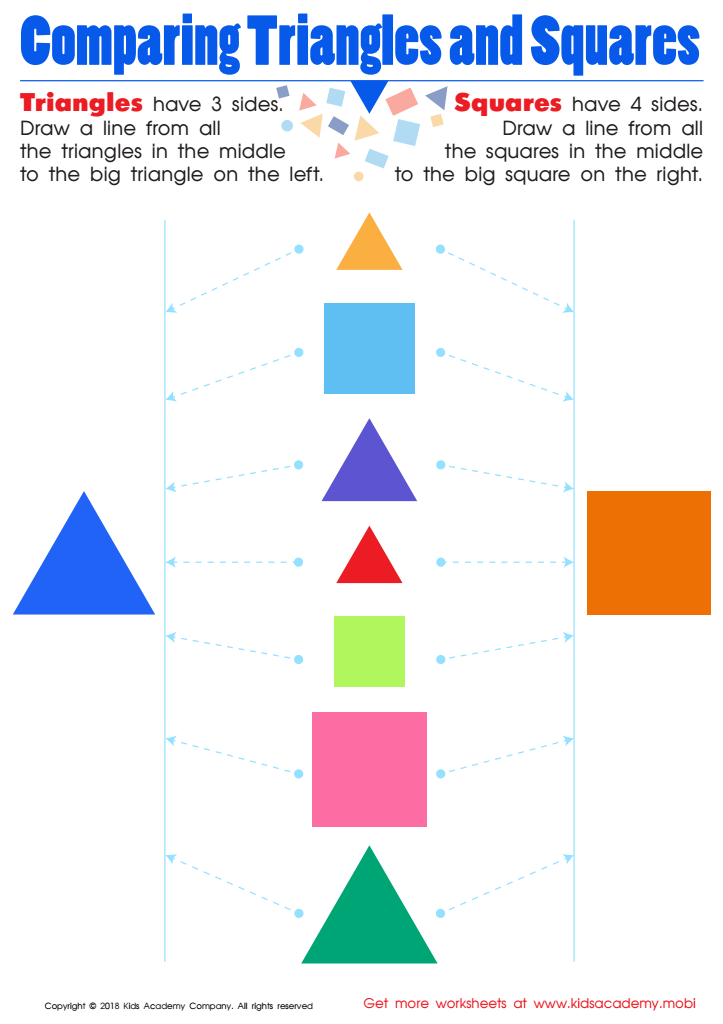
Comparing Triangles Squares Worksheet
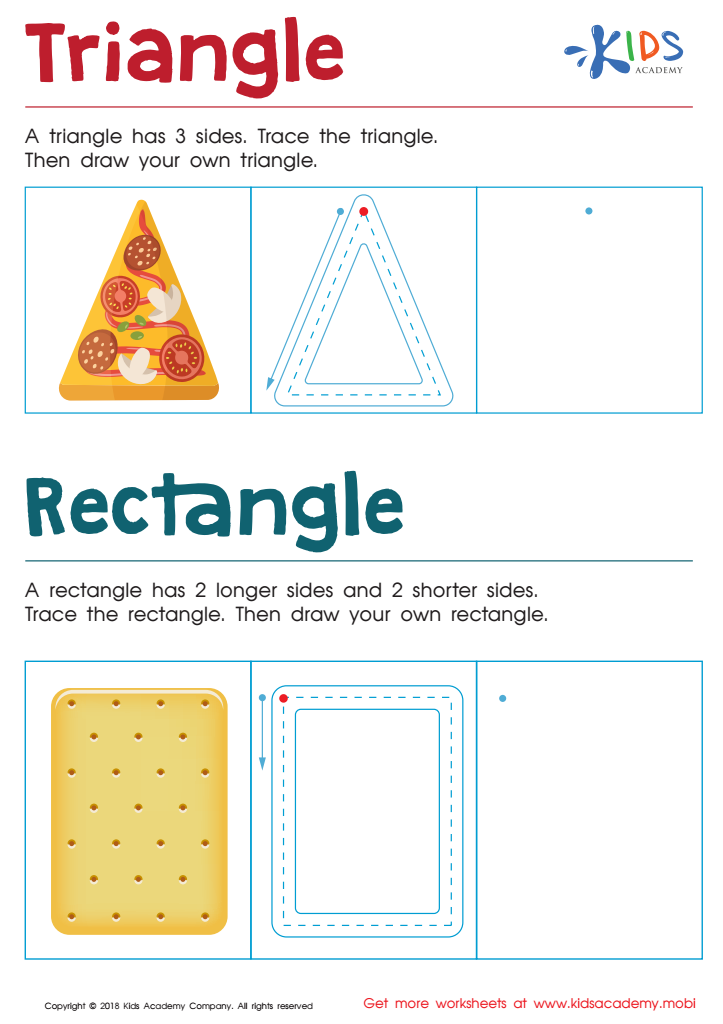
Triangle Rectangle Worksheet
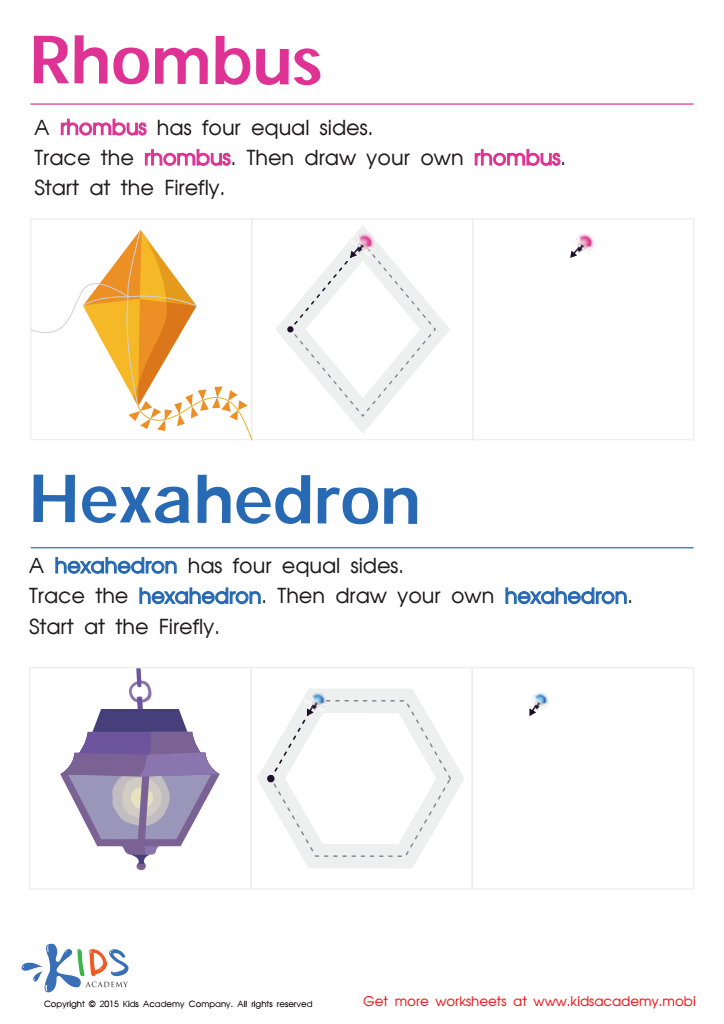
Draw a Rhombus And a Hexahedron Printable
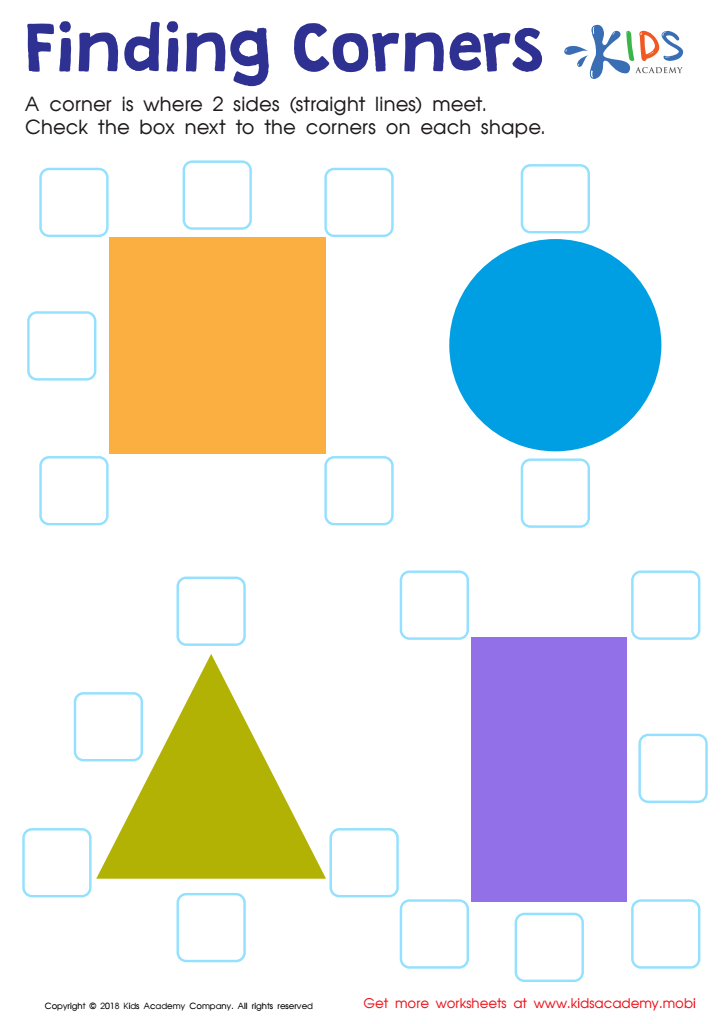
Finding Corners Worksheet








Understanding shape identification and basic geometry is fundamental for 5-year-olds as it promotes a multitude of developmental benefits. Firstly, recognizing and distinguishing shapes enhances cognitive development by improving children’s analytical and spatial reasoning skills. These abilities are important for problem-solving and understanding the world around them. For instance, identifying shapes translates to recognizing patterns and organizing information logically.
Moreover, shape identification helps children grasp early math concepts. Recognizing and naming shapes like circles, squares, and triangles lays the foundation for understanding more complex mathematical ideas like geometry, measurement, and spatial relationships. These skills are instrumental for future success in subjects that require critical thinking, including science, technology, and engineering.
It also plays a role in language development. Describing shapes encourages the use of specific, descriptive language, which enhances vocabulary and communication skills. Engaging with shapes often involves comparison and symbology—which fosters logical thought processes and conceptual clarity.
Socially, children learn collaboration and shared activities while engaging in shape-related games and crafts. This interaction promotes teamwork and improves interpersonal skills. Therefore, parents and teachers nurturing an interest in geometry and shape identification provide a robust framework that supports comprehensive development, equipping children with essential early skills for academic and life success.








