Spatial reasoning Normal Geometry Worksheets for 5-Year-Olds
3 filtered results
-
From - To
Our Spatial Reasoning Normal Geometry Worksheets for 5-Year-Olds are designed to develop young children's problem-solving and critical thinking skills in a fun and engaging way. These expertly crafted worksheets introduce basic geometry concepts such as shapes, patterns, and spatial relationships through interactive and age-appropriate exercises. By engaging with these activities, children will improve their ability to visualize and manipulate objects in space, a key foundational skill for future math success. Ideal for both classroom and home use, our worksheets provide a supportive and stimulating learning environment to make early math learning exciting and accessible for young learners.
Explore Kids Academy resources.
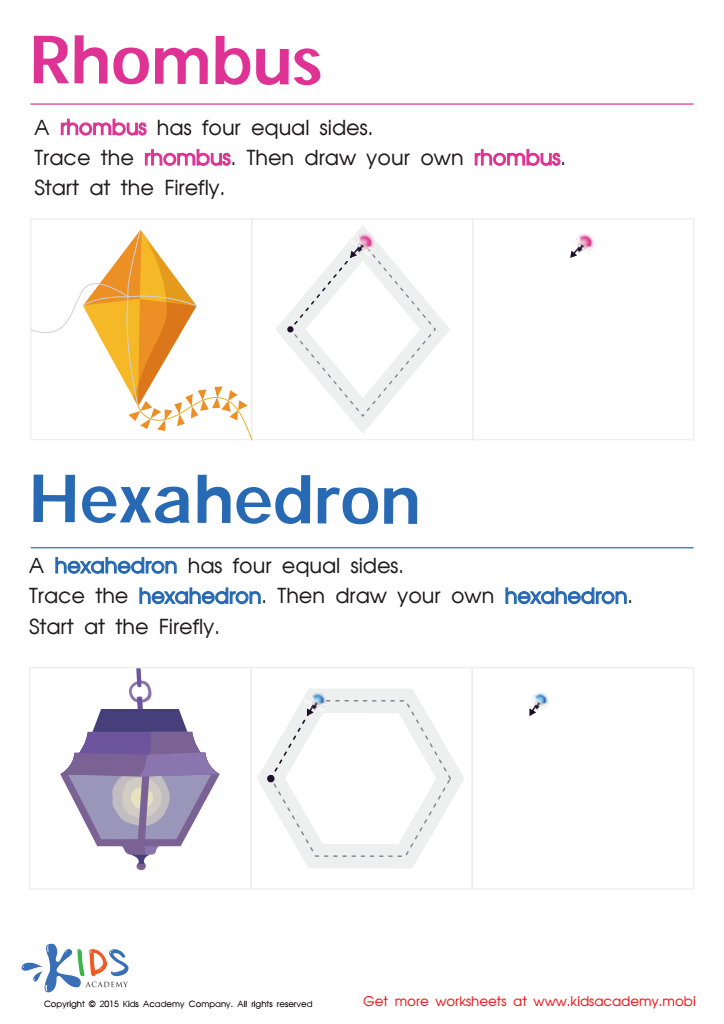
Draw a Rhombus And a Hexahedron Printable
 Assign to My Students











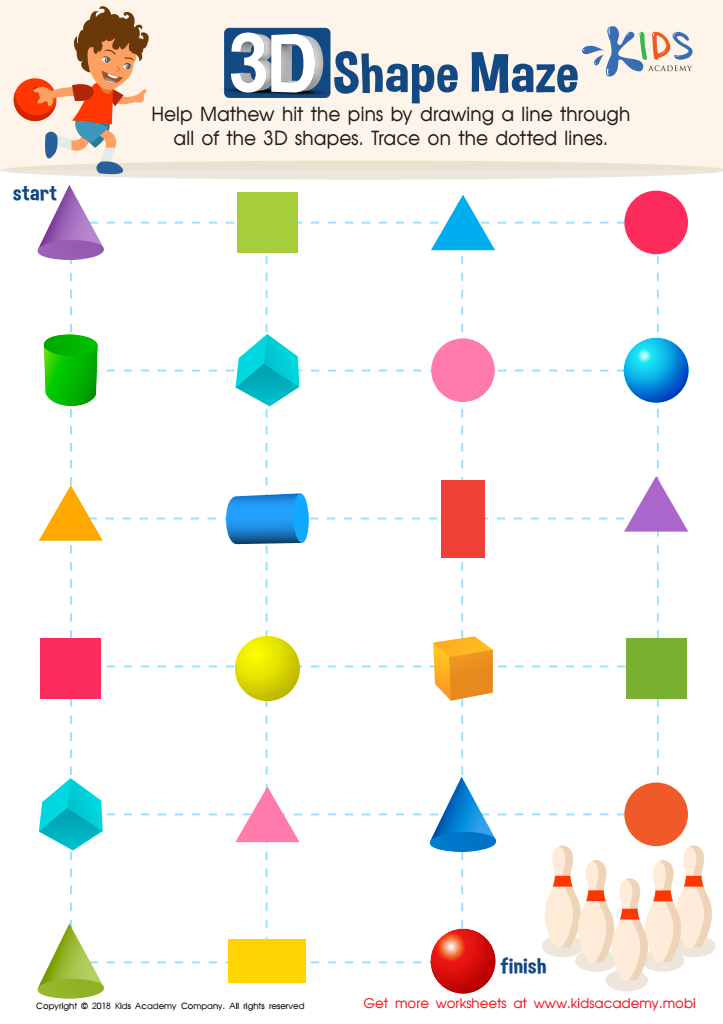
Shapes Maze Geometry Worksheet
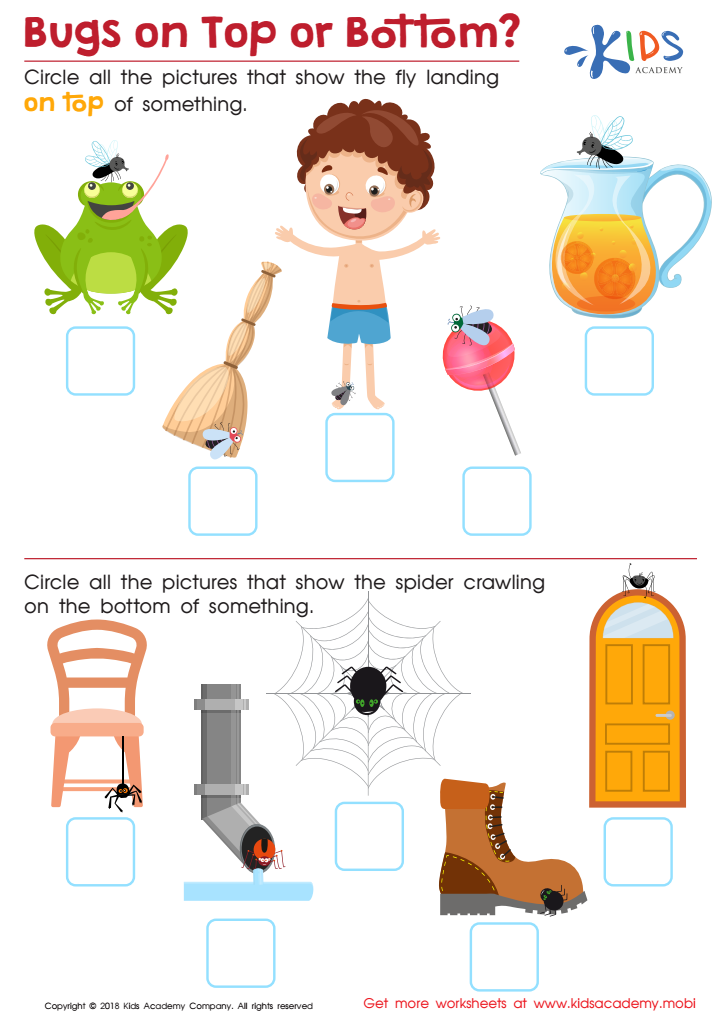
Bugs on Top or Bottom? Worksheet








Spatial reasoning and basic geometry are fundamental skills that lay the groundwork for more complex cognitive tasks in the future. For 5-year-olds, developing spatial reasoning—the ability to mentally manipulate shapes and understand the relationships between objects—has a profound impact on various aspects of their development.
Firstly, research shows that strong spatial abilities are closely linked to future success in STEM fields (Science, Technology, Engineering, and Mathematics). Early exposure to spatial thinking helps children acquire the skills needed to solve complex problems, understand mathematical concepts, and succeed in scientific disciplines.
Secondly, spatial reasoning supports everyday life skills. Children learn to navigate their environment, understand spatial relationships, and follow directions more effectively. Activities that strengthen these skills, such as puzzles, drawing, and building blocks, also enhance fine motor skills and hand-eye coordination.
Moreover, fostering spatial skills encourages critical thinking and creativity. Young children begin to grasp symmetry, patterns, and spatial orientation, which fosters innovative problem-solving and a greater appreciation for art.
Parents and teachers play a pivotal role by introducing fun, engaging activities that stimulate spatial reasoning. By investing in and prioritizing these skills at an early age, they set the stage for a child's holistic development, academic success, and ability to thrive in a rapidly evolving world.








