Counting skills Normal Numbers Worksheets for 5-Year-Olds - Page 3
51 filtered results
-
From - To
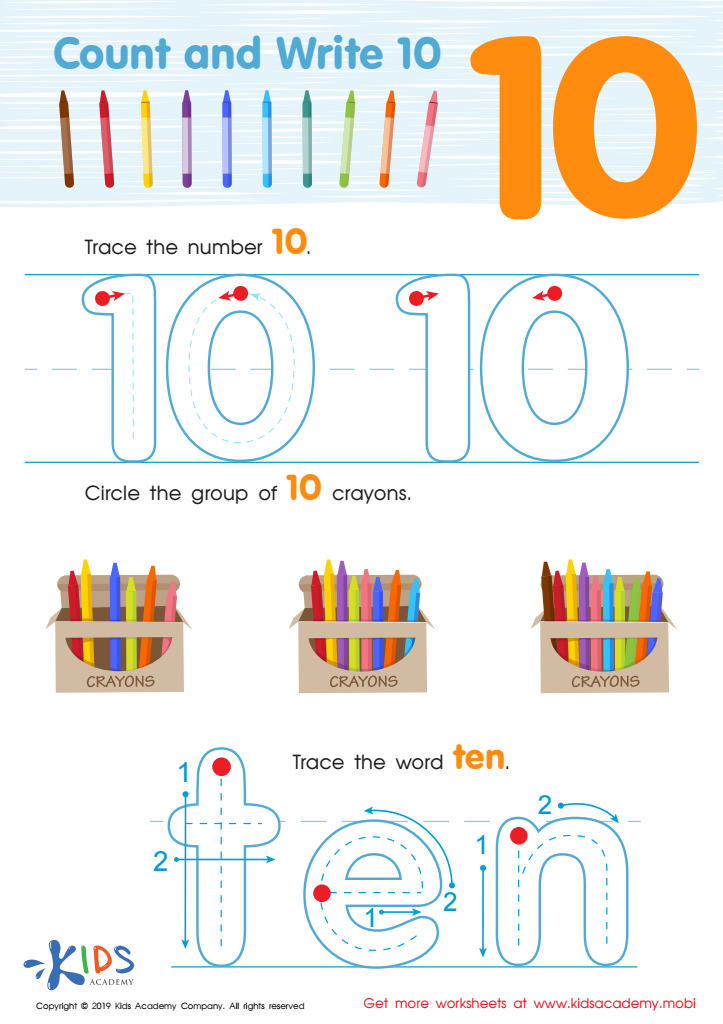
Count and Write 10 Worksheet
 Assign to My Students
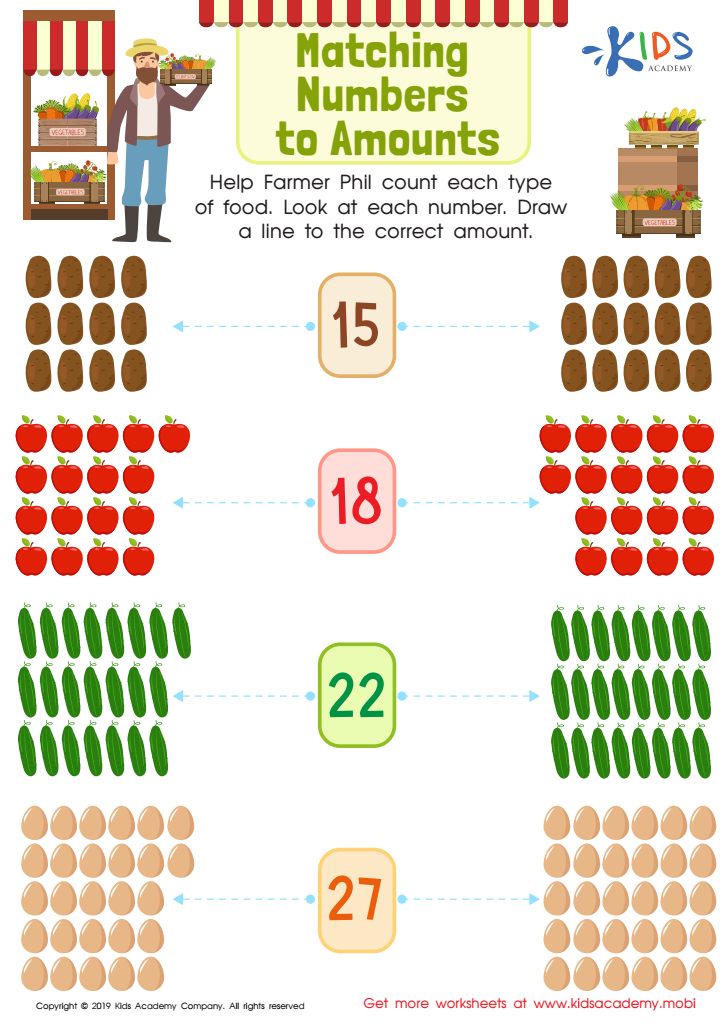
Matching Numbers to Amounts Worksheet
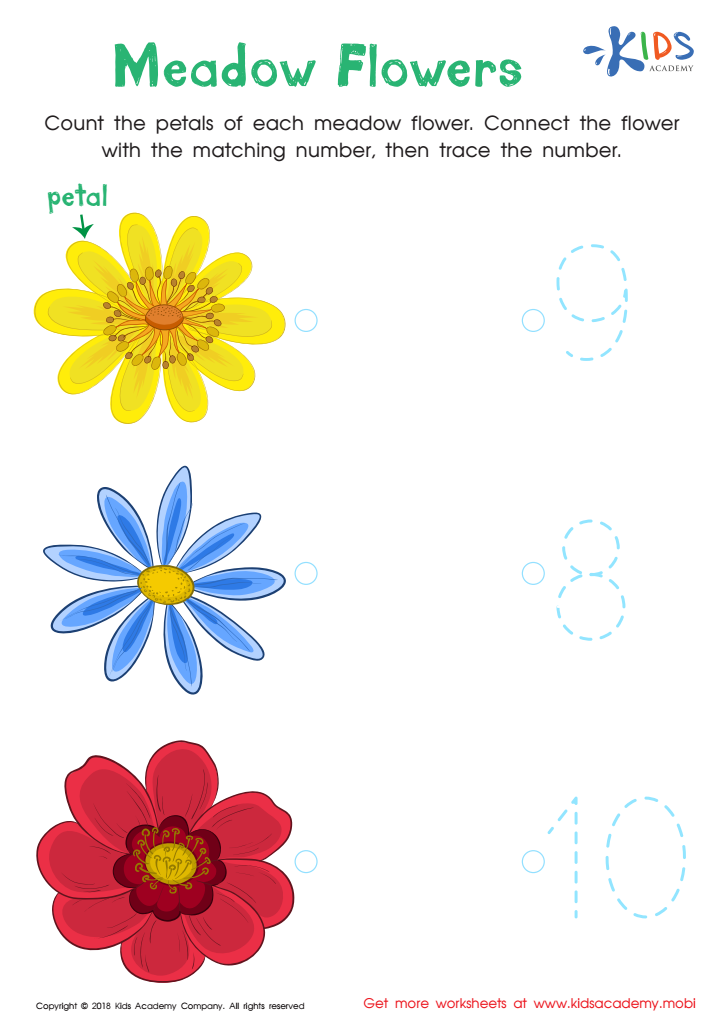
Kindergarten Number Tracing: Medow Flowers Worksheet








Counting skills and the understanding of normal numbers are foundational aspects of early mathematics education for 5-year-olds. At this age, children are developing critical cognitive abilities, and counting forms the basis for a wide range of mathematical concepts. Parents and teachers should prioritize these skills for several reasons.
First, counting is essential for problem-solving and logical thinking. Children practice not only basic numerical identification but also quantity recognition, which is crucial as they progress to more complex math topics. Early mastery of counting fosters confidence and sets a positive attitude toward math.
Second, counting skills are closely linked to daily life experiences. Children learn to apply math practically by counting objects, food items, or even during play, making it relevant and engaging. This real-world application enhances their understanding and retention of information.
Lastly, research shows that strong early math skills correlate with future academic success. By nurturing counting abilities now, educators and parents help build a solid foundation for further math learning in later grades. By focusing on these skills, adults can ensure their children develop both academic competencies and a lifelong appreciation for mathematics. In summary, supporting counting skill development is a crucial investment in a child’s educational journey.








