Comparison Skills Normal Math Worksheets for 5-Year-Olds
3 filtered results
-
From - To
Enhance your child's understanding of comparison skills with our engaging Math Worksheets designed specifically for 5-year-olds. These fun and interactive worksheets provide a variety of activities aimed at helping young learners identify similarities and differences, through comparing sizes, quantities, and more. Our carefully crafted exercises foster critical thinking and boost early math proficiency while keeping learning enjoyable. Perfect for home or classroom use, these printable resources empower kids to develop foundational comparison skills essential for their educational journey. Discover the joy of learning with our expertly designed worksheets that will captivate your child’s imagination and motivate them to explore the world of math!
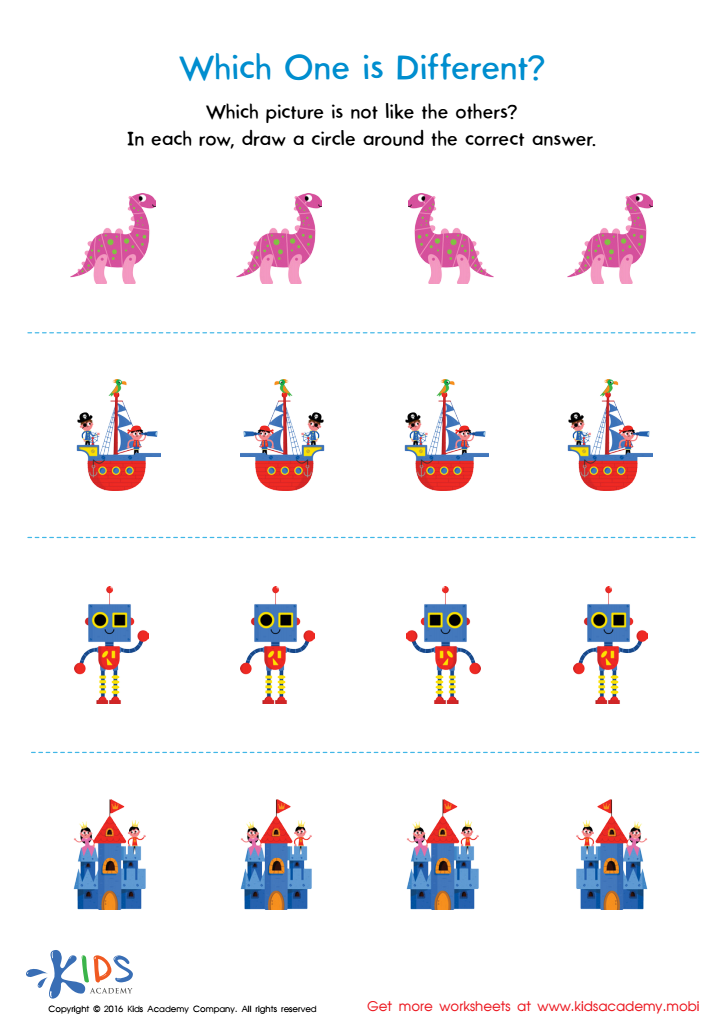
Which One Is Different Worksheet
 Assign to My Students
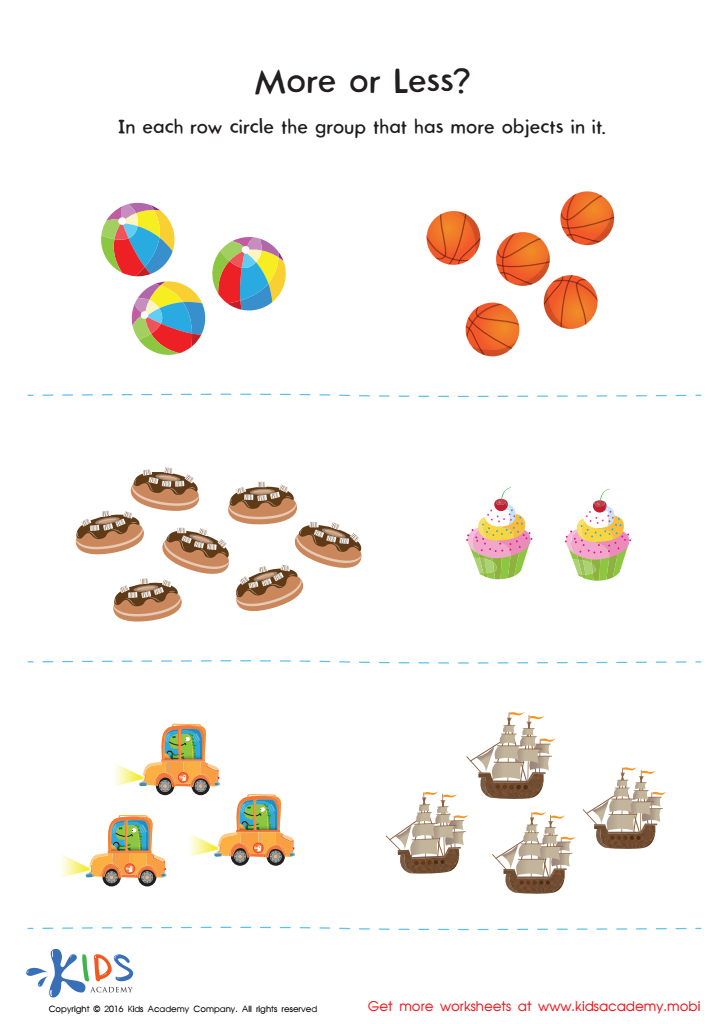
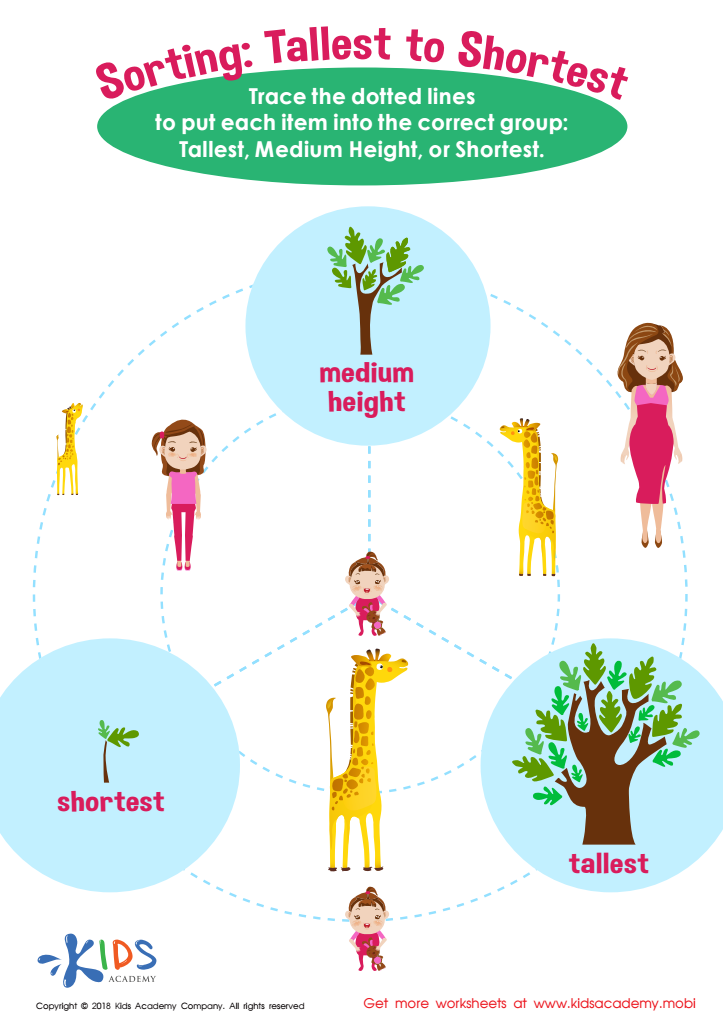
Sorting: Tallest to Shortest Worksheet







Comparison skills are vital for 5-year-olds as they form the building blocks for mathematical understanding and critical thinking. At this age, children are naturally curious and eager to understand their surroundings, and teaching them comparison skills can significantly enhance their cognitive development. When parents and teachers integrate comparison skills into learning, they enable children to differentiate sizes, quantities, and values, laying the groundwork for more complex math concepts.
By understanding comparisons, children learn to recognize "more than," "less than," and "equal to" concepts, which helps in developing their logic and reasoning abilities. These skills not only support mathematical learning but also foster problem-solving abilities, encouraging children to approach challenges analytically.
Moreover, comparison skills can be linked to real-life situations, allowing children to make connections between mathematics and their everyday experiences. This creates a more engaging and relevant learning atmosphere. Ultimately, by nurturing comparison skills, parents and teachers empower children to become confident learners who can skillfully navigate both mathematical tasks and daily decision-making. Cultivating these skills early will lead to a solid foundation, promoting lifelong learning and a positive attitude toward mathematics.








