
Counting practice Normal Math Worksheets for 5-Year-Olds
13 filtered results
Difficulty Level
Grade
Age
-
From - To
Subject
Activity
Standards
Discover engaging and educational counting practice worksheets tailored for 5-year-olds. Our resources, available at Kids Academy, help young learners build strong mathematical foundations with fun-filled activities. These normal math worksheets are expertly designed to enhance counting skills, improve number recognition, and foster a love for learning. Each printable worksheet combines vibrant visuals and interactive tasks to keep children motivated and focused. Perfect for both classroom and home settings, these worksheets ensure that practicing counting is enjoyable and effective, setting your child on a successful academic path. Start your child's math journey today with Kids Academy!
Favorites
With answer key
Interactive
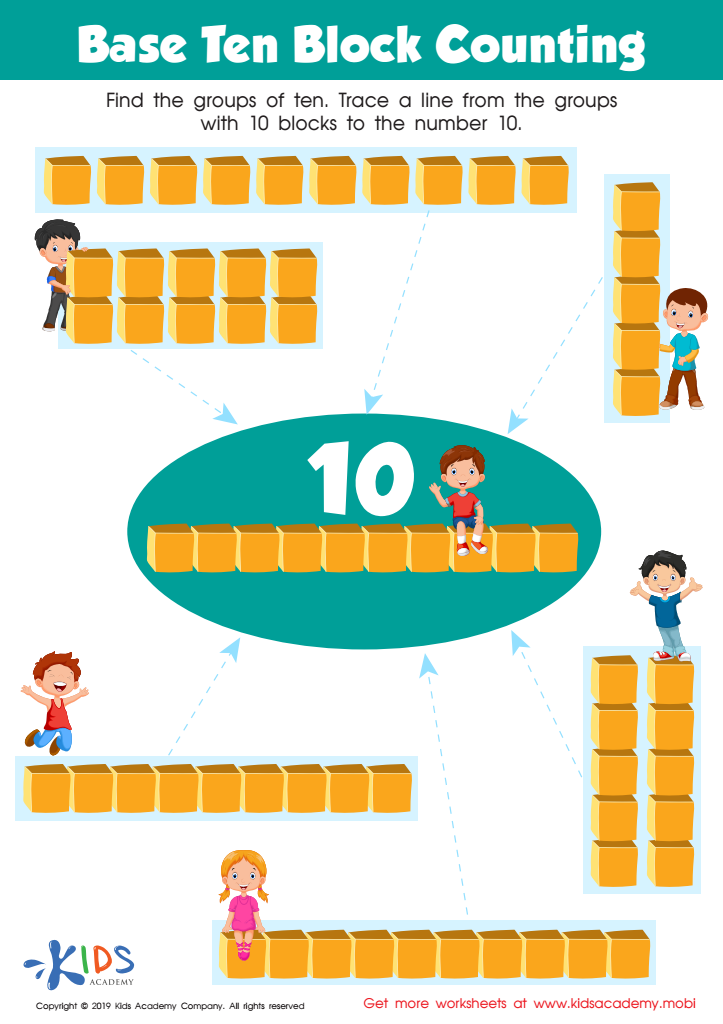
Base Ten Block Counting Worksheet
Introduce your kids to counting with educational DVDs and video games. Then use this worksheet: look at the picture and help them find the groups of ten; trace a line from the groups with 10 blocks to the number 10. This will help them practice and gain a better understanding of counting.
 Assign to My Students
Base Ten Block Counting Worksheet
Worksheet
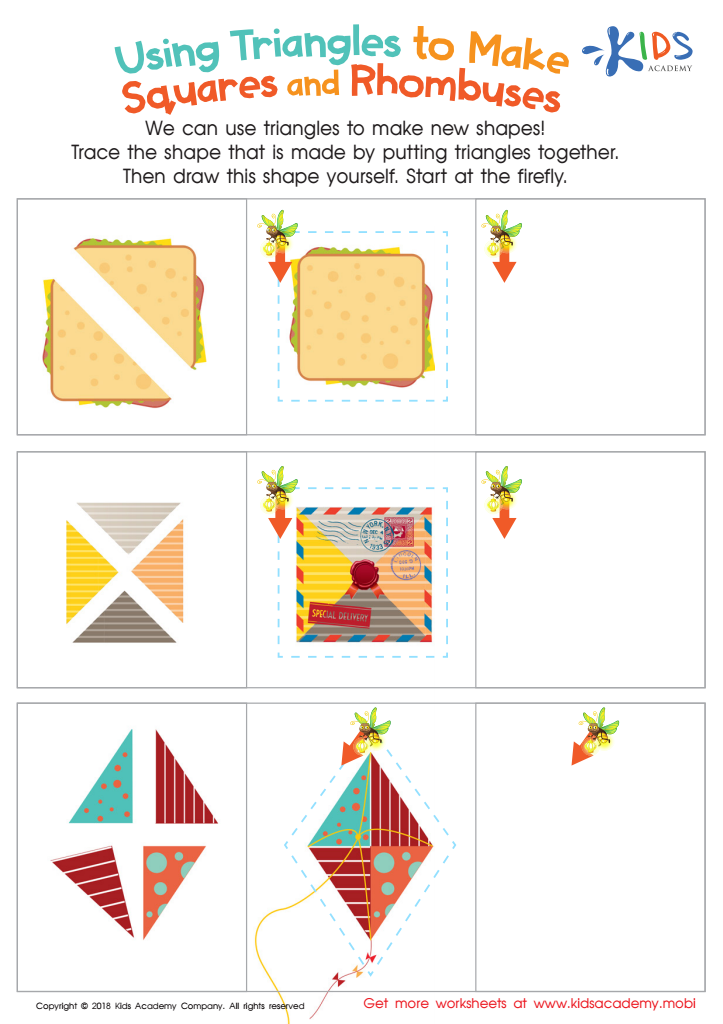
Using Triangles to Make Squares and Rhombuses Worksheet
Learning shapes is a fun way to boost spatial skills and critical thinking. This worksheet shows children how to use triangles to construct squares and rhombuses. Clear illustrations and a printout help children draw the new shape. A great activity for the math classroom! 80 words.
Using Triangles to Make Squares and Rhombuses Worksheet
Worksheet
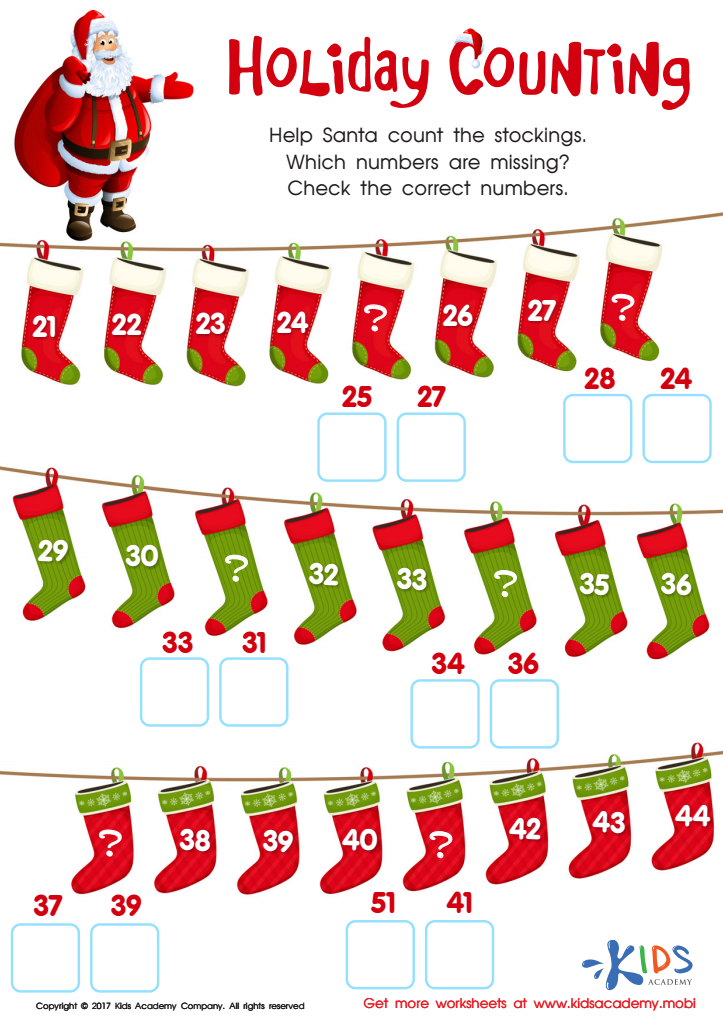
Holiday Counting Worksheet
Let's spread some holiday cheer! Santa needs help counting stockings hung up for gifts - can your little one lend a hand? Find the missing numbers on the worksheet and have them check the boxes for the correct answers. Time to get counting!
Holiday Counting Worksheet
Worksheet
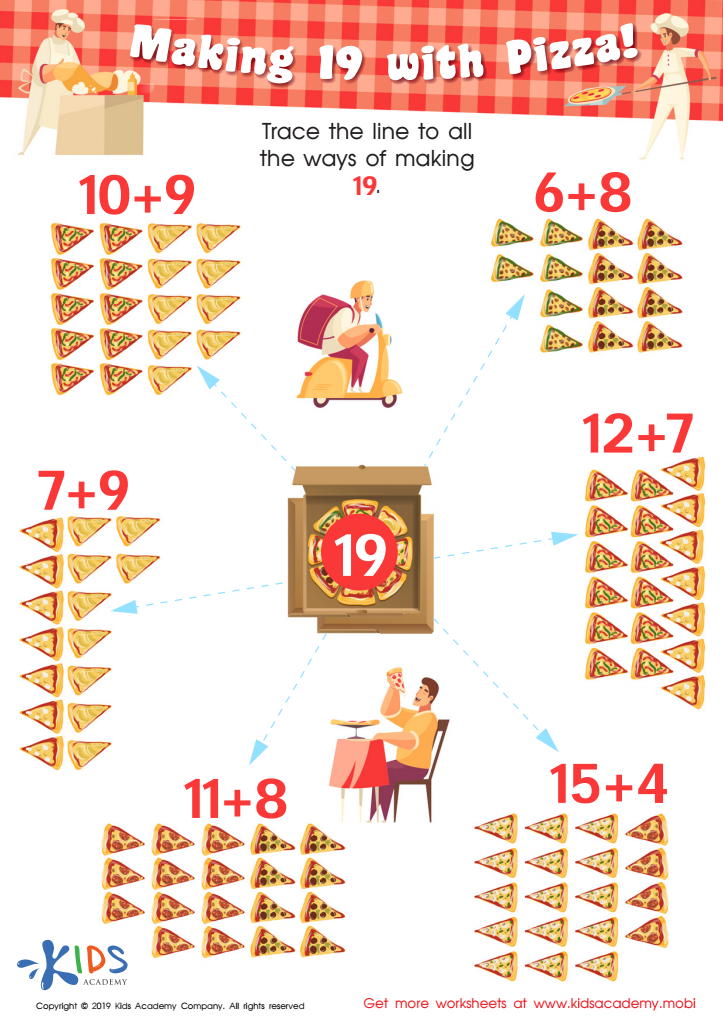
Making 19 with Pizza! Worksheet
Who loves pizza? Your kids do! Next time you need to teach them math, make it fun by combining it with something they enjoy. This worksheet uses a pizza-themed problem to help them practice solving equations. Have them trace the line to figure out how to make 19. It's a great way to make learning math fun!
Making 19 with Pizza! Worksheet
Worksheet
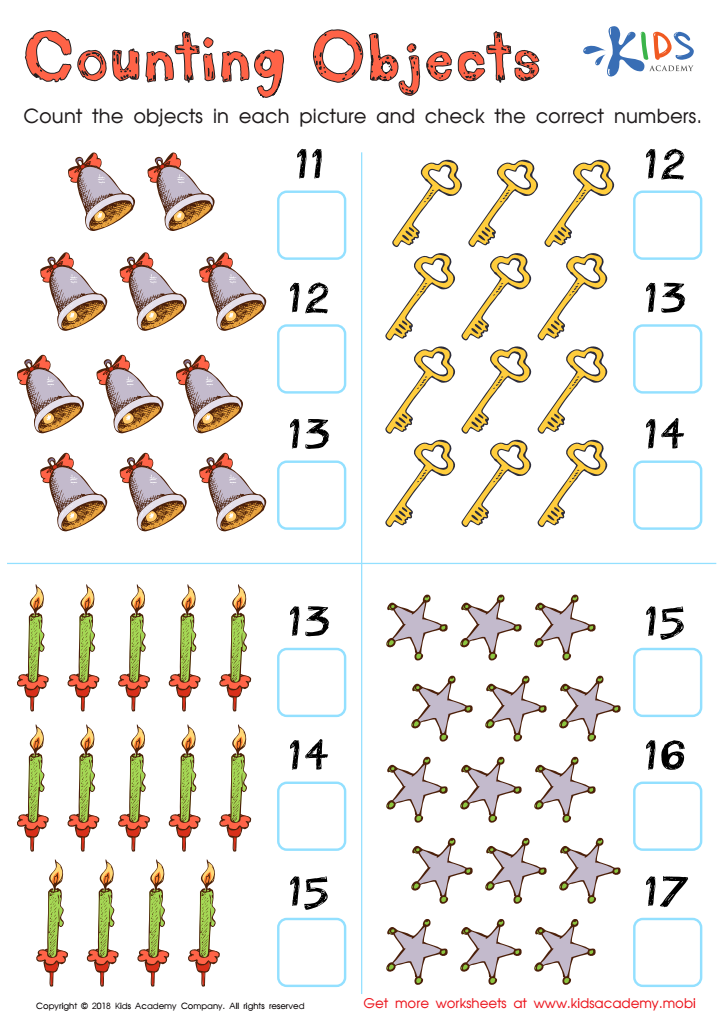
Counting Numbers Worksheet For Kindergarten
This worksheet is a great way to get your child practicing foundational math skills. With bright pictures to count, counting numbers just got a lot more fun! Get them ready for future math success and help them hone their early math skills.
Counting Numbers Worksheet For Kindergarten
Worksheet
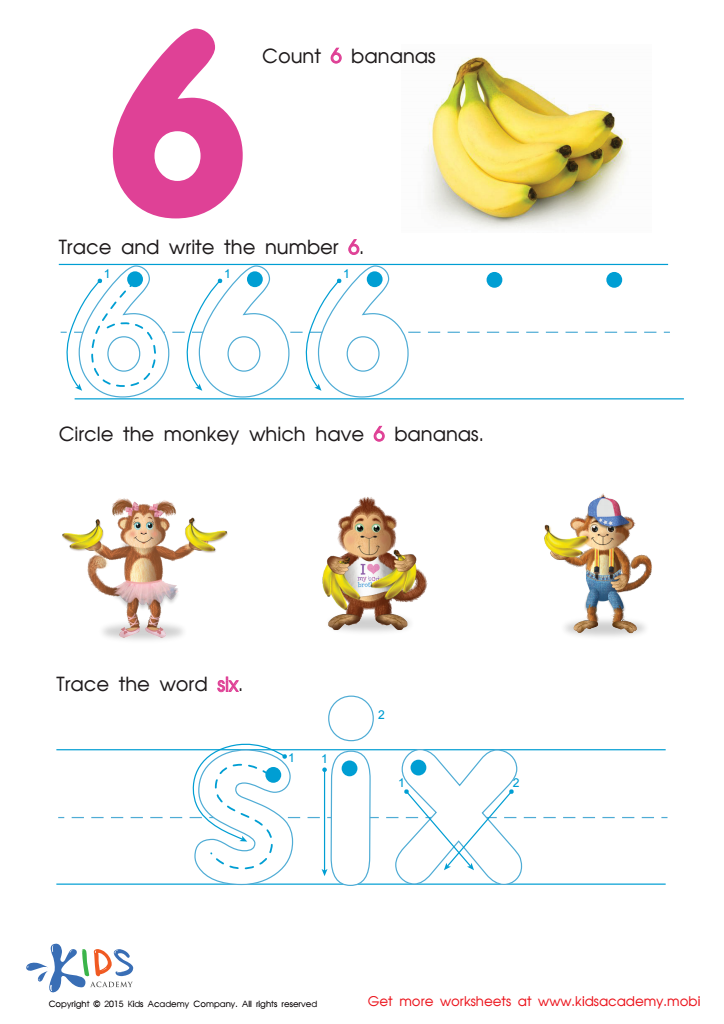
Tracing And Writing Number 6 Worksheet
Learn numbers in a fun way with our preschool number worksheets. Count six bananas, trace and write the number, find the monkey with six bananas, and trace the word "six." Explore more activities at Kids Academy.
Tracing And Writing Number 6 Worksheet
Worksheet
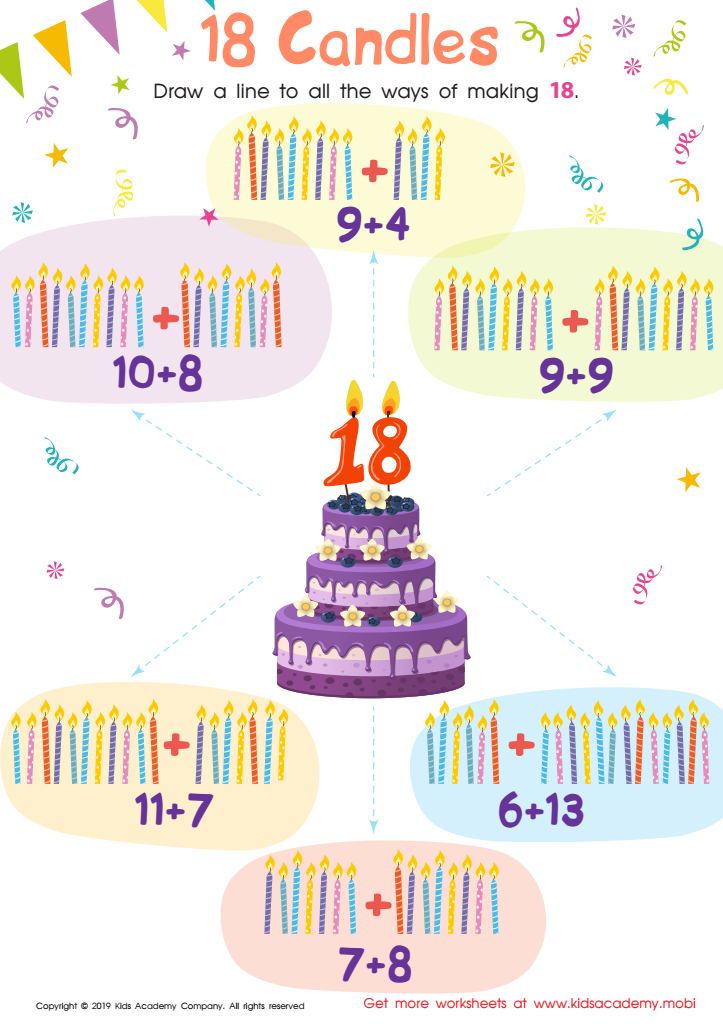
18 Candles Worksheet
This worksheet is great for introducing your students to addition and subtraction. Help your kids solve the simple equations on it and draw a line from the birthday cake with 18 on it to all the solutions. Practice like this will prepare them to tackle more complex math problems.
18 Candles Worksheet
Worksheet
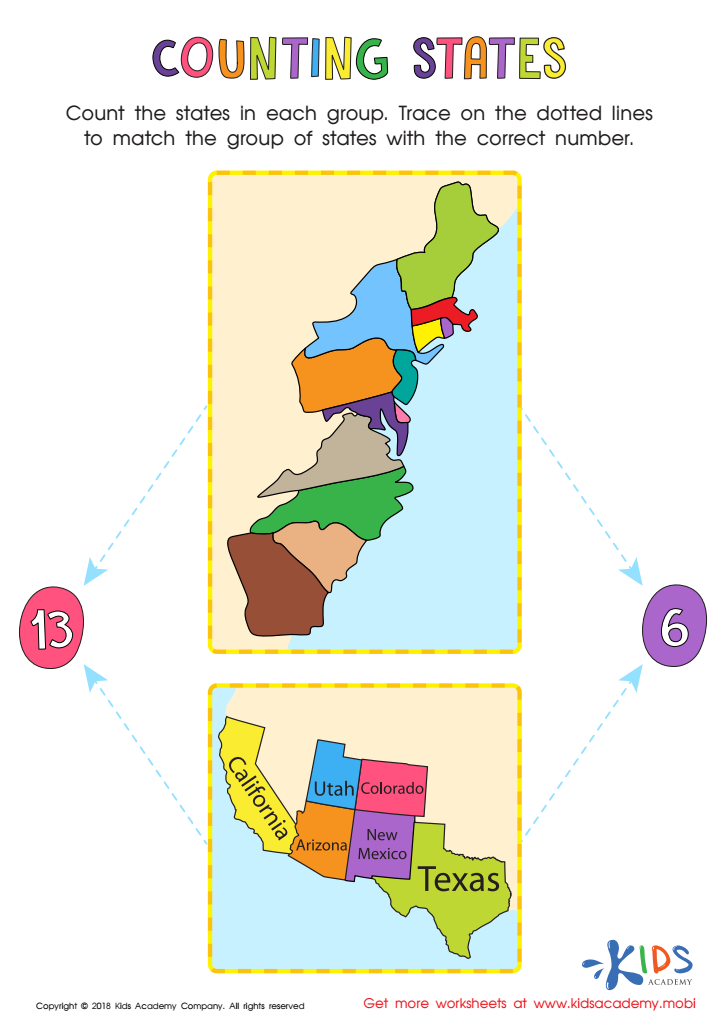
Counting States Worksheet
This fun and educative worksheet helps your kids learn more about their country. Ask them if they can name all the states, then help them trace on the dotted lines to match each state group to the correct number. Counting together is a fun way to reinforce learning.
Counting States Worksheet
Worksheet
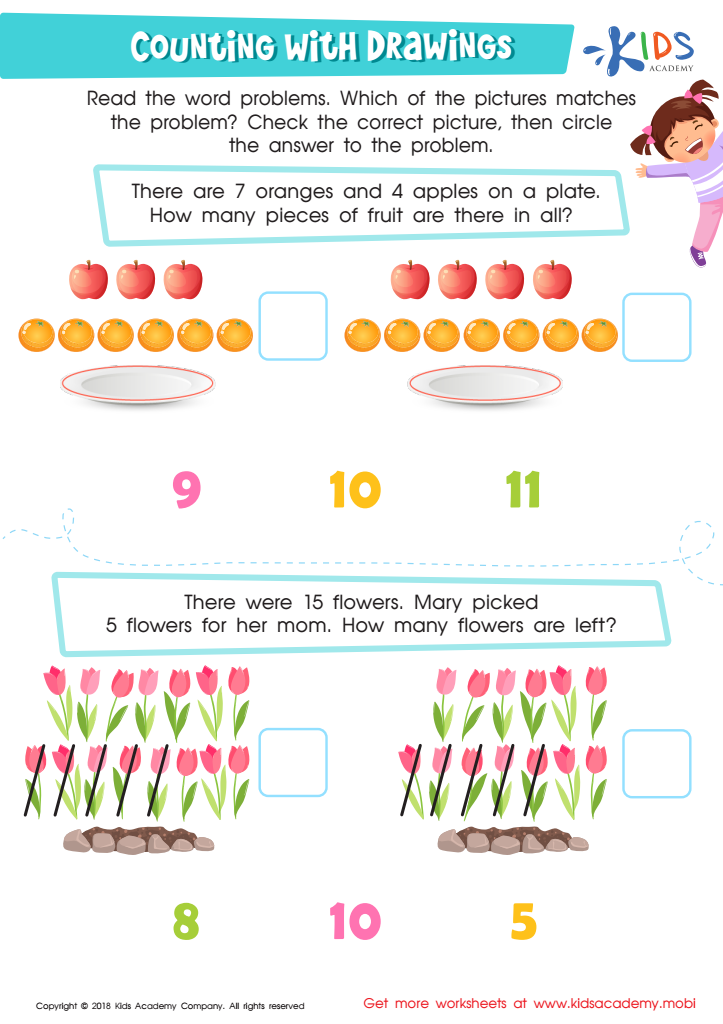
Counting with Drawings: Fruits & Chocolates Worksheet
Learning basic addition and subtraction has never been easier with this free worksheet! Young mathematicians can sort & count to get the right sum or difference for each problem. Plus, they'll practice fine motor skills by circling the correct answer. An ideal way to help kids build important visual recognition and discernment skills.
Counting with Drawings: Fruits & Chocolates Worksheet
Worksheet
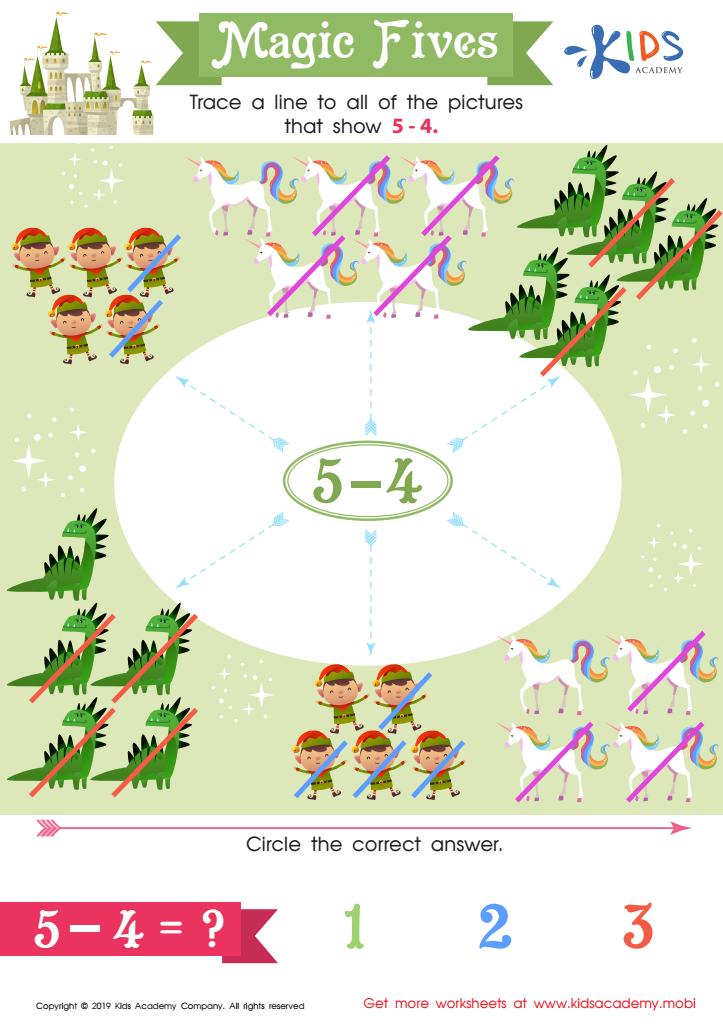
Magic Fives Worksheet
Help your students identify the objects & people in the worksheet. Point to the equation 5 -4 in the center, then get them to count the items and trace a line connecting those that add up to 5 - 4.
Magic Fives Worksheet
Worksheet
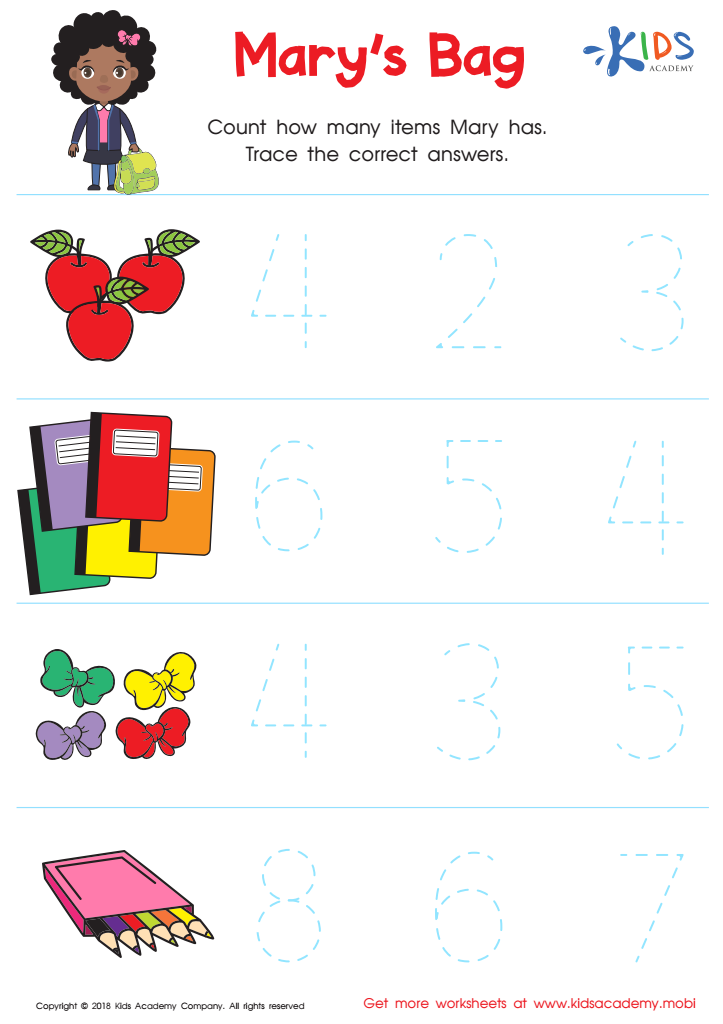
Kindergarten Number Tracing: Mary's Bag Worksheet
Counting and writing skills are honed with this kindergarten tracing worksheet. Guide Mary in counting the items in her bag then trace the correct number for each. Your child will get a great head start on essential kindergarten skills!
Kindergarten Number Tracing: Mary's Bag Worksheet
Worksheet
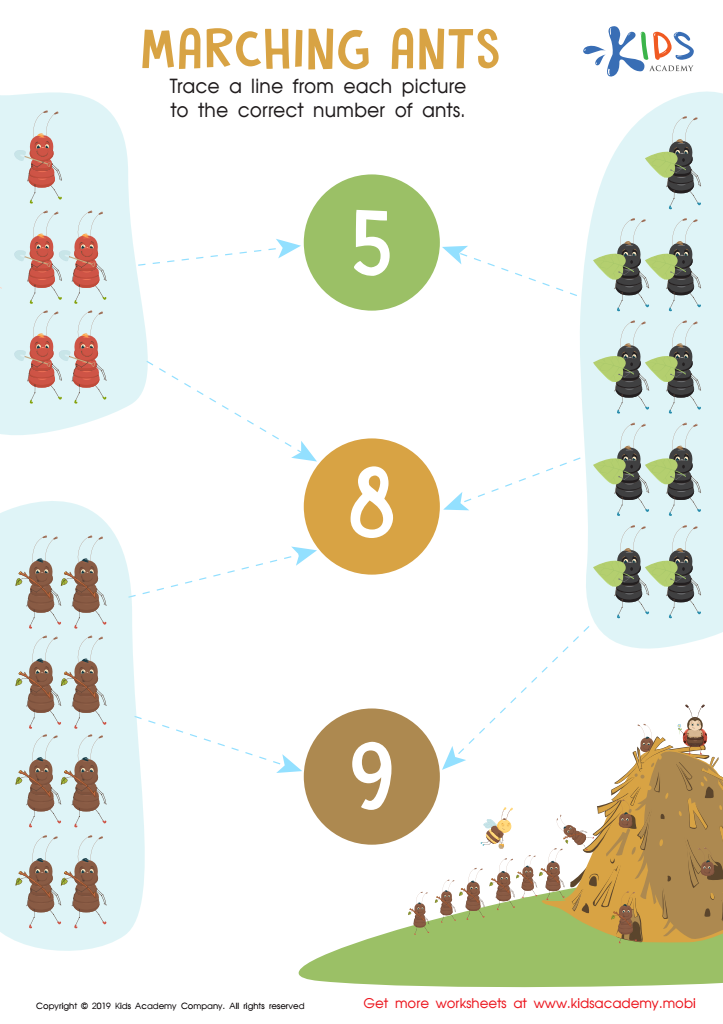
Marching Ants Worksheet
Assess and help your kids practice counting with this worksheet. Ask them to identify the four groups of ants in the picture. Guide them as they count each group and trace the lines to the corresponding number.
Marching Ants Worksheet
Worksheet
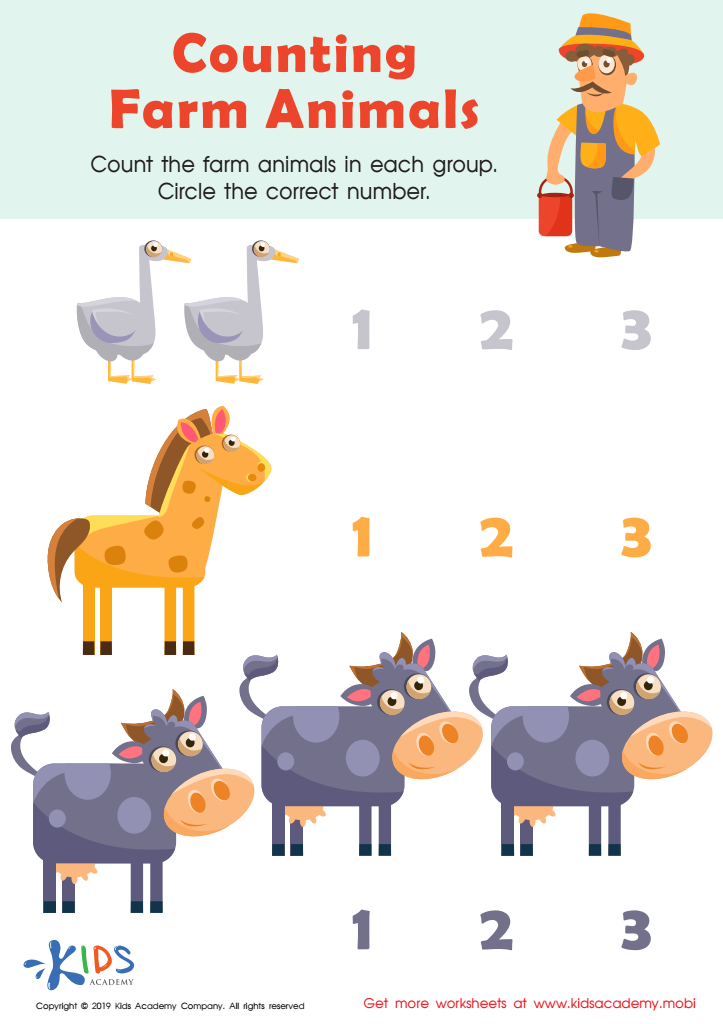
Counting Farm Animals Worksheet
Kids love farms! That's why this free farm animals counting worksheet is great for building number sense and counting skills. Have your young mathematician count the pictures, then circle the corresponding number. It's a fun and meaningful way to practice counting.
Counting Farm Animals Worksheet
Worksheet
Join Kids Academy for Free
Who is primarily going to use this learning content?





Counting practice in early childhood is a cornerstone of mathematical development and serves as a crucial building block for more advanced math skills. At the age of five, children are typically in the preoperational stage of cognitive development, as identified by Jean Piaget. During this phase, they are beginning to grasp basic numerical concepts. Here's why counting practice is so important:
Foundation for Future Learning: Mastery of counting lays the groundwork for future math skills such as addition, subtraction, and eventually multiplication and division. It's not just about memorizing numbers; it's about understanding the order and value each number represents.
Enhancing Cognitive Skills: Counting helps develop various cognitive skills, including pattern recognition, logical thinking, and problem-solving. These skills are transferable to other academic areas and everyday situations.
Fostering Confidence: Regular practice builds confidence. Children feel more comfortable manipulating numbers and are less likely to develop anxiety around math, which can hamper their academic progress.
Real-world Applications: Counting is a practical life skill. Children use counting to understand concepts of time, manage money, measure objects, and even follow recipes.
Parents and teachers who prioritize counting practice are investing in a child's overall intellectual growth, helping them to become confident, competent, and enthusiastic learners. By laying this solid foundation, children are more likely to find joy and success in math as they progress through their education.








