Matching skills Normal Math Worksheets for 5-Year-Olds
7 filtered results
-
From - To
Enhance your child's learning with our engaging Matching Skills Normal Math Worksheets designed specifically for 5-year-olds! These worksheets provide a fun and interactive way for children to develop critical matching and identification skills through colorful images and diverse activities. From matching numbers to corresponding objects, our worksheets encourage cognitive development, fine motor skills, and problem-solving abilities. Perfect for use at home or in the classroom, these activities foster a love for math while reinforcing foundational concepts. Explore our collection today, and empower your little ones to excel in their mathematical journey with enjoyable, hands-on learning experiences!
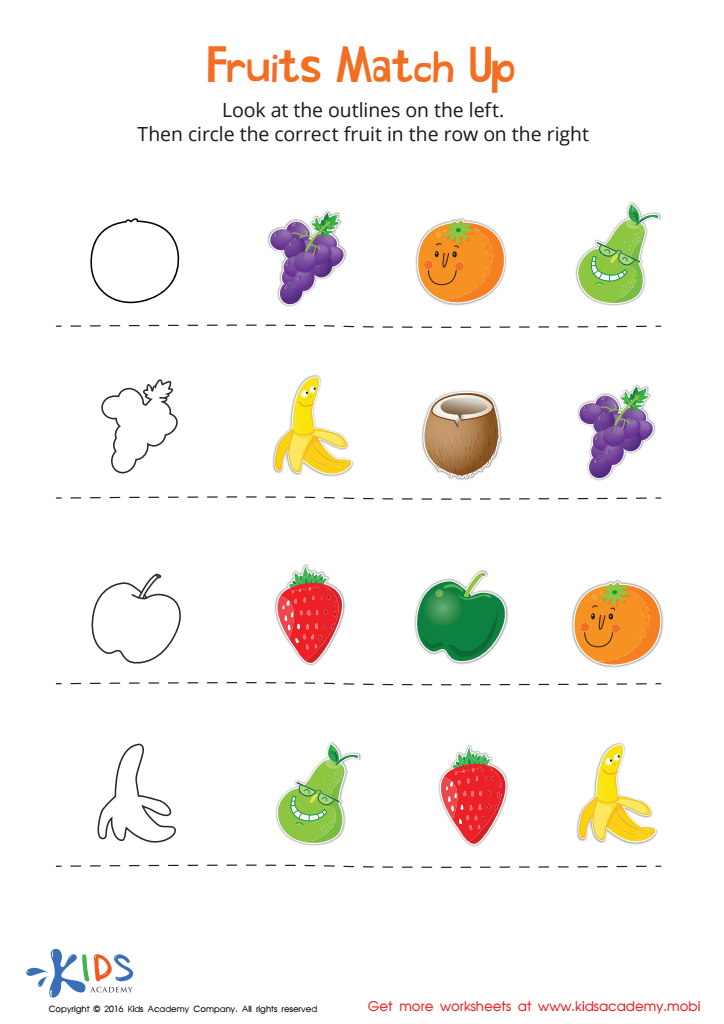
Fruits Match Up Worksheet
 Assign to My Students
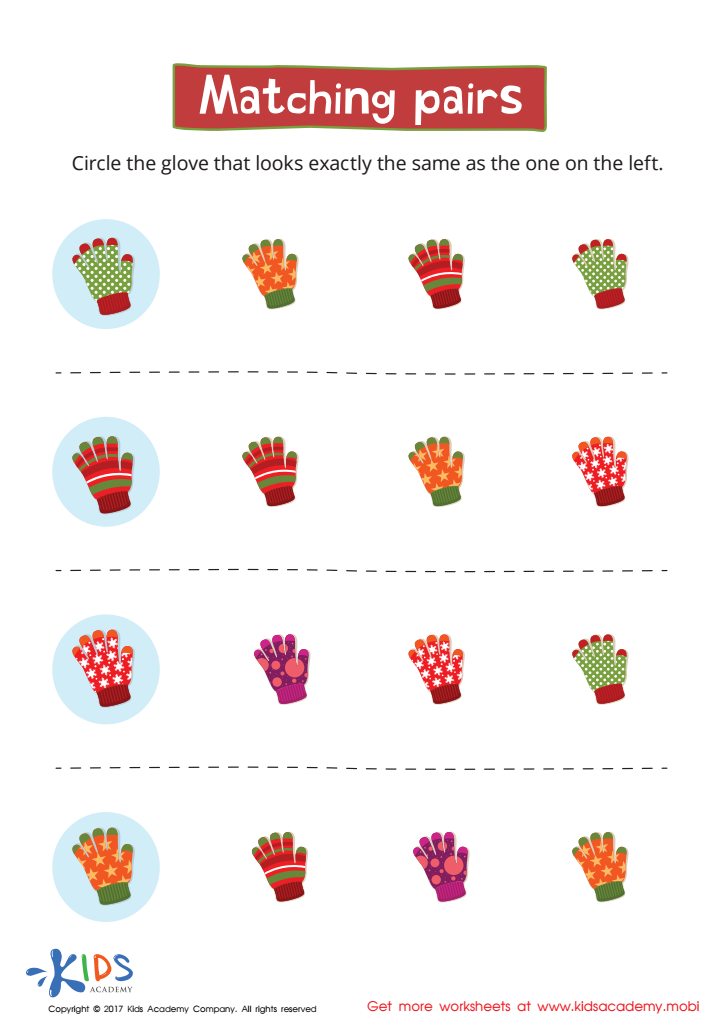
Matching: Matching Pairs Worksheet
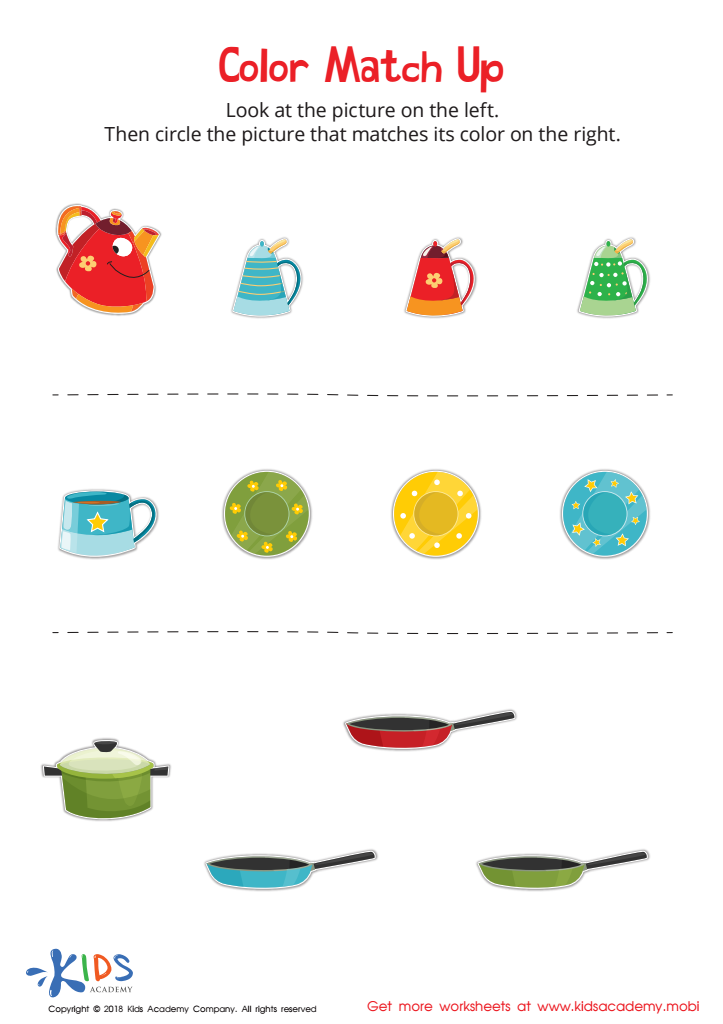
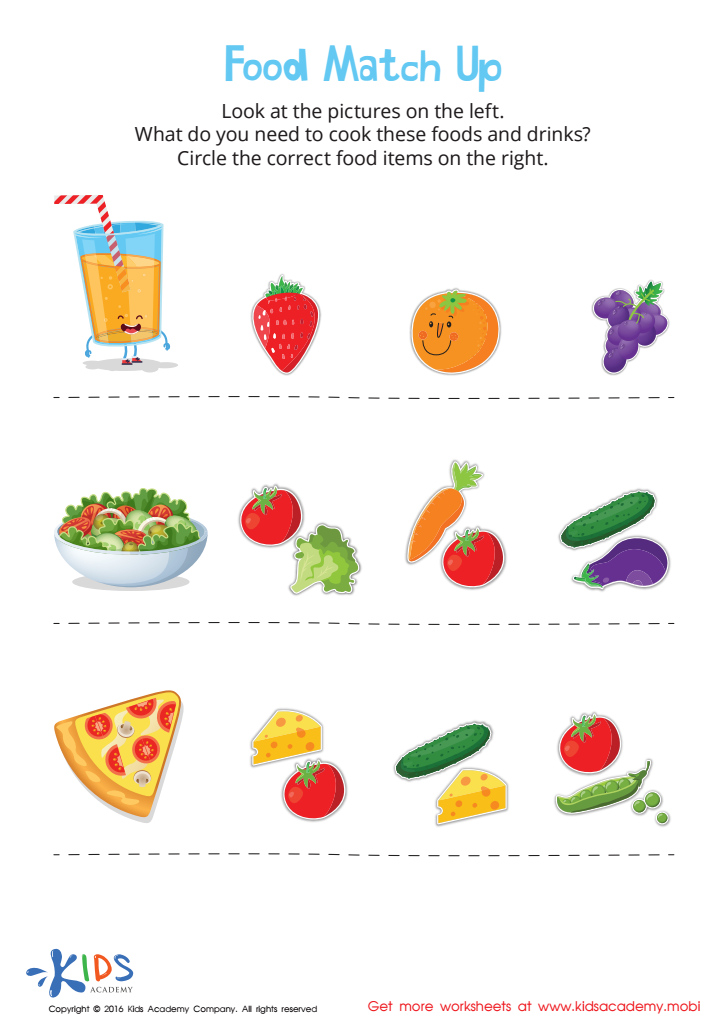
Food Match Up Worksheet
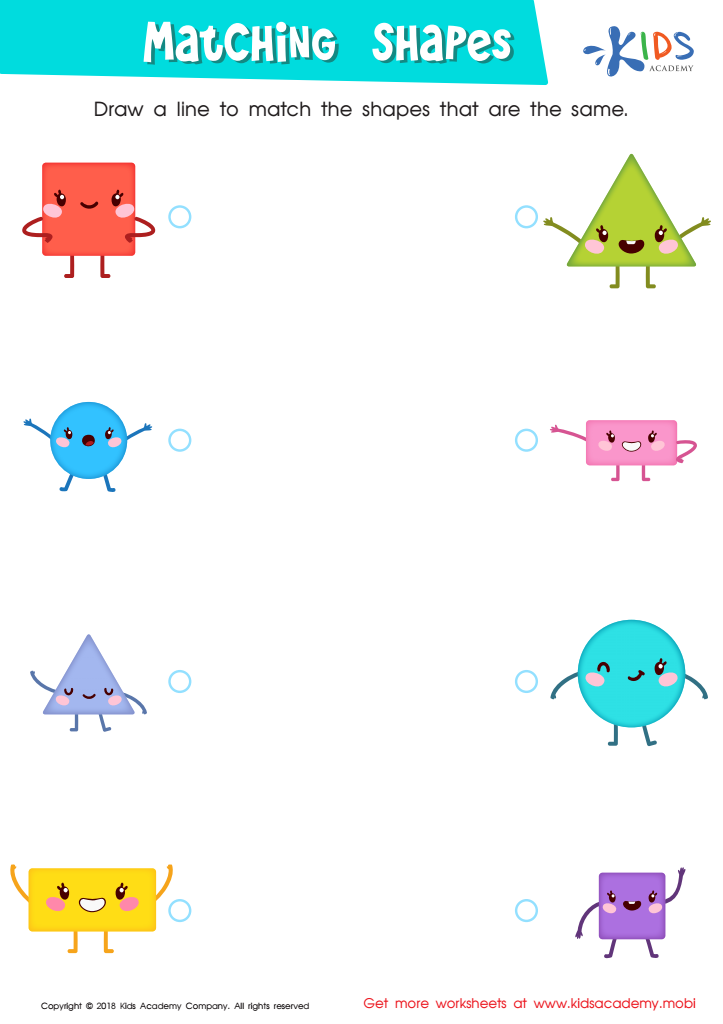
Matching Shapes Worksheet
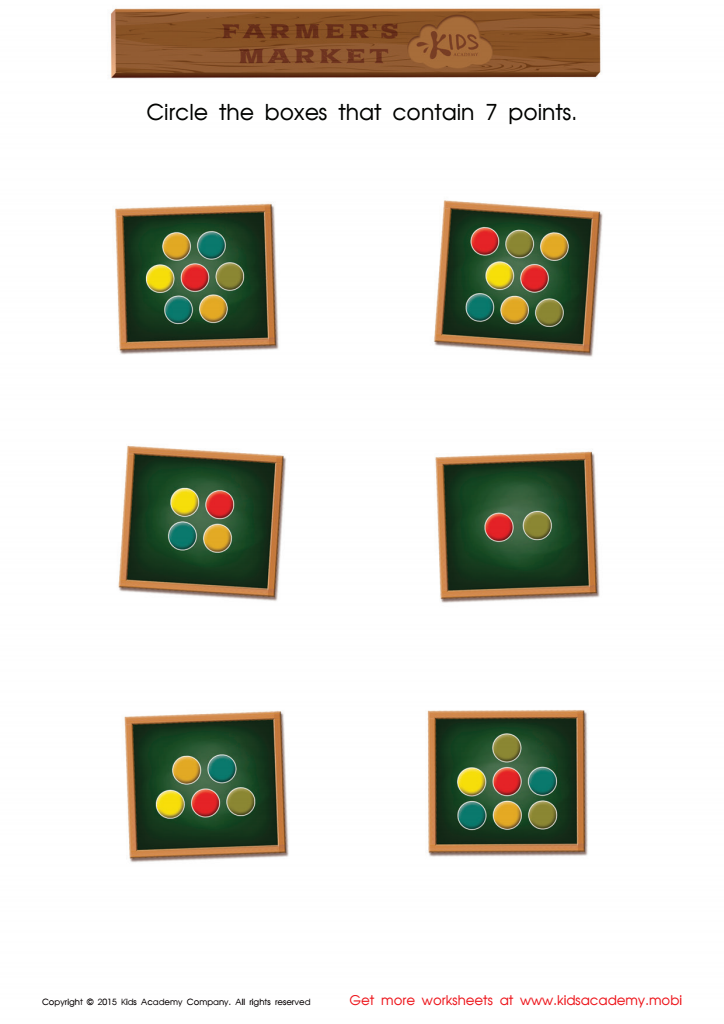
Count and Match Points 7 Math Worksheet
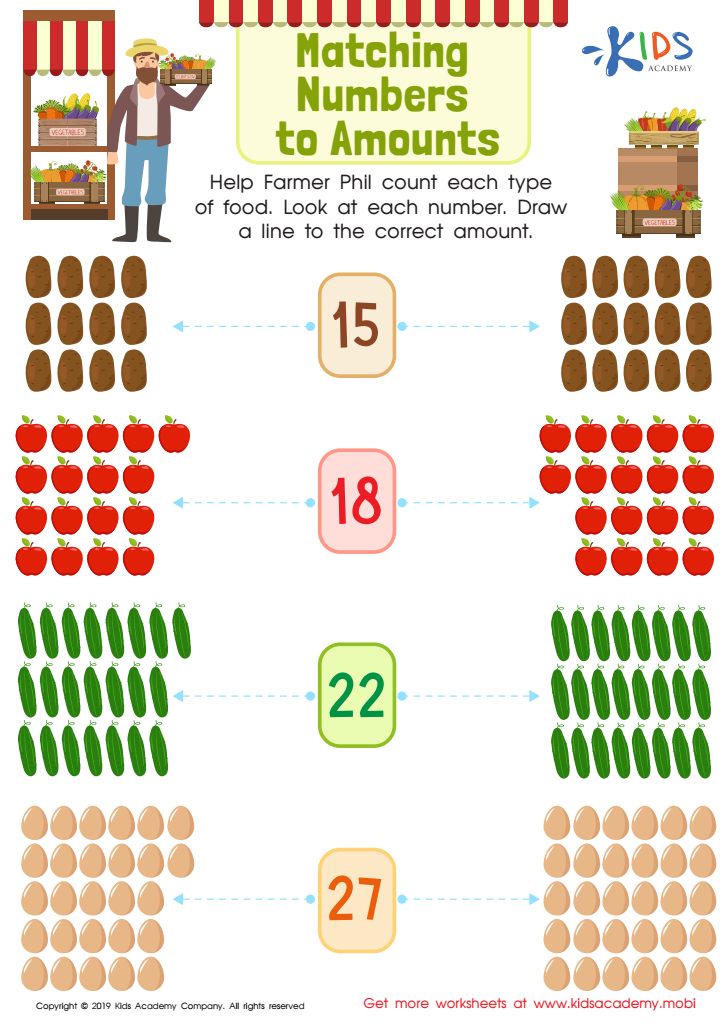
Matching Numbers to Amounts Worksheet





Parents and teachers should care about matching skills in early math education for 5-year-olds because these foundational skills play a critical role in a child's cognitive and academic development. Matching activities help develop critical thinking and problem-solving skills as children learn to identify similarities and differences in objects or numbers. This process reinforces their ability to categorize and group items, enhancing their overall understanding of the world around them.
Additionally, matching skills lay the groundwork for more complex mathematical concepts such as addition, subtraction, and even geometry later on. For instance, as children learn to match shapes, they begin to understand spatial relationships and properties of different objects, which are essential for geometrical awareness.
Moreover, matching activities promote fine motor skills through hands-on engagement, supporting handwriting and other practical tasks in school. Encouraging these skills fosters a sense of achievement and boosts a child's confidence, increasing their willingness to participate in learning activities. Ultimately, nurturing matching skills in young learners not only prepares them for advanced math concepts but also influences their overall personal development, building a robust foundation for lifelong learning.








