Shape identification Normal Math Worksheets for 5-Year-Olds
5 filtered results
-
From - To
Discover engaging Shape Identification Normal Math Worksheets designed for 5-year-olds. These printable activities from Kids Academy nurture early math skills by helping young learners recognize and differentiate between various shapes, such as circles, squares, and triangles. Through fun and interactive exercises, children will develop their fine motor skills and spatial awareness. Perfect for classroom use or at-home learning, these worksheets provide a solid foundation for future math success. Encourage your child’s curiosity and love for learning with these thoughtfully crafted educational resources tailored to make shape identification both enjoyable and beneficial. Explore more at Kids Academy today!
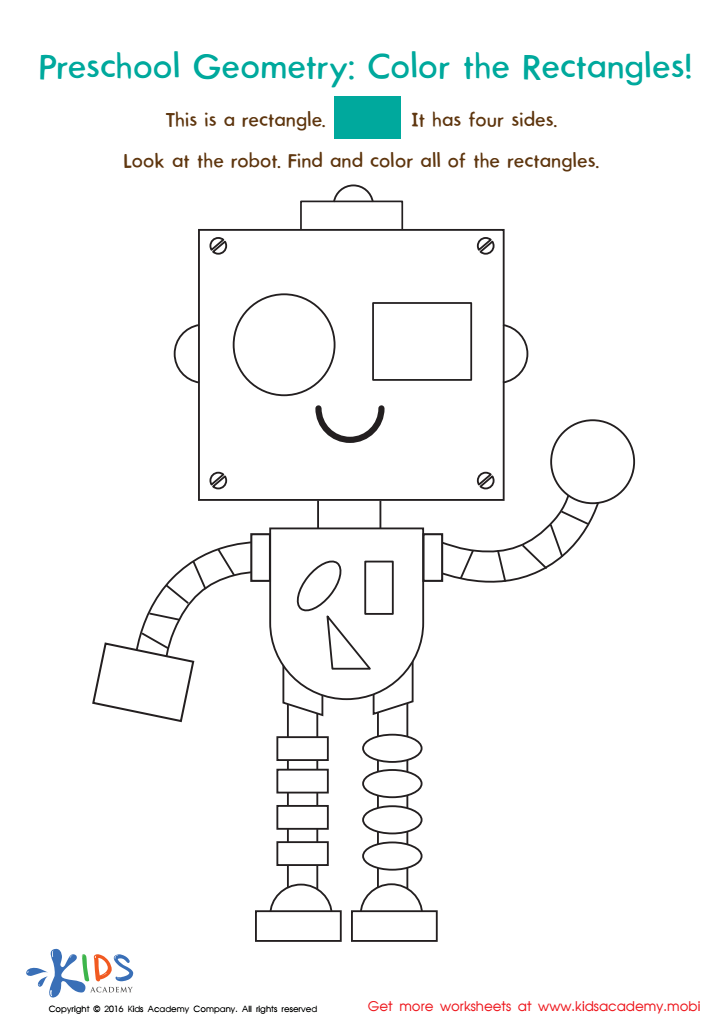
Geometry Worksheet
 Assign to My Students
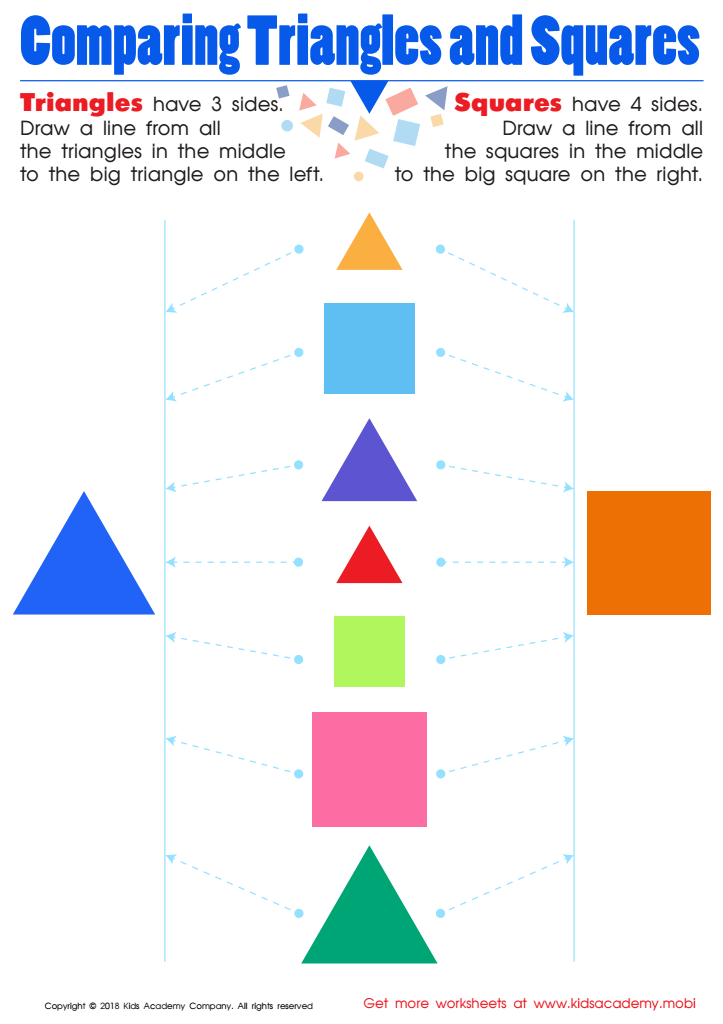
Comparing Triangles Squares Worksheet
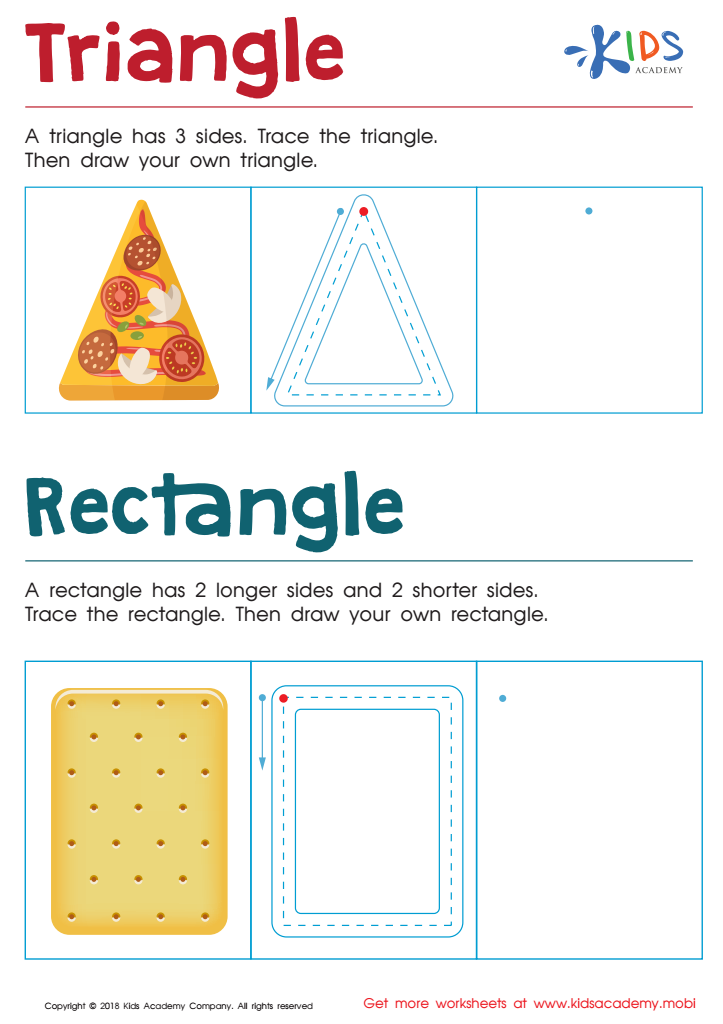
Triangle Rectangle Worksheet
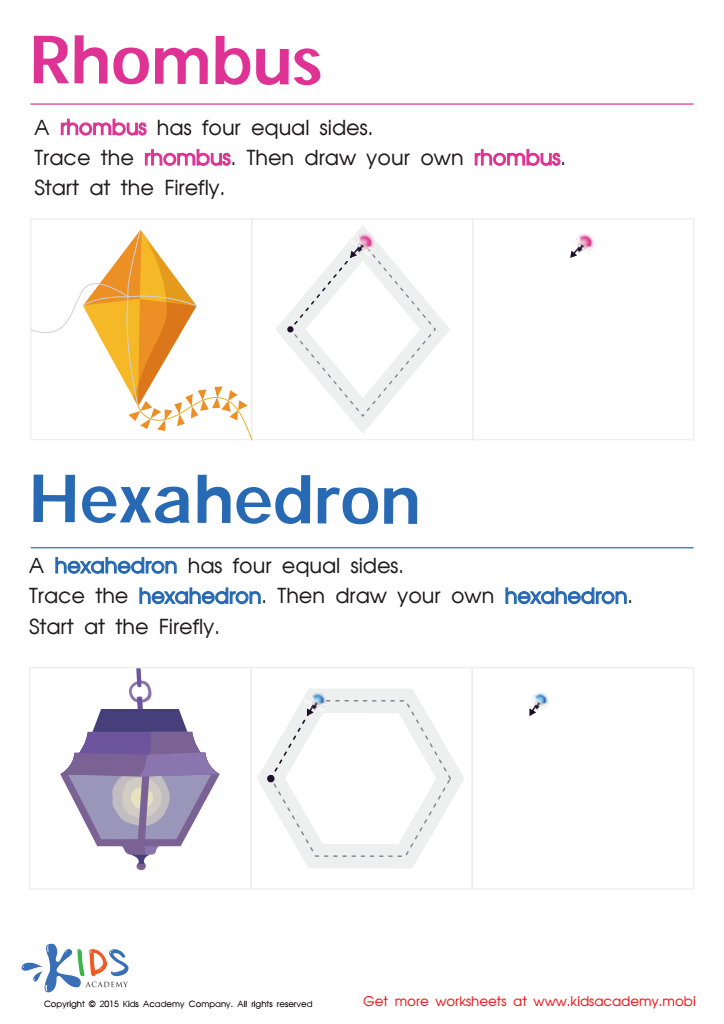
Draw a Rhombus And a Hexahedron Printable
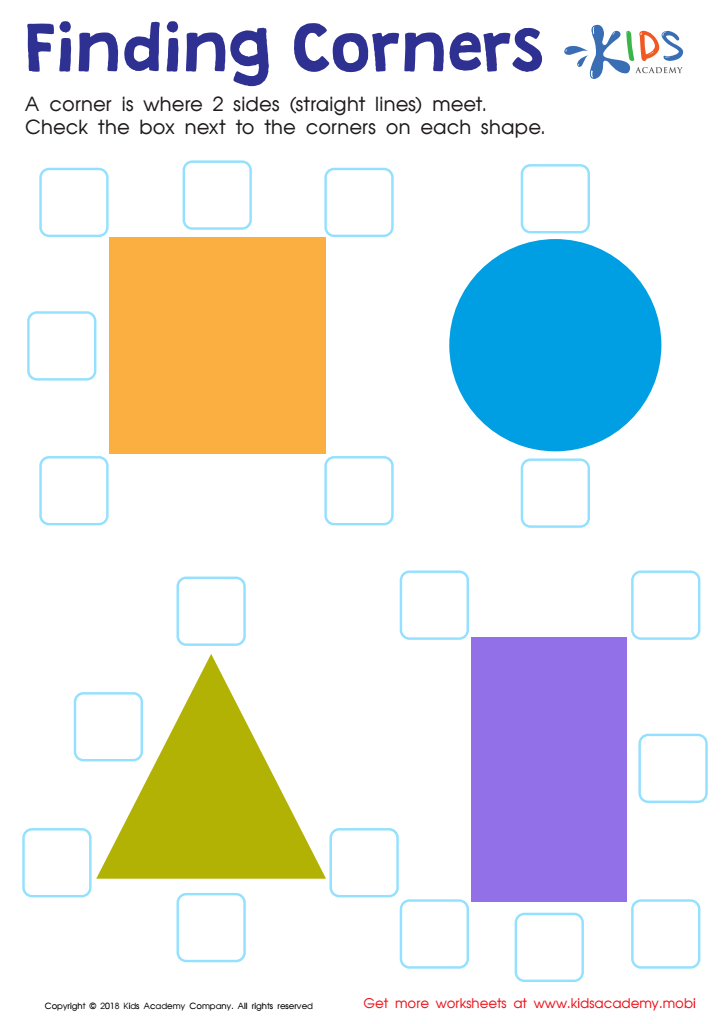
Finding Corners Worksheet








Shape identification is fundamental in early childhood education, serving as a cornerstone for many aspects of development and future learning. For 5-year-olds, recognizing and understanding shapes is not just about geometry; it lays the groundwork for a multitude of important skills.
First, it enhances cognitive development. Differentiating between shapes boosts critical thinking and problem-solving abilities. These skills transfer across subjects, enabling children to tackle more complex mathematical concepts and puzzles as they grow.
Second, shape recognition aids in spatial awareness and visual perception. Understanding shapes helps children navigate their physical environment and can improve their ability to interpret visual information, which is crucial for reading and writing.
Third, early math skills, including shape identification, support academic achievement. Mastery of shapes is a stepping stone to grasping other mathematical concepts such as patterns, symmetry, and geometry — essential components in higher-level math.
Additionally, recognizing shapes enhances language and communication skills. Educators and parents can use shape-related conversations to introduce new vocabulary and encourage descriptive language, aiding in language development.
Finally, identifying shapes has practical applications in daily life, making it an essential skill. It helps children to organize and categorize information, simplifying complex environments and interactions.
In essence, emphasizing shape identification at an early age contributes to a well-rounded, robust foundation for lifelong learning and problem-solving.








