Understanding directions Normal Math Worksheets for 5-Year-Olds
3 filtered results
-
From - To
Explore our "Understanding Directions Normal Math Worksheets for 5-Year-Olds" to stimulate young minds and enhance spatial awareness through engaging activities. These worksheets are specially designed to teach kids to follow directions, recognize patterns, and develop critical thinking skills. Perfect for early learners, each worksheet features fun, age-appropriate exercises that help children grasp basic math concepts while improving their ability to understand and execute directions. Ideal for preschool and kindergarten settings, our interactive worksheets ensure a solid foundation in math in a playful and effective manner. Join today and watch your child’s love for learning grow!
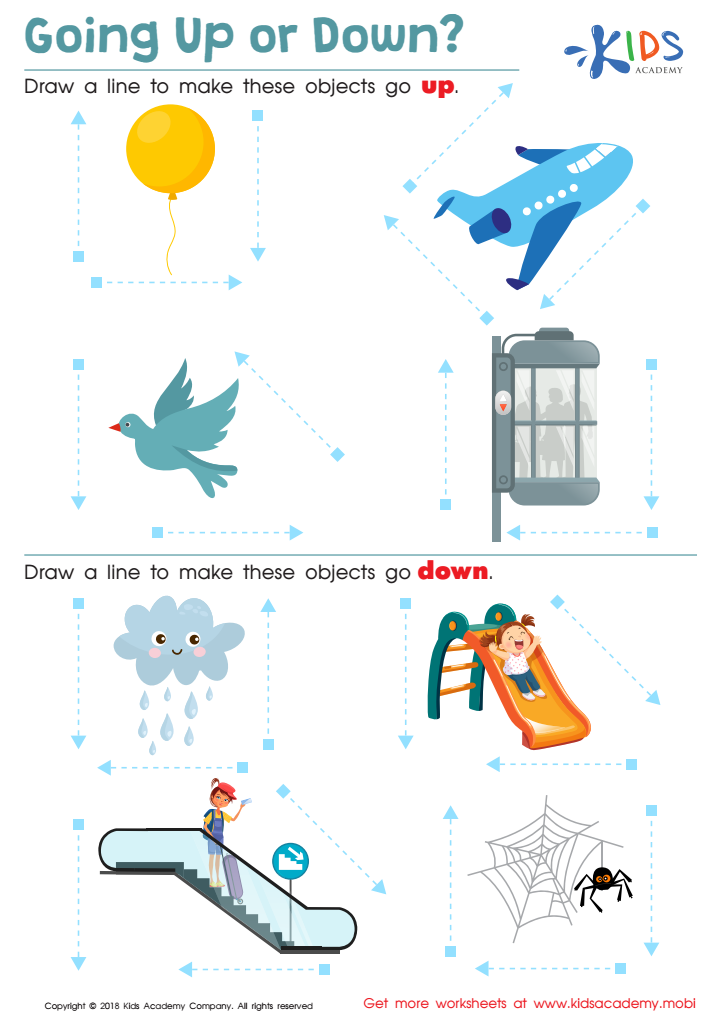
Going up or Down? Worksheet
 Assign to My Students
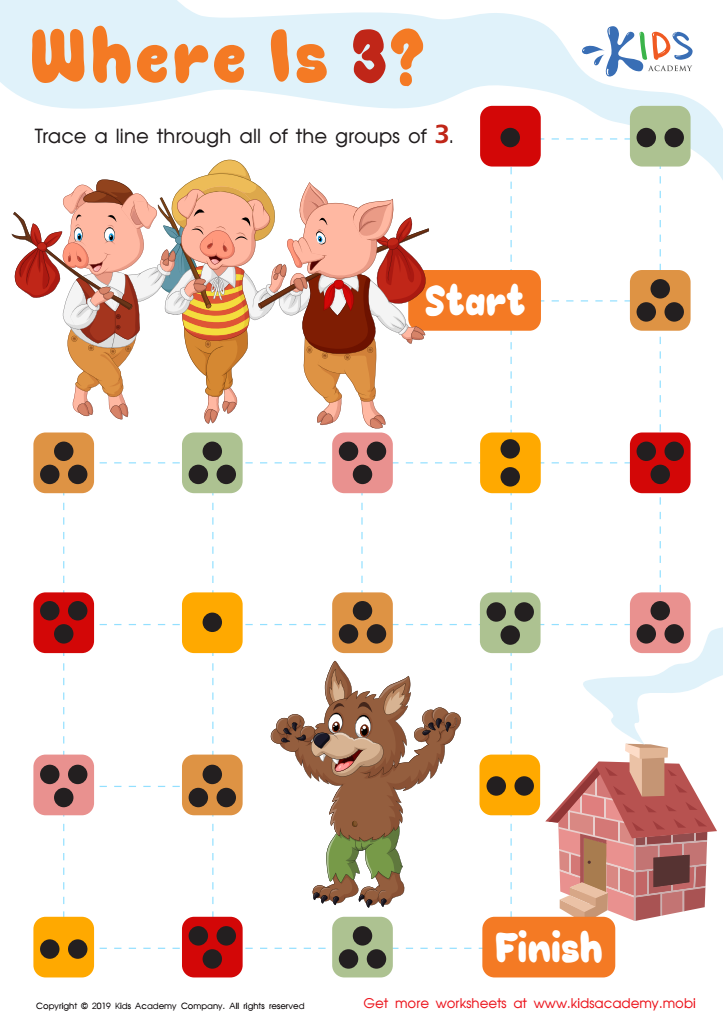
Where Is 3? Worksheet
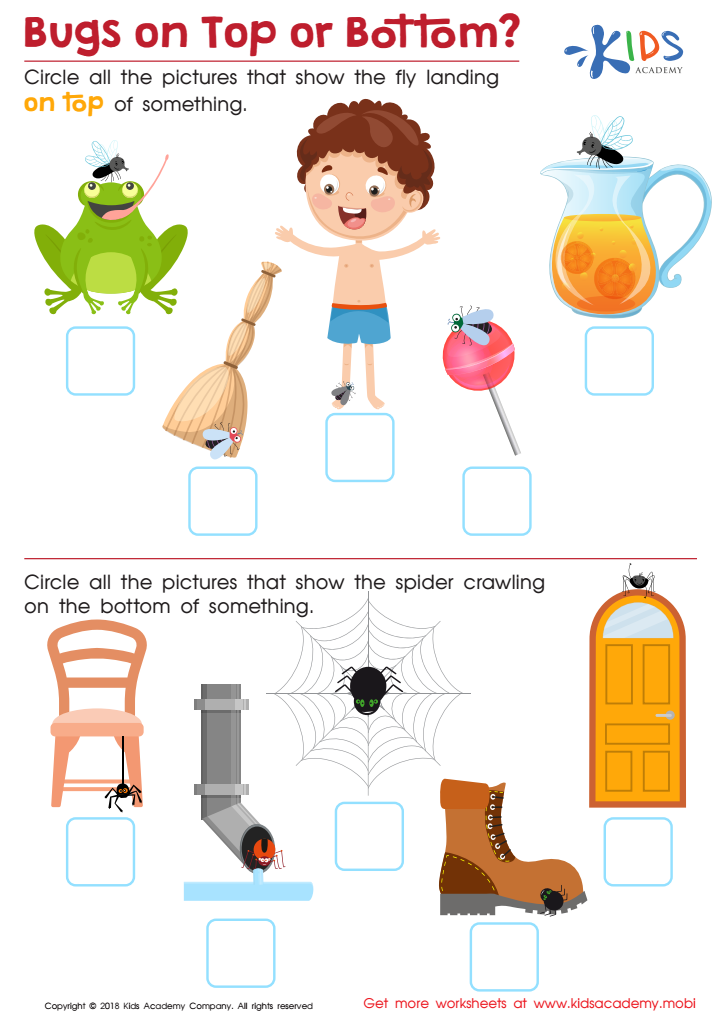
Bugs on Top or Bottom? Worksheet






.jpg)

Understanding directions in math is fundamental for 5-year-olds as it sets the stage for their future academic success. When parents and teachers ensure that young children grasp basic directional concepts (such as up, down, left, right, over, under, forward, and backward), they are helping them develop spatial awareness. This spatial awareness is crucial not only in mathematics but also in everyday problem-solving and reasoning.
For instance, many math problems, even at this early age, often involve following directions to reach an answer, such as finding objects using positional words or solving simple puzzles. Understanding directions enables children to comprehend more complex tasks as they progress in their education. This foundational skill aids in organizing thoughts, structuring learning activities, and following multi-step instructions, which are essential in more advanced math concepts and other subjects.
Moreover, when children grasp directions well, their confidence boosts. They experience success in activities such as classroom games, sports, and creative play, making learning enjoyable and less frustrating. Parental and teacher involvement in teaching and reinforcing these concepts also enhances the child’s listening skills and memory retention, providing a supportive learning environment. Ultimately, giving importance to understanding directions in early math prepares children for future academic endeavors and everyday challenges, fostering a love for learning.








