Pattern recognition Normal Patterns Worksheets for 5-Year-Olds
5 filtered results
-
From - To
Welcome to our "Pattern Recognition Normal Patterns Worksheets" designed specifically for 5-year-olds! These engaging worksheets provide a fun and interactive way for young learners to identify, create, and extend patterns using various shapes and colors. Our activities support essential early math skills, promoting cognitive development and visual discrimination. As children work to complete these patterns, they will enhance their critical thinking abilities and boost their confidence in math. Perfect for preschool and kindergarten classrooms or at-home learning, these printables are a delightful tool for developing foundational understanding in pattern recognition. Download now to spark your child's love for math!
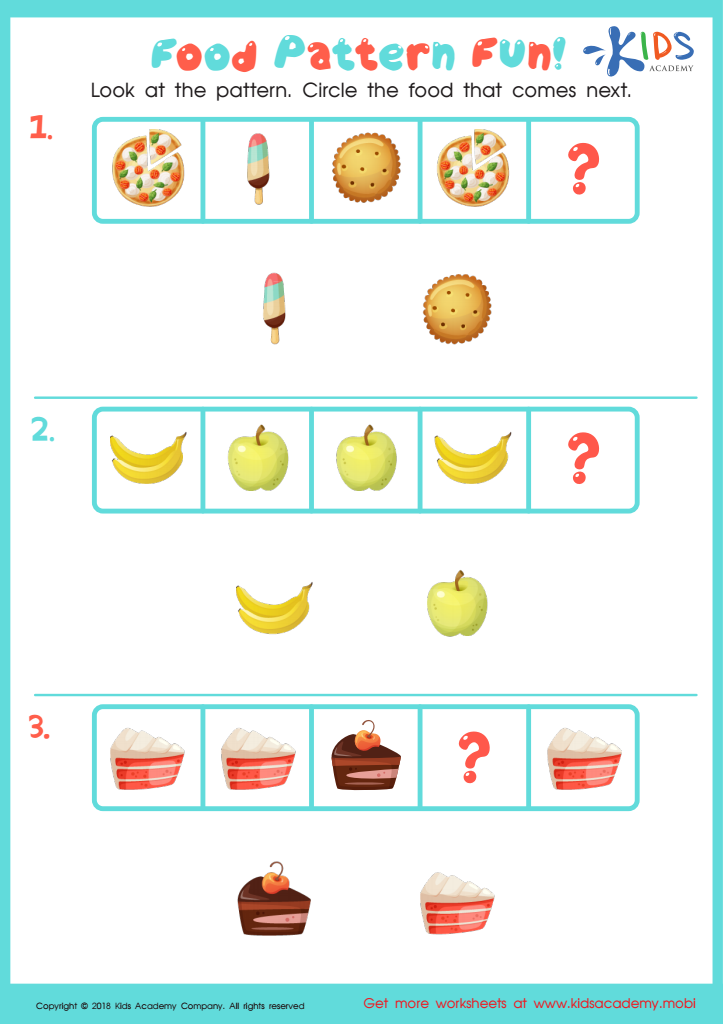
Food Pattern Fun Worksheet
 Assign to My Students
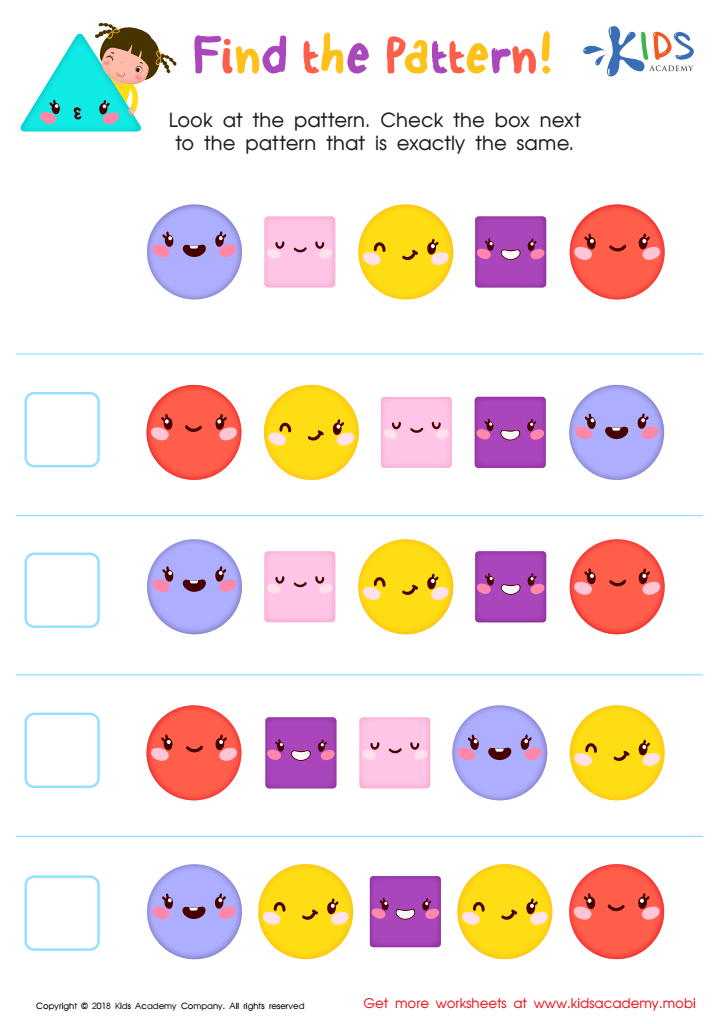
Find the Pattern Worksheet
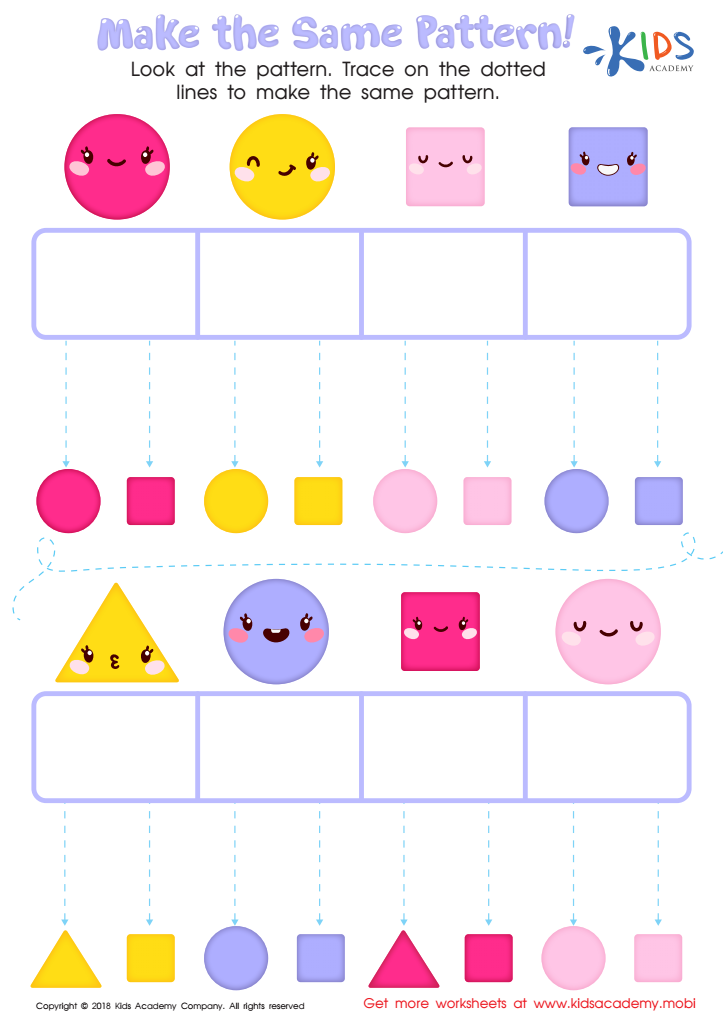
Make the Same Pattern Worksheet
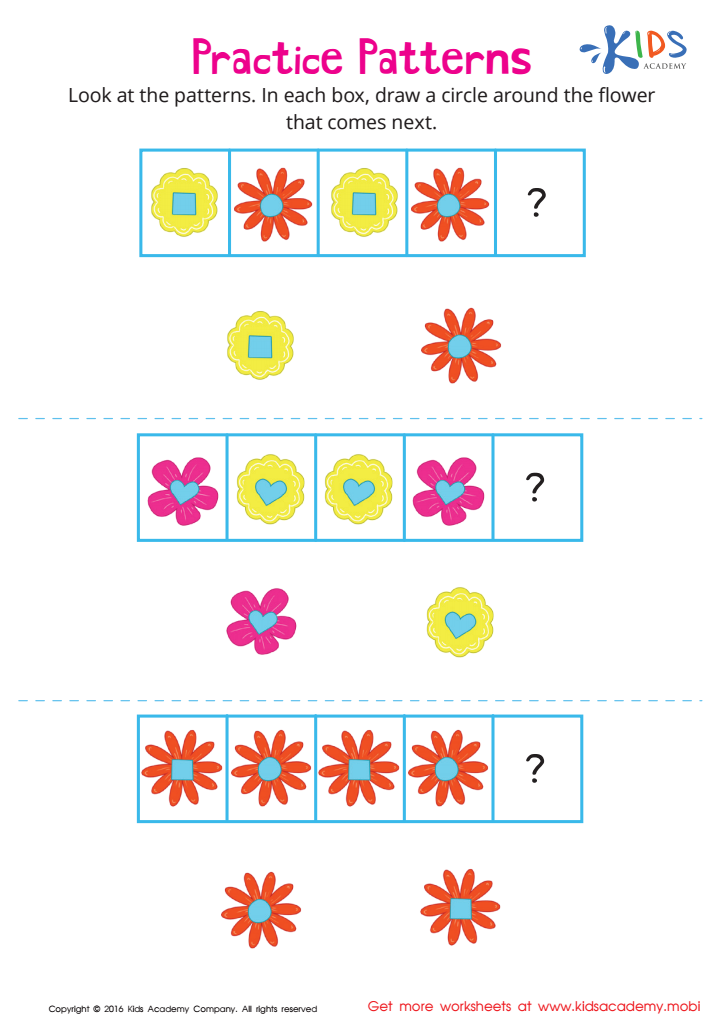
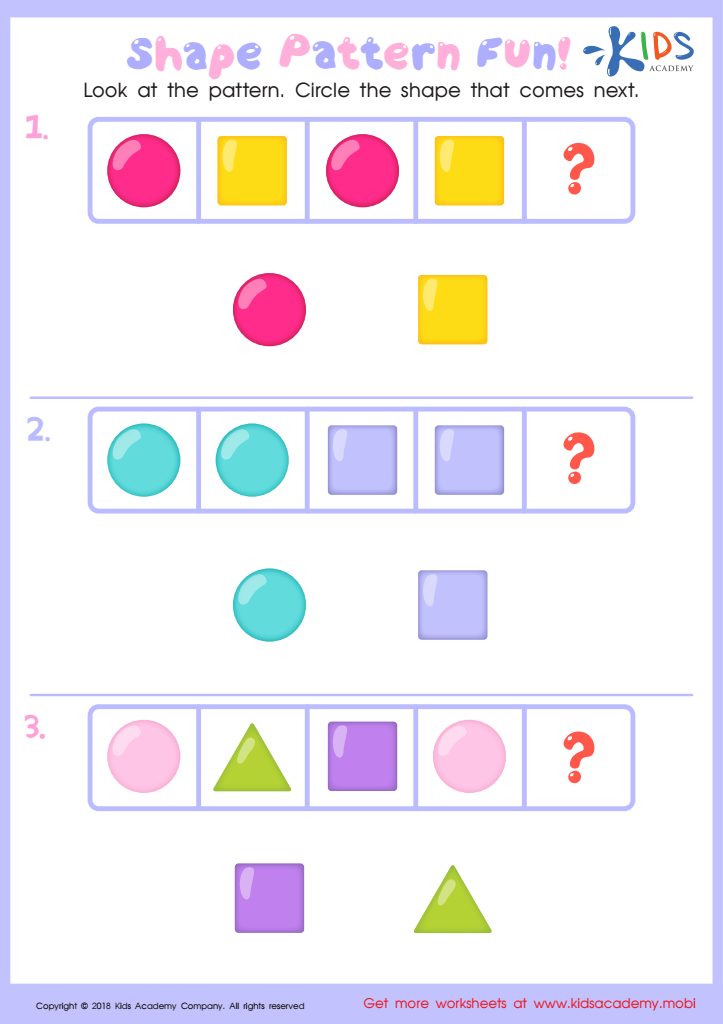
Shape Pattern Fun Worksheet








Pattern recognition is a fundamental skill in early childhood education, particularly for 5-year-olds, as it lays the foundation for critical thinking and problem-solving abilities. Parents and teachers should prioritize normal pattern recognition because it nurtures cognitive development. By identifying and understanding patterns—whether in numbers, shapes, or daily routines—young children enhance their logical thinking skills. This ability supports the transition from concrete to abstract thinking, which is essential as they progress in their learning journey.
Additionally, recognizing patterns helps children develop language skills as they learn to describe, relate, and categorize different experiences. This skill is crucial for early literacy, as it allows them to understand the structure of stories and recognize rhythmic and repetitive language in texts.
Furthermore, mastering pattern recognition aids in broader mathematical concepts, such as counting, sequencing, and problem-solving, providing a solid mathematical foundation for future learning. Patterns are ubiquitous in everyday life, and understanding them promotes a sense of order and predictability, which contributes to emotional security in young children. Ultimately, fostering pattern recognition can enhance a child's confidence and enjoyment in learning, creating motivated and engaged learners.








