Counting skills Normal Word Problems Worksheets for 5-Year-Olds
4 filtered results
-
From - To
Welcome to our Counting Skills Normal Word Problems Worksheets for 5-Year-Olds! Designed for young learners, these engaging worksheets help children strengthen their counting abilities through fun, relatable scenarios. Each activity presents simple problems that encourage critical thinking and problem-solving skills, reinforced by colorful illustrations and easy-to-follow instructions. As your child navigates through realistic situations, they'll practice counting objects, understanding quantities, and developing a solid foundation in numeracy. Perfect for home or classroom use, these worksheets make learning enjoyable and interactive, ensuring your little one builds confidence in their counting skills. Explore the world of numbers with us today!
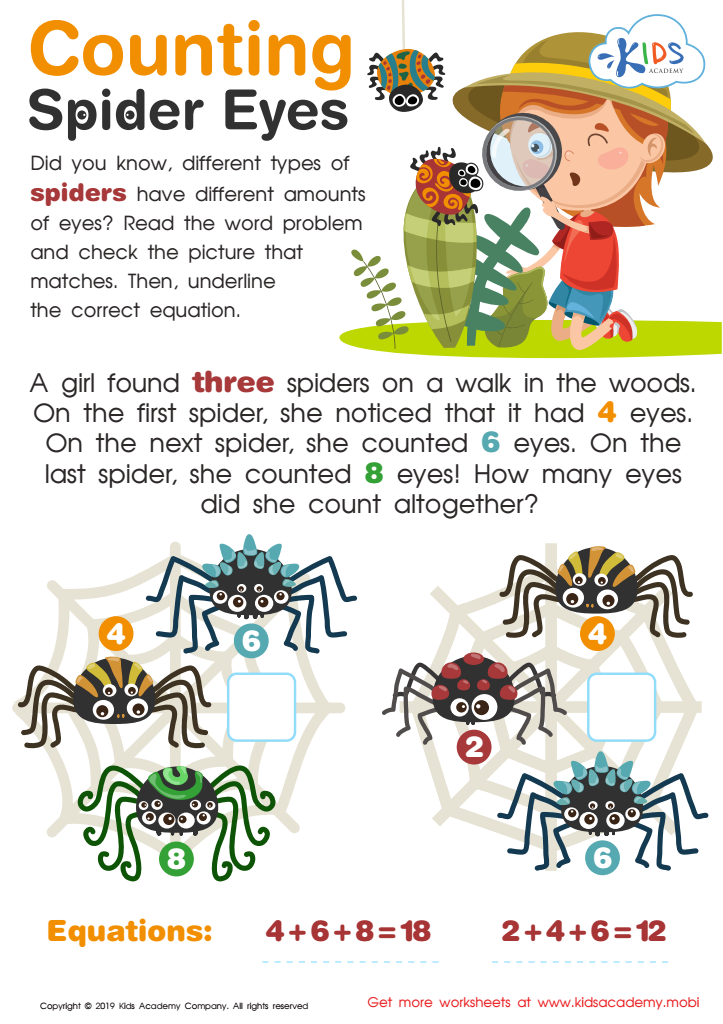
Counting Spider Eyes Worksheet
 Assign to My Students
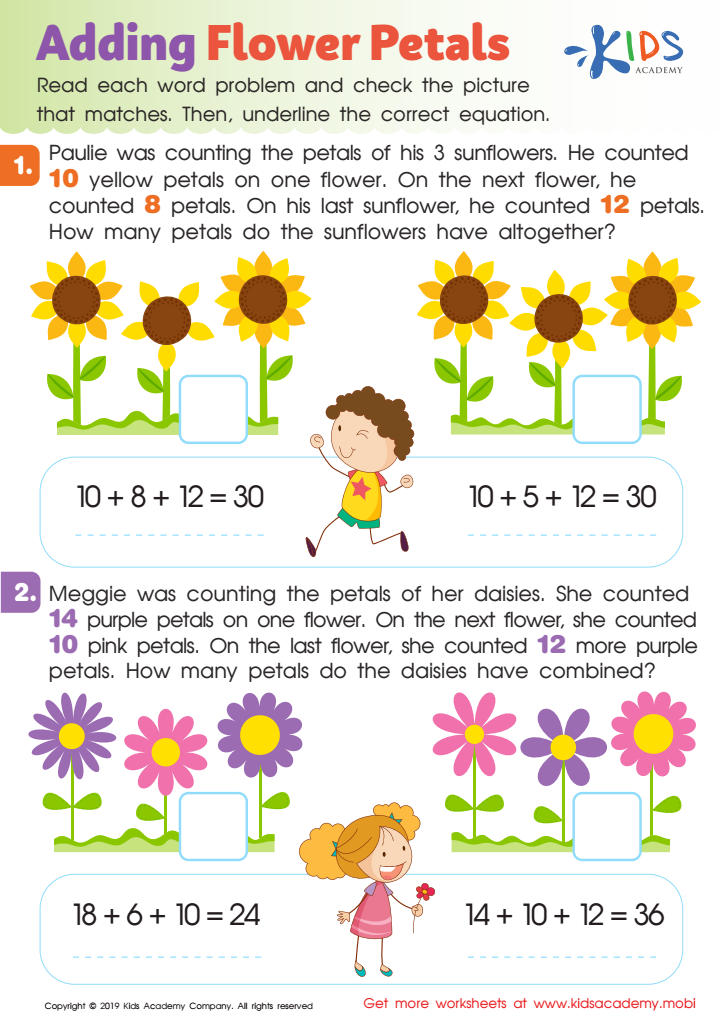
Adding Flower Petals Worksheet
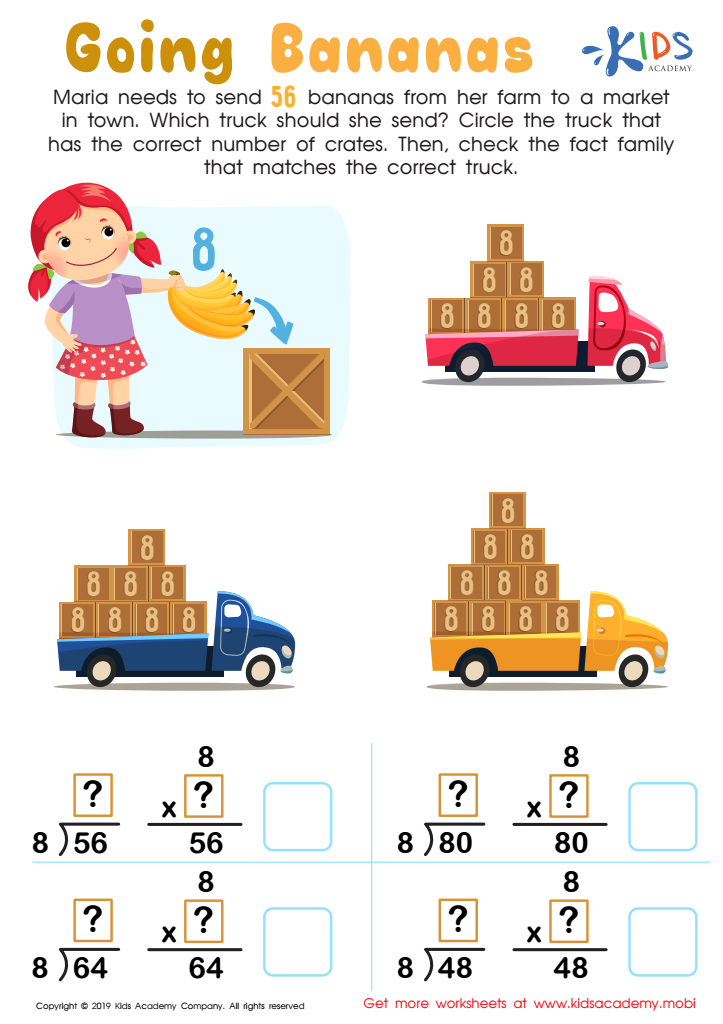
Going Bananas Worksheet
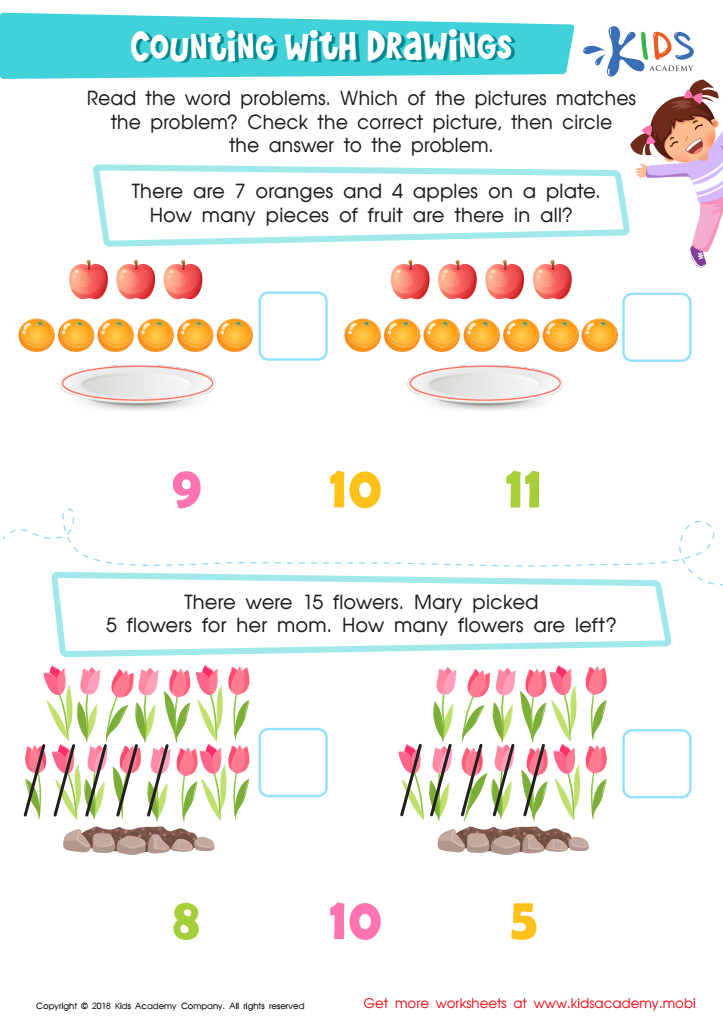
Counting with Drawings:Fruits & Flowers Worksheet








Counting skills and understanding word problems are foundational aspects of early mathematics education that significantly impact a child's development. For 5-year-olds, counting skills are not just about memorizing numbers but about grasping the concepts of quantity, order, and comparison. When kids engage with normal word problems, they learn to apply their counting skills in real-world contexts, which enhances their cognitive abilities and problem-solving skills.
Parents and teachers should care because these skills build the groundwork for more complex mathematical concepts in later years. Word problems require children to analyze situations, interpret language, and translate scenarios into mathematical operations. This process nurtures critical thinking and language development, promoting holistic cognitive growth.
Moreover, reinforcing counting skills and solving word problems fosters a positive attitude toward math, making it less intimidating as children grow. Engaging children with practical counting exercises and relatable word problems can increase their confidence and capacity to face mathematical challenges in the future. Ultimately, building these skills early equips children not only for academic success but also for everyday situations that require numerical understanding and decision-making throughout their lives. By prioritizing these skills, parents and teachers cultivate a strong mathematical foundation essential for lifelong learning.








